

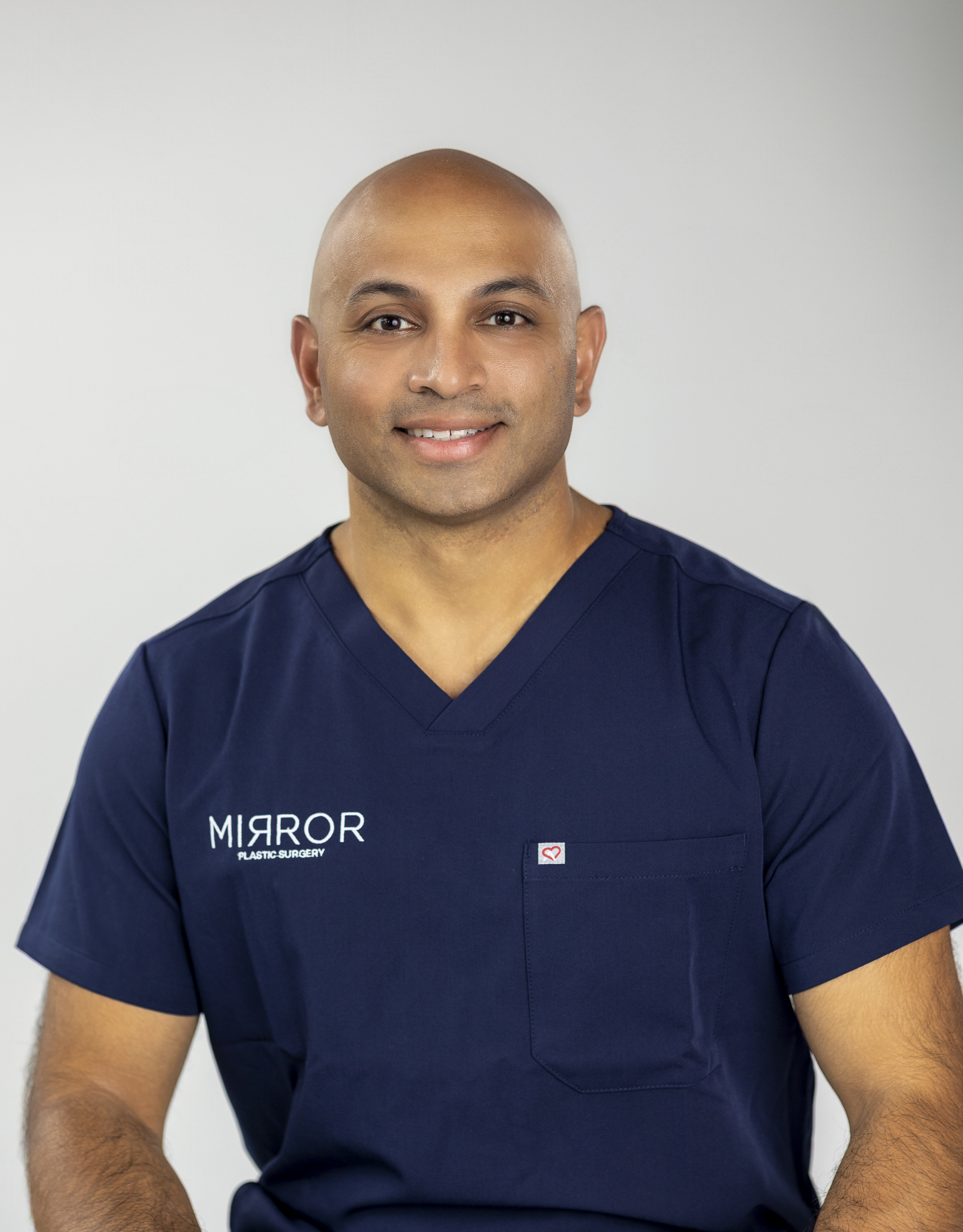
Written by: Dr. Akash Chandawarkar, Board Certified Plastic Surgeon, Mirror Plastic Surgery
Key Takeaways for Tampa Liposuction Costs
- Liposuction pricing in Tampa varies based on surgeon credentials, facility accreditation, and what each quote actually includes, so patients should compare complete, all-in costs instead of headline fees alone.
- Board-certified plastic surgeons with aesthetic fellowships who operate in accredited facilities typically deliver safer outcomes and charge higher fees that reflect their training and infrastructure.1
- Clear knowledge of technique options such as traditional, VASER, laser-assisted, and high-definition liposuction helps patients interpret quotes and match the approach to their goals.
- Patients should confirm that every quote spells out surgeon fees, anesthesia, facility costs, garments, medications, follow-ups, and revision policies to avoid hidden expenses or compromised care.
How Liposuction Costs Vary Across Tampa
Liposuction pricing across Florida spans a wide range, and totals shift with the areas treated, technique used, and facility type. National network data from board-certified surgeons shows that single-area all-in totals can differ significantly, while full-torso Lipo 360 usually costs more once anesthesia, facility, and post-operative care are included.
The American Society of Plastic Surgeons reports a 2024 national average surgeon fee range of $4,300–7,500 for liposuction, but that figure excludes anesthesia, facility, and other mandatory costs, which makes it a classic example of a headline fee. Headline fees that omit these components are not comparable to all-in quotes, so patients need a complete, itemized number before making a decision.
How Training and Facility Standards Influence Your Investment
Board certification in plastic surgery, fellowship training, and facility accreditation are the three structural factors that most reliably predict both safety outcomes and pricing. Accredited outpatient facilities are associated with lower complication rates than non-accredited venues because they must maintain higher staffing levels, more advanced monitoring equipment, and stricter emergency protocols. That infrastructure investment translates directly into higher facility fees, which is why all-in quotes from accredited centers cost more than quotes from unaccredited offices.
Accredited facilities require more staffing, equipment, monitoring, and emergency preparedness, which is reflected in the total quote. Board-certified plastic surgeons with fellowship training in body contouring also carry higher professional fees that correspond to deeper anatomical expertise and lower revision rates.1
The table below compares the credential tiers patients will encounter when evaluating Tampa-area plastic surgeons. The categories reflect publicly verifiable standards rather than specific competitors.
| Credential Tier | Board Certification | Fellowship Training | Facility Accreditation |
|---|---|---|---|
| Tier 1 — Board-Certified Plastic Surgeon with Aesthetic Fellowship | American Board of Plastic Surgery (ABPS) | Dedicated aesthetic surgery fellowship (e.g., MEETH/Lenox Hill or equivalent) | AAAASF, AAAHC, or Joint Commission accredited surgical center |
| Tier 2 — Board-Certified Plastic Surgeon, No Aesthetic Fellowship | American Board of Plastic Surgery (ABPS) | General plastic surgery residency only | AAAASF, AAAHC, or state-licensed facility |
| Tier 3 — Non-ABPS Board-Certified Physician | Board in another specialty (e.g., family medicine, dermatology) | Cosmetic procedure training courses; no accredited surgical fellowship | Office-based suite; accreditation varies widely |
| Tier 4 — No Recognized Board Certification | None verifiable through ABMS | None | Often unaccredited; limited emergency infrastructure |
Volume-discount models that compress surgeon time and facility standards represent the documented risk tier in body contouring. A lower headline fee at Tier 3 or Tier 4 often fails to account for the cost of revisions, complications, or corrective surgery.
Liposuction Technique Options and What They Mean for Pricing
Technique differences shape both the quote you receive and the type of result you can expect.
- Traditional (Tumescent) Liposuction: This foundational technique uses tumescent fluid to firm tissue and minimize bleeding, then a cannula mechanically disrupts and removes fat. It works for most body areas. National per-area costs range from $2,000–$5,000 for the surgeon fee alone.
- Ultrasound-Assisted Liposuction (VASER): Ultrasonic energy emulsifies fat cells before removal and preserves surrounding connective tissue. Some reviews suggest lower rates of contour irregularities and higher patient satisfaction than traditional liposuction.1 It adds a technology premium of $1,000–$2,500 per area.
- Laser-Assisted Liposuction (SmartLipo): Laser energy liquefies fat and may stimulate skin tightening. It carries an elevated risk of skin burns when used too aggressively or superficially, particularly with less-experienced operators.1 It works best for smaller areas with moderate skin laxity.
- High-Definition Body Contouring: This advanced technique sculpts superficial fat to accentuate underlying musculature. It requires precise anatomical knowledge and usually suits patients already near their goal weight with good skin tone.
Understanding these technique differences becomes especially important when evaluating how much fat can be safely removed in a single session, because volume thresholds directly affect both safety protocols and facility requirements.
Safe Fat Removal Limits for Lipo 360 in Florida
The American Society of Plastic Surgeons defines large-volume liposuction as procedures removing more than 5,000 cc (5 liters) of total aspirate in a single session, at which point the procedure must be performed in a hospital or accredited surgical facility with overnight monitoring. The volume of fat removed in a single outpatient session varies by patient and procedure plan.
Research has examined how liposuction volume relates to patient BMI, showing that patients with higher BMIs may tolerate larger aspirate volumes with lower relative complication risk, while lower-BMI patients can face increased risk at higher volumes.1 Patients with lower BMIs undergoing large-volume removal face disproportionately higher complication risk, which is why individualized pre-operative assessment is essential.1
Exceeding the 5-liter threshold discussed above increases risks of fluid shifts and lidocaine toxicity, which is why outpatient centers cap aspirate volume and refer larger-volume cases to hospital settings.
Factors That Can Disqualify a Liposuction Candidate
Liposuction reshapes localized fat deposits but does not serve as a primary weight-loss method. Several medical, anatomical, and lifestyle factors can disqualify a patient or shift the recommended approach.
- Significant distance from goal weight: Ideal liposuction candidates are adults within 30% of their ideal weight who have firm, elastic skin and good muscle tone. Patients well above this range benefit more from weight management first.
- Poor skin elasticity: Liposuction removes volume but not skin. Patients with significant skin laxity may need a body lift, arm lift, or thigh lift rather than liposuction alone.
- Visceral fat: Liposuction addresses only subcutaneous fat and cannot remove visceral fat beneath the muscle wall.
- Diastasis recti or muscle wall separation: Patients with stretched or separated abdominal muscles from pregnancy or major weight loss are poorer candidates for Lipo 360 alone and may require a combined lipo-abdominoplasty.
- Active smoking: Nicotine impairs circulation and wound healing, which significantly increases complication risk.
- Uncontrolled medical conditions: Unmanaged diabetes, bleeding disorders, cardiovascular disease, or immune-compromising conditions require medical optimization before any elective surgery.
- Unrealistic expectations: Patients seeking dramatic weight loss rather than contouring of localized, diet-resistant fat deposits are not appropriate candidates.
For patients who do qualify for body contouring, understanding recovery differences between procedures is essential for planning time off work and setting realistic expectations.
Recovery Differences Between Lipo 360 and Tummy Tuck
Lipo 360 and tummy tuck surgery address overlapping concerns but involve very different recovery timelines. Lipo 360 is a closed procedure with no skin excision. Most patients return to desk work within one week, and full activity usually resumes at 4–6 weeks.1 Compression garments stay in place for several weeks, and final contour results become visible at 3–6 months as swelling resolves.1
A tummy tuck, or abdominoplasty, involves skin excision and muscle repair. Recovery is substantially longer. Many patients need 1–2 weeks before returning to sedentary work and 4–6 weeks before resuming strenuous activity.1 The trade-off is that a tummy tuck addresses diastasis recti and removes excess skin, which Lipo 360 cannot achieve.
Mirror Plastic Surgery’s approach to abdominoplasty focuses on restoring the entire abdominal musculature from chest to pubic area for true functional restoration, rather than a limited “mini” tummy tuck that addresses only the lower abdomen. The right choice depends on the patient’s anatomy, skin quality, and goals, which requires a thorough in-person assessment rather than a simple checklist.
All-In Quote Checklist for Tampa Liposuction Patients
Every patient should confirm in writing which cost components are included or excluded before accepting any liposuction quote.
- Surgeon’s professional fee, which usually represents the largest single component
- Anesthesia fee, which varies with type and duration; confirm whether a board-certified physician anesthesiologist or CRNA will administer anesthesia
- Facility or operating room fee, which typically accounts for 50–60% of the total liposuction cost; verify the facility’s accreditation status (AAAASF, AAAHC, or Joint Commission)
- Pre-operative labs and medical clearances
- Compression garments, which are required post-operatively for weeks and often cost an additional $30–$100+ if not bundled
- Prescription medications, including pain management, antibiotics, and anti-nausea medications
- Post-operative follow-up visits, including how many are included and what triggers additional charges
- Revision policy, so you understand the practice’s approach to touch-up procedures if contour irregularities occur
- Technology surcharge, and whether the technology premium discussed earlier for VASER or laser-assisted techniques is already included in the quote
Dr. Akash’s Training and Credentials in Body Contouring
Dr. Akash brings a credential profile that is rare in any market. He completed his undergraduate studies in neuroscience and nuclear engineering at MIT before earning his M.D. with Honors from Harvard Medical School through the Harvard-MIT Division of Health Sciences and Technology, a program designed to train physician-scientists. His surgical training included a seven-year integrated plastic and reconstructive surgery residency at Johns Hopkins University, one of the world’s most rigorous programs, covering complex cancer reconstruction, trauma reconstruction at the R Adams Cowley Shock Trauma Center, and microsurgical training at the Curtis National Hand Center.
After residency, Dr. Akash completed an aesthetic surgery fellowship at the Manhattan Eye, Ear and Throat Hospital (MEETH), one of the most competitive aesthetic fellowships in the country, with advanced training in body contouring, facial rejuvenation, and breast surgery. He also completed the Stanford University Biodesign Innovation Fellowship, which trains physician-innovators to develop technological solutions for unmet clinical needs. He serves as Next Generation Editor for the Aesthetic Surgery Journal, has testified before the FDA on breast implant safety, and has been recognized as one of America’s Best Plastic Surgeons by Newsweek for two consecutive years.
Industry Myths, Safety Standards, and Practice Trade-Offs
Patients researching liposuction in Tampa often encounter persistent misconceptions that can obscure real safety differences between practices.
- Misconception: Lower price means equivalent care at a discount. Liposuction performed in non-accredited facilities or by non-board-certified practitioners carries substantially higher complication rates.1 A lower headline fee often reflects omitted line items, a non-accredited setting, or a less-trained provider.
- Misconception: Combining many procedures at once saves money and recovery time. Combining liposuction with other procedures can increase the complication rate because longer operative time and greater anesthesia exposure raise risk. Mirror Plastic Surgery advises against combining too many procedures at once for this reason.
- Misconception: High case volume signals expertise. High-volume practices that perform five to ten surgeries daily distribute team attention across many patients simultaneously. Mirror Plastic Surgery limits itself to one to two surgeries per day so the entire team can focus on a single patient before, during, and after the procedure.
- Misconception: Contour irregularities are rare with any provider. Contour irregularity is among the most common liposuction complications.1 Technique precision and patient selection are the primary modifiable factors.
Patient selection functions as a core safety protocol. Thorough pre-operative evaluation, including ultrasound assessment, review of BMI relative to aspirate volume thresholds, and honest discussion of skin elasticity, guides whether liposuction alone, a combined procedure, or a different approach best serves the patient’s anatomy and goals.
Conclusion: Choosing Safe, Evidence-Based Liposuction in Tampa
Liposuction pricing in Tampa reflects a real spectrum of surgeon training, technique capability, facility standards, and quote completeness. Patients who focus only on the lowest number risk encountering omitted fees, non-accredited settings, or providers whose training does not match the complexity of the requested procedure. Patients who evaluate credentials, verify all-in quotes, and prioritize accredited facilities with board-certified plastic surgeons make a more durable investment in both their safety and their results.
Mirror Plastic Surgery operates on the principle that safety comes first, function second, and aesthetics third. Every consultation with Dr. Akash is an unhurried, hour-long assessment of your anatomy, goals, and realistic expectations, not a sales appointment. The practice performs one to two surgeries per day by design so that every patient receives the full attention of the entire clinical team.
Frequently Asked Questions
What is included in an all-in liposuction quote at Mirror Plastic Surgery?
A complete quote from Mirror Plastic Surgery covers the surgeon’s professional fee, anesthesia administered by a board-certified physician anesthesiologist, and operating room and facility fees at an accredited surgical center. It also includes pre-operative laboratory work and medical clearances, compression garments, prescribed medications, and all scheduled post-operative follow-up visits. Because every patient’s anatomy and treatment plan differ, Dr. Akash provides a personalized quote during the consultation rather than publishing a fixed price list. Patients are encouraged to request a written, itemized breakdown so there are no surprises between the consultation and the day of surgery.
How does Mirror Plastic Surgery’s limited-case model affect my liposuction outcome?
Mirror Plastic Surgery performs one to two surgeries per day, which keeps the team’s focus on your procedure from pre-operative preparation through recovery. In body contouring, where contour irregularities are the most common complication and directly relate to technique precision, this level of focused attention becomes a meaningful safety and quality variable. High-volume practices that perform five to ten surgeries daily cannot provide the same degree of individualized intraoperative care.
Is Lipo 360 or a tummy tuck the right choice for me?
The right procedure depends entirely on your anatomy. Lipo 360 suits patients with good skin elasticity, localized subcutaneous fat around the midsection, and no significant muscle wall separation. A tummy tuck is indicated when there is excess skin, diastasis recti, or both, which liposuction cannot correct. Some patients benefit from a combined lipo-abdominoplasty that addresses fat, skin, and muscle in a single procedure.
During pre-operative assessment, Dr. Akash uses ultrasound to evaluate tissue quality and muscle integrity so the recommended approach matches your actual anatomy rather than a generalized protocol. This determination cannot be made accurately from photographs or a brief phone consultation.
What medical conditions or lifestyle factors could disqualify me from liposuction?
Active smoking, uncontrolled diabetes, bleeding or clotting disorders, cardiovascular disease, and immune-compromising conditions all require medical optimization before any elective surgery can be performed safely. From an anatomical standpoint, patients with significant skin laxity, visceral fat, or diastasis recti are not ideal candidates for liposuction alone and may need a different or combined procedure. Body weight also matters, and ideal candidates are usually within approximately 20 to 30 pounds of their stable goal weight.
During your consultation, Dr. Akash conducts a thorough top-to-bottom assessment to identify any factors that would affect your candidacy, safety, or expected outcome. He then recommends the most appropriate path forward based on that evaluation rather than proceeding with a procedure that does not fit your situation.
Why does Mirror Plastic Surgery use board-certified physician anesthesiologists rather than other anesthesia providers?
Safe anesthesia management requires continuous, dedicated monitoring that cannot occur simultaneously with performing surgery. Mirror Plastic Surgery employs board-certified physician anesthesiologists, not the operating surgeon, to oversee anesthesia throughout every procedure. This separation of roles reflects a foundational safety standard.
In the event of a rare complication, Dr. Akash’s board certification in plastic surgery also provides privileged hospital access, which allows transfer to a hospital setting if needed. This infrastructure forms part of what accredited surgical facilities require and distinguishes a safety-first practice from lower-cost alternatives that may compress these standards.
1 Results may vary from person to person. Editorial content, before and after images, and patient testimonials do not constitute a guarantee of specific results.
