
Written by: Ellie Pranckevicius, FNP-BC, Aesthetic Nurse Practitioner & Aesthetic Injector | Facial Restoration & Regenerative Injectable Specialist, Mirror Plastic Surgery
Key Takeaways for Women in Their 20s
- Preventative Botox is FDA-approved for adults 18 and older, but the label does not promote routine preventative use in women in their 20s.
- Short-term side effects such as eyelid ptosis, bruising, and headache depend on technique and usually resolve within days to weeks.
- Frequent or high-dose treatments raise the risk of neutralizing antibody formation, which can reduce long-term results.
- Women with neuromuscular disorders, active infections, or pregnancy should avoid treatment, so individualized assessment is essential.
- Schedule a safety-first consultation with Ellie at Mirror Plastic Surgery before deciding on preventative Botox.
How the FDA Defines Botox Use in Adults
BOTOX Cosmetic is FDA-indicated for the temporary improvement of moderate to severe glabellar lines, lateral canthal lines, forehead lines, and platysma bands in adult patients.1 The label uses the term “adult patients” without specifying a minimum age above 18. Safety and effectiveness have not been established in pediatric patients for cosmetic indications, and the product is not approved for anyone under 18.
The prescribing information carries a boxed warning that botulinum toxin effects may spread beyond the injection site, producing symptoms including swallowing and breathing difficulties that can be life-threatening. These symptoms have been reported hours to weeks after injection in adults. For women in their 20s, age alone does not prohibit treatment. The label does not endorse preventative use as a routine protocol, so clinical indication, anatomy, and provider judgment guide appropriateness.
Short-Term Side Effects and What Younger Patients Typically Experience
Published data focused specifically on women under 30 receiving preventative Botox remain limited. Adult clinical trials describe side effects such as eyelid ptosis, brow asymmetry, injection-site bruising, headache, and localized pain. Ptosis, or drooping of the upper eyelid, is one of the most clinically significant events. It occurs when toxin diffuses into the levator palpebrae muscle that lifts the eyelid. Rates in controlled glabellar-line studies vary by technique.
The following table summarizes common short-term side effects reported in adult trials. It highlights that several events occur fairly often, yet most resolve on their own within days to weeks.
| Side Effect | Approximate Incidence (Adult Trials) | Typical Duration |
|---|---|---|
| Eyelid ptosis | Varies, technique-dependent | Several weeks |
| Injection-site bruising | Common | 1–2 weeks |
| Brow asymmetry | Rare, technique-dependent | Resolves with toxin metabolism |
| Headache | Common | Several days |
Incidence ranges drawn from Allergan BOTOX Cosmetic Prescribing Information. Individual rates vary by injection site, dose, and provider technique.
Post-treatment behavior affects risk. The commonly cited “4-hour rule” advises patients to remain upright and avoid rubbing or applying pressure to treated areas for at least four hours after injection. This practice reduces the chance of toxin migration to nearby muscles. Most providers also recommend avoiding strenuous exercise, alcohol, and heat exposure for 24 hours.
Botox, Immunity, and Long-Term Response
Frequent administration of BoNT-A at shorter intervals or with higher cumulative doses is associated with an increased risk of neutralizing antibody formation, which can reduce therapeutic efficacy over time. Neutralizing antibodies bind to the botulinum toxin protein before it reaches nerve endings. This prevents muscle relaxation and can trigger a resistance response driven by repeated immune exposure.1
Resistance is described in three levels: Level 1 (mild, with delayed or weaker response), Level 2 (partial, where only some areas respond or effects fade quickly), and Level 3 (full, with no effect even at higher doses).
IncobotulinumtoxinA (Xeomin) has the lowest reported incidence of neutralizing antibodies among common BoNT-A products. Mitigation strategies include spacing sessions every 3–4 months for facial areas, using the minimal effective dose, and waiting at least 2–4 weeks before evaluating results or adding more units. For women in their 20s, who often need lower doses for a preventative effect, respecting these intervals helps protect long-term responsiveness.
Get a personalized dosing plan from Ellie that protects your long-term results while minimizing antibody risk.
Autoimmune Conditions and Botox Safety
Current evidence does not show a direct causal link between cosmetic Botox and systemic autoimmune flares in otherwise healthy adults. However, BOTOX Cosmetic is contraindicated in individuals with known hypersensitivity to any botulinum toxin preparation or to any component of the formulation, and in the presence of infection at the proposed injection site. Patients with active neuromuscular junction disorders such as myasthenia gravis or Lambert-Eaton syndrome face higher risk of exaggerated neuromuscular blockade and should not receive treatment. Women with autoimmune conditions managed by immunosuppressive therapy need individualized assessment with their provider before proceeding.
Is 27 Too Early? How Age, Muscles, and Skin Interact
Analyses of clinical studies have compared outcomes for subjects younger than 65 with those 65 and older. These comparisons reflect greater baseline muscle activity and skin elasticity in younger patients, not a directive to start treatment earlier. Theoretical concerns about long-term muscle atrophy from repeated neuromodulator use in the 20s appear in the literature, but robust long-term data in this age group remain limited.
The key question is whether a clinical indication exists at 27. Women with strong corrugator or frontalis activity, deep dynamic lines at rest, or a family history of early static wrinkle formation may have a legitimate indication. Women with minimal dynamic lines and good skin quality may gain little benefit and still assume risk. Trend data show a marked increase in Botox uptake among younger demographics. This pattern reinforces the need for evidence-based, individualized decisions rather than social pressure to start early.
Safety Checklist and Medical Red Flags
Pre-Treatment Self-Checklist for Women in Their 20s
- Are you currently pregnant or breastfeeding? (Contraindicated)
- Do you have an active skin infection, cold sore, or open wound at the proposed injection site? (Contraindicated)
- Do you have a diagnosed neuromuscular disorder such as myasthenia gravis or ALS? (Contraindicated)
- Have you experienced a prior allergic reaction to any botulinum toxin product? (Contraindicated)
- Are you taking aminoglycoside antibiotics or other agents that affect neuromuscular transmission? (Discuss with provider)
- Have you received Botox within the past 12 weeks? (Interval too short, reschedule)
- Is your motivation driven by a specific dynamic line or clinical concern, or mainly by social pressure? (Discuss with provider)
| Condition | Recommendation | Rationale | Source |
|---|---|---|---|
| Active injection-site infection | Contraindicated | Risk of spreading infection, labeling prohibition | Allergan PI |
| Known hypersensitivity to BoNT-A | Contraindicated | Risk of systemic hypersensitivity reaction | Allergan PI |
| Pregnancy or breastfeeding | Defer treatment | Insufficient safety data, precautionary standard | Allergan PI |
| Neuromuscular junction disorder | Contraindicated or high caution | Higher neuromuscular blockade risk | Allergan PI |
| Injections <12 weeks apart or >300 U cumulative | Defer, extend interval | Higher neutralizing antibody formation risk | PMC12899707 |
| No visible dynamic lines at rest or in motion | Treatment not indicated | No clear clinical endpoint, risk without benefit | Provider judgment |
When Ellie Recommends “Not Yet”
Ellie Pranckevicius, FNP-BC, approaches every injectable consultation like a dentist who tells a patient their teeth are healthy and to return in six months. Not every 20-something who books a preventative Botox consultation leaves with a treatment plan, and that is intentional.
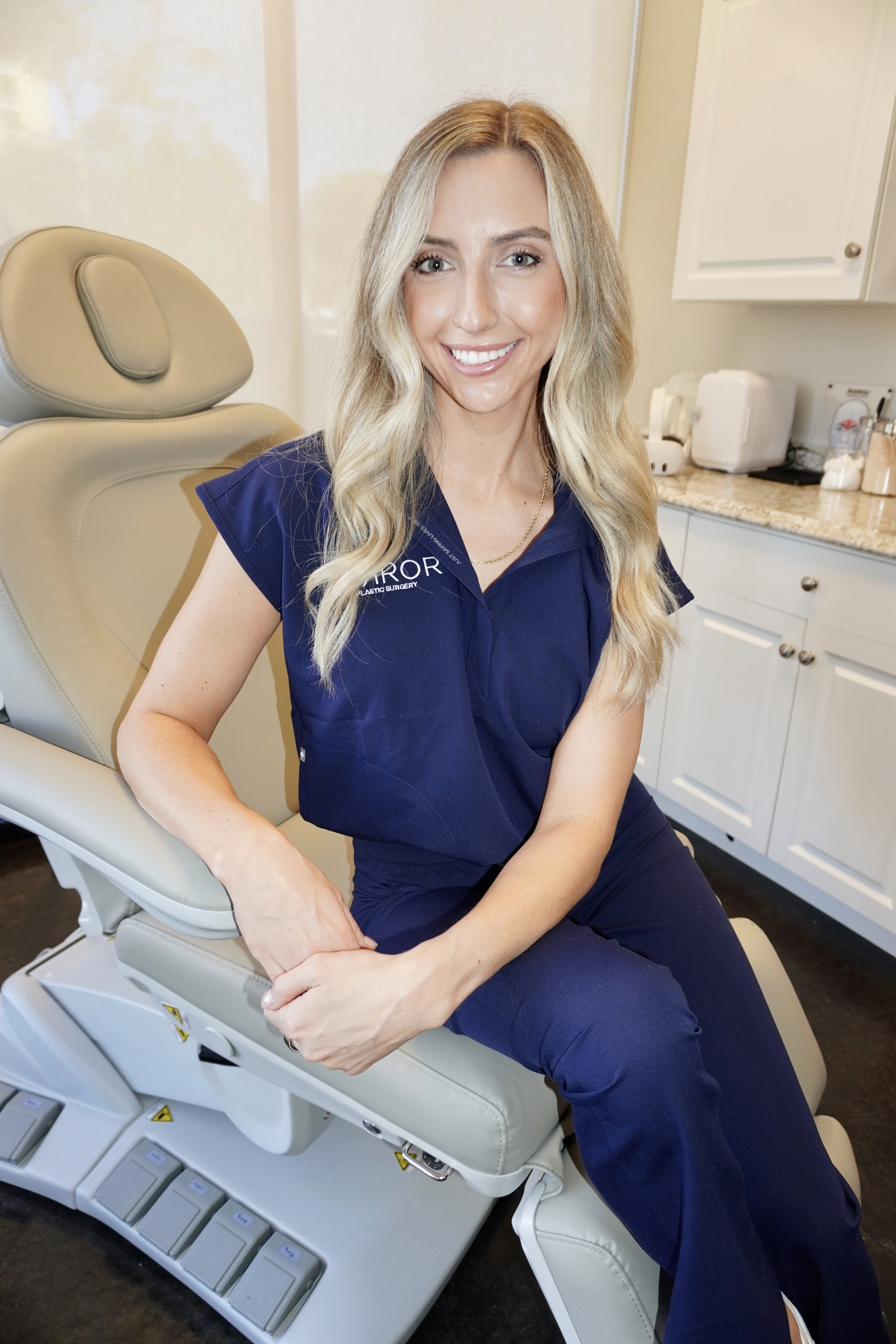
In practice, Ellie often declines or defers treatment in recurring scenarios. A 24-year-old with no visible dynamic lines at rest or in animation, whose main motivation is peer influence, receives counseling on skincare, sun protection, and realistic timelines instead. A 28-year-old with an undisclosed autoimmune condition managed by immunosuppressants undergoes a detailed medical history review before any injection is considered. A patient who received Botox at another practice eight weeks earlier and wants a “touch-up” is asked to return at the 12-week mark to reduce antibody risk. These situations are common and reflect the standard of care that Mirror Plastic Surgery’s top-to-bottom assessment is designed to catch.
Schedule your assessment with Ellie for an honest, anatomy-first evaluation, including a clear “not yet” when the evidence supports it.
Decision Framework: A Self-Check Before You Book
The following framework offers a starting point for reflection and does not replace clinical evaluation.
- Skin quality and dynamic activity: Do you see lines forming at rest, or only during expression? Lines visible only during movement are dynamic and may respond to neuromodulators.1 Lines present at rest may need a different or combined approach.
- Family history: Do close relatives show early static wrinkle formation in the same areas? Genetic patterns can support a clinical indication.
- Lifestyle factors: Sun exposure, smoking, hydration, and sleep quality influence skin aging more than most injectable interventions in the 20s. Addressing these first aligns with the evidence.
- Emotional drivers: Is your motivation rooted in a specific, observable concern, or in social comparison? Ellie explores this distinction directly and without judgment during consultation.
- Treatment history: Have you received Botox within the past 12 weeks, or accumulated high cumulative doses? Interval and dose history shape both safety and efficacy.
If this checklist raises one or more flags, a structured consultation is the next step, not a quick booking at the nearest high-volume clinic.
Limitations of Current Evidence
This review reflects currently available published evidence and FDA labeling as of June 2026. Long-term, prospective data on preventative Botox outcomes specifically in women aged 18–29 remain limited. Individual anatomy, injection technique, product formulation, dosing, and interval all influence safety and efficacy in ways that population-level data cannot fully capture. No published evidence defines a universal “safe” age or dose threshold for preventative use. Every treatment decision requires individualized clinical assessment.
Frequently Asked Questions
Is preventative Botox FDA-approved for women in their 20s?
Yes. As discussed in the FDA labeling section above, BOTOX Cosmetic is approved for adults 18 and older when clinical indications exist. The label does not endorse routine preventative use as a protocol. Age alone does not guarantee suitability or rule you out.
What is the 4-hour rule after Botox, and why does it matter?
As outlined in the side effects section, the 4-hour rule means staying upright and avoiding pressure on treated areas after injection. This precaution helps prevent toxin migration to unintended muscles, particularly the levator palpebrae muscle that lifts the eyelid. Protecting this muscle significantly reduces the risk of temporary eyelid ptosis. Most providers also recommend avoiding strenuous exercise, alcohol, and significant heat exposure for 24 hours.
Can starting Botox in your 20s cause resistance or immunity?
Yes. As detailed in the immunity section above, repeated exposure can prompt the immune system to form neutralizing antibodies that weaken or block the effect over time. The main risk factors are treatment intervals shorter than 12 weeks and high cumulative doses, which become more likely when treatment starts early in life. At Mirror Plastic Surgery, dosing and interval planning are individualized from the first session to reduce this risk.
Who should not get Botox in their 20s?
The absolute contraindications appear in the Safety Checklist table above and include active injection-site infection, known hypersensitivity to botulinum toxin, and neuromuscular junction disorders. Pregnancy and breastfeeding are standard reasons to defer treatment. Beyond medical factors, women with no visible dynamic lines and no family history of early static wrinkles may have no clear indication for preventative treatment at this stage.
How does Mirror Plastic Surgery approach preventative Botox differently?
Mirror Plastic Surgery’s injectable consultations are led by Ellie Pranckevicius, FNP-BC, whose background spans neuroscience ICU nursing, esthetics, and advanced aesthetic nursing. Every consultation includes a comprehensive assessment of medical history, emotional drivers, skin quality, dynamic muscle activity, and treatment history before any recommendation. Ellie frequently advises that treatment is not yet indicated when the evidence supports that conclusion. This approach contrasts with high-volume practices where consultation time is brief and treatment is often the default outcome. The practice’s philosophy places safety first, function second, and aesthetics third.
Conclusion and Your Next Step
Preventative Botox is not inherently unsafe for women in their 20s, and it is not automatically appropriate. FDA labeling allows treatment in adults when clinical indications exist, and current evidence supports safe use when dosing intervals are respected, contraindications are screened, and providers exercise restraint. Risks such as neutralizing antibody formation, ptosis, and asymmetry remain manageable with careful technique and individualized planning. The most important decision factors are anatomy, indication, and the quality of the clinical assessment, not age alone.
At Mirror Plastic Surgery in St. Petersburg, Florida, Ellie Pranckevicius, FNP-BC, brings neuroscience ICU judgment and advanced aesthetic expertise to every injectable consultation. The concierge model ensures your assessment is not rushed, your questions receive evidence-based answers, and “not yet” remains an option when it is the right call.
Request a preventative Botox evaluation with Ellie and receive a safety-first, anatomy-driven assessment of whether treatment makes sense for you right now.
Disclaimer: Results may vary from person to person. Editorial content, before and after images, and patient testimonials do not constitute a guarantee of specific results.
1 Results may vary from person to person. Editorial content, before and after images, and patient testimonials do not constitute a guarantee of specific results.