
Written by: Ellie Pranckevicius, FNP-BC, Aesthetic Nurse Practitioner & Aesthetic Injector | Facial Restoration & Regenerative Injectable Specialist, Mirror Plastic Surgery | Last updated: August 19, 2026
Key Takeaways on Minoxidil, Peptides, and Hair Regrowth
- GHK-Cu copper peptides support hair follicle repair through VEGF upregulation, TGF-beta1 suppression, and collagen remodeling, which differ from minoxidil’s vasodilation effects.
- Published trials show GHK-Cu formulations can increase hair count by 71.5 hairs/cm² at six months with favorable tolerability and no documented initial shedding phase.1
- Minoxidil remains the FDA-approved standard with decades of data, yet up to one-third of users experience scalp irritation or shedding that prompts early discontinuation.1
- Supervised combination protocols that pair minoxidil with copper peptides are emerging as a strong option for treatment-resistant androgenetic alopecia.
- Patients seeking a personalized, lab-guided assessment of peptide candidacy can book an appointment with Ellie at Mirror Plastic Surgery for concierge hair-restoration care.
How GHK-Cu Copper Peptides Support Follicle Repair and Growth
GHK-Cu (glycine-histidine-lysine copper peptide) is a naturally occurring tripeptide-copper complex that supports hair follicle repair through several pathways. It upregulates VEGF, FGF-2, and IGF-1 in dermal papilla cells, suppresses the follicle-miniaturizing cytokine TGF-beta1, activates Wnt/beta-catenin signaling, and increases collagen I and III synthesis in the perifollicular dermis. These combined actions extend the anagen growth phase and rebuild the structural environment that supports hair density.
Meet the Practitioner Guiding Peptide-Based Hair Protocols
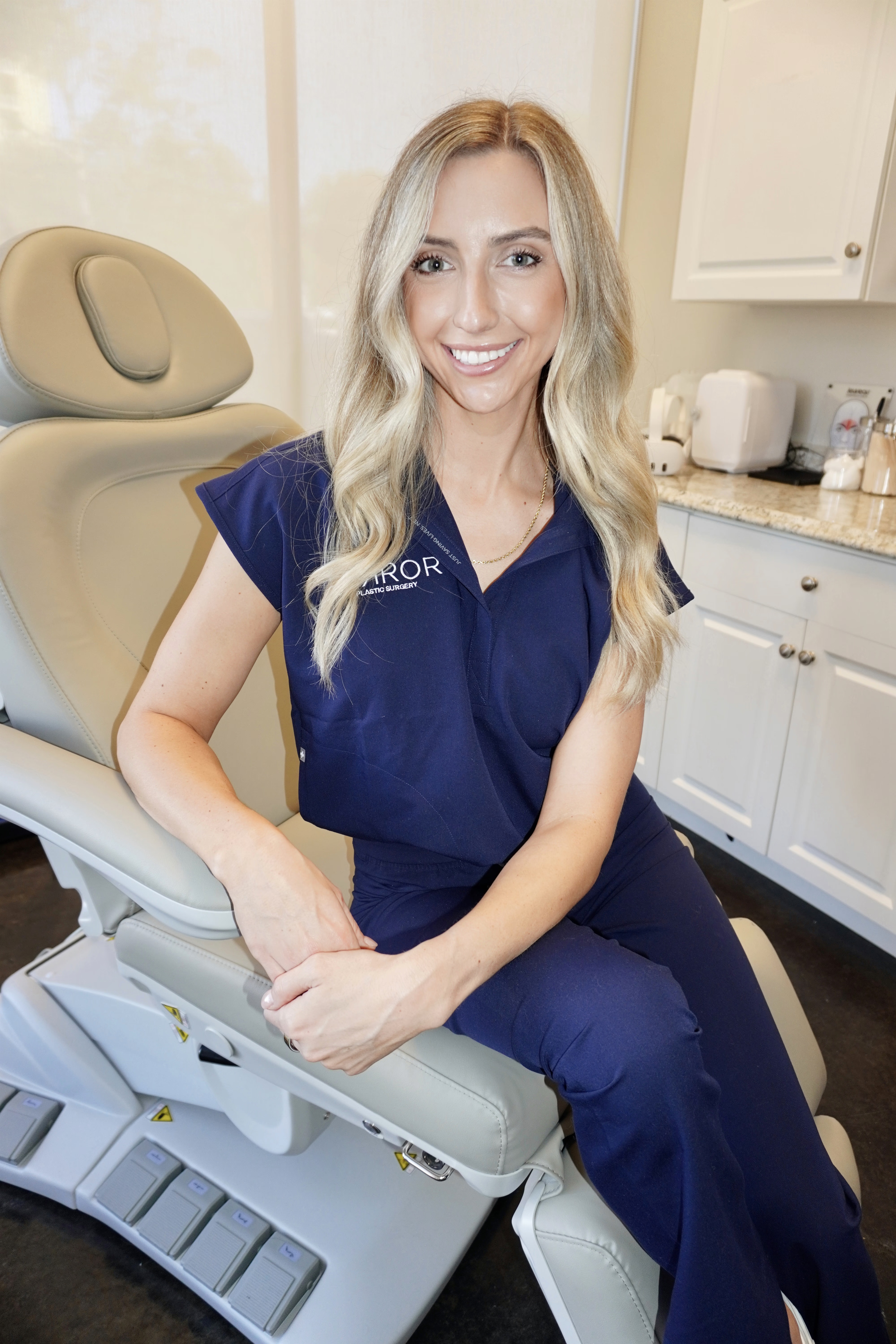
Peptide therapies at Mirror Plastic Surgery are led by Ellie Pranckevicius, FNP-BC, a board-certified Family Nurse Practitioner with experience in high-end aesthetic medicine and four years in the Neuroscience ICU at Tampa General Hospital. Ellie holds a Bachelor’s in Health Science from Boston University, a Bachelor’s and Master’s in Nursing from the University of South Florida, and completed a rigorous aesthetics licensure program before her advanced clinical training. That dual foundation in esthetics and critical-care physiology gives her a clear view of both the cosmetic goals patients bring and the biological mechanisms required to reach those goals safely. Her protocols rely on lab analysis, transparent sourcing from batch-tested suppliers, and ongoing one-on-one concierge support.
Schedule your personalized assessment to receive a lab-guided evaluation of your hair loss pattern and peptide candidacy.
Key Terms for Hair Regrowth: Minoxidil, GHK-Cu, BPC-157, TB-500, and the Glow Stack
Minoxidil is a potassium-channel opener that increases follicular blood flow and prolongs the anagen phase through vasodilation, but it does not directly address dermal papilla cell signaling or follicle stem-cell activity. It has been FDA-approved for androgenetic alopecia since 1988 and requires continuous daily use to maintain results.
GHK-Cu targets follicle biology through the dermal papilla and stem-cell mechanisms described above, operating through pathways distinct from minoxidil’s action on blood flow. Pickart’s 2018 gene expression analysis showed that GHK-Cu modulates 31.2% of human genes, including pathways for VEGF production, collagen synthesis, and anti-inflammatory signaling.
BPC-157 (Body Protective Compound 157) is a systemic anti-inflammatory peptide that supports muscle, tendon, ligament, and joint repair, which can reduce the inflammatory burden that affects scalp tissue health. TB-500 (Thymosin Beta-4) supports soft tissue repair and wound healing, complementing the systemic effects of BPC-157.
The Glow Stack combines GHK-Cu, BPC-157, and TB-500 into a single protocol that addresses systemic inflammation, collagen and elastin decline, and scalp tissue remodeling at the same time. This stack targets hair, skin, and nail health from multiple biological angles under medical supervision.
Head-to-Head Evidence on Tolerability and Regrowth, 2025–2026
The following table compares hair count outcomes and side-effect profiles across several published trials. These data highlight that GHK-Cu formulations can deliver meaningful density gains with favorable tolerability, while minoxidil’s benefits often come with higher rates of scalp irritation.
| Intervention | Study / Source | Hair Count Outcome | Adverse Events |
|---|---|---|---|
| GHK peptide + 5-ALA (low dose, topical spray) | Lee et al. 2016 RCT, n=45 men, 6 months | +71.5 hairs/cm² (2.38× baseline increase)1 | Adverse events evaluated |
| Topical biomimetic peptide formula | Rinaldi et al. 2019 RCT, n=60, 4 months | 68.12% mean scalp hair regrowth (treatment arm)1 | Not reported |
| Minoxidil + dutasteride + copper peptides (microneedling) | Kuceki et al. 2025, JAAD International | Hair regrowth in treatment-resistant AGA | Well tolerated |
| 5% topical minoxidil solution | Olsen et al. 2002 RCT, n=393 men, 48 weeks | Increases in hair count over comparable periods | Scalp irritation more common than with placebo |
Direct head-to-head human trials comparing GHK-Cu alone to minoxidil alone remain limited. As of June 2026, no large multicenter placebo-controlled RCTs compare injectable GHK-Cu mesotherapy to topical GHK-Cu or placebo in diverse populations stratified by severity. The figures above reflect separate study populations and should be interpreted with that context in mind.
Side-Effect Comparison for Minoxidil and GHK-Cu Protocols
| Parameter | Topical Minoxidil | GHK-Cu Peptide Protocols |
|---|---|---|
| Local scalp irritation | Scalp irritation in 5% solution users, with propylene glycol as the primary driver | Favorable tolerability in published trials including Lee et al. 2016 |
| Initial shedding | About 20% of users experience initial shedding that resolves by week 12 in nearly all cases | No initial shedding documented in available peptide studies |
| Ongoing maintenance requirement | Lifelong daily use required, with gains reversing within 3–6 months after stopping | Continuous use required to maintain results, with follicles reverting upon discontinuation |
| Non-responder rate | Up to 1 in 3 women lack sufficient scalp sulfotransferase enzyme | Not yet characterized in large-scale trials |
Managing Minoxidil Shedding and Scalp Irritation
The initial shedding phase associated with topical minoxidil is a documented and frequently cited barrier to adherence. Shedding typically begins 2–4 weeks after starting minoxidil, peaks around the second month, and resolves within 6–8 weeks as follicles transition from telogen to anagen. This response is physiologic, yet it often causes significant anxiety and remains a common reason for early discontinuation.
Scalp irritation represents the other leading tolerability concern. Propylene glycol in liquid minoxidil formulations drives most contact dermatitis cases, and facial hypertrichosis can occur at lower rates with foam formulations compared to solution.
Patients who cannot tolerate minoxidil’s shedding or irritation profile often consider GHK-Cu protocols as a mechanistically distinct alternative. No initial shedding increase has been documented with peptide serums, and the tolerability profile across published trials has remained consistently favorable. The evidence base for peptides as a standalone replacement for minoxidil in moderate-to-severe androgenetic alopecia is still smaller than minoxidil’s 35-year clinical record, and individual response varies.
Combining or Transitioning Therapies with Clinical Oversight
The most clinically supported approach for treatment-resistant androgenetic alopecia often involves layering therapies rather than replacing them outright. The Kuceki et al. 2025 study in JAAD International evaluated a combined minoxidil, dutasteride, and copper peptide microneedling protocol for treatment-resistant AGA.
Patients starting fresh benefit from a clear sequence. Beginning both minoxidil and a peptide protocol at the same time makes it difficult to attribute outcomes to either agent, so a sequential introduction over 3–4 months allows clearer assessment of individual response. Patients already established on minoxidil can add topical GHK-Cu support on non-needling days or after microchannels have closed, keeping minoxidil on its standard schedule as the evidence-based foundation.
At Mirror Plastic Surgery, Ellie Pranckevicius guides transitions and combinations using in-depth lab panels and detailed medical history review to determine the safest and most effective protocol for each patient. Because peptides are not FDA-regulated, sourcing becomes a critical safety factor, and Ellie uses only suppliers with rigorous batch testing to ensure purity and potency. That level of quality control, combined with ongoing clinical oversight, is not available through online peptide retailers or generalized telemedicine platforms that ship compounds without individualized assessment.
Discuss a supervised protocol with Ellie to see whether a combination or transition approach fits your hair loss stage and history.
Frequently Asked Questions
Is peptide therapy better than minoxidil for hair growth?
Neither therapy works better for every patient in every situation. Minoxidil has a 35-year clinical record and FDA approval for androgenetic alopecia, which makes it the established standard of care. GHK-Cu copper peptides act through distinct mechanisms that include dermal papilla support, TGF-beta1 suppression, and collagen remodeling, which minoxidil does not address directly. Patients who cannot tolerate minoxidil’s shedding or irritation, or who have not responded adequately, may benefit from peptide protocols that show a favorable tolerability profile in published trials. Many patients with treatment-resistant hair loss achieve the strongest results with a supervised combination of both, as recent clinical data suggest. An individualized assessment that includes lab work offers the most reliable starting point.
What are the best peptides for hair growth?
GHK-Cu is the most extensively studied copper peptide for hair growth, with documented effects on VEGF upregulation, collagen synthesis, TGF-beta1 suppression, and Wnt/beta-catenin activation. The Glow Stack, which combines GHK-Cu with BPC-157 and TB-500, addresses systemic inflammation and tissue repair alongside direct follicle signaling, so it functions as a broader protocol for patients whose hair loss includes an inflammatory component. Other peptides such as AHK-Cu show evidence of direct dermal papilla cell proliferation and 5-alpha reductase modulation in cell culture studies. The optimal peptide or stack depends on the individual’s hair loss pattern, lab results, and overall health profile, which Ellie Pranckevicius evaluates during a comprehensive consultation at Mirror Plastic Surgery.
Can copper peptides and minoxidil be used together?
Topical GHK-Cu and minoxidil can be used together safely based on current data. There is no known pharmacological incompatibility, and clinical research supports their combined use. The Kuceki et al. 2025 study investigated microneedling with copper peptides in patients who continued topical minoxidil. Hair restoration experts also report that peptides are frequently added alongside minoxidil to support scalp comfort and improve overall outcomes. Sequencing matters in practice, so applying GHK-Cu on non-needling days or after microchannels have closed can reduce irritation risk. Medical supervision confirms that this combination fits your specific scalp condition and health history.
What are the alternatives to the minoxidil shedding phase?
The initial shedding phase with minoxidil, described earlier as a 2–8 week process, affects approximately 20% of users and reflects follicle synchronization into the anagen phase. Patients who find this phase intolerable can consider several strategies. Switching from a propylene glycol-containing solution to a foam formulation often reduces irritation, although it does not remove the shedding risk. GHK-Cu peptide protocols have not produced documented initial shedding in published trials, which makes them a lower-disruption option for patients with early or mild androgenetic alopecia. A 2025 study reported that a cytokine and peptide serum achieved a 54.6% reduction in hair shedding in women with telogen effluvium. Patients with more advanced loss may benefit from a supervised combination protocol that introduces peptides first and adds minoxidil gradually, which can soften the perceived severity of shedding. Ellie Pranckevicius designs these transition plans based on each patient’s prior treatment history and current scalp status.
What results can I expect from GHK-Cu for hair growth?
Published clinical data show meaningful improvements in hair count and density with GHK-Cu-containing formulations, including the 71.5 hairs/cm² increase reported in the Lee et al. 2016 trial mentioned earlier. A mouse study found that GHK-Cu microemulsion accelerated entry into the hair growth phase faster than minoxidil. Some small trials have also shown improvements in hair density with GHK-Cu protocols. Visible GHK-Cu hair growth results in humans typically require three to six months of consistent use according to anecdotal reports.1 Individual outcomes vary based on genetics, hair loss severity, scalp health, and adherence to the protocol.1 Results do not remain permanent after discontinuation, so ongoing maintenance is required to sustain density gains.
Choosing a Sustainable Plan for Long-Term Hair Density
Topical minoxidil and GHK-Cu copper peptides address androgenetic alopecia through different biological pathways that can complement each other. Minoxidil delivers vasodilation and anagen prolongation through a well-characterized mechanism with decades of safety data, yet it carries a documented shedding phase, tolerability limitations driven largely by propylene glycol vehicles, and a lifelong maintenance requirement. GHK-Cu works through collagen remodeling, growth factor upregulation, and anti-inflammatory gene modulation, which support the follicular microenvironment more broadly, and published trials report a favorable tolerability profile with no documented initial shedding. Both therapies require ongoing use to sustain results.
Current evidence increasingly supports supervised combination protocols for patients with treatment-resistant hair loss, and clinical data on copper peptide plus minoxidil layering appear promising. The same evidence does not support a single universal recommendation, because non-responder rates, enzyme-level variability, inflammatory burden, and hair loss severity all influence which protocol or combination fits a given individual.
Mirror Plastic Surgery’s concierge model addresses these variables directly. Ellie Pranckevicius conducts comprehensive 30–60 minute consultations that include medical history review and, when indicated, lab panels to identify root causes before any protocol is designed. Peptides come from suppliers with rigorous batch testing, and patients receive direct ongoing support throughout treatment. This level of personalized, lab-guided oversight often marks the difference between a sustainable outcome and an unsupervised experiment.
Book an appointment with Ellie at Mirror Plastic Surgery in St. Petersburg, Florida, or remotely across the United States, to begin a medically supervised hair restoration protocol tailored to your biology and goals.
1 Results may vary from person to person. Editorial content, before and after images, and patient testimonials do not constitute a guarantee of specific results.
Peptide therapy is intended for wellness and optimization purposes and is not prescribed to diagnose, treat, cure, or prevent disease unless specifically stated. Many peptides are not FDA-approved and may be used off-label. Some have limited long-term safety data, with a potential for unknown risks, complications, or desensitization with prolonged use.