
Written by: Ellie Pranckevicius, FNP-BC, Aesthetic Nurse Practitioner & Aesthetic Injector | Facial Restoration & Regenerative Injectable Specialist, Mirror Plastic Surgery | Last updated: August 18, 2026
Key Takeaways on Stem Cell Peptide Hair Treatment
- Stem cell peptide hair treatment uses bioactive signaling peptides like GHK-CU rather than plant-derived extracts. GHK-CU modulates over 4,000 human genes to support follicle cycling and calm inflammation.
- GHK-CU differs from topical plant stem cell serums by addressing angiogenesis, NF-κB-mediated inflammation, and copper-dependent collagen remodeling around the follicle sheath at the same time.
- Medically supervised GHK-CU protocols at Mirror Plastic Surgery start with a 30–60 minute consultation, lab review, and personalized dosing to support safety and efficacy.
- Clinical evidence shows GHK-CU can increase hair density within 3–6 months, with benefits similar to minoxidil.1 Continued use is required to maintain results.
- Patients who want a clinically grounded GHK-CU hair protocol can schedule a consultation with Ellie at Mirror Plastic Surgery for lab-monitored, concierge-level care.
What Stem Cell Peptide Hair Treatment Means in Practice
In clinical and regulatory language, a stem cell treatment involves living human or animal stem cells that can differentiate into target tissue. Most consumer products labeled “stem cell” for hair contain neither living cells nor human-derived material. They usually contain conditioned media or extracts from plant cell cultures such as apple, argan, or edelweiss that supply antioxidants and growth-factor analogs to the scalp surface.
Bioactive signaling peptides such as GHK-CU work through a different mechanism. GHK-CU is a naturally occurring tripeptide, glycine-histidine-lysine, bound to a copper ion. GHK-CU modulates the expression of over 4,000 human genes. It upregulates pathways involved in stem cell proliferation, DNA repair, antioxidant response, and anti-inflammatory signaling. It also downregulates genes associated with inflammation and tissue destruction. That gene-level activity differs from the surface-level antioxidant delivery of plant extracts.
How GHK-CU Differs from Topical Plant Stem Cell Serums
Plant stem cell serums studied for androgenetic alopecia, such as Platycladus orientalis leaf extract, work primarily through growth-factor upregulation and anti-apoptosis in dermal papilla cells. A 2026 in vitro study found that the extract increased dermal papilla cell numbers by activating the VEGFA/Bcl-2 signaling pathway, an effect comparable to minoxidil in that model.1 The mechanism focuses on growth-factor upregulation and cell survival signaling.
GHK-CU acts across a broader set of pathways at once. The 2023 Bioactive Materials paper on ionic-liquid microemulsions shows improved topical delivery of GHK-CU for hair growth in mice and other work identifies VEGF and Wnt/β-catenin mechanisms that regulate hair follicle cycling.1 Beyond angiogenesis, GHK-CU suppresses NF-κB-mediated inflammation and perifollicular lymphocytic infiltrate, which supports inflammation control in androgenetic alopecia independent of DHT blockade.
GHK-CU also delivers copper as a cofactor for superoxide dismutase antioxidant activity and lysyl oxidase-mediated collagen cross-linking. This activity helps new collagen mature into load-bearing extracellular matrix around the dermal sheath. Plant extracts do not reproduce this copper-dependent enzymatic effect.
Meet Ellie Pranckevicius, FNP-BC, Your Peptide Protocol Specialist
Peptide protocols at Mirror Plastic Surgery are led by Ellie Pranckevicius, FNP-BC, a board-certified Family Nurse Practitioner. Her background spans esthetician training, four years in the Neuroscience ICU at Tampa General Hospital, and graduate nursing education at the University of South Florida. Her ICU experience managing complex physiological cases gives her a working understanding of metabolic health and recovery capacity that most aesthetic providers do not bring into a peptide consultation.
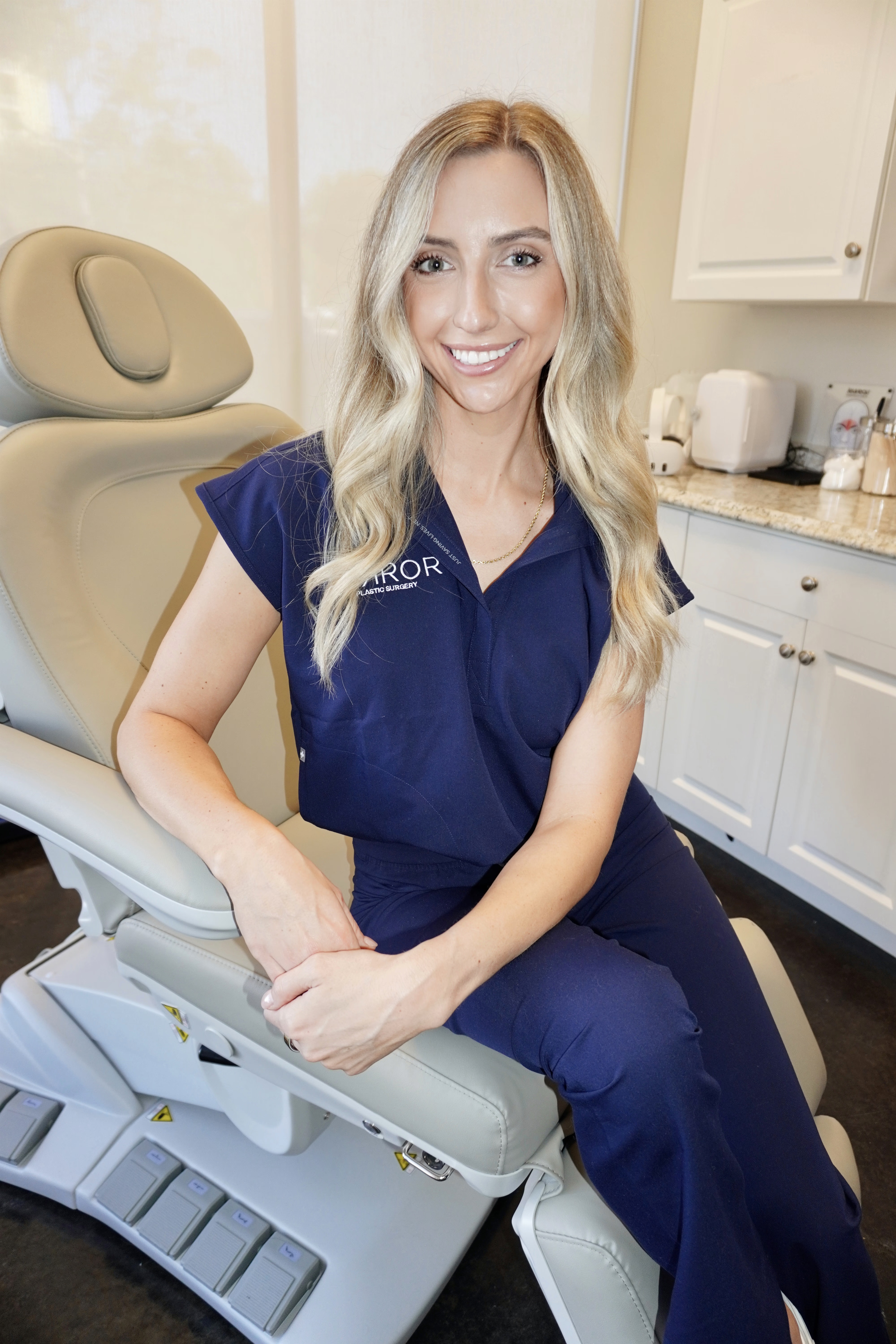
Ellie began her career at a high-end medical spa in Boston, where she developed a strong command of skin physiology and aesthetic assessment. She then pursued her nurse practitioner credentials. This dual perspective shapes how she evaluates the cosmetic goals a patient wants to achieve and the clinical science required to reach them safely.
Ellie’s approach centers on education. She explains the physiology behind each recommendation in accessible terms so patients understand what they are taking and why they are taking it. When a service or product is not yet warranted, she says so clearly.
Schedule a consultation with Ellie to explore a personalized peptide protocol tailored to your hair-loss pattern and health history.
Key Peptide and Hair Biology Terms for This Protocol
The following definitions create a plain-language foundation for evaluating any peptide hair protocol and clarify how each component fits into treatment planning.
- GHK-CU (Copper Tripeptide-1): A naturally occurring peptide–copper complex that modulates gene expression, promotes collagen synthesis, extends the anagen growth phase of the hair cycle, and suppresses perifollicular inflammation.
- BPC-157 (Body Protective Compound 157): A synthetic peptide derived from a gastric protein. BPC-157 activates VEGFR2 and the PI3K-Akt-eNOS signaling cascade to drive endothelial cell proliferation and new vessel formation. This activity makes it relevant for systemic inflammation and tissue repair. No published data supports its use for hair follicle applications specifically.
- TB-500 (Thymosin Beta-4): A peptide involved in soft-tissue repair and wound healing. TB-500 lacks any controlled human trials for hair loss and is included in the Mirror Plastic Surgery Glow Stack for its systemic anti-inflammatory contribution rather than direct follicle activity.
- Follicle Anchoring: The structural integrity of the connective tissue sheath surrounding the hair follicle. GHK-CU supports follicle anchoring through copper-dependent remodeling of the extracellular matrix collagen scaffold surrounding the dermal sheath.
- Collagen Remodeling: The process by which old or disorganized collagen fibers are broken down and replaced with structurally sound cross-linked collagen. GHK-CU facilitates this process through lysyl oxidase activation, a copper-dependent enzyme.
These mechanisms explain why a medically supervised protocol focuses on both follicle biology and overall health markers.
What a Medically Supervised GHK-CU Hair Protocol Includes
At Mirror Plastic Surgery, the process starts with a 30–60 minute consultation with Ellie. She reviews medical history, current medications, and hair-loss pattern to determine candidacy and rule out contraindications. This review includes Wilson’s disease and other copper-handling disorders, which are absolute contraindications for copper-peptide therapies.
Where clinically indicated, lab panels are ordered or reviewed before a protocol is finalized. This step grounds dosing decisions in each patient’s baseline health markers. Those results guide the selection of custom peptide stacks based on individual goals. For hair-focused protocols, GHK-CU serves as the primary agent. It may be combined with BPC-157 and TB-500 as part of the Glow Stack when systemic inflammation also needs attention.
Once the protocol is finalized, patients receive detailed reconstitution instructions, often with video demonstrations. They have direct access to Ellie via text for ongoing questions throughout treatment. The entire process, from consultation through prescription and shipping, can be completed remotely across the United States.
What 2024–2026 Research Shows About GHK-CU and Hair Density
A 2016 randomized controlled trial found that a topical complex of 5-ALA and GHK peptide increased hair count versus placebo, with a mean gain of 71.5 hairs at 50 mg/ml.1 The study did not compare 1% GHK-CU directly to 5% minoxidil. Separate research has explored combining GHK-CU with minoxidil in pattern hair loss.
The table below compares GHK-CU and topical minoxidil across four dimensions. All figures come from the cited sources. Where direct numerical comparison is not possible, the cell summarizes the available evidence.
| Dimension | GHK-CU (Topical) | Topical Minoxidil (5%) | Evidence Level |
|---|---|---|---|
| Hair-Density Change (6 months) | Increased hair count versus placebo in small trial of GHK peptide complex1 | Increases in hair count from multiple RCTs | GHK-CU: small trials, no large RCT replication. Minoxidil: Grade A, multiple RCTs |
| Tolerability | Generally well tolerated with low irritation | Initial shedding phase common, contact dermatitis possible | Data from small trials for GHK-CU, extensive for minoxidil |
| Primary Mechanism | Anagen extension, collagen remodeling, NF-κB suppression, VEGF upregulation, Wnt/β-catenin activation | Anagen phase extension, vellus-to-terminal hair conversion, does not block DHT | Mechanistic data from preclinical and in vitro studies |
| Maintenance Requirement | Effects reverse upon stopping, continued use required | Benefits reverse to original trajectory within 3–6 months after discontinuation | Consistent across reviewed sources |
The British Association of Dermatologists and American Academy of Dermatology focus on minoxidil and finasteride as first-line therapies for pattern hair loss. Minoxidil and finasteride carry the highest evidence grades for androgenetic alopecia. GHK-CU functions best as a complementary intervention rather than a standalone replacement for first-line therapies.
Discuss your lab results with Ellie to determine whether adding GHK-CU to your current regimen is supported by your health profile.
Timeline for Results with Peptide Hair Treatments
Users of GHK-CU may see reduced shedding and early density changes at 8–10 weeks, with measurable density gains after about 3 months or over 2–6 months of use.1 A minimum evaluation window of 12 weeks is needed before drawing conclusions. Clinically meaningful assessment usually requires 6 months, with early signs of response sometimes visible at 3 months.1
These timelines are similar to minoxidil, for which typical visible change occurs after 3 to 6 months, often with an initial shedding phase.1 Patients should not interpret early shedding as treatment failure. Shedding reflects the follicle cycling response to treatment. As noted in the comparison above, maintenance is not optional, because benefits diminish after discontinuation in line with follicle-cycling dependency.
Risks of Unregulated Stem Cell Peptide Products
Injectable “research-grade” GHK-CU sold to consumers for hair loss is labeled “not for human use” and carries documented purity hazards including endotoxins, bacteria, heavy metals, and inaccurate dosing. The absence of third-party batch testing in gray-market products means a consumer cannot verify active peptide concentration, sterility, or the absence of contaminants.
Beyond sourcing quality concerns, several clinical considerations apply to all GHK-CU protocols regardless of delivery route.
- Copper contraindications: Wilson’s disease and other copper-handling disorders are absolute contraindications.
- Follicle viability: Peptide-based scalp treatments are not appropriate for patients with advanced bald areas, because miniaturized follicles that have already disappeared cannot be rebuilt by any current peptide formulation.
- Result variability: Realistic outcomes vary widely based on genetics, age, stage of hair loss, and consistency of use. No peptide guarantees regrowth.
- Delivery method: Topical GHK-CU is the better-studied delivery route for hair outcomes. Subcutaneous injection lacks comparative data showing superior hair results and is more suited to systemic wound-healing applications.
- Microneedling enhancement: Microneedling before topical GHK-CU application can increase dermal absorption compared to topical application alone.
Medical supervision separates a structured protocol from an unmonitored experiment. Clinical supervision with pharmaceutical-grade formulations and personalized dosing is required for GHK-CU protocols to separate effective treatment from an expensive experiment.
Why Mirror Plastic Surgery for Stem Cell Peptide Hair Treatment
Mirror Plastic Surgery’s concierge model addresses three primary gaps in the current peptide hair market: sourcing quality, personalized dosing, and ongoing clinical oversight. Peptides come from providers with rigorous batch testing. Lab panels are reviewed or ordered before a protocol is finalized. Ellie remains accessible via text throughout the protocol, and telemedicine appointments are available for mid-cycle reassessment.
The practice serves patients in St. Petersburg and Tampa, Florida, and remotely across the United States, including Hawaii and Alaska. For patients who have used minoxidil without satisfactory results, a supervised GHK-CU adjunct protocol designed around individual lab values, hair-loss phenotype, and treatment history offers a clinically grounded next step rather than a lateral move to another unmonitored topical.
Start your lab-monitored GHK-CU protocol with concierge-level oversight from Ellie.
Frequently Asked Questions
Is GHK-CU FDA-approved for hair loss?
No peptide, including GHK-CU, is FDA-approved as a standalone hair-loss treatment as of 2026. All use remains off-label or investigational. The regulatory risk relates to how and where it is obtained rather than to the molecule alone. Sourcing from a medically supervised provider who uses batch-tested, pharmaceutical-grade formulations substantially reduces the contamination and dosing risks associated with gray-market products.
At Mirror Plastic Surgery, Ellie reviews each patient’s health profile before recommending any peptide. Informed consent about the current evidence level is part of every consultation.
How does GHK-CU compare to minoxidil for androgenetic alopecia?
Minoxidil holds Grade A evidence from multiple randomized controlled trials and remains the guideline-recommended first-line topical treatment for androgenetic alopecia, as outlined earlier in the research section. GHK-CU has small-cohort human trial data showing hair-density improvements comparable to 5% minoxidil over 6 months, with favorable tolerability in those studies, but it has not been replicated in large independent trials.
The two agents work through different mechanisms. Minoxidil primarily extends the anagen phase and converts vellus to terminal hairs. GHK-CU also addresses perifollicular inflammation, extracellular matrix remodeling, and collagen cross-linking. The strongest protocols combine both agents to target different pathways at the same time. GHK-CU does not block DHT and does not replace finasteride or minoxidil in patients with androgenetic alopecia.
What happens if I stop taking GHK-CU?
Benefits from GHK-CU, like those from minoxidil, diminish after discontinuation. Hair follicle cycling changes that were sustained by the peptide gradually revert, and shedding may return to its pre-treatment trajectory. Continued use through a maintenance protocol is the standard expectation rather than a finite course of therapy.
Ellie structures protocols with this long-term view in mind. She establishes realistic maintenance schedules during the initial consultation instead of presenting peptide therapy as a one-time intervention.
Am I a candidate for a GHK-CU hair protocol if I have tried minoxidil without success?
Candidacy depends on several factors, including the current stage of hair loss, follicle viability, overall health profile, and any contraindications such as copper-handling disorders. Patients with advanced bald areas where follicles have fully miniaturized are unlikely to respond to any peptide protocol. Patients with active androgenetic alopecia or diffuse thinning who retain viable follicles are more likely to benefit from a GHK-CU adjunct.
A thorough consultation with Ellie, which may include lab panels and a review of prior treatment history, is the appropriate starting point for determining candidacy.
What is the difference between buying GHK-CU online and getting it through Mirror Plastic Surgery?
Products sold online as research peptides are labeled “not for human use” and are not subject to the same quality controls as compounded pharmaceutical-grade formulations. As discussed in the risks section, gray-market peptides carry documented contamination and dosing hazards that pharmaceutical-grade formulations are designed to eliminate.
At Mirror Plastic Surgery, peptides are sourced from reputable providers with batch testing. Protocols are personalized to individual lab results and health history. Ellie provides direct ongoing support throughout the treatment period. This clinical oversight model is designed to create a structured, monitored protocol instead of an unsupervised experiment with an unknown product.
1 Results may vary from person to person. Editorial content, before and after images, and patient testimonials do not constitute a guarantee of specific results.
Peptide therapy is intended for wellness and optimization purposes and is not prescribed to diagnose, treat, cure, or prevent disease unless specifically stated. Many peptides are not FDA-approved and may be used off-label. Some have limited long-term safety data, with a potential for unknown risks, complications, or desensitization with prolonged use.