
Written by: Dr. Akash Chandawarkar, Board Certified Plastic Surgeon, Mirror Plastic Surgery | Last updated: July 18, 2026
Key Takeaways for Tampa Bay Patients
- Concierge plastic surgery practices limit daily surgical volume to one or two cases and provide hour-long consultations with direct surgeon access.
- Patients in the Tampa Bay area increasingly choose this model after rushed consultations and generic treatment plans at high-volume practices.
- Objective evaluation of any plastic surgeon should focus on ABPS board certification, fellowship training, and a documented safety record in accredited facilities.
- The safety-function-aesthetics hierarchy keeps patient safety first, functional restoration second, and aesthetic outcomes third.
- Patients ready to explore a true concierge experience can book a consultation at Mirror Plastic Surgery to discuss their goals with Dr. Akash.
Why Tampa Bay Patients Are Moving Away from High-Volume Surgery
High-volume aesthetic practices routinely schedule five to ten surgical cases per day. At that pace, consultation time contracts, pre-operative assessment becomes abbreviated, and the surgeon’s attention divides across multiple operating rooms. Tampa Bay patients who have experienced this model report consistent frustrations: generic treatment plans, limited access to their surgeon after discharge, and outcomes that favor speed over anatomical precision.
The demand for an alternative is measurable. The U.S. concierge medicine market reached approximately $7.35 billion in 2024 and is projected to grow at over 10% per year through 2030, reflecting a broad shift toward individualized, lower-volume care. In aesthetic surgery, the 2025 AAFPRS Annual Survey found that patients increasingly seek natural-looking results and wish to avoid an overdone appearance, driving demand for practices that prioritize restraint and anatomical preservation over volume. These patient preferences directly shape what a true concierge aesthetic practice must deliver in daily operations.
What a True Concierge Plastic Surgery Practice Delivers
A true concierge aesthetic practice must embody all ten core values: Integrity, Courtesy, personalized Information, Direction, priority Access, Amenity, gracious Communication, Convenience, Loyalty, and Goodwill. Missing even one value signals a marketing label rather than a genuine concierge model. These values translate into specific operational features that separate authentic concierge practices from high-volume alternatives and directly affect patient experience and outcomes.
- Limited daily surgical volume. Many premium practices in the United States perform a limited number of procedures per day with significant surgeon hands-on involvement. Mirror Plastic Surgery adheres to this standard, performing one to two surgeries per day.
- Extended consultations. Hour-long initial assessments allow a thorough top-to-bottom anatomical evaluation, clear education on procedural rationale, and honest discussion of risks. This structure replaces abbreviated, booking-focused appointments common in high-volume settings.
- Direct surgeon access. Concierge physicians are typically directly available to patients and respond more quickly, often the same day, than providers in conventional practices. This access reduces anxiety and supports smoother recovery.
- Accredited surgical facilities. The ISAPS Four Diamond Factors require that the surgical setting be accredited or certified by recognized national bodies, confirming compliance with safety protocols.
- Supplier-neutral, evidence-based planning. Treatment recommendations follow anatomical science and documented efficacy, not product quotas or promotional incentives.
- Transparent, no-surprise communication. Concierge practices provide thorough guidance with no surprises in treatment or pricing and focus on the individual rather than promotions.
- Continuity of care. Post-operative follow-up remains structured and accessible and is managed by the operating surgeon’s team rather than rotating staff.
How to Identify the Top Plastic Surgeon in Tampa, Florida
Objective evaluation of any plastic surgeon starts with verifiable credentials, not marketing language. The criteria that matter most include board certification by the American Board of Plastic Surgery (ABPS), fellowship training in the relevant subspecialty, surgical volume concentrated in the specific procedures you seek, and a documented safety record in accredited facilities.
The ABPS is the only board recognized by the American Board of Medical Specialties for certifying plastic surgeons in the United States, covering comprehensive expertise in both cosmetic and reconstructive procedures across the entire body. Certification requires at minimum six years of post-medical school surgical training, submission of a personal surgical case list, and passage of rigorous written and oral examinations.
Dr. Akash is the lead surgeon at Mirror Plastic Surgery in St. Petersburg, Florida. He is board certified by the American Board of Plastic Surgery and has been named in Newsweek’s America’s Best Plastic Surgeons list for two consecutive years. His training pathway, detailed below, represents one of the most integrated academic and clinical preparation routes available in the field.
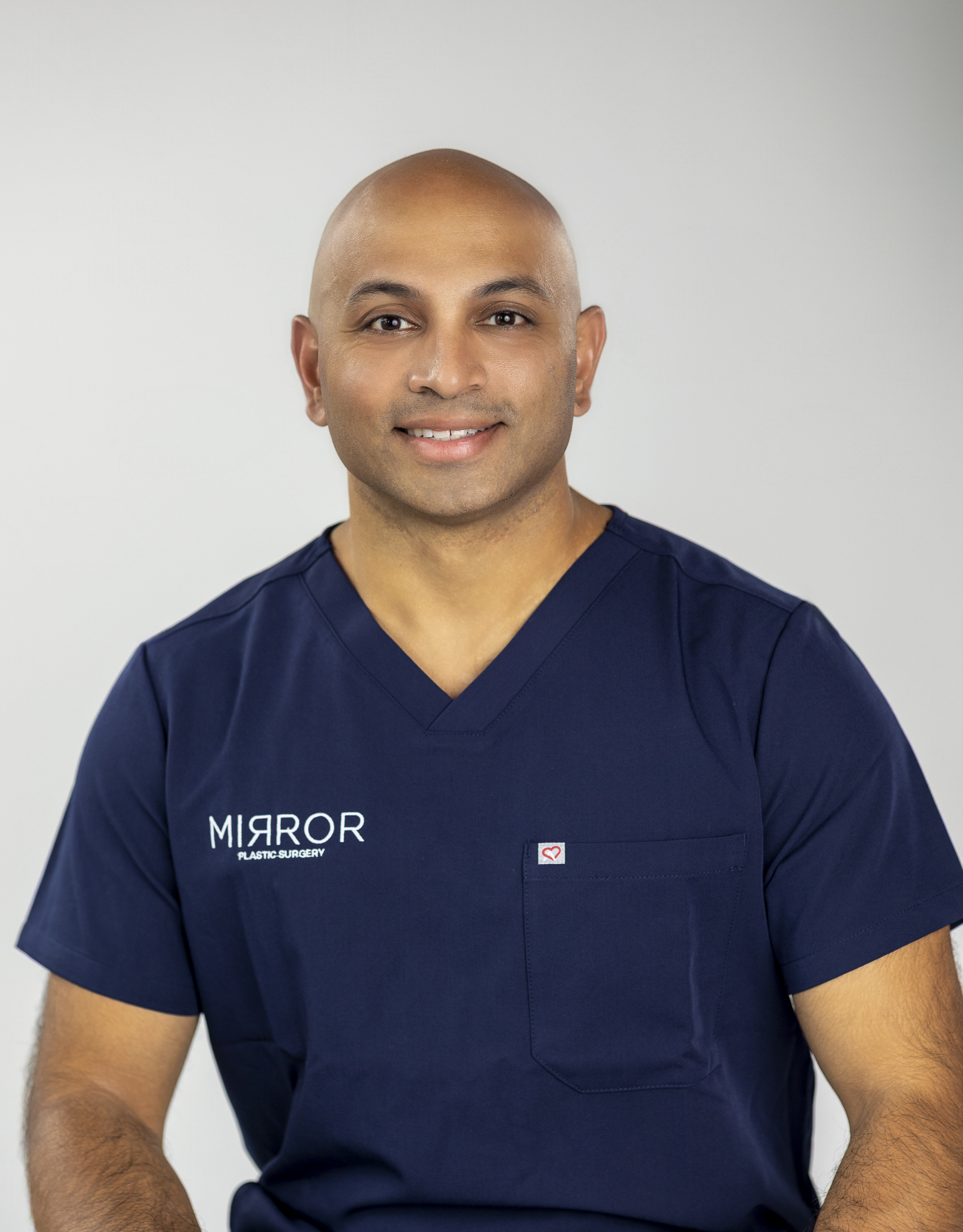
Book a consultation with Dr. Akash to discuss your goals with a surgeon whose credentials are independently verifiable and whose practice follows a limited daily volume model.
How Dr. Akash’s Training Compares to Typical Pathways
The table below compares standard plastic surgery training benchmarks with Dr. Akash’s documented training pathway. All figures are drawn from publicly verifiable sources.
| Training Element | Standard ABPS Pathway | Dr. Akash’s Pathway | Significance |
|---|---|---|---|
| Medical Degree | Accredited U.S. medical school | Harvard Medical School (cum laude, Honors), via the Harvard-MIT Division of Health Sciences and Technology, a program integrating rigorous scientific research with clinical medicine | HST is a highly selective physician-scientist program combining MIT engineering and Harvard clinical training |
| Surgical Residency | 6–7 years post-medical school; integrated programs accept fewer than 200 residents annually nationwide | Seven-year integrated plastic and reconstructive surgery residency at Johns Hopkins University, including rotations at Johns Hopkins Hospital, the R Adams Cowley Shock Trauma Center, and the Curtis National Hand Center | Johns Hopkins is widely regarded as one of the world’s leading surgical training programs, and trauma and microsurgery rotations build deep anatomical fluency |
| Aesthetic Fellowship | Optional 1–2 year focused aesthetic surgery fellowship after residency | Aesthetic Surgery Fellowship at the Manhattan Eye, Ear and Throat Hospital (MEETH) / Lenox Hill Hospital, a highly competitive program providing advanced training in facial rejuvenation, breast surgery, and body contouring | An aesthetic surgery fellowship develops refined technical skills and aesthetic judgment that distinguish exceptional results from competent ones |
| Innovation Training | Not a standard residency component | Stanford University Biodesign Innovation Fellowship, training physician-innovators to identify unmet clinical needs and develop technological solutions | Provides direct engagement with emerging surgical technologies and evidence evaluation frameworks |
How Mirror Plastic Surgery Uses the Safety-Function-Aesthetics Hierarchy
Mirror Plastic Surgery operates on an explicit three-tier hierarchy: safety first, function second, and aesthetics third. This ordering directly shapes how surgical plans are constructed, which facilities are used, and how outcomes are evaluated over time.
Safety includes rigorous pre-operative evaluation using in-office diagnostic tools such as ultrasound, board-certified physician anesthesiologists, and procedures performed exclusively in accredited surgical facilities. As noted in the ISAPS Four Diamond Factors framework above, facility accreditation confirms compliance with safety protocols. Dr. Akash’s ABPS certification also confers hospital privileges, which provide a verified pathway for managing rare complications. The practice also advises against combining too many procedures simultaneously, because evidence shows that extensive combinations can sharply increase complication rates.
Function is treated as a prerequisite for durable aesthetic outcomes. Many procedures at Mirror Plastic Surgery aim to restore or improve function, such as alleviating back or neck pain associated with breast issues, correcting animation deformities from implants, or restoring abdominal muscle integrity after pregnancy or weight loss. A long-term analysis of more than 9,000 patients found that facial rejuvenation performed according to anatomical indication rather than age alone resulted in predictable healing, durable outcomes, and sustained satisfaction over decades1.
Aesthetics emerge from the integration of safety and function. By restoring underlying structures and anatomy first, the practice produces natural, athletic, and timeless results rather than outcomes that require early revision.1
Recovery Timelines and How to Reduce Regret
Recovery after cosmetic surgery in 2026 follows standardized phases: intensive rest for the first 24–48 hours, return to desk work in one to two weeks, normal daily activities in two to four weeks, and strenuous exercise restricted until four to six weeks, with full visible results emerging over several months1. This framework helps patients plan work, childcare, and social commitments realistically.
For combined breast and body procedures such as a mommy makeover, the wound healing phase lasts two to three months, and patients should plan at least three to six months ahead for involved procedures to allow the body to heal properly and for most swelling to subside. The distinction between “event-ready” and “fully healed” is clinically meaningful. Event-ready means a patient can attend an outing while still actively healing, while full healing, including scar maturation and zero residual swelling, can take up to a full year.1
Regret minimization in 2026 centers on subtlety and anatomical preservation. The 2025 AAFPRS Annual Survey found that surgeons are responding to patient demand by prioritizing anatomical preservation, restraint, and subtle early interventions over dramatic transformations, with subtlety described as the new status symbol. Factors that reduce revision risk include thorough pre-operative anatomical assessment, evidence-based product selection, limiting the number of procedures combined in a single session, and strict adherence to post-operative instructions.
Serious complications from plastic surgery remain rare in 2026 when procedures are performed by board-certified surgeons in accredited facilities. Complication rates for tumescent liposuction performed by board-certified plastic surgeons in accredited facilities are generally low.1
Overview of Face, Breast, and Body Procedures at Mirror Plastic Surgery
Mirror Plastic Surgery offers a comprehensive range of surgical procedures organized across three primary categories. This overview orients patients to available options, while specific treatment recommendations always follow individualized consultation and anatomical assessment.
Face and Neck: Procedures address facial aging, structural imbalance, and functional concerns across all facial layers. Options include facelift techniques (traditional and minimally invasive), brow lift, neck lift, eyelid surgery, rhinoplasty, facial fat transfer, chin and cheek augmentation, lip lift, and ear surgery.
Breast: Procedures address volume, position, symmetry, and functional concerns. Options include breast augmentation (implant-based and fat transfer), breast lift, breast reduction, breast revision surgery, and nipple and areola surgery.
Body: Procedures address contour, musculature, and functional restoration. Options include liposuction, abdominoplasty, body lift, thigh lift, arm lift, high-definition body contouring, buttock augmentation, labiaplasty, and mommy makeover combinations.
How to Evaluate Any Surgeon’s Concierge Claims
The following criteria create an objective framework for assessing whether a practice’s concierge claims match its daily operations. Start with foundational credentials that every legitimate practice must hold, then review operational characteristics that distinguish concierge models.
- Board certification verification. Patients should verify a surgeon’s board certification through official resources such as the ABMS website or the certifying board’s online directory to confirm current and authentic credentials. ABPS is the only ABMS-recognized board for plastic and reconstructive surgery.
- Facility accreditation. Under the ISAPS Four Diamond Factors, the surgical setting must be accredited or certified by recognized national bodies. Request the name of the accrediting organization, as required by ISAPS standards, and verify it independently.
- Hospital privileges. ABPS-certified surgeons maintain hospital privileges, which provide a verified pathway for managing rare complications that cannot be addressed in an outpatient setting.
- Daily surgical case volume. Ask directly how many surgical cases the surgeon personally performs on operating days. A genuine concierge model limits this to a small number of cases. Five or more cases per day conflict with the individualized attention the model requires.
- Consultation length and structure. Confirm that the initial consultation is conducted by the operating surgeon, lasts at least 45 to 60 minutes, and includes anatomical education specific to your goals rather than a generic overview followed by a booking prompt.
- Direct post-operative access. Clarify who manages after-hours concerns following surgery, whether the operating surgeon’s team or a general answering service, and what the expected response time is.
- Supplier neutrality. Determine whether product and technique recommendations follow anatomical evidence or vendor relationships and promotional incentives.
Book a consultation with Dr. Akash and apply these criteria directly. Every operational standard listed above is verifiable at Mirror Plastic Surgery.
Frequently Asked Questions
What is the difference between ABPS board certification and other cosmetic surgery certifications?
The American Board of Plastic Surgery is the only board recognized by the American Board of Medical Specialties for certifying plastic surgeons in the United States. As detailed earlier, ABPS certification requires at least six years of post-medical school surgical training, case list submission, and rigorous written and oral examinations. The American Board of Cosmetic Surgery is not ABMS-recognized and requires only a one-year cosmetic surgery fellowship after any specialty residency. Patients should verify ABPS certification directly through the ABMS website or the ABPS online directory rather than relying on self-reported credentials.
Why does limiting daily surgical volume matter for patient safety and outcomes?
When a surgeon performs a small number of cases per day, the entire clinical team, including the surgeon, anesthesiologist, and nursing staff, maintains focused attention on one patient at a time. Pre-operative assessment becomes more thorough, intraoperative decision-making is less time-pressured, and post-operative monitoring is more attentive. High-volume practices scheduling five to ten cases per day distribute that attention across multiple operating rooms simultaneously. The safety-function-aesthetics hierarchy at Mirror Plastic Surgery is enforced through this limited daily volume model, not stated only as a philosophy. This structure also reduces the risk of combining too many procedures in a single session, which evidence shows can sharply increase complication rates.
What should patients expect during recovery from major plastic surgery procedures?
Recovery timelines vary by procedure, but general benchmarks for major surgical cases follow the phases described in the recovery section above. Typical expectations include desk work resumption in one to two weeks and restriction of strenuous exercise until four to six weeks. Full visible results, including complete scar maturation and resolution of residual swelling, can take up to a full year.1 For combined procedures such as a mommy makeover, the wound healing phase often spans two to three months. Patients should plan their schedules accordingly and distinguish between being “event-ready” and being fully healed. Careful adherence to post-operative instructions regarding activity restrictions, wound care, and compression garments strongly influences both safety outcomes and final aesthetic results.
How does the safety-function-aesthetics hierarchy affect surgical planning at Mirror Plastic Surgery?
The hierarchy means that every treatment plan is evaluated against three sequential questions before proceeding. First, the team determines whether the procedure is safe for this specific patient, given anatomy, medical history, and the planned surgical setting. Second, the plan must restore or preserve function, including structural integrity, muscle continuity, and anatomical balance, rather than simply altering surface appearance. Third, the aesthetic outcome must align with the patient’s natural anatomy and long-term goals rather than a generic template. This ordering prevents the common error of prioritizing visual outcome over anatomical reality, which often drives revision surgery and patient regret. It also means that Dr. Akash will advise against a procedure when anatomical or functional considerations make it inappropriate, regardless of patient preference.
What credentials should patients look for when selecting a plastic surgeon for facial procedures?
For facial procedures, the most relevant credentials include ABPS board certification covering the full body, including the face, combined with fellowship training focused on aesthetic facial surgery. Fellowship training concentrates face-specific procedural volume and depth that residency alone does not replicate. Patients should ask whether the surgeon’s fellowship included training in deep-plane facelift technique, rhinoplasty, and periorbital surgery, and at which institution the fellowship was completed. Dr. Akash completed his aesthetic surgery fellowship at the Manhattan Eye, Ear and Throat Hospital, one of the most competitive aesthetic fellowship programs in the country, following his seven-year integrated residency at Johns Hopkins. Patients should also confirm that the surgeon’s ABPS certification is current and active through the ABMS online verification tool.
Conclusion: Using Clear Criteria to Choose a Concierge Surgeon
The term “concierge” in plastic surgery has no regulatory definition, so any practice can apply it without meeting the operational standards the model requires. Informed patients evaluate daily surgical volume, consultation structure, facility accreditation, board certification, and direct surgeon access as objective criteria rather than marketing language. The safety-function-aesthetics hierarchy provides an additional evaluative lens. Practices that apply this ordering consistently tend to produce more durable, anatomically appropriate outcomes and lower revision rates than those that prioritize aesthetic appearance in isolation.1
Mirror Plastic Surgery’s model, which combines limited daily volume, hour-long consultations, and an ABPS-certified surgeon with Harvard-MIT, Johns Hopkins, MEETH, and Stanford training, represents a verifiable benchmark against which any concierge claim can be measured.
Book a consultation with Dr. Akash at Mirror Plastic Surgery, located at 780 4th Ave S, St. Petersburg, FL 33701, to begin an evidence-based evaluation of your goals with a surgeon whose credentials and operational standards are independently verifiable.
1 Results may vary from person to person. Editorial content, before and after images, and patient testimonials do not constitute a guarantee of specific results.