
Written by: Dr. Akash Chandawarkar, Board Certified Plastic Surgeon, Mirror Plastic Surgery | Last updated: September 9, 2026
Key Takeaways
- Botox jaw slimming (masseter Botox) relaxes and shrinks the masseter muscles over weeks, creating a softer, V-shaped lower face and easing bruxism and TMJ tension.1
- Only patients whose jaw width is primarily muscle-driven are good candidates. The simple clench test helps determine if Botox will meaningfully change your shape.
- Typical dosing is 20–30 units per side (40–60 total). Results build gradually, peak around 10–12 weeks, and require maintenance every 4–9 months.1
- When an experienced provider performs the injections, treatment is generally safe. Risks include temporary chewing weakness, smile asymmetry, and rare bone-density changes with repeated high-dose use.
Ready to find out if masseter Botox is right for you? Request a personalized jaw assessment with Ellie at Mirror Plastic Surgery.
How Does Botox Jaw Slimming Work?
Botulinum toxin blocks acetylcholine release at the neuromuscular junction, temporarily paralyzing the masseter. With reduced use, the muscle atrophies and physically shrinks in volume. The masseter can generate up to approximately 200 pounds of force on the molars during maximum voluntary contraction. Chronic clenching or grinding enlarges this already powerful muscle and widens the lower face. Botox interrupts that cycle.
The results timeline usually follows these stages:
- Days 3–7: Clenching force decreases and functional relief begins.
- Weeks 2–4: Initial softening appears and chewing tough foods may feel different.
- Weeks 6–8: Visible slimming begins as muscle volume decreases.
- Weeks 10–12: Peak cosmetic effect appears, with muscle thickness often reduced by 20–30% in cross-sectional area.1
- Months 4–6: Effects gradually wear off and maintenance becomes necessary.
Am I a Good Candidate? The Clench Test
Botox reduces muscle only and does not change bone or fat. This distinction is the key factor in determining candidacy, and many clinic pages skip it.
The Clench Test
Use this quick self-assessment before any consultation:
- Place your fingertips on the angle of your jaw, just in front of your earlobes.
- Clench your teeth firmly, as if biting down hard.
- If you feel a hard, bulging muscle that protrudes when you bite down, your jaw width is likely muscle-driven and Botox can meaningfully reduce it.
- If your jaw feels wide but the muscle is flat and you feel mostly bone, Botox will not change your shape.
- If you notice soft tissue fullness over the jaw angle, Botox is not the right tool.
The following patients are generally poor candidates:
- Patients with significant skin laxity or jowling. Reducing masseter bulk in patients with lower-face laxity may reveal or worsen jowling.
- Patients whose jaw width is primarily skeletal, such as a wide mandible or prominent gonial angle.
- Pregnant or breastfeeding women.
- Patients with neuromuscular disorders such as myasthenia gravis or Lambert-Eaton syndrome.
- Older patients or those with low BMI and midface volume loss, who should be screened for hollowing risk because aggressive slimming can create a gaunt appearance.
Can Botox fix a saggy jawline? Botox does not lift skin. If sagging is your primary concern, Botox may make it more noticeable by removing muscle volume that supports the overlying tissue. A thorough consultation is essential to assess this risk before treatment.
What Results Can I Expect?
Most patients see a softer, more contoured jawline and reduced masseter bulk. Patients who clench or grind often notice relief from morning jaw soreness, tension headaches, and TMJ-related discomfort. About 70–90% of TMJ patients experience significant improvement in jaw pain, with 85% reporting reduced pain during chewing and 75% seeing decreased joint clicking.1
When evaluating before-and-after photos, same lighting, same camera angle, and the same jaw position (relaxed vs. clenched) are required for a fair comparison. Unfortunately, many clinics violate this rule by comparing a clenching “before” to a relaxed “after,” which is misleading and does not reflect true muscle reduction.
Results remain temporary. If treatment stops, the muscle gradually returns to its pre-treatment size over approximately six to twelve months.1
How Many Units of Botox Do I Need for Jaw Slimming?
Most patients receive around 20–30 units of Botox per masseter, or approximately 40–60 units total when both sides are treated equally. Patients with larger or stronger masseters, often men or heavy clenchers, may need more per side.
Several factors determine your dose:
- Muscle size and thickness: Assessed by palpation during the clench test. A typical female masseter is 10–13 mm thick, while a hypertrophic male masseter can exceed 17–20 mm.
- Treatment goal: Subtle softening, maximum slimming, and bruxism relief each require different dosing thresholds.
- Sex: Male masseters are typically 25–40% larger and stronger than female masseters.
- Treatment history: Established patients receiving repeat treatments typically require 15–25% fewer units than their initial session as the muscle progressively atrophies..1
Some clinics advertise masseter Botox at 20 units total (10 per side) to offer a low headline price, but at that dose the muscle is barely weakened, bruxism returns within weeks, and there is no slimming effect. That is why you should always ask for the per-side unit count, not just the total, before booking.
More units do not automatically create better results. Excessive dosing may increase the risk of chewing weakness, unwanted facial slimming, hollowing, or asymmetry. The goal is to use the lowest appropriate dose that achieves the desired result while preserving normal chewing function and facial balance. That dose directly determines your cost, which explains why pricing varies so widely.
What Does Botox Jaw Slimming Cost?
Because the right dose depends on your anatomy and goals, Mirror Plastic Surgery provides personalized pricing during consultation. Understanding the variables that drive cost across the market helps you evaluate any quote you receive.
- Units: The primary cost driver. A higher-unit treatment costs proportionally more.
- Geography: Per-unit pricing varies by market.
- Provider Type: Board-certified plastic surgeons and dermatologists typically charge more per unit than chain med spas.
- Frequency: Masseter Botox commonly requires repeat treatment 2–3 times per year, so annual cost matters as much as the first visit.
Low per-unit pricing often signals diluted product, fewer units than you actually need, or an injector who feels more comfortable with forehead lines than lower-face anatomy. A bad masseter injection can affect your smile for months, which becomes a real cost that never appears on a price list. That risk profile deserves a closer look.
What Is The Downside Of Jawtox? Risks And Side Effects
“Jawtox” is a common nickname for masseter Botox. Like any injectable treatment, it has a defined risk profile that every patient should understand clearly.
Common, expected side effects include:
- Mild soreness, swelling, or bruising at injection sites. Bruising occurs in approximately 2.5% of sessions.
- Temporary reduction in chewing force, reported in 30% of sessions, usually moving toward baseline by week 12.
- Headache in the first 24–48 hours, occurring in less than 1% of sessions.
Rare but important complications include:
- Asymmetric smile (0.15%): Caused by toxin spreading to the risorius or zygomaticus muscles, often from injection placed too far anteriorly outside the safe zone. This issue is technique-related and temporary.
- Paradoxical bulging (0.49%): Uneven muscle atrophy creates a visible bulge when clenching, usually from superficial fiber atrophy with deep fiber compensation.
- Sunken cheeks or hollowing (0.44%): Often due to over-treatment or diffusion into the buccinator.
- Sagging or worsened jowls (0.20%): Seen in patients with pre-existing skin laxity whose muscle was supporting the overlying tissue.
The bone density question. A 2017 longitudinal study in the Korean Journal of Orthodontics found that repeated botulinum toxin injections into the masseter muscle produced statistically significant bone loss in the mandible, with the double-injection group showing measurable thinning of mandibular bone at 6 months as assessed by cone-beam computed tomography (CBCT). A 2026 review in Toxins (Yoshida) confirms that mandibular bone changes have been observed after repeated or high-dose injections, but states that their clinical significance, reversibility, and dose-response relationship remain unclear.
The surgeon’s view is that these findings support conservative dosing, avoidance of unnecessary repeated injections, and ongoing reassessment. Ethical use of masseter botulinum toxin requires dose minimization, avoidance of unnecessary repeated injections, functional monitoring, and transparent discussion of the limitations of current evidence. A qualified provider will monitor muscle volume and bone health over time.
When an experienced, board-certified provider uses appropriate doses, masseter Botox has a strong safety profile. Complications occur in less than 3% of cases when proper injection techniques are applied by board-certified practitioners with specific training in facial anatomy. Most complications are technique-related and temporary.
Botox Jaw Slimming Compared With Alternatives
Dermal fillers add volume to the jawline for definition or balance. They do not slim the jaw. In some cases, chin filler combined with masseter Botox creates a more dramatic V-shape by adding projection below, which visually narrows the jaw angle without removing any structure.
Kybella targets submental fat beneath the chin, not the masseter muscle. It treats a different anatomical problem and cannot replace masseter reduction.
Surgical jaw reduction, such as bone shaving or mandibular angle reduction, is invasive, requires general anesthesia, and involves significant recovery. Botox is the only non-surgical option that directly reduces muscle bulk. Surgery creates a permanent change, while Botox remains reversible. For patients whose jaw width is primarily skeletal, surgery may be the only effective option, and that decision requires a surgeon’s assessment rather than a med spa consultation.
How To Choose A Provider: Why A Surgeon’s Expertise Matters
The masseter is a deceptively complex injection site. It sits near the parotid gland, the facial nerve, and the risorius and zygomaticus muscles that control your smile. Precise placement of each aliquot, and clear awareness of where to avoid, separates a clean masseter Botox result from one that affects the smile or feels heavy. The masseter deserves treatment as a precision injection, not a quick add-on.
Board certification in plastic surgery or dermatology reflects years of dedicated anatomical training. A surgeon has a three-dimensional understanding of facial layers, including muscle bellies, fascial planes, and nerve branches, that a weekend-certified injector lacks. Lower-face toxin treatment is not beginner territory. Experienced providers charge for their judgment in reading facial symmetry and preventing problems that affect jaw movement or smile balance.
Ask these questions in any masseter Botox consultation:
- How many masseter Botox treatments do you perform per month?
- What dose do you plan to use per side, and why?
- What is your approach if I develop an asymmetric smile or paradoxical bulging?
- Will you personally perform the injection, or will it be delegated?
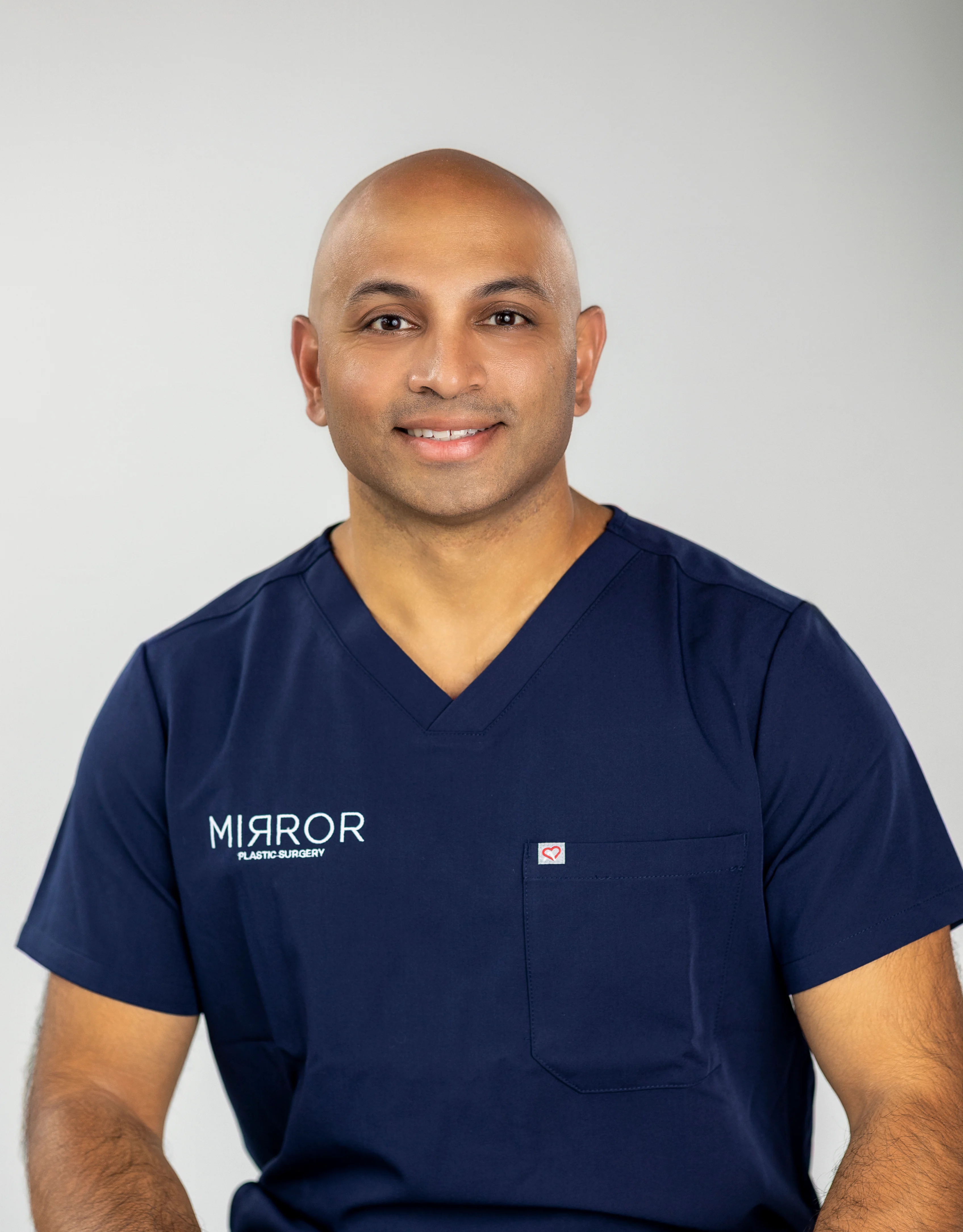
For example, at Mirror Plastic Surgery in St. Petersburg, FL, Dr. Akash Chandawarkar, a board-certified plastic surgeon, personally performs every injection and prioritizes safety and function over aesthetics. Consultations can run up to an hour, which allows time for detailed assessment rather than a quick, high-volume visit. As an advisory board member for aesthetic companies including Merz Aesthetics and Tiger Aesthetics, he follows evidence-based, supplier-neutral recommendations. This level of expertise is what to look for in any provider.
Frequently Asked Questions
Is Botox For Jaw Slimming Painful?
Most patients describe the sensation as a mild pinch. The procedure takes 10–15 minutes and does not require downtime afterward. For sensitive patients, ice or topical numbing cream can be applied before injection. Post-treatment soreness at the injection site is common and usually resolves within a few days.
How Long Does Botox Jaw Slimming Last?
Initial results typically last 4–6 months. With repeated treatments, the masseter muscle stays smaller for longer between sessions, and many patients extend their maintenance interval to 6–9 months after the first few treatment cycles.1 If treatment stops entirely, the muscle gradually returns toward its original size over 6–12 months as normal chewing activity resumes.
Can Botox Help With Teeth Grinding?
Masseter Botox can reduce the force of clenching by weakening the muscle, which breaks the clench-spasm-pain cycle responsible for morning jaw soreness, tension headaches, and TMJ strain. Studies show that 70–90% of TMJ patients experience significant pain improvement.1 Functional relief typically begins within one to two weeks. Masseter Botox works best as part of a broader treatment plan that may include a custom night guard and other TMJ therapies. This use is currently off-label in the United States.
Will I Look Different After Botox Jaw Slimming?
The goal is to look like yourself with a softer, more contoured lower face. A skilled provider preserves your natural structure and expression. The change appears gradually over 6–8 weeks, so it reads as natural rather than sudden. Patients who receive excessive dosing or treatment from an inexperienced injector risk an artificially narrow “over-V-shaped” result or hollowing at the jaw angle. Conservative dosing and proper technique help avoid these outcomes.
Are There Any Long-Term Risks?
The main long-term consideration is potential bone density change with repeated, high-dose use. As discussed earlier, some studies show mandibular bone thinning after multiple treatments, while the clinical impact and reversibility remain uncertain. Conservative dosing, periodic reassessment of muscle volume and jaw structure, and avoiding unnecessary repeat injections are the recommended risk-mitigation strategies. Patients planning long-term maintenance should review this evidence with their provider and confirm that ongoing monitoring is part of the treatment plan.
The Bottom Line
Botox jaw slimming offers a safe, effective, non-surgical way to reduce masseter muscle bulk when the patient is a true muscle-driven candidate and an experienced provider performs the injection with anatomical precision. The clench test is your starting point. Per-side unit count is your quality check. Provider credentials are your safety margin.
Ready to explore Botox jaw slimming with a surgeon who prioritizes safety and natural results? Request your consultation with Ellie at Mirror Plastic Surgery in St. Petersburg, FL. Call or text 727-361-6515 or email hello@mirrorplasticsurgery.com.
Disclaimer: Results may vary from person to person. Editorial content, before and after images, and patient testimonials do not constitute a guarantee of specific results.
1 Results may vary from person to person. Editorial content, before and after images, and patient testimonials do not constitute a guarantee of specific results.