
Written by: Ellie Pranckevicius, FNP-BC, Aesthetic Nurse Practitioner & Aesthetic Injector | Facial Restoration & Regenerative Injectable Specialist, Mirror Plastic Surgery | Last updated: June 30, 2026
What You Can Expect From a BBL Consultation
- A Brazilian butt lift consultation is a structured medical visit that evaluates your health, anatomy, and goals to see whether surgical fat transfer or a non-surgical option fits you.
- Every consultation includes a full medical history, a physical exam of donor sites and buttocks, and an honest goal-setting conversation that matches your wishes with your anatomy.
- Providers should walk you through the full surgical sequence, confirm subcutaneous-only injection technique, and explain serious risks such as fat embolism in clear, direct language.
- Recovery planning is part of the visit. You learn about sitting restrictions for 2–6 weeks, compression garments, and the 3–6 month timeline for final results.1
- At Mirror Plastic Surgery, consultations are unhurried and safety-focused; book a consultation to experience a thorough, personalized assessment.
1. Medical History and Health Screening at Mirror Plastic Surgery
Every BBL consultation begins with a complete medical history review. Your provider asks about medications, prior surgeries, bleeding disorders, heart and lung conditions, diabetes, and smoking status. These details affect anesthesia safety, healing, and how well transferred fat survives.1
At Mirror Plastic Surgery, this intake goes far beyond a quick checklist. The team uses the initial assessment to explore your physical health and the emotional reasons behind your interest in surgery. Your motivation matters as much as your BMI or lab values, because both shape whether a BBL is appropriate.
You are usually asked to bring recent bloodwork, a list of supplements, and any history of body contouring procedures. Arriving with this information ready shortens the screening phase and leaves more time for goal-setting and risk discussion.
2. Physical Evaluation and Donor-Site Assessment for BBL
The physical evaluation focuses on your buttocks and potential donor sites. A BBL uses your own fat, collected with liposuction from areas such as the abdomen, flanks, lower back, or thighs. Your provider evaluates how much donor fat you have, how it is distributed, your skin quality, and the proportions of your torso and hips.
Some patients do not have enough donor fat for a safe surgical BBL. Patients with very low body fat may be guided toward non-surgical options or advised to reach a stable, higher weight before surgery. This honest feedback reflects a safety-first approach and separates careful practices from high-volume clinics that operate even when anatomy is not ideal.
3. Goal Discussion and Realistic Outcome Planning
Goal-setting shapes your entire BBL plan. A qualified provider uses reference photos, diagrams, and before-and-after images to connect your goals with what your body can realistically achieve. Projection, width, upper-pole fullness, and hip-to-waist ratio are discussed in specific, easy-to-understand terms.
Mirror Plastic Surgery’s framework places safety first, function second, and aesthetics third. This hierarchy exists because a dramatic result that weakens your structural support or needs revision within two years is not a true success. Realistic planning during the consultation protects your long-term health and satisfaction.
4. How Your BBL Procedure and Anesthesia Are Explained
Once your goals are clear and achievable, the consultation moves into how surgery actually works. A thorough BBL consultation explains the full sequence: tumescent liposuction to harvest fat, processing to purify the graft, and careful injection into the gluteal region. Your provider should state exactly which tissue layers receive the fat, because that choice directly affects safety.
The American Society of Plastic Surgeons instructs surgeons to inject fat into the subcutaneous layer only, not into or below the gluteal muscle, to lower the risk of fatal fat embolism. You should confirm that your surgeon follows this protocol and can explain how they do so in practice.
The visit also covers anesthesia options, such as general anesthesia versus deep sedation. Your provider should review who administers anesthesia, their credentials, and whether the surgical facility holds proper accreditation.
5. Comprehensive Review of BBL Risks
Fat embolism is the most serious risk linked to BBL surgery and deserves a direct, detailed explanation. A fat embolism occurs when fat enters the bloodstream and travels to the lungs or brain. The ASPS BBL Task Force lists BBL among the elective cosmetic procedures with the highest mortality rate, which is why real-time ultrasound guidance and the subcutaneous-only protocol described earlier are now widely adopted by safety-focused surgeons.
Additional risks your provider should cover include:
- Infection and seroma formation
- Asymmetry and contour irregularities
- Fat reabsorption, often 20–40 percent of transferred volume1
- Skin necrosis at liposuction donor sites
- Deep vein thrombosis (DVT) and pulmonary embolism
- Complications related to anesthesia
A provider who minimizes or skips this discussion signals a red flag. At Mirror Plastic Surgery, risk communication is a core part of care, and every patient leaves with an evidence-based understanding of what they are choosing.
6. Recovery Timeline, Sitting Rules, and Lifestyle Planning
BBL recovery feels more restrictive than many patients expect. Transferred fat cells need steady blood flow to survive, so direct pressure on the buttocks must be avoided for at least two to six weeks after surgery. Your provider should explain how each recovery rule protects fat survival and your final result.
- Sitting restrictions: No direct sitting for 2–6 weeks. A BBL pillow shifts pressure to the thighs when you must sit.
- Compression garments: Worn most of the day for 6–8 weeks to control swelling and support liposuction areas.
- Activity limitations: No strenuous exercise for 6–8 weeks. Return-to-work timing depends on how physical your job is.
- Final results: Swelling settles over 3–6 months, and the true shape appears only after that period.1
- Sleep position: Stomach or side sleeping only during early recovery to avoid pressure on the grafted fat.
Patients with physically demanding jobs, long commutes, or caregiving duties need a tailored recovery plan instead of a generic handout. This level of planning requires time and attention from your surgical team.
7. What to Bring, What to Ask, and How to Spot Rushed Consultations
What to bring to your BBL consultation:
- Photo ID and insurance information, if applicable
- A complete list of medications and supplements
- Recent lab results, if you have them
- Reference photos that show your aesthetic goals
- A written list of questions you want answered
What to wear to a BBL consultation: Choose loose, comfortable clothing that allows easy access to your abdomen, flanks, and buttocks for the exam. Skip shapewear or compression garments on the day of your visit so your provider can see your natural contours.
Questions to ask your surgeon:
- What injection technique do you use, and do you inject into the subcutaneous layer only?
- How many BBL procedures have you performed, and what is your revision rate?
- Is your surgical facility accredited, and by which organization?
- Who provides anesthesia, and what are their qualifications?
- How many surgeries do you schedule on the same day as mine?
- How do you handle complications that occur after hours?
Red flags in a rushed consultation: A visit that lasts under 20 minutes, no physical exam, no mention of fat embolism risk, pressure to book immediately, or a surgeon who performs five or more procedures per day all suggest a volume-focused practice rather than a safety-focused one.
Non-Surgical BBL Options With an Experienced Injector
Some patients are not ideal surgical candidates, and others simply prefer a non-surgical path. Non-surgical BBL consultations explore whether biostimulatory fillers such as Radiesse or AlloClae can improve shape, volume, and skin texture without general anesthesia or surgical downtime.
Biostimulatory fillers stimulate your own collagen production over time. This process creates gradual, natural-looking volume and can also improve skin quality.1 These treatments work especially well for hip dip correction, subtle volume enhancement, cellulite softening, and stretch mark improvement in the buttock and hip area.
At Mirror Plastic Surgery, non-surgical BBL services are led by Ellie Pranckevicius, FNP-BC, an Aesthetic Nurse Practitioner with training in both esthetics and advanced nursing. Ellie holds a Bachelor’s in Health Science from Boston University and a Master’s in Nursing from the University of South Florida. She also spent four years in the Neuroscience ICU at Tampa General Hospital before moving into aesthetics, which gives her a strong foundation in anatomy and safety.
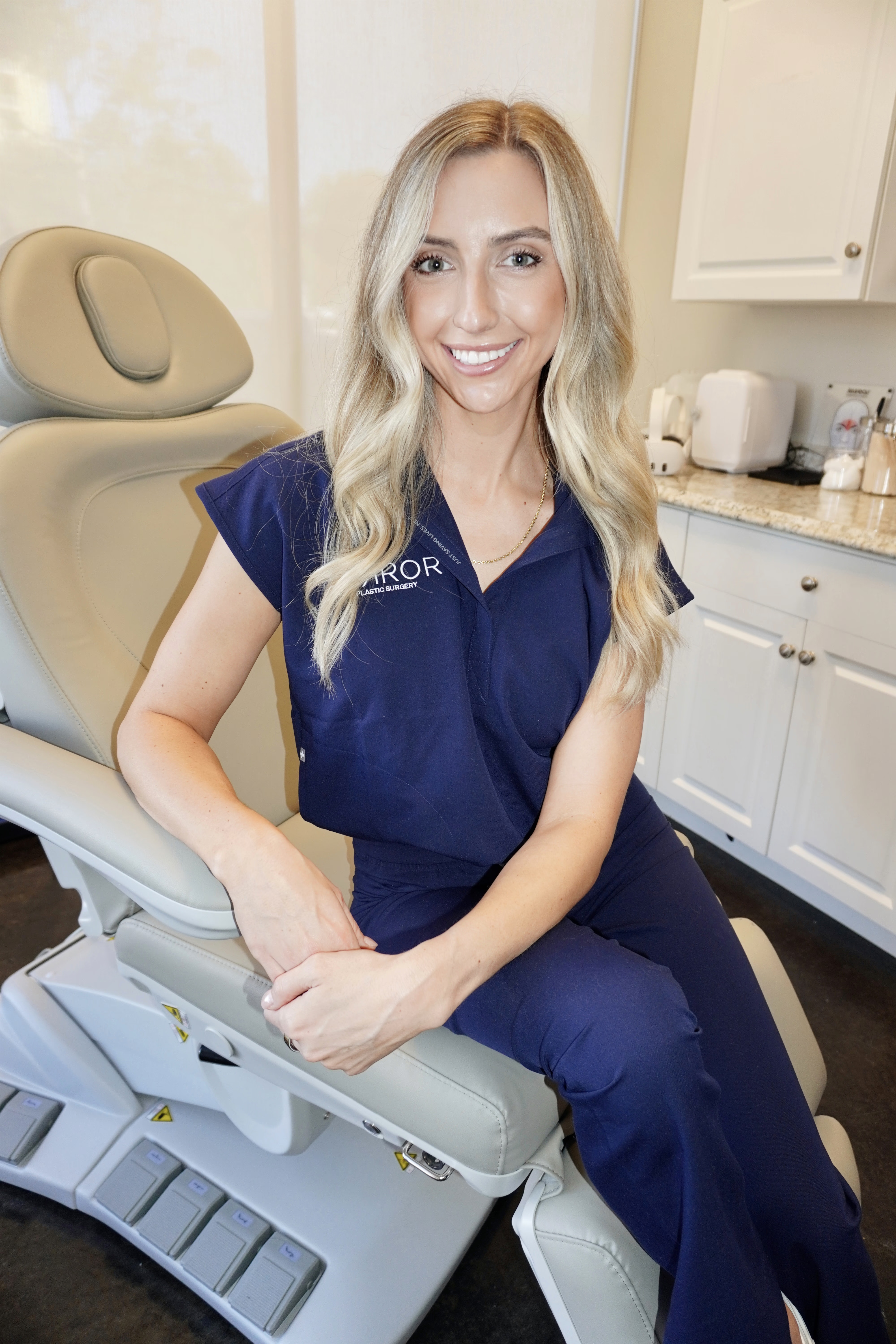
Ellie builds each non-surgical BBL plan around the individual patient. She considers whether you want noticeable volume, subtle contouring, or better symmetry, then designs a series of treatments focused on long-term results instead of quick fixes. When your goals exceed what injectables can safely offer, she explains that clearly and refers you to Dr. Akash Chandawarkar for a surgical opinion.
Dr. Akash is a Harvard-educated physician, a Johns Hopkins-trained plastic surgeon, and a fellowship-trained aesthetic surgeon from Manhattan Eye Ear & Throat Hospital/Lenox Hill Hospital. His background helps ensure that both surgical and non-surgical options at Mirror follow the same high standard of care.
Frequently Asked Questions
How painful is a BBL on a scale of 1 to 10?
Most surgical BBL patients rate discomfort as a 4 to 6 out of 10 during the first three days.1 Pain usually centers on the liposuction donor sites rather than the buttocks. Soreness, tightness, and bruising are common during this period.
By the end of the first week, pain often drops sharply and responds well to prescribed oral medications.1 Many patients find the sitting restrictions more disruptive than the pain itself. Non-surgical BBL with biostimulatory fillers usually causes mild to moderate injection-site discomfort, often rated 2 to 4 out of 10, and does not require significant downtime.1
What do many patients wish they knew before a BBL?
The sitting restriction is the part of recovery most patients underestimate. Daily activities such as driving, desk work, dining out, and sleeping all need adjustment for several weeks. Planning ahead for these changes makes recovery smoother.
Fat reabsorption also surprises many people. A portion of the transferred fat does not survive, and the final volume does not appear for several months.1 Choosing a surgeon who limits daily case volume, follows a subcutaneous-only injection protocol, and operates in an accredited facility affects your safety far more than a lower price.
What should I expect at a BBL consultation?
A thorough BBL consultation includes a complete medical history, a physical exam of donor sites and buttocks, and a candid goal-setting discussion with reference images. You also receive a detailed explanation of the surgical technique and anesthesia plan, a clear review of risks including fat embolism, and a personalized recovery strategy.
At Mirror Plastic Surgery, this comprehensive process allows time for every question. You should leave knowing whether you are a candidate, what results are realistic, and what recovery will involve. If you walk away feeling rushed or uncertain, seeking a second opinion is wise.
When should I consider non-surgical alternatives?
Non-surgical BBL works well when your goals include mild to moderate volume, hip dip correction, smoother cellulite, or better stretch mark appearance rather than a dramatic size increase. It also suits patients who lack sufficient donor fat, have medical conditions that limit surgery, or prefer to avoid general anesthesia.
Biostimulatory fillers such as Radiesse and AlloClae provide gradual, natural-looking changes with minimal downtime. A qualified injector evaluates your anatomy honestly and tells you when a surgical consultation would better match your goals.
Final Disclaimer
Disclaimer: Results may vary from person to person. Editorial content, before and after images, and patient testimonials do not constitute a guarantee of specific results.
1 Results may vary from person to person. Editorial content, before and after images, and patient testimonials do not constitute a guarantee of specific results.