

Written by: Ellie Pranckevicius, FNP-BC, Aesthetic Nurse Practitioner & Aesthetic Injector | Facial Restoration & Regenerative Injectable Specialist, Mirror Plastic Surgery | Last updated: August 19, 2026
How Cryoskin Targets Fat and Cellulite
Cryoskin cellulite treatment is a non-invasive procedure that applies controlled cold temperatures to superficial tissue to reduce localized fat volume and soften the appearance of cellulite. Its effects remain surface-level and temporary because the technology does not address the fibrous septal bands that create cellulite’s structural dimples.
Key Takeaways
- Cryoskin is a non-invasive cryotherapy treatment that reduces superficial fat volume but does not treat the fibrous septal bands that cause cellulite dimples.
- Published evidence on cryolipolysis shows 20–25% localized fat reduction per cycle, yet this does not create direct or durable cellulite improvement.1
- Results are temporary and maintenance-dependent, typically requiring 3 initial sessions followed by biannual touch-ups to sustain any visible smoothing effect.1
- Paradoxical adipose hyperplasia (PAH) is a rare but serious complication that usually requires surgical correction and has accounted for over 95% of FDA MAUDE adverse-event reports for cryolipolysis devices.
- Patients seeking longer-lasting, mechanism-matched cellulite correction often benefit more from structural treatments such as Avéli subcision; schedule a personalized consultation at Mirror Plastic Surgery to determine the most appropriate option for your anatomy.
Sources Used for This Cryoskin Review
This review draws on peer-reviewed clinical trials and prospective studies indexed on PubMed, systematic reviews and meta-analyses published in aesthetic surgery journals, FDA MAUDE adverse-event database analyses, statements from board-certified dermatologists and plastic surgeons, and manufacturer and clinical forum data. Manufacturer claims are identified as such, and evidence quality is noted where relevant.
How Cryoskin Works and Typical Protocol
Cryoskin devices deliver alternating cycles of cold and warm temperatures to the skin surface. The cold phase is intended to induce apoptosis of superficial fat cells through a mechanism similar to cryolipolysis, while the thermal cycling is marketed as stimulating circulation and lymphatic drainage to help clear cellular debris.
A standard Cryoskin cellulite protocol involves multiple sessions. The °CRYO Slim Cellulite provider states that optimal visible outcomes are typically seen after the 3rd session, with best results appearing from 15 days to 3 weeks after the start of treatment1. Maintenance sessions are recommended every six months. Individual session duration is typically 20–30 minutes per treatment area.
Cryoskin differs from clinical cryolipolysis devices such as CoolSculpting because it operates at less extreme temperatures and does not use vacuum applicators. The underlying biological mechanism, cold-induced fat cell disruption, is broadly similar, but the depth of tissue penetration and the magnitude of fat reduction are lower.
Evidence Review: What Published Data Show
Published clinical evidence specific to the Cryoskin brand for cellulite reduction remains limited. The broader cryolipolysis literature provides the most relevant proxy data, with important caveats about how well those findings apply.
Published evidence on cryolipolysis, including ultrasound and caliper measurements, supports a reduction in the thickness of the treated fat layer of roughly 20 to 25% per cycle in appropriate candidates1. This fat-reduction effect does not translate directly into cellulite improvement. Cryolipolysis targets deeper subcutaneous adipose tissue and does nothing for cellulite, which involves the hypodermal fat layer; manufacturers therefore make no cellulite-reduction claims for the technology.
Multiple cryolipolysis sessions may produce a secondary, modest improvement in skin texture by reducing subcutaneous fat volume, which can slightly soften the orange-peel appearance in areas such as the abdomen and hips1, but this represents an indirect effect rather than a targeted cellulite mechanism. Published reviews indicate cryolipolysis can produce reductions in local circumference and fat thickness but has no significant effect on overall body weight, confirming it as a localized contouring method only.
Despite these general findings about cryolipolysis, no large-scale, peer-reviewed randomized controlled trial has been published specifically evaluating Cryoskin for cellulite severity scores using validated grading scales.
Result Duration and Maintenance Commitment
Results for slimming last anywhere from several months to several years depending on the individual, their lifestyle, and diet, while toning results are more temporary and require ongoing maintenance based on lifestyle1, according to the Cryoskin provider’s FAQ. The provider recommends 2–3 maintenance sessions every six months after the initial course.
Patients should therefore expect an ongoing maintenance commitment rather than a one-time result. Any cellulite-smoothing benefit remains closely tied to lifestyle factors outside the clinic.
Reported Side Effects and Patient Experiences
Side effects associated with cryotherapy-based treatments range from common and transient to rare but serious.
Common short-term reactions include:
- Redness and swelling, typically resolving within hours to days
- Bruising, particularly on fragile skin
- Moderate aching or tenderness resembling muscle soreness
- Tingling, itching, or temporary numbness
- Transient hypoesthesia that can persist for several weeks before resolving spontaneously
Rare but serious risks include:
- Paradoxical adipose hyperplasia (PAH), which accounted for 95.1% of 11,280 FDA MAUDE adverse-event reports for cryolipolysis systems received between 2011 and May 2026
- A 2025 systematic review that estimated PAH incidence, though the evidence was rated low-certainty due to incomplete follow-up
- Cold burns or frostbite if skin protection or temperature controls fail
- 120 MAUDE reports mentioning hernia, mostly inguinal or periumbilical, diagnosed months after abdominal treatment
- Prolonged neuropathic pain or numbness lasting months
PAH deserves particular attention. It does not resolve on its own and usually requires liposuction or surgery to correct. PAH reports in the MAUDE database have surged in recent years, which calls for careful patient and provider awareness.
Book a consultation with Ellie to receive an honest, anatomy-informed assessment of whether any cryotherapy-based treatment is appropriate for your specific presentation and goals.
Cryoskin Compared With Longer-Lasting Options
Cellulite is a structural condition caused by fibrous septal bands tethering the dermis to underlying tissue. Treatments that release or remodel these bands produce more durable results than those that only target fat volume.
| Feature | Cryoskin / Cryolipolysis | Avéli (Targeted Verifiable Subcision) | Radiofrequency (Deep-Acting) |
|---|---|---|---|
| Primary mechanism | Cold-induced fat cell apoptosis | Mechanical release of fibrous septal bands | Thermal collagen remodeling and tissue tightening |
| Addresses structural cause of cellulite | No | Yes, directly severs tethering septa | Partially, remodels collagen but does not sever septa |
| Durability of cellulite improvement | Several months to years, with maintenance required every 6 months1 | 68% physician-assessed improvement at Day 180 in a 2026 prospective study; prior Cellfina data show durability to 5 years1 | Approximately 90% success rate for cellulite reduction; typically requires 6–12 sessions |
| Sessions typically required | 3 or more initial sessions with ongoing maintenance | Single session in the 2026 DiBernardo study | 3–6 sessions for optimal results |
Cost and Session Considerations
Cryoskin protocols typically require a minimum of three initial sessions to achieve visible results, followed by biannual maintenance. The cumulative investment across multiple sessions over time should be weighed against the durability of outcomes. Longer-lasting structural treatments may require fewer total sessions over a multi-year horizon, although the per-session cost structure differs. Patients at Mirror Plastic Surgery receive a personalized quote during their consultation based on their individual anatomy and treatment plan, so no generalized pricing applies.
Who May Benefit From Cryoskin and Who Should Consider Alternatives
Cryoskin may be a reasonable consideration for patients who meet specific criteria.
- Have mild, diffuse soft cellulite with a primary concern of localized fat volume rather than structural dimpling
- Prefer a non-invasive, no-downtime option and accept temporary results with ongoing maintenance
- Have no contraindications to cold-based treatments
Some patients are better served by alternative treatments.
- Have moderate to severe cellulite with distinct dimples caused by fibrous septal tethering
- Have any of the contraindications discussed in the side effects section above, including cold-sensitivity disorders, pregnancy, implanted devices, or hernias
- Have poor skin elasticity, as reducing underlying fat may leave overlying skin looser rather than smoother
- Seek durable structural improvement rather than temporary surface-level softening
Practical Implications for Treatment Decisions
Patients evaluating Cryoskin for cellulite should enter the process with calibrated expectations. The technology does not release fibrous septa, does not produce histologically confirmed collagen remodeling, and requires ongoing maintenance. No cellulite treatment provides a permanent cure, and maintenance treatments are typically needed regardless of modality.1 The key consideration is whether the mechanism of a given treatment matches the structural cause of an individual patient’s cellulite.
A thorough provider assessment that evaluates cellulite grade, skin laxity, septal anatomy, and patient lifestyle forms the basis for any evidence-based recommendation.
Book a consultation with Ellie at Mirror Plastic Surgery for a top-to-bottom assessment that maps your anatomy to the most appropriate treatment pathway.
Safety Themes and Anatomical Considerations
Safety in cryotherapy-based treatments depends heavily on both the operator and the device. Cryolipolysis is contraindicated in pregnancy or lactation, cold-related disorders, major circulatory disorders, uncontrolled diabetes, active cancer or severe chronic illness, recent abdominal surgery or existing hernias, implanted electronic devices, and significant obesity.
Anatomical knowledge guides safe treatment planning. Patients with abdominal wall laxity, prior hernia repair, or reduced skin sensation require individualized evaluation before any suction- or cold-based device is applied. The risk of PAH is higher in male patients and in those undergoing abdominal treatment or repeated cycles, so a qualified provider must screen for these factors proactively.
At Mirror Plastic Surgery, every non-surgical body contouring assessment follows the practice’s foundational hierarchy: safety first, function second, aesthetics third. Because safety takes precedence over aesthetic outcomes, this sequence requires that anatomical risk factors be identified and addressed before any treatment recommendation is made.
Limitations of Current Evidence
Several evidence gaps limit definitive conclusions about Cryoskin specifically for cellulite.
- No large-scale, peer-reviewed randomized controlled trial has evaluated Cryoskin using validated cellulite severity scales such as the Cellulite Severity Scale or GAIS
- Most available cryolipolysis data address fat reduction rather than cellulite structural improvement
- A 2025 meta-analysis of cryolipolysis found no statistically significant change in body weight, confirming it produces only local contour changes
- PAH incidence estimates carry low-certainty ratings due to incomplete follow-up in available studies
- Long-term durability data beyond 12 months for Cryoskin cellulite outcomes are not available in the peer-reviewed literature
Industry Trends and Evolving Standards
RealSelf reported a 117% surge in consumer interest for Cellfina during Q1 2026, reflecting a broader patient shift toward treatments with structural and durable mechanisms. Minimally invasive procedures are expected to be the fastest-growing treatment segment in the cellulite treatment market, driven by patient demand for options that deliver prolonged cellulite reduction compared to purely non-invasive methods.
This trend aligns with the clinical evidence. Patients and providers are increasingly prioritizing mechanism-matched, evidence-backed treatments over high-volume, low-durability protocols. The expansion of medical spa settings also raises the importance of provider expertise, because more powerful and structurally targeted devices require deeper anatomical knowledge to deploy safely.
Frequently Asked Questions
Does Cryoskin actually treat cellulite, or does it only reduce fat?
Cryoskin’s primary mechanism is cold-induced disruption of superficial fat cells. It does not release the fibrous septal bands that structurally cause cellulite dimples. Any improvement in cellulite appearance represents an indirect secondary effect of modest fat volume reduction rather than a targeted structural correction. Patients with distinct dimpling caused by septal tethering are unlikely to see meaningful or lasting improvement from Cryoskin alone.
How many Cryoskin sessions are needed, and how long do results last?
Most Cryoskin protocols recommend a minimum of three initial sessions, with optimal results typically visible after the third session. Results for fat slimming may last from several months to a few years depending on lifestyle, diet, and individual metabolism. Toning and cellulite-smoothing results are more temporary and require ongoing maintenance sessions, typically recommended every six months. This maintenance burden should be considered when comparing total investment against longer-lasting structural treatments.
What is paradoxical adipose hyperplasia and should I be concerned?
Paradoxical adipose hyperplasia (PAH) is a recognized complication of cryolipolysis in which the treated area develops a firm, enlarged mass of fat rather than shrinking. It typically appears two to five months after treatment, does not resolve on its own, and usually requires liposuction or surgery to correct. FDA MAUDE data show PAH accounted for over 95% of adverse event reports for cryolipolysis devices. While the estimated incidence is approximately 1 in 455 patients, the consequence is significant enough to warrant thorough pre-treatment screening and informed consent. Male patients and those undergoing abdominal treatment face higher relative risk.
What is Avéli and how does it differ from Cryoskin?
Avéli is an FDA-cleared, minimally invasive subcision device that mechanically releases the fibrous septal bands responsible for cellulite dimples. Unlike Cryoskin, which targets fat volume through cold exposure, Avéli addresses the structural cause of cellulite directly. A 2026 prospective study demonstrated 68% physician-assessed improvement at Day 180 following a single session combining Avéli with helium plasma radiofrequency, with histological confirmation of collagen and elastin remodeling. Prior multicenter data on tissue-stabilized guided subcision show durable improvement extending to five years. Mirror Plastic Surgery offers Avéli as part of its evidence-based body contouring portfolio.
How do I know which cellulite treatment is right for my anatomy?
The appropriate treatment depends on cellulite grade, the presence and depth of fibrous septal tethering, skin laxity, body area, and individual health history. Mild, diffuse soft cellulite with minimal dimpling may respond differently than moderate-to-severe cellulite with distinct structural dimples. A thorough, anatomy-focused assessment by a qualified provider offers the only reliable basis for a personalized recommendation. At Mirror Plastic Surgery, consultations extend up to an hour and include a top-to-bottom evaluation of the relevant anatomical factors before any treatment is proposed.
Summary
Cryoskin cellulite treatment offers a non-invasive option with a low immediate downtime profile, but its mechanism does not address the fibrous septal anatomy that causes cellulite. Published evidence for cryolipolysis, the closest well-studied proxy, confirms meaningful localized fat reduction but no direct structural cellulite correction. Results remain temporary, maintenance-dependent, and influenced by individual lifestyle factors. The risk of paradoxical adipose hyperplasia, while statistically uncommon, carries significant consequences when it occurs. Longer-lasting, mechanism-matched alternatives such as Avéli subcision are supported by stronger durability data and histological evidence of structural remodeling. Any treatment decision should follow a thorough, individualized anatomical assessment conducted by a provider with demonstrated expertise in body contouring and patient safety.
Next Step
Patients in the St. Petersburg and Tampa Bay area seeking an objective, anatomy-first evaluation of their cellulite treatment options can schedule a concierge consultation at Mirror Plastic Surgery. Ellie Pranckevicius, FNP-BC, brings a dual background in esthetics and advanced nursing, including four years in the Neuroscience ICU at Tampa General Hospital, to every assessment. Her approach prioritizes honest communication, deep anatomical understanding, and treatment plans built around your specific presentation and long-term goals, not a one-size-fits-all protocol.
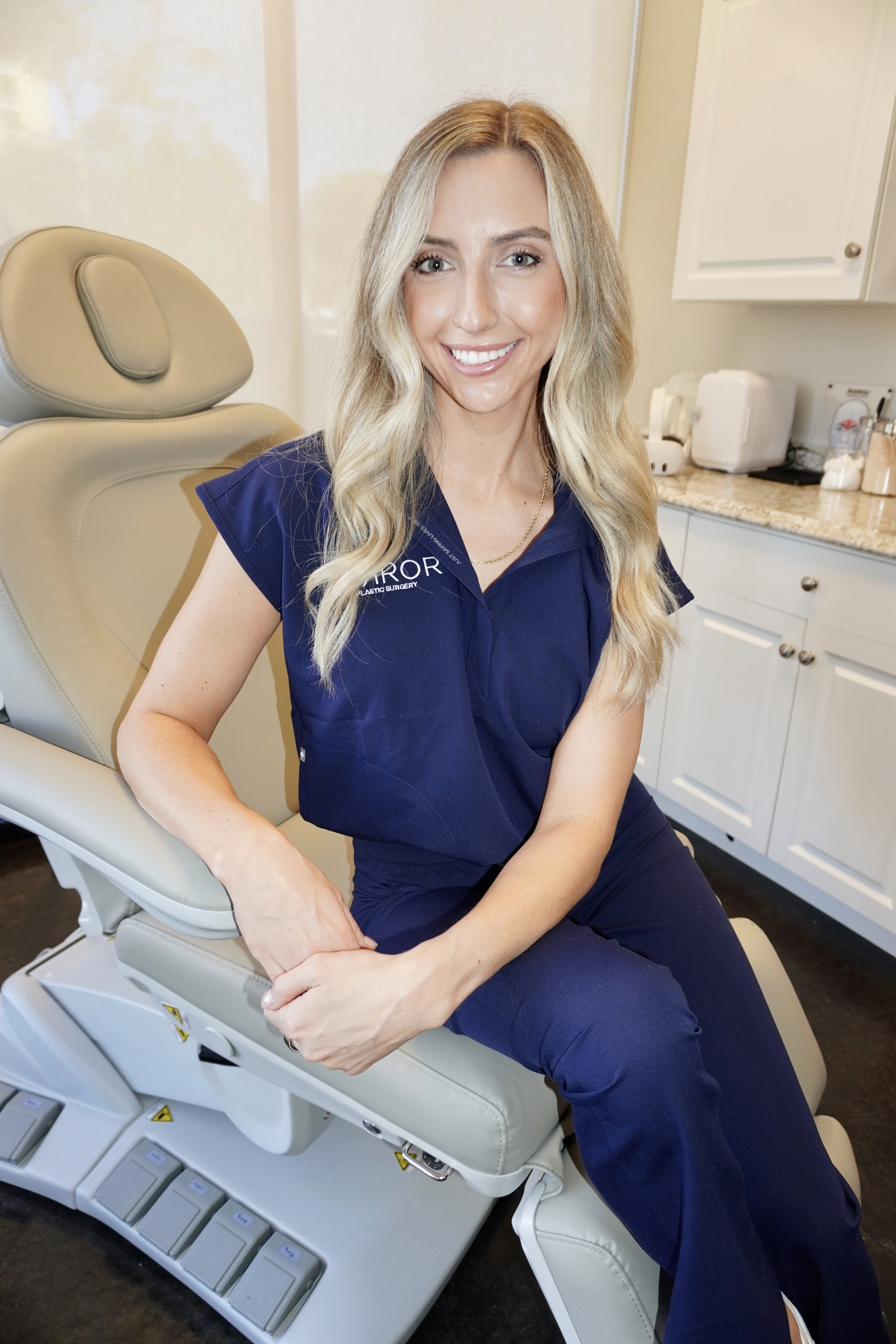
Book a consultation with Ellie and receive a comprehensive, top-to-bottom assessment that gives you the clarity to make a confident, evidence-informed decision about your body contouring care.
Disclaimer: Results may vary from person to person. Editorial content, before and after images, and patient testimonials do not constitute a guarantee of specific results.
1 Results may vary from person to person. Editorial content, before and after images, and patient testimonials do not constitute a guarantee of specific results.



