
Written by: Dr. Akash Chandawarkar, Board Certified Plastic Surgeon, Mirror Plastic Surgery | Last updated: July 4, 2026
Revision rhinoplasty is significantly more complicated than primary rhinoplasty. Scar tissue alters normal tissue planes, prior surgery depletes cartilage reserves, and compromised blood supply narrows the margin for error. Complex cases involving structural collapse, breathing obstruction, or multiple prior procedures require fellowship-trained surgeons with high revision volume, rib-cartilage graft experience, and a safety-first philosophy.
Key Takeaways for Complex Revision Rhinoplasty
- Revision rhinoplasty is more complex than primary surgery because of scar tissue, depleted cartilage, and reduced blood supply, so it requires specialized expertise.
- Complex cases often involve structural collapse, breathing obstruction, or multiple prior surgeries and demand fellowship-trained surgeons with high revision volume and rib-cartilage graft experience.
- Key evaluation criteria for choosing a surgeon include ABPS board certification, aesthetic surgery fellowship training, substantial revision case volume, and published research contributions.
- Mirror Plastic Surgery follows a safety-function-aesthetics hierarchy, prioritizing airway restoration and structural stability before aesthetic refinement in every revision case.
- Patients seeking expert care for complex revision rhinoplasty in Tampa can book a consultation with Dr. Akash for a thorough, concierge-level evaluation.
How to Tell If Your Revision Rhinoplasty Case Is Complex
Persistent breathing problems after rhinoplasty often signal a complex revision case. Functional impairment is the most common reason patients seek revision, and structural collapse or aesthetic deformity frequently appear alongside it.
These structural and functional markers often indicate a complex case:
- Saddle-nose deformity, a visible depression along the nasal bridge caused by excessive cartilage or bone removal, which produces a concave dorsal profile and significant structural instability.
- Internal valve collapse, narrowing or collapse of the internal nasal valve, the primary regulator of airflow, often resulting from over-resection of upper lateral cartilages during primary surgery.
- Nasal tip asymmetry or ptosis, including drooping, over-rotation, or under-rotation of the tip that persists after full healing.
- Inverted-V deformity or pinched appearance, a visible collapse of the middle vault that indicates loss of structural support.
- Depleted septal cartilage, where prior septoplasty or aggressive cartilage harvest leaves insufficient graft material for reconstruction.
- Persistent breathing obstruction that continues after primary rhinoplasty and drives many patients to seek revision.
- Scar tissue and internal adhesions, where internal scarring narrows passages and distorts anatomy, complicating dissection during revision.
Structural collapse after rhinoplasty usually requires cartilage grafting to rebuild the nasal framework, which classifies the case as complex. Most experts recommend waiting at least 12 months after primary rhinoplasty before revision, except in cases of severe breathing difficulties or significant structural collapse.
Surgeon Evaluation Criteria for Complex Revision Cases
Choosing a revision rhinoplasty surgeon requires going beyond board certification and before-and-after photos. Most patients start with those basics, yet complex revision cases also demand fellowship training focused on rhinoplasty, a high percentage of revision cases, and clear structural grafting strategies.
Use this checklist when evaluating any surgeon for complex revision rhinoplasty:
- ABPS board certification, because the American Board of Plastic Surgery is the only plastic surgery board recognized by the American Board of Medical Specialties. Dr. Akash holds ABPS board certification.
- Aesthetic surgery fellowship, which provides advanced facial surgery training beyond residency. Dr. Akash completed his fellowship at the Manhattan Eye, Ear and Throat Hospital (MEETH), one of the most competitive aesthetic surgery programs in the country.
- High revision volume, where revision rhinoplasty ideally comprises 30% or more of a surgeon’s practice, since primary rhinoplasty expertise alone does not guarantee success in revision cases.
- Rib-cartilage graft experience, because complex cases frequently require costal cartilage when septal reserves are depleted. Dr. Akash’s reconstructive training at Johns Hopkins included complex structural reconstruction.
- Published research contributions, as seen in Dr. Akash’s peer-reviewed articles and presentations at The Rhinoplasty Society Annual Meeting, which reflect active engagement with evolving techniques.
- Rhinoplasty Society-level engagement, since Rhinoplasty Society active membership requires board certification by the American Board of Plastic Surgery, the American Board of Facial Plastic and Reconstructive Surgery, the American Board of Otolaryngology, or an equivalent foreign board, plus at least two years of active practice.
- Low daily surgical volume, as practiced at Mirror Plastic Surgery, which performs one to two surgeries per day, in contrast to high-volume practices performing five to ten daily.
Schedule your structural assessment with Dr. Akash to review your prior procedure history and discuss your revision candidacy.
Why Revision Volume and Graft Experience Matter
Complex revision rhinoplasty cases leave very little room for error. The surgeon must work through scar tissue and altered anatomy, which demands deeper experience, higher surgical judgment, and careful planning of cosmetic and functional tradeoffs.
Rib cartilage becomes the graft material of choice when septal and conchal cartilage reserves are insufficient. Its strength, versatility, and larger available quantity make it ideal for rebuilding collapsed nasal bridges or compensating for poor structural support from prior procedures.
These advantages only translate into long-term stability when surgeons use precise carving and placement techniques that reduce the risk of warping. Graft technique precision therefore directly determines long-term structural stability.
Many complex revision rhinoplasty cases require rib cartilage harvesting because septal cartilage is often depleted from previous surgery and substantial grafting volume is needed for comprehensive structural reconstruction.
Mirror Plastic Surgery’s Safety-Function-Aesthetics Approach
Mirror Plastic Surgery follows a clear hierarchy for complex nasal reconstruction: safety first, function second, aesthetics third. This sequence reflects how the nose actually heals and performs after surgery.
In revision rhinoplasty, restoring a patent airway and stable structural framework must come before any aesthetic refinement. A combined septorhinoplasty approach often serves as the standard for addressing both functional breathing improvements and aesthetic concerns in a single operation.
Safety at Mirror Plastic Surgery includes rigorous pre-operative evaluation, accredited surgical facilities, board-certified physician anesthesiologists, and advanced in-office diagnostic tools. Dr. Akash’s ABPS certification also provides hospital access privileges in the rare event of surgical complications, which adds a layer of protection that non-ABPS-certified providers cannot offer.
When experienced surgeons who specialize in revision cases perform these procedures, outcomes are typically very good, with substantial improvement even in complex situations.1 Success rates still remain lower than for primary rhinoplasty because operating on previously treated tissues presents greater technical challenges.1
Red Flags When Considering High-Volume Practices
High-volume practices that perform five to ten surgeries daily often cannot allocate the diagnostic time that complex revision cases require. Rushed consultations lead to incomplete anatomical assessments and increase the risk of needing another revision.
Watch for these specific red flags:
- Consultations lasting under 30 minutes for a revision case
- No discussion of graft source or structural reconstruction plan
- Inability to explain a functional airway assessment
- No documented revision rhinoplasty case volume
- Absence of fellowship training beyond residency
- No hospital privileges for complication management
Revision rhinoplasty expertise grows from hands-on experience across primary, functional, ethnic, and revision cases. This breadth shows a surgeon’s command of nasal anatomy, scar tissue management, altered anatomy, and structural support rebuilding. A surgeon who cannot address all of these dimensions is not the right choice for a complex case.
What a Concierge Revision Consultation Looks Like
At Mirror Plastic Surgery, the initial consultation for revision rhinoplasty functions as a comprehensive, hour-long anatomical assessment, not a sales appointment.
The consultation process includes:
- Full review of prior operative reports and imaging
- In-office diagnostic evaluation of nasal airway and structural integrity
- Clear anatomical explanation of what changed during prior surgery and why
- Discussion of graft options, including septal, conchal, or rib cartilage, based on available reserves
- Realistic outcome framing based on existing scarring, skin thickness, and tissue quality
- A documented surgical plan that prioritizes airway restoration before aesthetic refinement
Patients with thick skin, extensive prior surgery, or significant scarring may benefit from waiting 18 to 24 months so tissues can fully mature and reveal the true final result. During the consultation, Dr. Akash will advise you on the safest and most effective timing.
Experience Mirror’s concierge consultation process and book your hour-long evaluation with Dr. Akash.
Dr. Akash’s Background in Complex Nasal Reconstruction
Dr. Akash’s training pathway ranks among the most rigorous in American plastic surgery. His credentials align directly with the complexity markers that define difficult revision rhinoplasty cases.
- Harvard-MIT HST Medical Degree, through the Harvard-MIT Division of Health Sciences and Technology program, which integrates rigorous scientific research with clinical medicine. Dr. Akash graduated from Harvard Medical School with Honors.
- Johns Hopkins Integrated Residency, a seven-year plastic and reconstructive surgery residency at one of the world’s leading training programs, including rotations in complex cancer reconstruction, trauma, and microsurgery.
- MEETH Aesthetic Surgery Fellowship, at the Manhattan Eye, Ear and Throat Hospital, one of the most competitive aesthetic surgery programs in the country, with advanced training in facial rejuvenation and nasal surgery.
- Stanford Biodesign Innovation Fellowship, which provided specialized training in identifying unmet clinical needs and developing technological solutions, including AI-based objective analysis in rhinoplasty.
- America’s Best Plastic Surgeons 2025 — Newsweek, with recognition by Newsweek as one of America’s Best Plastic Surgeons for two consecutive years.
- Rhinoplasty Society Annual Meeting presenter, reflecting active research contributions to the rhinoplasty subspecialty community.
- Next Generation Editor, Aesthetic Surgery Journal, an editorial board role that shows ongoing engagement with peer-reviewed evidence in aesthetic surgery.
- FDA testimony on breast implant safety, where he was selected to testify before the U.S. Food and Drug Administration, demonstrating familiarity with regulated safety standards.
Key Concepts in Complex Revision Rhinoplasty
Saddle-nose deformity: A concave depression along the nasal dorsum caused by excessive removal of cartilage or bone during prior surgery. It produces both a visible structural collapse and functional airway compromise. Correction typically requires rib cartilage grafting to rebuild the dorsal framework.
Rib-cartilage graft: Costal cartilage harvested from the chest wall and used to reconstruct depleted nasal structures. Rib cartilage is often preferred in complex revision cases because its strength, versatility, and larger available quantity support reconstruction when septal or conchal reserves are insufficient.
Internal valve collapse: Narrowing or inward collapse of the internal nasal valve, the primary airflow regulator, most commonly caused by over-resection of upper lateral cartilages. Even minor structural changes can significantly affect airflow, which makes internal valve collapse one of the most critical functional complications of rhinoplasty.
Frequently Asked Questions
Is revision rhinoplasty more complicated than primary rhinoplasty?
Yes. Revision rhinoplasty is consistently more technically demanding than primary rhinoplasty. Each prior surgery compounds the challenge. Beyond the scar tissue and depleted cartilage mentioned earlier, revision cases often face slower healing timelines and higher complication rates because of compromised tissue vascularity. The surgeon must also account for unpredictable tissue response, since techniques that worked in a virgin nose may fail in previously operated anatomy. Complexity increases further with each additional prior procedure.
What qualifies you for revision rhinoplasty surgery?
Most surgeons recommend waiting at least 12 months after primary rhinoplasty before pursuing revision. This window allows swelling to resolve, scar tissue to mature, and the final structural result to become clear. Patients with thick skin, extensive prior surgery, or significant scarring may benefit from waiting 18 to 24 months. Exceptions include severe breathing obstruction, significant structural collapse, or deformities that impair daily function. A qualified revision rhinoplasty surgeon will assess your specific anatomy and healing timeline before recommending a surgical date.
How many revision rhinoplasties should a surgeon perform yearly?
Rhinoplasty Society membership standards require an average of 30 rhinoplasties per year as a baseline credential. For revision-specific expertise, surgeons should ideally dedicate 30% or more of their practice to revision cases. This volume threshold ensures consistent exposure to scar tissue management, altered anatomy, and structural grafting decisions. Annual volume alone is not sufficient, so the proportion of revision cases within that volume serves as the more meaningful benchmark.
How risky is a revision rhinoplasty?
Revision rhinoplasty carries the standard surgical risks of bleeding, infection, and anesthesia complications. It also includes revision-specific risks such as poor wound healing from compromised blood supply, graft warping or resorption, persistent swelling that can last up to 12 months, and the possibility of needing a third procedure if outcomes fall short of goals. When an experienced, board-certified surgeon with high revision volume performs the operation, the procedure is generally safe and often produces substantial improvement even in complex cases.1 Realistic expectations remain essential because perfection may not be possible after prior tissue manipulation, existing scarring, and cartilage loss.
Revision rhinoplasty cost vs. risk for complex cases — how should patients weigh them?
Complex revision rhinoplasty usually involves higher surgical costs than primary rhinoplasty because of longer operative time, potential rib cartilage harvest, and the greater expertise required. The meaningful comparison is the cost of a well-executed revision by a qualified specialist versus the compounded cost, risk, and recovery burden of a third or fourth procedure after an inadequate revision. Patients who prioritize price over surgeon qualifications in complex revision cases statistically face higher rates of repeat surgery.1 Mirror Plastic Surgery provides personalized quotes during consultation based on each patient’s specific anatomy and surgical plan.
Conclusion: Taking the Next Step in Tampa
Complex revision rhinoplasty demands a surgeon with fellowship-level training, documented revision volume, rib-cartilage graft experience, and a structured approach that places airway safety above aesthetic goals. Patients in the Tampa Bay area who achieve the strongest outcomes usually invest in a thorough pre-operative evaluation rather than a fast consultation.
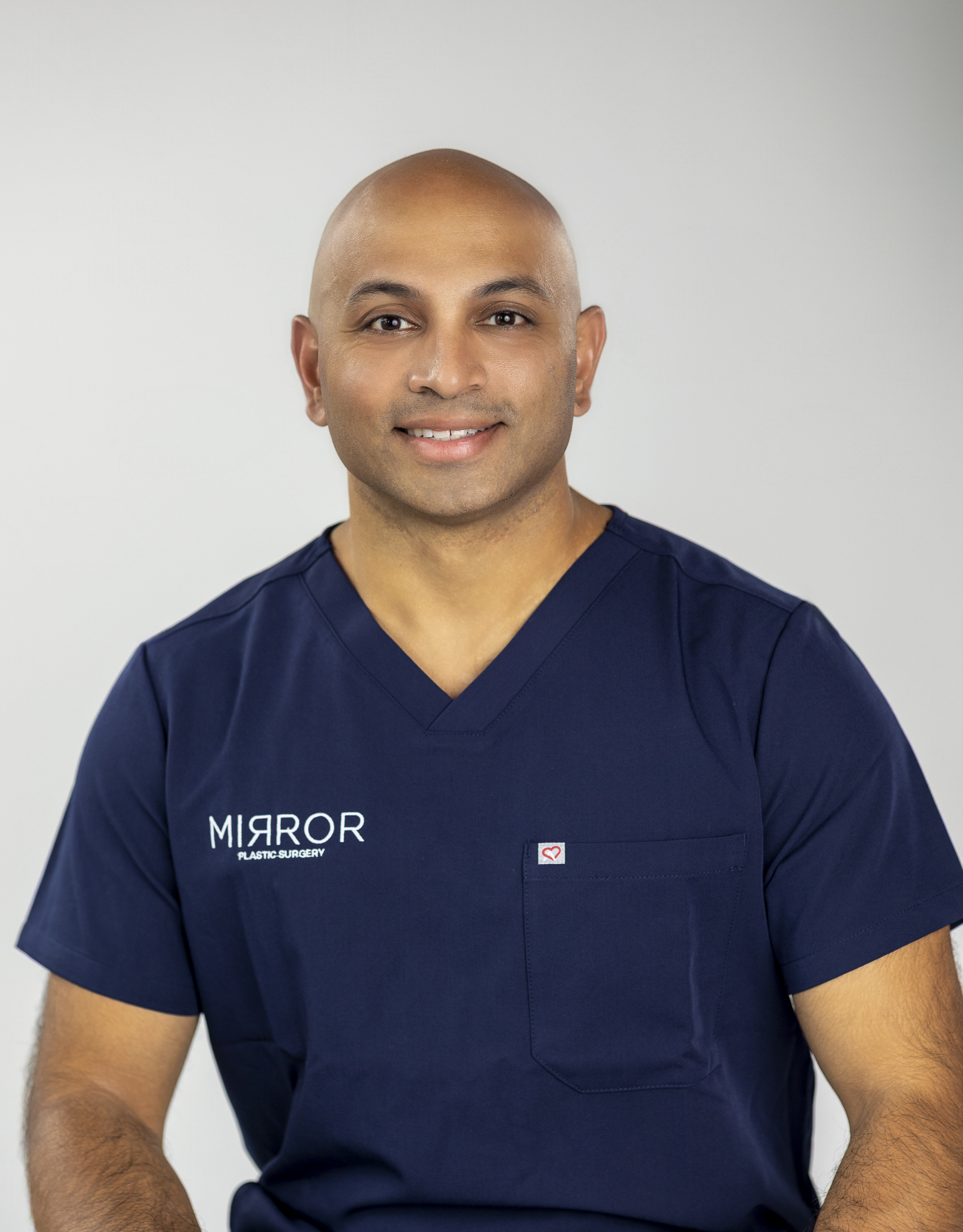
Mirror Plastic Surgery’s concierge model, with one to two surgeries per day, hour-long assessments, and Dr. Akash’s Harvard-MIT, Johns Hopkins, and MEETH credentials, was designed for patients who have already experienced what a rushed approach can produce.
Begin your evidence-based revision evaluation and request a consultation with Dr. Akash today.
1 Results may vary from person to person. Editorial content, before and after images, and patient testimonials do not constitute a guarantee of specific results.