
Written by: Dr. Akash Chandawarkar, Board Certified Plastic Surgeon, Mirror Plastic Surgery | Last updated: July 17, 2026
Key Takeaways for Thin Lip Augmentation
- Lip augmentation for thin lips includes four main options: HA fillers, lip flip, fat transfer, and surgical lip lift, each suited to specific anatomy.
- Extremely thin lips respond best to conservative, staged HA filler dosing with micro-boluses and superficial placement to reduce migration and unnatural shape.1
- HA fillers provide reversible volume restoration that typically lasts 6–12 months, while a surgical lip lift offers permanent correction for structural issues such as a lengthened philtrum.1
- Age-related lip changes call for even more conservative techniques, frequent cannula use, and staged sessions to restore natural proportion without overfilling.1
- Book a consultation with Dr. Akash at Mirror Plastic Surgery for a personalized, anatomy-based lip augmentation plan.
Why Extremely Thin Lips Need a Different Treatment Plan
Extremely thin lips develop from changes across four structural layers at the same time. Collagen production peaks in the twenties and then declines by about 1% per year, with loss accelerating during the first five years of menopause. Age-related bone resorption of the maxilla and mandible removes structural support beneath the lips, which pulls the upper lip backward and reduces visible vermilion. Facial fat pads also shrink and shift with gravity and bone changes, so the lips lose three-dimensional contour. The orbicularis oris muscle gradually weakens and atrophies, turning the youthful J-shaped lip cross-section into a flatter I-shaped profile that inverts the lip margin.
Because these changes affect several layers at once, extremely thin lips cannot be safely treated with the same volume and technique used on lips with more baseline tissue. For very thin lips, first-session HA filler volume should stay conservative, with follow-up sessions spaced about 30 days apart so the tissue can adapt. This staged approach matters because thin lips have limited submucosal tissue to hold product. Each injection should use micro-boluses to reduce lumping or migration. These small deposits need placement in superficial or submucosal planes, not deep intramuscular boluses into the orbicularis oris, where the major labial arteries run. This anatomy-specific strategy creates a natural result instead of the duck-lip appearance patients want to avoid.
How Much Lip Thinning Can Realistically Be Reversed
Injected fillers can restore noticeable lip volume, yet they may create uneven or overfilled lips if dosing is not conservative.1 The underlying bone resorption and collagen decline that drive thinning cannot be fully reversed by any injectable or topical product alone. Treatment can, however, significantly improve the visible effects of that loss.
For patients in earlier stages of atrophy, staged HA filler sessions rebuild volume gradually while preserving natural movement and proportion. Injectable hyaluronic acid fillers increase lip fullness, with results lasting several months.1 For patients with advanced structural changes, such as a lengthened philtrum, marked vermilion inversion, or minimal tooth show at rest, permanent surgical correction with a lip lift targets the core anatomical problem that fillers cannot fix. Realistic expectations and a staged treatment plan, created during a detailed consultation, form the basis of any effective reversal strategy.
Injectable Options That Make Thin Lips Fuller
Hyaluronic acid fillers are the evidence-based standard for injectable lip augmentation. Linear retrograde threading, retrograde fanning, and microdeposit techniques are the main approaches for HA lip augmentation. HA fillers are preferred over calcium hydroxylapatite or poly-L-lactic acid in the lips because they carry lower risk of nodules or vascular compromise and are fully reversible with hyaluronidase.
A safety-first ranking of injectable options for thin lips, from lowest to highest risk, is as follows:
- Lip flip (botulinum toxin): Minimal risk, no volume added, results last 3–4 months, suitable for subtle upper-lip reveal or gummy-smile correction.1
- Conservative HA filler with cannula: Cannula injections have been linked with lower risk of vascular occlusion compared with needle injections and are preferred for thin-lip tissue.
- HA filler with needle: Similar safety profile when performed by an experienced injector with precise anatomical knowledge, with clinical studies showing a low incidence of vascular occlusion.
- Fat transfer: Surgical option with longer recovery and less predictable resorption; fat graft retention in the lips varies because of high motion and thin tissue.
Vascular occlusion is the most serious injectable complication and requires immediate hyaluronidase treatment. Provider selection and anatomical expertise are the main modifiable risk factors, and even the most skilled injector must respect these safety limits.
Choosing Between Lip Lift Surgery and Fillers for Thin Lips
The choice between a surgical lip lift and HA fillers depends on the specific anatomical cause of lip thinness. Non-surgical fillers increase volume but do not shorten the upper lip. Surgery offers proportionate, lasting correction for patients with long upper lips and thin lips. Fillers work best as a first-line option when the main concern is volume loss without clear philtrum lengthening.
Key differences between the two approaches include the following:
- Invasiveness: HA fillers are non-surgical with same-day return to normal activity. A lip lift involves an incision at the nasal base, suture removal at 5–7 days, and an active recovery period of about two weeks.
- Longevity: HA fillers last 6–12 months in most patients.1 Lip lift results are permanent and age naturally with the face.1
- Complication profile: Lip lift procedures show low rates of major complications. Minor issues can include swelling, bruising, and hypertrophic scarring. HA filler complications are usually mild and temporary.
- Reversibility: HA fillers can be dissolved with hyaluronidase. Lip lift results require additional surgery for meaningful revision.
- Candidacy: Patients with an upper lip longer than 15 mm from nose to lip edge, or with minimal pink lip visible when relaxed, are strong candidates for a surgical lip lift.
Many patients benefit from a staged plan that starts with conservative HA filler and later progresses to surgical correction if structural changes justify it.
Plumping Older Lips While Keeping Results Natural
Age-specific lip augmentation uses a more conservative framework than treatment for younger patients with genetically thin lips. Loss of the retro-orbicularis oris fat pad with age allows the orbicularis oris muscle to dominate, which creates persistent lines even at rest that filler alone may not fully correct. Age-related lip involution, where the top lip rotates inward and the white lip dominates the vermilion, demands precise anatomical understanding when treated with injectables.
For mature patients, conservative dosing with staged sessions guides the plan. A full 1 mL syringe often provides enough product for a complete treatment that restores volume and definition without overfilling. To limit bruising and swelling, which older patients tolerate less well, cannula technique is strongly preferred because it lowers the chance of piercing blood vessels. Once initial results are in place, maintenance every 9–12 months allows touch-up sessions to build a cumulative foundation over time instead of chasing dramatic single-session correction.
Book a consultation with Dr. Akash to receive an age-specific, anatomy-based plan for restoring lip volume and definition.
Key Questions to Ask Before Lip Augmentation
A thorough pre-treatment consultation should cover the following points before any lip augmentation procedure:
- Side-profile balance: Will the proposed volume maintain appropriate upper-to-lower lip projection from the side view, or could it create a flat or overly pouty look?
- Gummy-smile correction: Is a lip flip or combined approach more suitable than filler alone when excessive gum show is part of the concern?
- Long-term maintenance: What is the realistic treatment interval, and how will repeated sessions affect the tissue over time?
- Revision pathways: Is hyaluronidase available on-site, and what is the protocol if vascular occlusion or overfilling occurs?
- Staged vs single-session approach: Given your baseline lip volume, is a multi-session plan safer and more proportionate than maximum-volume correction in one visit?
Provider Expertise at Mirror Plastic Surgery
The answers to these questions depend entirely on your provider’s training, experience, and clinical judgment. Dr. Akash completed his medical degree through the Harvard-MIT Division of Health Sciences and Technology, graduating from Harvard Medical School with Honors. His surgical training included a seven-year integrated plastic and reconstructive surgery residency at Johns Hopkins University, followed by an aesthetic surgery fellowship at the Manhattan Eye, Ear and Throat Hospital (MEETH), one of the most competitive aesthetic training programs in the United States. He also completed the Stanford University Biodesign Innovation Fellowship, which focuses on physician-led medical technology development. Dr. Akash has earned the Newsweek recognition mentioned earlier for two consecutive years, including 2025.
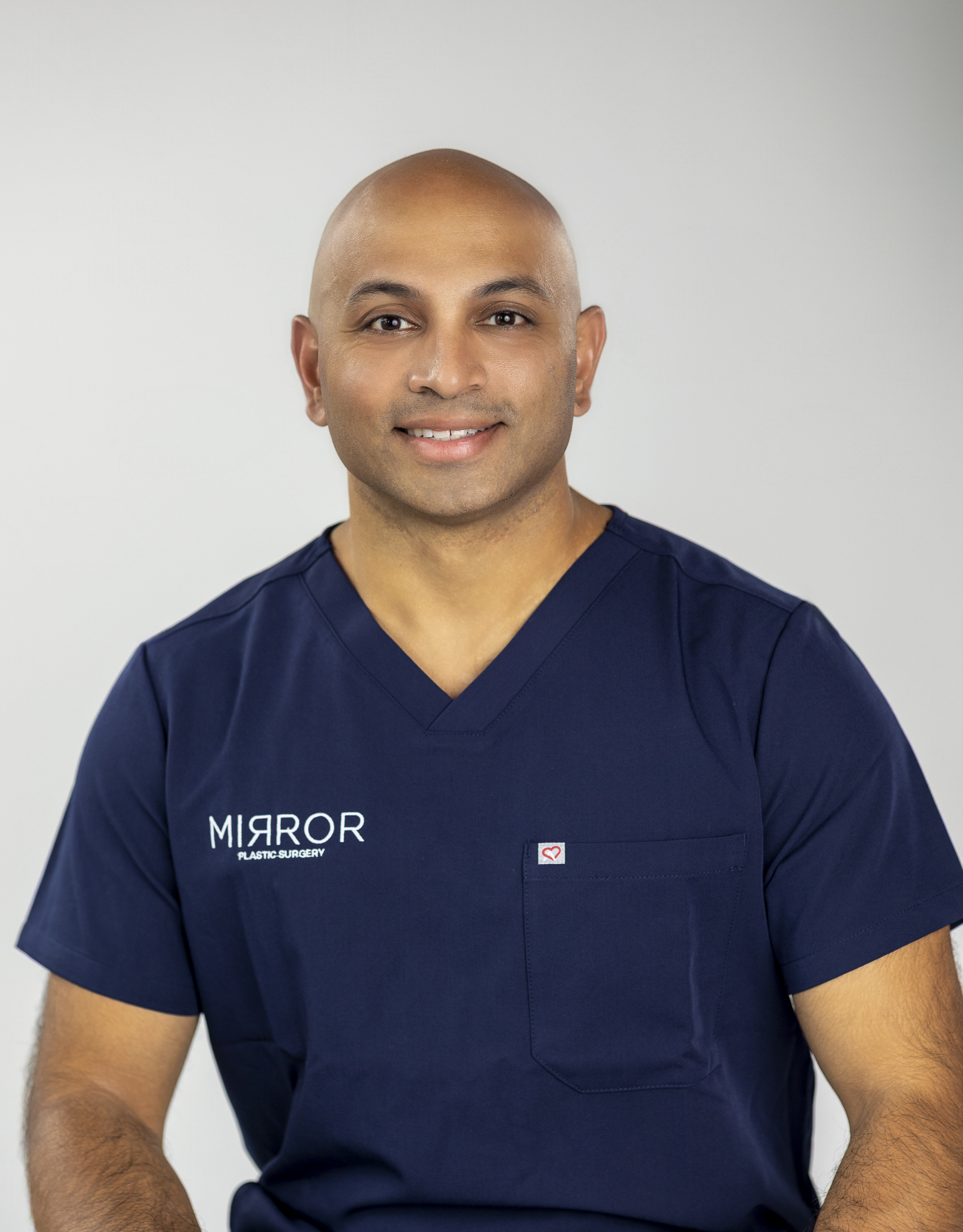
At Mirror Plastic Surgery, the practice philosophy places safety first, function second, and aesthetics third. Every lip augmentation evaluation starts with a comprehensive anatomical assessment that reviews bone structure, fat-pad volume, muscle dynamics, and philtrum length before any technique or product is chosen. The practice schedules only one to two surgeries per day so each patient receives unhurried, detailed care instead of the abbreviated evaluations common in high-volume settings. Hyaluronidase is kept on-site for every injectable appointment, and Dr. Akash’s board certification by the American Board of Plastic Surgery provides hospital-access privileges in the rare event that a complication needs escalated care.
Summary: How to Make a Confident Lip Augmentation Decision
Lip augmentation for thin lips functions as a category of options that must match the patient’s anatomy, degree of atrophy, structural concerns, and long-term goals. Conservative dosing, anatomy-specific injection planes, and staged treatment protocols are the evidence-based standards that separate natural, proportionate results from overfilled outcomes. A surgical lip lift corrects structural problems that injectables cannot fix, while HA fillers remain the most flexible, reversible, and well-studied first-line option for restoring volume.
The most influential factor in any lip augmentation result is the expertise and anatomical knowledge of the provider. A thorough, unhurried consultation that focuses on education rather than sales forms the foundation of a safe and satisfying outcome.
Book a consultation with Dr. Akash at Mirror Plastic Surgery in St. Petersburg, Florida, for a personalized, anatomy-based evaluation for lip augmentation.
Frequently Asked Questions
How long does lip augmentation last for thin lips, and will I need ongoing treatments?
Duration depends on the procedure chosen. As noted earlier, HA fillers in the lips last 6–12 months, and this area shows shorter duration than other facial regions because constant movement from talking and eating speeds breakdown. A lip flip using botulinum toxin lasts about 3–4 months.1 Autologous fat transfer can provide results that last several years, although retention in the lips is lower than in less mobile facial areas due to frequent motion.1 A surgical lip lift creates permanent structural change that ages naturally with the face and does not require product-based maintenance. For patients choosing HA fillers, repeat sessions over time usually build a cumulative foundation, and some patients notice that maintenance intervals lengthen with consistent treatment. The right interval and product for your anatomy are set during a personalized consultation.
Is lip augmentation safe for patients who have never had any injectable treatment before?
Hyaluronic acid lip fillers have a well-established safety record when a provider has strong anatomical knowledge and clear emergency protocols. For first-time patients with thin lips, a standard starting volume of 0.5 mL limits overfilling risk and lets the tissue adapt before more volume is considered. Common temporary effects include swelling that peaks at 24–48 hours, mild bruising, and tenderness, which usually resolve within one to two weeks. Serious complications such as vascular occlusion are rare and become even less likely when the injector uses blunt-tipped cannulas, maintains precise depth control, and keeps hyaluronidase immediately available. Patients with a history of cold sores should share this before treatment, since preventive antiviral medication may be recommended. A careful medical history review and candidacy assessment before any procedure form the first step in maintaining safety.
What is the difference between a lip lift and lip fillers for someone with a long upper lip?
A long upper lip, measured from the base of the nose to the vermilion border, represents a structural anatomical feature that fillers cannot correct. Hyaluronic acid fillers add volume and can sharpen definition, but they do not shorten the cutaneous lip or increase the amount of pink tissue visible at rest. A surgical lip lift, performed through a bullhorn-shaped incision hidden at the nasal base, removes a measured strip of skin to elevate the vermilion, improve tooth show, and restore a more youthful lip-to-nose ratio. For patients whose main concern is a flat, thin upper lip that disappears when smiling or a philtrum that has lengthened with age, the lip lift addresses the root anatomical problem. For patients whose primary concern is volume loss without major structural change, HA fillers are the appropriate starting point. Many patients ultimately benefit from a combined approach, with structural correction via lip lift followed by conservative filler at about three months, once tissue stability is confirmed.
Can lip augmentation look natural on very thin lips, or will the result always appear overdone?
Natural results on very thin lips are achievable with conservative dosing, anatomy-specific technique, and realistic expectations about what a single session can deliver.1 Thin lips have limited submucosal tissue to hold product, so large-volume single-session treatments carry a higher risk of migration, border blurring, and an artificial look. Starting at 0.5 mL with micro-bolus placement, aiming for an upper-to-lower lip ratio of about 1:1.2 to 1:1.3, and building volume gradually across staged sessions creates proportionate results that match the rest of the face.1 Patients with very thin lips will not see dramatic change in one session while still keeping proportion, so clear expectations matter. At Mirror Plastic Surgery, the evaluation includes a detailed discussion of what is anatomically realistic and how staged treatment unfolds over time, so patients understand the full plan before treatment begins.
What should I expect during recovery from lip augmentation at Mirror Plastic Surgery?
Recovery varies by procedure. For HA filler, swelling peaks within the first 24–48 hours, and most patients find it largely resolved by days 5–7, with final settled results visible at about two weeks. Bruising, when present, usually clears within 5–10 days. Patients should avoid strenuous exercise, heat exposure, alcohol, and pressure on the lips for the first 48 hours and should wait until the two-week follow-up before judging the final result. For a surgical lip lift, the active recovery period with activity changes lasts about two weeks, with suture removal at 5–7 days and scar maturation continuing for up to one year. Silicone scar treatment and daily broad-spectrum SPF are recommended for several months after surgery. For fat transfer, recovery includes 1–2 weeks of swelling at both the donor and treatment sites. At Mirror Plastic Surgery, every patient receives tailored aftercare guidance based on procedure type, anatomy, and medical history, and follow-up visits are scheduled to review results once healing is complete.
1 Results may vary from person to person. Editorial content, before and after images, and patient testimonials do not constitute a guarantee of specific results.