
Written by: Dr. Akash Chandawarkar, Board Certified Plastic Surgeon, Mirror Plastic Surgery | Last updated: September 9, 2026
How To Choose The Right Lip Filler For Your Goals
Your goals guide the choice of lip filler. Some patients want barely there hydration. Others want sharper borders or a fuller, but still natural, pout. The FDA has approved several hyaluronic acid fillers specifically for lip augmentation, each designed with different properties to address these needs.
To help you see how each filler aligns with common goals, here is a quick breakdown:
- Subtle enhancement and smoothing vertical lip lines: Juvéderm Volbella XC, the softest option, designed for delicate refinement
- Natural movement with definition: Restylane Kysse, a flexible gel that moves naturally when you talk and smile
- Dynamic lips that adapt to facial expressions: RHA 3, engineered to integrate with your lip’s natural motion
- More pronounced volume: Juvéderm Ultra XC, a firmer option when a noticeable difference is the goal
The consultation is where this decision becomes truly personalized. Your injector should assess your lip anatomy, skin quality, and facial proportions before recommending a specific product. They should choose based on your needs, not on what happens to be in stock. At Mirror Plastic Surgery, consultations often last up to an hour because this level of individualized assessment takes time.
Schedule a personalized lip filler consultation to receive a recommendation tailored to your anatomy and goals.
Detailed Comparison Of The Top FDA-Approved Lip Fillers
Once you know your primary goal, the next step is understanding how the leading fillers differ in structure and behavior. The comparison below highlights key features of three top FDA-approved options.
| Feature | Juvéderm Volbella XC | Restylane Kysse | RHA 3 |
|---|---|---|---|
| FDA Approval for Lips | 2016 | 2020 | 2023 |
| Formulation Technology | Vycross | XpresHAn | Resilient HA |
| Relative Firmness (G′) | Low | Medium | Medium |
| Best For | Subtle enhancement, smoothing lines | Natural movement with definition | Dynamic lips, expressive faces |
Juvéderm Volbella XC received FDA approval on May 31, 2016, for lip augmentation and correction of perioral rhytids in adults over 21. Its Vycross technology blends different molecular weights of hyaluronic acid at a lower concentration of 15 mg/mL. This makes it the softest of the three options. Patients choose Volbella when they want subtle volume, smoother lip texture, and minimal swelling.
Restylane Kysse received FDA approval in 2020 for lip augmentation and correction of upper perioral rhytids. Its XpresHAn technology delivers medium firmness with high flexibility. The filler moves with your mouth when you talk, smile, or kiss instead of feeling stiff. Many patients prefer Kysse when they want definition that still looks and feels natural in motion.
RHA 3 received FDA approval on October 27, 2023, for injection into the lips in adults aged 22 and older, making it the newest lip filler available. Its Resilient Hyaluronic Acid technology is designed to adapt to dynamic facial expressions. Clinical data showed visible lip augmentation effects in approximately 78% of subjects at 12 weeks, with effects persisting in 48% at one year.1
All three fillers are hyaluronic acid based. They attract water to create volume, integrate naturally into tissue, and can be completely dissolved with hyaluronidase if results need adjustment.
Why Injector Skill Matters More Than The Brand
Injector expertise shapes your outcome more than the brand on the syringe. A 2026 study in Aesthetic Plastic Surgery analyzing 400 lip filler patients found no systematic excess risk for any single filler brand. Results depended more on anatomy-based planning and technique than on product choice alone.
The lips are among the most vascular areas of the face. A 2026 ultrasound study of 126 participants published in Plastic and Reconstructive Surgery found that the subcutaneous layer of the lips averaged less than 1 mm in both upper and lower lips, resulting in unintended intramuscular filler placement in most treated individuals. This very thin layer means precision matters. A board-certified plastic surgeon with deep knowledge of facial and subdermal anatomy provides a crucial safety margin.
To vet your lip filler provider, start with credentials. Verify board certification in plastic surgery or dermatology, which confirms rigorous training. Then ask how many lip injections they perform monthly, since higher volume often correlates with refined technique. Review before-and-after photos of patients with similar lip anatomy to evaluate their aesthetic style. Confirm that hyaluronidase is available on-site for emergency reversal. Finally, ask them to describe their vascular occlusion protocol, because a confident, qualified injector will welcome that question.
At Mirror Plastic Surgery, Dr. Akash Chandawarkar personally performs all injections. His Harvard education, Johns Hopkins plastic surgery training, and fellowship at the Manhattan Eye Ear & Throat Hospital give him a command of facial anatomy that supports both safety and precision. His philosophy is straightforward: safety first, function second, aesthetics third.
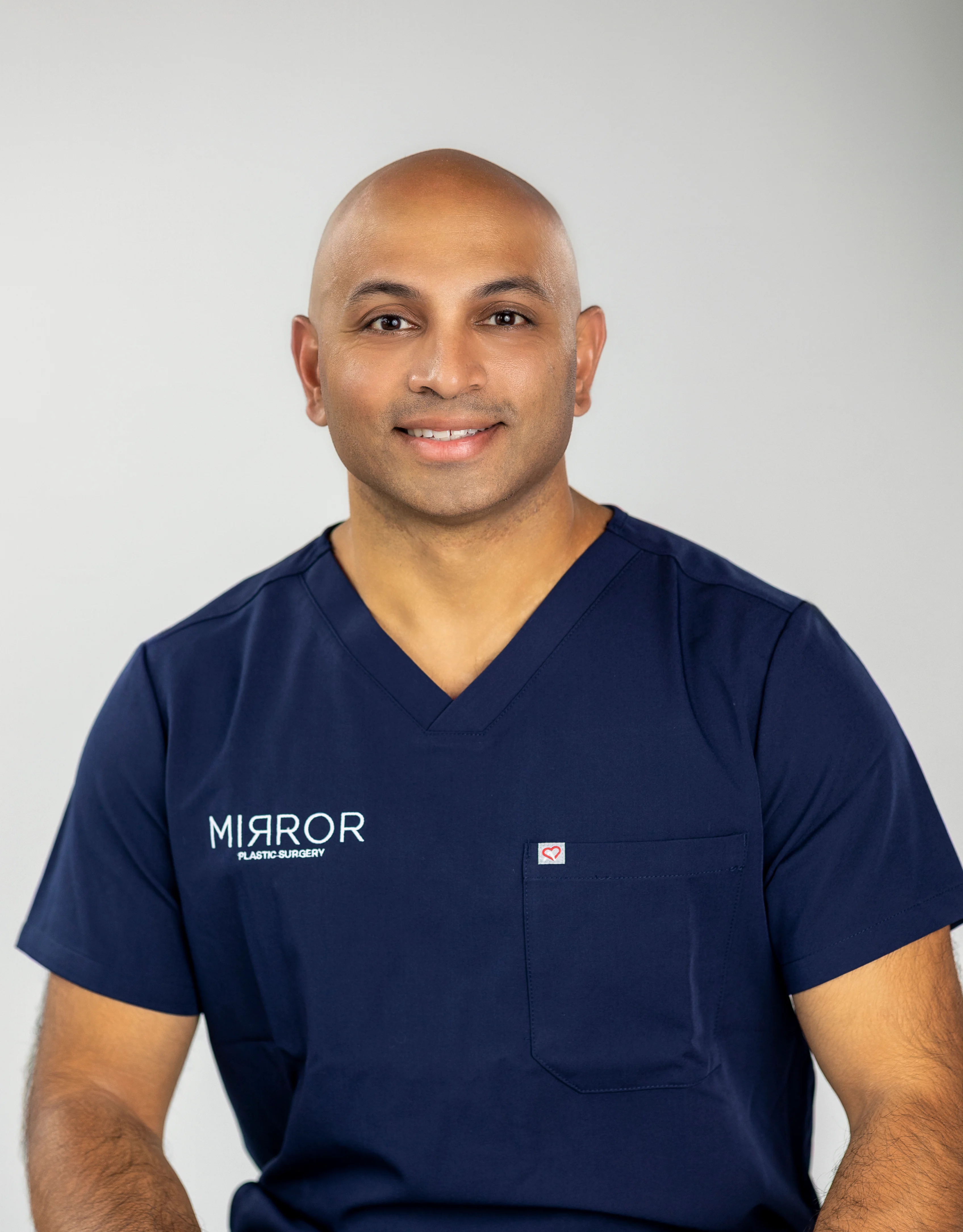
Meet with our surgeon-led team to explore a safety-first lip augmentation plan.
Safety, Risks, And Reversibility: What You Should Know
Lip filler is a medical procedure, not a spa treatment. Common side effects include swelling, which peaks within 24–48 hours and subsides over 3–7 days, along with bruising and tenderness that typically resolve within two weeks.
Serious complications are rare but real. Vascular occlusion, where filler blocks or compresses a blood vessel, occurs in approximately 1 in 6,600 procedures, according to research in the Aesthetic Surgery Journal. Warning signs include severe pain, skin blanching, or dusky discoloration. Recognition at the earliest stage and treatment within 4–6 hours usually prevents permanent damage. Because vascular occlusion is rare but serious, and early recognition is critical, choosing an experienced injector who can identify and treat complications immediately is essential.
The primary safety advantage of hyaluronic acid fillers is reversibility. HA fillers can be completely reversed with hyaluronidase, with significant degradation occurring within hours of injection, as confirmed by reversal documented across 11 published case series involving 341 patients. This safety valve explains why HA fillers dominate the market and why permanent options like silicone see far less use.
What Is The Best Lip Filler For Older Lips?
Understanding the safety profile of HA fillers matters even more for older patients, who often have different anatomical needs. As we age, lips lose volume and definition. The vermilion border thins, vertical lines deepen, and the lip itself flattens. Many patients in their 50s and 60s seek lip enhancement to restore what time has taken rather than to create dramatic fullness.
For aging lips, a conservative approach works best. Juvéderm Volbella XC often excels here, adding subtle volume while smoothing vertical lip lines. RHA 3 may also be appropriate, because its dynamic properties accommodate the natural movement of mature lips. The goal is restoration and balance across the face. A skilled injector evaluates the entire facial structure, not only the lips.
Age alone does not rule out lip fillers. Overall health, aesthetic goals, and provider expertise matter more. The ASPS recorded approximately 1,449,565 lip augmentation procedures using injectable materials in the U.S. in 2024, reflecting strong demand across a wide age range.
Natural-Looking Results: Lip Flip Vs. Filler And Avoiding The Overdone Look
The overfilled look that dominates social media usually reflects technique, not product choice. Facial overfilled syndrome is attributed primarily to inadequate anatomical knowledge, poor injection technique, inappropriate product choice, and overfilling, rather than to inherent properties of hyaluronic acid fillers.
A lip flip uses neuromodulators like Botox to relax the upper lip muscle, causing the lip to roll outward slightly. This approach enhances appearance without adding volume. Filler adds actual volume. Expert consensus confirms that the lip flip is becoming increasingly popular for subtle contouring but cannot produce the range of outcomes possible with HA-based treatments. For very subtle enhancement, some patients benefit from combining both approaches.
The key to natural results is a conservative start. A skilled injector often recommends less than you think you need, then builds gradually over sessions. The most flattering lip filler result looks like you on your best day, not like a different person.
What To Expect: Procedure, Recovery, And Longevity
The lip filler procedure usually takes 15–30 minutes. Your lips are numbed with topical anesthetic, and the filler is placed using fine needles or cannulas. Results appear immediately, although early swelling can temporarily exaggerate the effect.1
Recovery is minimal for most patients. As mentioned earlier, swelling peaks within 24–48 hours and subsides over 3–7 days, while bruising generally fades within 7–14 days.1 Most people return to normal activities right away, but strenuous exercise, alcohol, and excessive heat should be avoided for the first 24–48 hours.
Most hyaluronic acid lip fillers last approximately 6–12 months, with lips absorbing filler faster than most facial areas due to constant movement from talking, eating, and smiling.1 Maintenance treatments help sustain your results over time.
Plan your lip filler timeline with a customized treatment roadmap.
Frequently Asked Questions
What Is The Newest Lip Filler Available?
RHA 3 received FDA approval for lip augmentation in October 2023, making it the newest option currently available. It is manufactured using Resilient Hyaluronic Acid technology, which is designed to move naturally with dynamic facial expressions. It is FDA-approved for adults aged 22 and older and is particularly well suited for patients with expressive lips who want a filler that adapts to their natural movement rather than sitting rigidly in the tissue.
Which Lip Filler Looks The Most Natural?
Natural-looking results come from matching the filler to your anatomy and goals, then placing it with precise technique. Juvéderm Volbella XC offers the most subtle enhancement because of its low firmness and soft formulation. Restylane Kysse provides natural movement with definition, which suits patients who want their lips to look and feel authentic in motion. RHA 3 is engineered specifically for dynamic integration. In every case, injector skill and conservative dosing shape the outcome more than the brand name.
Do Lips Sag After Lip Fillers?
Hyaluronic acid fillers do not cause sagging. The gel integrates into tissue, attracts water to create volume, and gradually metabolizes over months. Repeated overfilling over time, however, can stretch the skin and alter natural lip architecture. A conservative, staged approach, starting with less product and building gradually, is the standard of care at Mirror Plastic Surgery. Patients who have received excessive filler elsewhere may benefit from dissolving existing product with hyaluronidase before beginning a fresh, anatomy-respecting treatment plan.
What Looks More Natural: Lip Flip Or Filler?
A lip flip uses a small amount of neuromodulator injected into the orbicularis oris muscle, causing the upper lip to roll slightly outward. It creates the appearance of a fuller upper lip without adding volume. Filler physically adds volume and can reshape the lip border, body, and proportions. For patients who want subtle refinement without fullness, a lip flip may look more natural. For patients who want restored definition, improved symmetry, or correction of age-related volume loss, filler is often more appropriate. Many patients benefit from a combination of both, which Dr. Chandawarkar evaluates during a comprehensive consultation.
Are Lip Fillers Safe?
Yes, when performed by a qualified, experienced provider. FDA-approved hyaluronic acid fillers are biocompatible, well studied, and reversible with hyaluronidase. Common side effects, such as swelling, bruising, and tenderness, are temporary and manageable. Serious complications such as vascular occlusion are rare, occurring at the 1 in 6,600 rate mentioned earlier. The primary safety factors are injector credentials, anatomical knowledge, conservative technique, and immediate access to hyaluronidase on-site. At Mirror Plastic Surgery, Dr. Chandawarkar’s surgical background and safety-first philosophy address each of these factors directly.
The Best Filler Is The One Chosen By An Expert
The best dermal filler for lips is the one matched to your anatomy, your aesthetic goals, and your injector’s expertise. Juvéderm Volbella XC, Restylane Kysse, and RHA 3 each offer distinct advantages among the leading lip fillers in 2026, yet all of them rely on a skilled, safety-focused injector who understands the complexity of lip anatomy.
At Mirror Plastic Surgery, Dr. Akash Chandawarkar brings Harvard-level education, Johns Hopkins surgical training, and fellowship-level aesthetic expertise to every injection. His approach, with safety first, function second, and aesthetics third, means your results rest on anatomical precision rather than brand marketing. If you are considering lip enhancement in the St. Petersburg or Tampa area and want honest, unbiased guidance from a board-certified plastic surgeon, the next step is a thorough, unhurried consultation.
Request your comprehensive lip filler consultation to find the right filler for your face.
Disclaimer: Results may vary from person to person. Editorial content, before and after images, and patient testimonials do not constitute a guarantee of specific results.
1 Results may vary from person to person. Editorial content, before and after images, and patient testimonials do not constitute a guarantee of specific results.