
Written by: Ellie Pranckevicius, FNP-BC, Aesthetic Nurse Practitioner & Aesthetic Injector | Facial Restoration & Regenerative Injectable Specialist, Mirror Plastic Surgery | Last updated: August 9, 2026
Key Takeaways
- Bioidentical hormones chemically match those produced by the ovaries and can relieve common menopausal symptoms such as hot flashes, night sweats, and sleep disruption.1
- FDA-approved bioidentical products undergo federal review for safety and quality, while compounded preparations lack this oversight and carry additional risks.
- The February 2026 FDA labeling update removed certain warnings from approved products but does not apply to compounded bioidentical hormones.
- Women with a history of breast cancer, blood clots, stroke, or active liver disease should avoid hormone therapy and explore non-hormonal options such as peptide protocols.
- Schedule a personalized consultation at Mirror Plastic Surgery to discuss whether FDA-approved hormone therapy, peptide support, or both are right for your menopause goals.
How Bioidentical Hormones Support Menopause Relief
Bioidentical hormones are synthetic hormones derived from plant sources such as soy or yams and processed in a laboratory to match endogenous molecular structures including estradiol, estriol, progesterone, testosterone, and DHEA. Their molecular structure mirrors the body’s own hormones, so they bind to the same receptors and produce the same physiological effects, especially for vasomotor symptoms.
Nearly 80% of women experience perimenopausal and menopausal vasomotor symptoms, which can persist for years and significantly affect sleep, mood, and daily functioning.
Regulated vs Compounded Bioidentical Hormones
FDA-approved bioidentical hormones are finished drug products reviewed by the FDA for safety, efficacy, and consistent manufacturing before marketing. Compounded bioidentical hormone therapies are custom-mixed by compounding pharmacies, are not FDA-approved as finished products, and lack standardized potency testing. The key distinction is not whether a hormone is bioidentical, but whether the final product is FDA-approved or compounded.
The February 12, 2026 FDA labeling update approved changes for six menopausal hormone therapy products, including Prometrium, Divigel, Cenestin, Enjuvia, Bijuva, and Estring, and removed cardiovascular disease, breast cancer, and probable dementia language from their boxed warnings. These changes apply exclusively to FDA-approved finished hormone products and do not cover compounded bioidentical hormones, which the FDA does not review or approve for safety, efficacy, or quality. The following table summarizes the regulatory and safety differences that often guide whether an FDA-approved or compounded option makes sense for your situation.
| Feature | FDA-Approved Bioidentical Products | Compounded Bioidentical Preparations | February 2026 Update Applicability |
|---|---|---|---|
| FDA review for safety & efficacy | Yes, required before marketing | No, each batch not FDA-reviewed as a finished drug | Applies only to FDA-approved products |
| Standardized potency & purity | Yes, cGMP manufacturing required | Variable, no standardized potency testing | Not addressed by February 2026 update |
| Boxed warning status (post-Feb 2026) | CVD, breast cancer, dementia language removed; endometrial cancer warning retained on estrogen-alone products | No boxed warning framework, unregulated | N/A for compounded products |
| Clinical trial evidence | Phase III trials with robust safety data | No equivalent randomized controlled trial data | Not changed by February 2026 update |
| NASEM 2020 recommendation | Preferred when clinically appropriate | Restrict to documented allergy or unavailable dosage form | Not changed by February 2026 update |
How Bioidentical Hormones Fit Within HRT
The framing of “HRT versus bioidentical hormones” reflects an outdated distinction. The term “bioidentical” is not a regulatory category, and many FDA-approved hormone therapy products, including estradiol patches, gels, and oral micronized progesterone, are already bioidentical by molecular structure.
The 2002 Women’s Health Initiative study that generated widespread concern about HRT used conjugated equine estrogens and medroxyprogesterone acetate, not bioidentical estradiol and micronized progesterone. Subsequent research suggests a more favorable profile for the bioidentical formulations. Bioidentical progesterone has a generally favorable cardiovascular profile and does not appear to share the elevated breast cancer signal associated with synthetic progestins like medroxyprogesterone acetate. This distinction has informed updated clinical guidance.
The British Menopause Society’s 2020 recommendations confirm that HRT prescribed before age 60 has a favorable benefit to risk profile. When initiated before age 60 or within 10 years of menopause, it is likely associated with a reduction in coronary heart disease and cardiovascular mortality.1
Risks and Downsides of Bioidentical Hormones
Bioidentical hormone therapy carries risks broadly similar to those of conventional HRT. These include an increased chance of breast cancer, blood clots, stroke, and endometrial cancer. Risk magnitude depends on age, dose, duration, route of administration, and personal health history.
The February 2026 FDA labeling update removed cardiovascular disease, breast cancer, and probable dementia language from the boxed warnings of six products, but the endometrial cancer warning remained in the boxed warning on systemic estrogen-alone products such as Divigel, Cenestin, and Enjuvia. The update also removed the instruction to “use the lowest dose for the shortest time” and added language that starting hormone therapy can be considered for moderate to severe hot flashes in women under 60 or within 10 years of menopause.
For compounded preparations, additional risks apply. Pellet implants can produce supraphysiologic estradiol levels and have been linked to endometrial hyperplasia. A 2026 recall of more than 100,000 estradiol pellets due to contamination risk highlighted these concerns.
Duration of Bioidentical Hormone Use
Clinicians should reassess patients on hormone therapy regularly by monitoring risks and benefits annually, assessing symptoms, comorbidities, vital signs, and laboratory values. Tapering should be considered each year starting after age 60, when risks begin to outweigh benefits.
This age-based guidance reflects the evidence base. Randomized studies show that women who initiate menopausal hormone therapy within 10 years of menopause onset, generally before age 60, experience a reduction in all-cause mortality, while those starting later face a less favorable risk profile.
Duration beyond that window requires individualized evaluation. The British Menopause Society April 2026 consensus advises that management of menopause-related problems should follow national and international guidance and prioritize regulated products whenever possible.
Who Is Not a Candidate for Bioidentical Hormones?
Women with certain medical histories should not use bioidentical hormone therapy. See the detailed contraindication list below for specific conditions that require avoidance or extra caution.
The following conditions represent absolute or relative contraindications requiring careful individual evaluation:
- History of breast cancer or other estrogen-sensitive neoplasia
- Active deep vein thrombosis, pulmonary embolism, or thrombophlebitis, or history of these conditions
- Active or recent (within the past year) arterial thromboembolic disease such as stroke or myocardial infarction
- Active liver disease or uncontrolled hypertension
- Unexplained vaginal bleeding
- Migraine with aura, hypertriglyceridemia, or strong family history of hormone-dependent cancers (relative contraindications requiring heightened caution)
- Active smoking combined with elevated stroke or clotting risk
A significant proportion of women should not take menopausal hormone therapy, and individual evaluation with a qualified clinician is required to determine candidacy.
Comparing Bioidentical Hormone Delivery Methods
Each delivery method offers distinct benefits, side effects, and practical tradeoffs. The table below compares FDA-approved and compounded options across symptom targets, safety markers, and day-to-day considerations so you can see which routes may align with your health profile and treatment goals.
Weight, Belly Fat, and Metabolic Concerns
Metabolic changes during menopause, including increased abdominal adiposity, insulin resistance, and slowed metabolism, are among the most common concerns women raise. Hormone therapy’s role in these changes is nuanced. Common side effects of BHRT include bloating and weight gain, though most are dose-related and tend to improve once the dose or delivery form is adjusted.1
Route of administration matters for metabolic outcomes. Oral estradiol undergoes first-pass liver metabolism, increasing clotting factor synthesis and raising blood clot and stroke risk, and should be avoided in women with a 10-year ASCVD cardiovascular risk of 5% or higher. Transdermal delivery avoids these hepatic effects, making it the preferred route for women with elevated cardiovascular risk or metabolic concerns. The pharmacokinetics of oral micronized progesterone can also vary among individuals and may influence weight and fluid balance.
For some women, these metabolic effects, combined with contraindications or personal preference, make hormone therapy less suitable. For women whose primary concern is weight management, metabolic optimization, or body composition rather than vasomotor symptom control, supervised peptide protocols represent a distinct, non-hormonal pathway worth evaluating alongside or instead of hormone therapy.
Peptide Therapy Options at Mirror Plastic Surgery
Peptide therapies are amino acid chains that target specific physiological pathways, including inflammation, metabolic function, collagen synthesis, and energy production, without directly altering the hormonal axis. For menopausal women who are not candidates for hormone therapy, prefer a non-hormonal approach, or want adjunct support for weight management and tissue health, supervised peptide protocols offer a structured alternative.
At Mirror Plastic Surgery, peptide protocols are led by Ellie Pranckevicius, FNP-BC, and may include:
- GLP-3R compounding targets appetite, insulin resistance, and cardiovascular risk factors and is similar to GLP-1 but reported to have fewer gastrointestinal side effects and lower muscle-wasting risk.
- NAD (Nicotinamide Adenine Dinucleotide) supports mitochondrial energy production and cellular anti-aging pathways.
- GHK-Cu (Copper Peptide) supports collagen and elastin production, skin health, and hair and nail rejuvenation.
- BPC-157 and TB500 address systemic and soft-tissue inflammation, as well as muscle, tendon, and joint repair.
- Sermorelin/Ipamorelin stimulate natural growth hormone production and support muscle retention and metabolic fitness.
- Selank is a nootropic peptide for anxiety and mood support that acts on similar brain pathways as benzodiazepines without dependency risk.
Peptides are not FDA-regulated. Their use requires medical supervision, in-depth lab review, and quality-assured sourcing to minimize risk and improve outcomes. Mirror Plastic Surgery sources peptides from providers with rigorous batch testing and provides 24/7 concierge support throughout each protocol.
Practitioner Context: Ellie Pranckevicius, FNP-BC
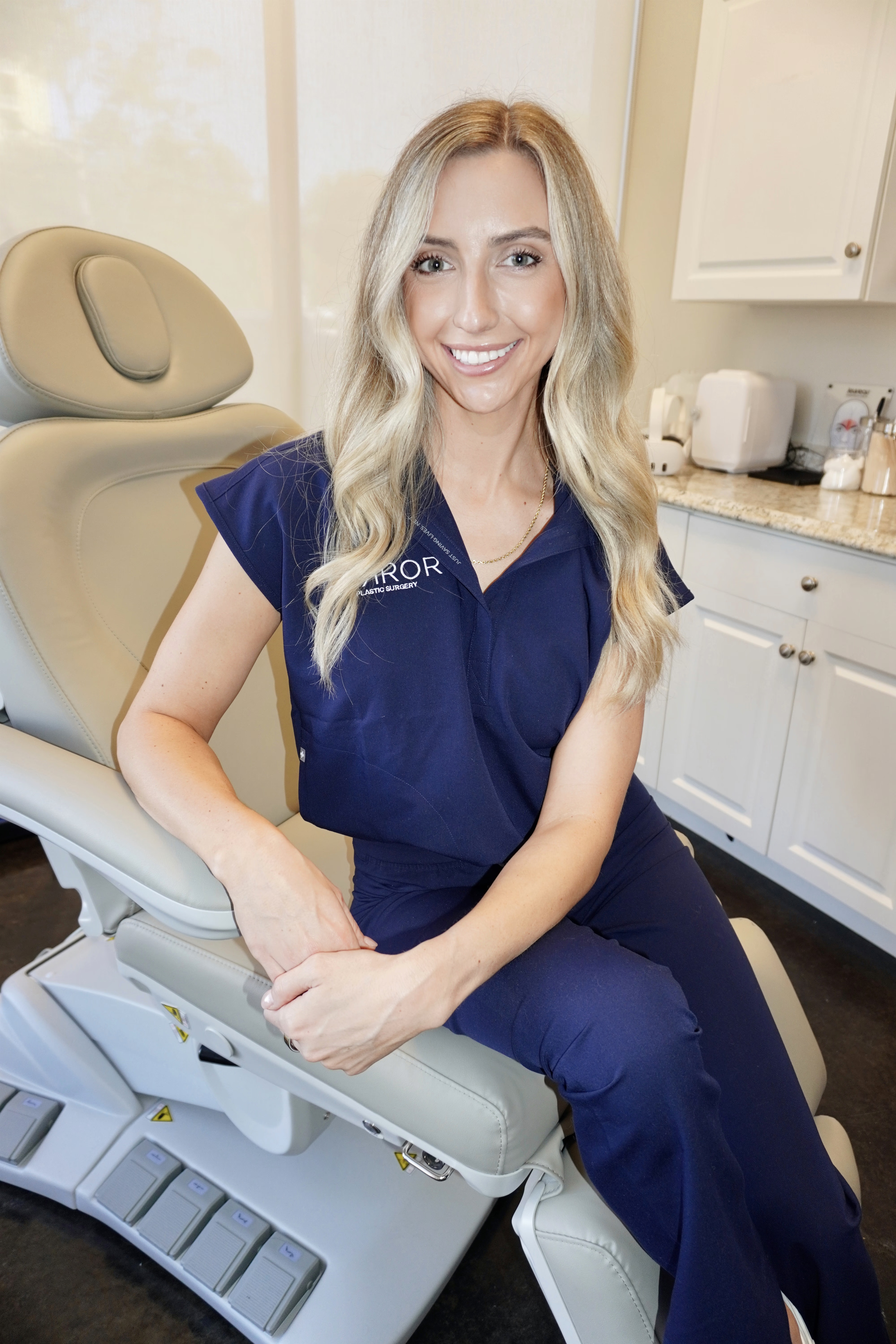
Ellie Pranckevicius is a board-certified Family Nurse Practitioner with a clinical foundation built across four years in the Neuroscience ICU at Tampa General Hospital, where she managed complex patients who required advanced physiological and metabolic assessment. She holds a Bachelor’s in Health Science from Boston University, completed an aesthetics licensure program, and earned both her Bachelor’s and Master’s in Nursing from the University of South Florida.
Ellie began her career at a high-end medical spa in Boston, which gave her a dual perspective that bridges skin physiology and aesthetic goals with the clinical science required to achieve them safely. Her approach to patient care is rooted in education and transparency. She explains the physiology behind each recommendation in accessible terms and often advises clients when a service or product is not yet necessary for them.
Concierge Care at Mirror Plastic Surgery
Mirror Plastic Surgery offers 30 to 60 minute consultations with Ellie that include a full review of medical history, current symptoms, and health goals. For weight management or inflammatory concerns, in-depth lab panels covering thyroid, liver, kidney, diabetes markers, and hormone levels are reviewed or ordered.
Peptides are sourced from reputable providers with documented batch testing for purity and accurate dosage. Patients receive direct 24/7 text access to Ellie for ongoing support, protocol adjustments, and refill requests. The entire process, from consultation through prescription and shipping, is available in person at the St. Petersburg clinic or remotely across the United States.
Key Decision Factors and Next Steps
Choosing between FDA-approved bioidentical hormone therapy, compounded preparations, and non-hormonal peptide protocols depends on several individual factors. These include symptom severity and type, time since menopause onset, age, contraindication profile, delivery route preference, and metabolic health status. The February 2026 FDA labeling update clarifies that FDA-approved bioidentical products carry an updated and more accurate risk profile for women under 60 or within 10 years of menopause, but that update does not extend to compounded preparations.
The Menopause Society’s 2022 position states that FDA-approved hormone therapy is safe for most healthy women under 60 or within 10 years of menopause onset, while acknowledging legitimate use cases for compounded HRT when patients cannot access needed formulations through FDA-approved products.
For women who are not candidates for hormone therapy or who want adjunct metabolic and anti-aging support, supervised peptide protocols at Mirror Plastic Surgery provide a structured, evidence-informed alternative with concierge-level oversight.
Medical, Regulatory, and Outcomes Disclaimers
This article is for informational and educational purposes only and does not constitute medical advice, diagnosis, or treatment. The February 2026 FDA labeling changes described apply to six specific FDA-approved menopausal hormone therapy products and do not extend to compounded bioidentical hormone preparations. Individual eligibility for any hormone therapy or peptide protocol must be determined through a qualified clinician following a full medical history review, symptom assessment, and, where appropriate, laboratory evaluation.
Peptide therapies offered at Mirror Plastic Surgery are not FDA-approved or FDA-regulated. Results from peptide protocols vary significantly between individuals based on genetics, health status, lifestyle, and the specific protocol used. No outcomes are guaranteed. Statements in this article regarding peptide therapies reflect current clinical use and available research and should not be interpreted as FDA-approved claims.
Mirror Plastic Surgery is located at 780 4th Ave S, St. Petersburg, FL 33701. To speak with Ellie Pranckevicius directly, call or text 727-361-6515 or email hello@mirrorplasticsurgery.com.
Frequently Asked Questions
What is the difference between FDA-approved bioidentical hormones and compounded bioidentical hormones?
FDA-approved bioidentical hormones are finished drug products that have undergone federal review for safety, efficacy, and manufacturing consistency before being marketed. Examples include estradiol patches, gels, oral micronized progesterone (Prometrium), and combination products like Bijuva. Compounded bioidentical hormones are custom-mixed by compounding pharmacies for individual patients and are not FDA-approved as finished products, meaning they have not been independently tested for dose accuracy, purity, or absorption. The February 2026 FDA labeling update applies only to FDA-approved preparations and does not change the regulatory status of compounded products. For details on which products were affected and what warnings were removed, see the section “Regulated vs Compounded Bioidentical Hormones” above. The National Academies of Sciences, Engineering, and Medicine’s 2020 report concluded that compounded bioidentical hormone therapy should be restricted to patients with a documented allergy to an ingredient in an FDA-approved product or a need for a dosage form unavailable commercially.
Who should not take bioidentical hormone therapy?
Absolute contraindications to bioidentical hormone therapy, whether FDA-approved or compounded, include known or suspected estrogen-sensitive breast cancer, unexplained vaginal bleeding, active or recent venous thromboembolism, active liver disease, and recent stroke or myocardial infarction. Relative contraindications requiring heightened caution include migraine with aura, controlled hypertension, hypertriglyceridemia, and a strong family history of hormone-dependent cancers. Approximately 25% of women are not appropriate candidates for menopausal hormone therapy.
Individual eligibility must be assessed by a qualified clinician through a full medical history review and, where appropriate, laboratory evaluation. Women over 60 or more than 10 years past menopause onset face a less favorable benefit to risk ratio and require particularly careful evaluation before initiating or continuing therapy.
Can peptide therapy be used instead of or alongside bioidentical hormone therapy for menopause?
Peptide therapies and bioidentical hormone therapies address different physiological targets and are not direct substitutes for one another. Bioidentical hormone therapy directly replaces declining estradiol and progesterone to relieve vasomotor symptoms, protect bone density, and support cardiovascular health in eligible women. Peptide protocols target specific pathways, including inflammation, metabolic function, collagen production, energy, and weight management, without directly altering the hormonal axis.
For women who are not candidates for hormone therapy due to contraindications, or who prefer a non-hormonal approach, supervised peptide protocols can address menopause-adjacent concerns such as weight gain, fatigue, skin aging, and mood. For women already on hormone therapy, peptide protocols may serve as adjunct support for metabolic and tissue health goals. Any decision to use peptides alongside hormone therapy should involve a clinician who can review the full clinical picture, including current medications, lab values, and health history.
How long does it take to see results from peptide therapy, and are the results permanent?
The timeline for peptide therapy results varies significantly depending on the peptide used, the condition being addressed, the individual’s physiology, and protocol adherence. Some clients report initial improvements within the first hours or week of use for certain conditions, while other goals, such as collagen remodeling or sustained weight management, develop over weeks to months.1
Results are not permanent in the same way that a surgical outcome might be. If a peptide protocol is discontinued, the physiological benefits it was supporting will typically diminish over time, similar to stopping any health maintenance regimen.1 Continued use through a maintenance protocol is often necessary to sustain achieved benefits. At Mirror Plastic Surgery, Ellie Pranckevicius designs protocols with long-term goals in mind and provides ongoing monitoring and adjustment to support durable outcomes.
What does a peptide therapy consultation at Mirror Plastic Surgery involve?
A peptide therapy consultation with Ellie Pranckevicius at Mirror Plastic Surgery is a comprehensive 30 to 60 minute appointment that covers full medical history, current symptoms, health goals, and any relevant prior treatments or lab results. For weight management, inflammatory conditions, or hormonal concerns, in-depth lab panels, including thyroid, liver, kidney, diabetes markers, and hormone levels, are reviewed if available or ordered if not.
Based on this evaluation, Ellie designs a custom peptide stack and protocol tailored to the individual’s unique physiology and goals. Peptides are sourced from reputable providers with documented batch testing for purity and accurate dosage. Following the initial consultation, patients receive direct 24/7 text access to Ellie for ongoing support, protocol questions, and refill requests. Consultations are available in person at the St. Petersburg clinic or remotely across the United States, including Hawaii and Alaska.
1 Results may vary from person to person. Editorial content, before and after images, and patient testimonials do not constitute a guarantee of specific results.
Peptide therapy is intended for wellness and optimization purposes and is not prescribed to diagnose, treat, cure, or prevent disease unless specifically stated. Many peptides are not FDA-approved and may be used off-label. Some have limited long-term safety data, with a potential for unknown risks, complications, or desensitization with prolonged use.