
Written by: Ellie Pranckevicius, FNP-BC, Aesthetic Nurse Practitioner & Aesthetic Injector | Facial Restoration & Regenerative Injectable Specialist, Mirror Plastic Surgery | Last updated: August 10, 2026
Key Takeaways
- Bioidentical hormone testing measures circulating sex hormones and pituitary signals to create a baseline for BHRT decisions.
- Symptoms and quality-of-life impact, not isolated lab values, drive therapy decisions in major guidelines.
- Serum blood testing with LC-MS/MS remains the reference standard for sex-hormone assessment. Saliva and dried-urine panels play narrower or non-endorsed roles.
- Clinician-ordered serum panels interpreted alongside medical history and symptoms provide the most useful information for safe, personalized BHRT and peptide care.
- Schedule a concierge hormone evaluation at Mirror Plastic Surgery to review your symptoms and decide whether testing should be your next step.
Why Symptoms Guide BHRT More Reliably Than Single Lab Numbers
Major guideline bodies agree that symptom burden and quality-of-life impact should guide hormone therapy decisions more than isolated lab values. Clinicians use labs to support a diagnosis, not to replace clinical judgment.
Clinical diagnosis, not a single blood draw, defines menopause. Menopause is diagnosed after 12 consecutive months without a menstrual period rather than by any single hormone blood test. For women over 45 with classic symptoms and cycle changes, ACOG, NICE NG23 (updated 2024), and Mayo Clinic guidelines state that perimenopause is diagnosed clinically based on age, symptoms, and period changes, with no routine lab testing required.
Real-world evidence supports this symptom-first framework. A prospective cohort study of postmenopausal women used symptom scores and STRAW criteria rather than hormone values alone and still showed symptom improvement with menopausal hormone therapy.1 Laboratory values function as supportive tools within that clinical picture, not as standalone decision drivers.
Testing becomes appropriate in specific circumstances. Serum FSH may be considered when a woman is aged 40 to 45 with symptoms or under 40 with suspected premature ovarian insufficiency.
Comparing Blood, Saliva, and Urine Testing for Real-World Accuracy
When testing is appropriate, the method you choose affects how confidently your clinician can act on the results. Three modalities dominate the bioidentical hormone testing landscape. Each measures hormones differently, offers specific strengths, and carries limitations that shape how results guide care. The table below shows what each method actually measures, where it performs well, and where its limits make it less useful for BHRT decisions.
| Modality | What It Measures | Key Strengths | Key Limitations |
|---|---|---|---|
| Serum blood (LC-MS/MS) | Total and free hormone concentrations (estradiol, testosterone, progesterone, FSH, LH, SHBG) | Widely regarded as a clinical reference standard with good precision for estradiol, testosterone, and cortisol. Serum testosterone is widely used for monitoring transdermal testosterone replacement therapy. | A single test reflects a momentary level. Hormone levels fluctuate with circadian rhythms, menstrual cycles, and individual variability. FSH, LH, and estradiol fluctuate markedly during perimenopause, so a single sample can be misleading. |
| Saliva | Free (unbound) hormone fraction of steroid hormones including cortisol, estradiol, progesterone, testosterone, and DHEA | Late-night salivary cortisol is a well-validated first-line screening test endorsed in Endocrine Society guidelines for Cushing syndrome. Measures the bioavailable fraction without a venous draw. | Salivary testing often shows higher variability than serum and is not typically used for HRT titration. Saliva and dried blood spot testosterone testing lack sufficient clinical correlation and should not be used for transdermal testosterone monitoring, because they routinely produce supraphysiological values unrelated to benefit. |
| Dried urine (DUTCH) | Hormone metabolites including estrogen pathways (2-OH, 4-OH, 16-OH estrone) and cortisol metabolites | Reports downstream metabolites such as estrogen pathways and cortisol metabolites that standard serum panels usually omit, giving a broader metabolic picture. | DUTCH panels are laboratory-developed tests and are not endorsed by guidelines for menopausal hormone therapy dose titration. Reference ranges are determined by the performing laboratory. |
Key Blood Markers and When to Add Thyroid or Adrenal Testing
A practical female hormone panel often includes estradiol, progesterone, total and free testosterone, SHBG, DHEA-S, and thyroid markers. This combination gives a clear view of ovarian output and how hormones circulate and bind in the body.
Clinicians add thyroid and adrenal markers when symptoms overlap with perimenopause. Because hypothyroidism can cause fatigue, weight gain, and mood changes that mirror perimenopause, TSH, free T3, and free T4 help rule out thyroid dysfunction before attributing symptoms to hormonal shifts. Blood cortisol testing can also indicate adrenal function, but timing and context matter. Morning draws between 8 am and 9 am capture peak levels, and clinicians interpret results alongside symptoms and other findings rather than in isolation.
Timing and preparation affect every draw. When baseline sex-hormone labs are ordered for a still-menstruating woman, early follicular phase collection improves consistency between tests.
For women considering peptide protocols that affect the growth hormone axis, a responsible baseline panel must first establish metabolic safety. Fasting glucose, fasting insulin, HbA1c, a full lipid panel, liver enzymes (ALT, AST), a comprehensive metabolic panel for kidney function, and TSH help assess how the body handles glucose and lipids. When hormonal dysfunction is also suspected, adding total and free testosterone, DHEA-S, LH, FSH, and estradiol ensures the protocol addresses both metabolic and endocrine baselines rather than a single axis.
Insurance Coverage and Out-of-Pocket Costs for Hormone Testing
Insurance coverage for hormone testing and BHRT usually tracks with FDA approval status and documented medical necessity. Insurers often cover hormone testing and lab work when a clinician orders them for diagnosis or monitoring.
FDA-approved bioidentical formulations receive more favorable coverage. Generic FDA-approved estradiol patches typically cost $15–$50 per month with a discount card and are frequently insurance-covered, while generic micronized progesterone costs about $14–$30 per month with a discount card and is often covered. Compounded formulations, pellets, and testosterone for women occupy a different category. Most commercial insurance plans exclude coverage for compounded bioidentical hormones from compounding pharmacies because these formulations are not FDA-approved.
Saliva testing faces additional coverage barriers and rarely receives reimbursement. Coverage for saliva hormone testing is often limited or not covered by insurance; insurance companies typically prefer blood tests for hormone level assessments. HSA and FSA funds can offset eligible BHRT expenses, including testing, regardless of insurance coverage.
One practitioner’s experience highlights the practical impact. “The validated lab methodology for sex hormone assessment is serum, not saliva. I see patients walk in with hundreds of dollars of saliva test results that I cannot use to make a treatment decision.”
How Lab Testing Shapes Personalized Peptide Protocols
Hormone testing directly informs peptide therapy decisions at Mirror Plastic Surgery. Growth hormone secretagogues such as Sermorelin and Ipamorelin stimulate endogenous GH release through GH secretagogue receptors, and their effects depend on the hormonal environment revealed by baseline labs.
These peptides can change body composition and influence glucose metabolism.1 Because of that, monitoring insulin sensitivity and glucose levels becomes essential for safe use in wellness protocols. Clinical monitoring then looks at the overall pattern of effects, not just a single marker.
For women with PCOS or suspected hormonal imbalance, growth hormone axis function intersects with androgen metabolism and insulin signaling. A complete hormone panel therefore becomes a prerequisite rather than an optional add-on. At the same time, biomarker-guided dosing is replacing fixed protocols, with progressive practitioners adjusting peptide doses based on regular bloodwork including IGF-1 levels for growth hormone secretagogues, inflammatory markers for repair peptides, and hormonal panels for peptides affecting the endocrine system. Together, these trends show why baseline and follow-up labs sit at the center of modern peptide care.
At Mirror Plastic Surgery, Ellie Pranckevicius reviews comprehensive lab panels before designing any peptide protocol. Sermorelin, Ipamorelin, and other growth hormone-related peptides are matched to each patient’s metabolic and hormonal baseline rather than applied as a one-size template.
Discuss your lab results with Ellie and design a peptide protocol tailored to your hormone profile.
Red Flags When Considering At-Home Hormone Testing Kits
Direct-to-consumer hormone testing kits have grown rapidly, yet several built-in limits reduce their value when results will guide treatment.
- At-home urine FSH kits detect elevated FSH but cannot confirm perimenopause because levels swing day to day. They work best as conversation starters with clinicians rather than standalone decision tools.
- Finger-prick capillary blood spot kits are more prone to hemolysis and small sample volume issues than venous draws, which makes them less reliable for hormones with tight reference ranges, short half-lives, or specific timing requirements.
- Reference ranges for hormone levels vary between laboratories and reflect population averages, not individual “ideal” levels, so results still require interpretation alongside symptoms, medical history, and physical examination.
- Serum testing ordered by a clinician allows personalized interpretation and follow-up, unlike direct-to-consumer panels or at-home urine kits that lack clinical context and insurance coverage.
Risks and Limitations of Bioidentical Hormones
Bioidentical hormones carry real risks and require ongoing clinical oversight. ACOG and the Endocrine Society state there is no evidence that compounded bioidentical hormones are safer or more effective than FDA-approved formulations. Compounded preparations also introduce concerns about dosage consistency and quality control that FDA-approved products do not share.
Growth hormone-related peptides that are sometimes paired with BHRT add their own risk profile. Therapies acting on the GH-IGF-1 axis can cause fluid retention and metabolic effects.1 No growth hormone secretagogue trial longer than two years has been published, so long-term cancer and mortality risk remain unknown and justify continued lab surveillance.
The British Menopause Society adds a methodological caution. Claims for the benefits of compounded bioidentical hormone replacement therapy have been largely extrapolated from studies of conventional regulated bioidentical hormone replacement therapy, which means the evidence base for compounded preparations remains thinner than marketing often suggests.
Will Insurance Pay for Bioidentical Hormones?
Coverage depends primarily on whether the formulation is FDA-approved and how the clinician documents medical necessity. As discussed in the cost section above, FDA-approved formulations such as estradiol patches and oral micronized progesterone are typically covered when prescribed for an FDA-labeled indication, often with prior authorization or step therapy.
Compounded formulations, pellet therapy, and testosterone for women usually fall outside standard coverage. Blue Cross Blue Shield plans are much more likely to cover FDA-approved bioidentical hormones than custom-compounded preparations because the latter lack FDA oversight for safety, effectiveness, and dosage consistency. Patients may use HSA or FSA funds to pay for bioidentical hormone therapy, including hormones, consultations, and lab work, because it qualifies as a medical expense.
How Long Women Can Safely Continue Bioidentical Hormones
Duration of therapy depends on ongoing symptom assessment and individual risk profile rather than a fixed time limit. The British Menopause Society 2020 consensus advises that decisions about HRT duration should be individualized based on symptoms and risk assessment.
NAMS and Endocrine Society guidelines recommend periodic reassessment of symptoms, risk factors, and patient preference. NICE recommends a review three months after starting each treatment for menopause-associated symptoms, including HRT, and then at least annually, with more frequent reviews if side effects or other clinical issues arise. Each annual review incorporates updated cardiovascular risk, breast density monitoring, bone health, and the patient’s current symptom burden.
Next Steps in Tampa Bay: Concierge Lab Analysis at Mirror Plastic Surgery
Mirror Plastic Surgery uses in-office concierge hormone testing and lab analysis as the starting point for every BHRT and peptide protocol. Instead of relying on at-home kits or generic direct-to-consumer panels, the practice orders clinician-directed serum panels through certified laboratories, interprets results alongside a full symptom review, and builds individualized protocols from that combined picture.
The concierge model gives each patient a 30 to 60 minute consultation, a detailed review of medical history and current symptoms, and a custom protocol. That plan may involve BHRT, peptide therapies such as Sermorelin or Ipamorelin, or a combination approach. Ongoing monitoring, including follow-up lab panels and direct access to Ellie Pranckevicius, keeps dosing aligned with symptom response and updated biomarkers rather than a fixed starting prescription.
Mirror Plastic Surgery is located at 780 4th Ave S, St. Petersburg, FL 33701, and serves the broader Tampa Bay area. Remote consultations are also available across the United States.
Begin your concierge hormone evaluation with Ellie at Mirror Plastic Surgery.
Meet Your Practitioner: Ellie Pranckevicius, FNP-BC
Ellie Pranckevicius is a board-certified Family Nurse Practitioner and the lead practitioner for peptide therapies and non-surgical aesthetics at Mirror Plastic Surgery. She earned her Bachelor’s in Health Science from Boston University on the premedical track, completed an aesthetics licensure program, and obtained both her Bachelor’s and Master’s in Nursing from the University of South Florida. Four years in the Neuroscience ICU at Tampa General Hospital gave her a deep foundation in physiology, metabolic health, and complex patient management.
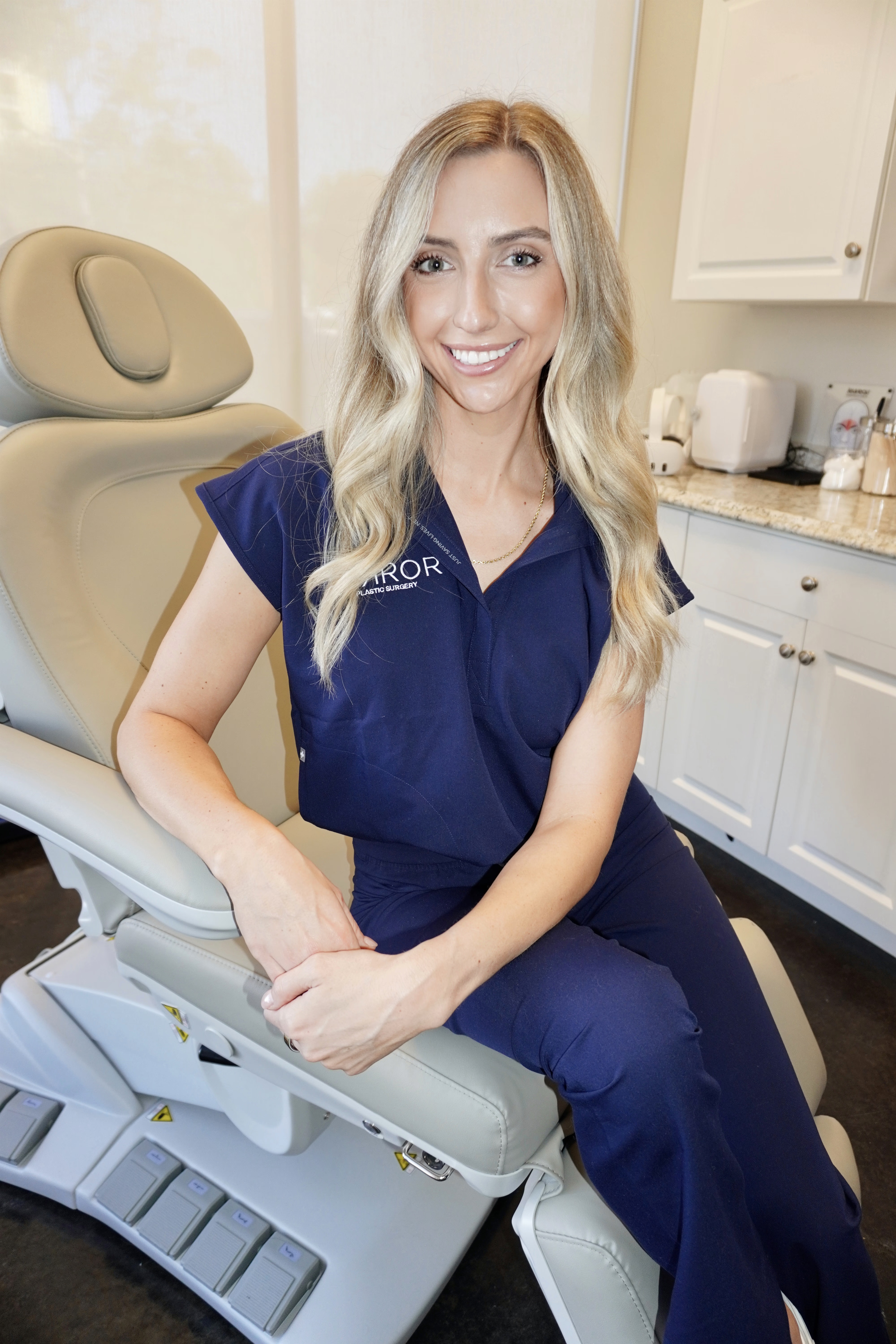
Ellie began her career at a high-end medical spa in Boston, where she developed expertise in skin physiology and aesthetic assessment before pursuing her nurse practitioner credentials. That dual background, combining esthetician training with advanced clinical nursing, shapes her approach to hormone and peptide care. She understands both the aesthetic goals patients want and the clinical science required to reach them safely.
Her practice philosophy centers on education and transparency. She explains the physiology behind each recommendation in accessible terms so patients understand not only what they are taking but also why. She often tells patients when a service or product is not yet necessary, prioritizing long-term outcomes over short-term revenue. When surgical needs arise, Ellie’s work is complemented by Dr. Akash Chandawarkar, MD, a Harvard-educated physician, Johns Hopkins-trained plastic surgeon, and founder of Mirror Plastic Surgery.
Summary: Turning Hormone Testing into Clear, Individualized Decisions
Bioidentical hormone testing works best as a supportive clinical tool rather than a standalone diagnostic system. Serum blood testing analyzed by LC-MS/MS remains the validated reference standard endorsed by NAMS, the Endocrine Society, and ACOG for most reproductive hormone decisions. Saliva testing has a narrow validated role in cortisol rhythm assessment and is not recommended for HRT titration. Dried urine panels provide metabolite data that serum cannot capture but lack guideline endorsement and broad insurance coverage.
Symptoms, clinical history, and individualized risk assessment guide therapy decisions more reliably than any single hormone value. Testing becomes most useful when it rules out conditions that mimic perimenopause, confirms premature ovarian insufficiency in younger women, establishes a metabolic baseline before peptide protocols, and monitors specific markers such as testosterone or IGF-1 when those therapies are prescribed.
For Tampa Bay women navigating this landscape, Mirror Plastic Surgery offers serum-based lab analysis, symptom-integrated interpretation, and medically supervised peptide protocols that at-home kits and generic online panels cannot match.
Frequently Asked Questions
Which hormone test is most accurate for guiding BHRT decisions?
Serum blood testing analyzed by liquid chromatography-mass spectrometry (LC-MS/MS) is the validated clinical reference standard for sex hormones, endorsed by the Endocrine Society, NAMS, and ACOG. It delivers the lowest analytical variability of the three main modalities and is the only method with published clinical guidelines supporting its use for monitoring hormone replacement therapy. Saliva testing has a validated role only for diurnal cortisol assessment and is not recommended for estradiol, progesterone, or testosterone monitoring during HRT. Dried urine panels provide metabolite data that serum cannot capture, but they are classified by the FDA as laboratory-developed tests without premarket accuracy review and are not endorsed by NAMS for dose titration. For most women making BHRT decisions, a clinician-ordered serum panel interpreted alongside a full symptom review provides the most actionable and guideline-aligned information.
Do I need hormone testing before starting BHRT or a peptide protocol?
For women over 45 with classic perimenopause symptoms, major guidelines including ACOG, NICE NG23, and Mayo Clinic state that perimenopause is a clinical diagnosis that does not require routine lab testing. Testing becomes important when a woman is under 45 with symptoms, when premature ovarian insufficiency is suspected, when symptoms could reflect thyroid disease or another condition, or when a peptide protocol affecting the growth hormone or metabolic axis is under consideration. Before growth hormone secretagogues such as Sermorelin or Ipamorelin, a baseline panel including fasting glucose, fasting insulin, HbA1c, lipid panel, liver enzymes, and a comprehensive metabolic panel represents responsible clinical practice. At Mirror Plastic Surgery, Ellie Pranckevicius reviews existing lab results, or orders them when needed, before designing any personalized protocol.
Will my insurance cover hormone testing and BHRT?
Insurance coverage depends on whether the formulation is FDA-approved and whether the provider documents medical necessity. Clinician-ordered serum hormone panels are frequently covered under medical evaluation and management codes even when the hormone therapy itself is not. As discussed earlier, FDA-approved bioidentical formulations such as estradiol patches and oral micronized progesterone are typically covered when prescribed for an FDA-labeled indication, often with prior authorization. Compounded bioidentical hormones, pellet therapy, and testosterone for women are common coverage gaps across most commercial plans. Saliva hormone testing is rarely covered. HSA and FSA funds can be applied to eligible hormone therapy expenses, including consultations, lab work, and medications, regardless of insurance coverage. Mirror Plastic Surgery recommends verifying your specific plan’s benefits before your consultation.
How does hormone testing connect to peptide therapy at Mirror Plastic Surgery?
Hormone testing establishes the metabolic and endocrine baseline that makes peptide protocol design safer and more precise. Growth hormone secretagogues such as Sermorelin and Ipamorelin interact with the GH-IGF-1 axis, which intersects with insulin signaling, androgen metabolism, and adrenal function. Without a baseline panel, clinicians cannot reliably identify pre-existing glucose dysregulation, thyroid dysfunction, or hormonal imbalances that could affect how a patient responds to a peptide protocol. At Mirror Plastic Surgery, Ellie Pranckevicius uses lab results alongside a detailed symptom review and medical history to build custom peptide stacks tailored to each patient’s physiology. Follow-up lab monitoring, including IGF-1 for growth hormone secretagogues and metabolic markers for GLP-related peptides, supports ongoing safety and protocol adjustment based on real biomarker data rather than fixed schedules.
What is the difference between regulated and compounded bioidentical hormones?
Regulated bioidentical hormones are FDA-approved products, such as estradiol patches, gels, and oral micronized progesterone, that have undergone premarket review for safety, efficacy, and dosage consistency. Compounded bioidentical hormones are custom-prepared by compounding pharmacies and are not FDA-approved, so they have not been subject to the same standardized manufacturing and quality controls. As noted earlier, major guideline bodies including the Endocrine Society, ACOG, and The Menopause Society have found no evidence that compounded formulations offer safety or efficacy advantages over FDA-approved options. ACOG’s 2023 clinical consensus goes further and advises against routinely prescribing compounded bioidentical hormone therapy when FDA-approved formulations are available. Clinicians reserve compounding primarily for documented allergies to approved products or for doses and delivery forms not commercially available. Insurance coverage reflects this distinction, with FDA-approved formulations typically covered and compounded preparations almost universally excluded.
Disclaimer: The information in this article is intended for educational purposes only and does not constitute medical advice, diagnosis, or a treatment recommendation. Bioidentical hormone therapy and peptide therapies, including growth hormone secretagogues, are not one-size-fits-all interventions; individual results vary based on genetics, health history, lab values, and clinical context. Many peptide therapies discussed are not FDA-approved, and compounded bioidentical hormone formulations are not FDA-approved products. Insurance coverage for hormone testing and therapy varies by plan, formulation, and documented medical necessity. Consult a qualified, licensed healthcare provider before initiating, modifying, or discontinuing any hormone or peptide therapy. Mirror Plastic Surgery’s peptide and hormone services are led by a board-certified Family Nurse Practitioner operating within the scope of applicable Florida state law.
1 Results may vary from person to person. Editorial content, before and after images, and patient testimonials do not constitute a guarantee of specific results.
Peptide therapy is intended for wellness and optimization purposes and is not prescribed to diagnose, treat, cure, or prevent disease unless specifically stated. Many peptides are not FDA-approved and may be used off-label. Some have limited long-term safety data, with a potential for unknown risks, complications, or desensitization with prolonged use.