
Written by: Ellie Pranckevicius, FNP-BC, Aesthetic Nurse Practitioner & Aesthetic Injector | Facial Restoration & Regenerative Injectable Specialist, Mirror Plastic Surgery | Last updated: June 27, 2026
Key Takeaways for BBL Revision in Tampa Bay
- BBL revision aims to restore natural proportions, addressing excessive projection, asymmetry, and contour irregularities that many Tampa Bay patients experience.
- Targeted lipo-reduction and strategic grafting can correct many issues, but they rarely fix poor skin quality or significant laxity from the original procedure.1
- Surgical revision demands high precision to avoid new irregularities, while biostimulatory fillers such as Radiesse and AlloClae offer lower-downtime options for mild to moderate contour and texture concerns.
- Choosing a specialist who prioritizes safety, performs a detailed anatomical assessment, and limits surgical volume supports safer planning and more predictable outcomes.
- Schedule a personalized revision assessment with Ellie Pranckevicius, Mirror’s Aesthetic Nurse Practitioner to review your anatomy, goals, and safest options.
What a BBL Revision Can and Cannot Change
BBL revision addresses several common problems, which generally fall into volume issues and shape issues. Volume concerns include reducing overall gluteal size or softening an overly projected or shelf-like lower pole. Shape concerns include smoothing contour irregularities from uneven fat grafting, correcting asymmetry between sides, and improving donor-site irregularities from the original liposuction harvest.
Revision has clear limits. It rarely corrects poor skin quality or significant laxity that developed after the original procedure.1 Skin stretched by excessive volume may not fully retract after reduction.1 That possibility needs open discussion before finalizing any plan. Realistic revision planning starts with an honest anatomical assessment, not a promise of a specific silhouette.
The American Society of Plastic Surgeons emphasizes that buttock procedures carry unique anatomical risks, and revision can compound those risks without careful planning. Any provider who recommends revision without a thorough evaluation of your fat distribution, skin envelope, and underlying musculature is skipping a critical safety step.
Targeted Lipo-Reduction vs. Additional Grafting in Revision
Two main surgical strategies reshape an overdone BBL result. One removes volume through targeted liposuction of the gluteal region. The other redistributes volume through additional fat grafting to correct specific contour deficits while reducing volume elsewhere.
Targeted gluteal lipo-reduction is the more direct path when excess projection or overall size is the main complaint. The procedure itself is straightforward in concept. A surgeon uses small cannulas to selectively remove fat from the upper, lateral, or lower gluteal zones, depending on where the imbalance lies. What makes this work demanding is the need for extreme precision. Fat grafted in a prior procedure may have integrated unevenly with surrounding tissue. Removing too much in one area can create new irregularities, so revision lipo-reduction often proves more technically challenging than primary liposuction on native fat.
Additional grafting fits better when shape is the problem rather than total volume. For example, if central projection is excessive but the lateral hips look flat, a surgeon can reduce the central mound while grafting fat to the hips. This combination creates a more balanced silhouette without a dramatic change in overall size. That approach requires strong three-dimensional judgment and specific experience in secondary body contouring, not just high-volume primary BBL work.
At Mirror Plastic Surgery, Dr. Akash Chandawarkar, a Harvard-educated physician and Johns Hopkins-trained plastic surgeon with fellowship training at the Manhattan Eye Ear & Throat Hospital, performs a structured top-to-bottom assessment before recommending any surgical path.
Muscle Injection Realities and Safety Limits
One of the most important safety boundaries in BBL revision involves the gluteal muscles. As noted earlier, buttock procedures carry unique anatomical risks, and intramuscular fat injection is the specific factor that makes deep revision work particularly dangerous.
Fat that was inadvertently placed inside the muscle during an original BBL cannot be safely targeted for selective removal with standard liposuction. Large gluteal vessels, especially the superior and inferior gluteal veins, sit close to the deep muscular plane. Aggressive cannula work in that area carries serious vascular risk. A qualified revision surgeon stays in the subcutaneous plane and avoids deep muscular dissection.
This limitation does not resolve with greater technical skill. It reflects a fixed anatomical constraint that any honest provider will acknowledge. Patients who were told their original BBL involved deep or intramuscular placement should share that information during their revision consultation so the surgical plan accounts for it.
Non-Surgical Biostimulatory Filler Options for Subtle Correction
Many BBL revision concerns do not require another surgery. Patients with moderate issues such as mild asymmetry, hip dip irregularities, surface texture changes, or a shape that needs gentle softening often benefit from non-surgical biostimulatory fillers.
Radiesse and AlloClae are the primary options for gluteal non-surgical correction at Mirror Plastic Surgery. Radiesse is a calcium hydroxylapatite-based biostimulatory filler that stimulates collagen production over time. It improves skin quality and provides structural support without adding heavy bulk. AlloClae is a newer biostimulatory option used for buttock contouring, hip dip correction, and surface refinement. Grouping these treatments under one plan allows tailored correction of shape and texture with minimal downtime.
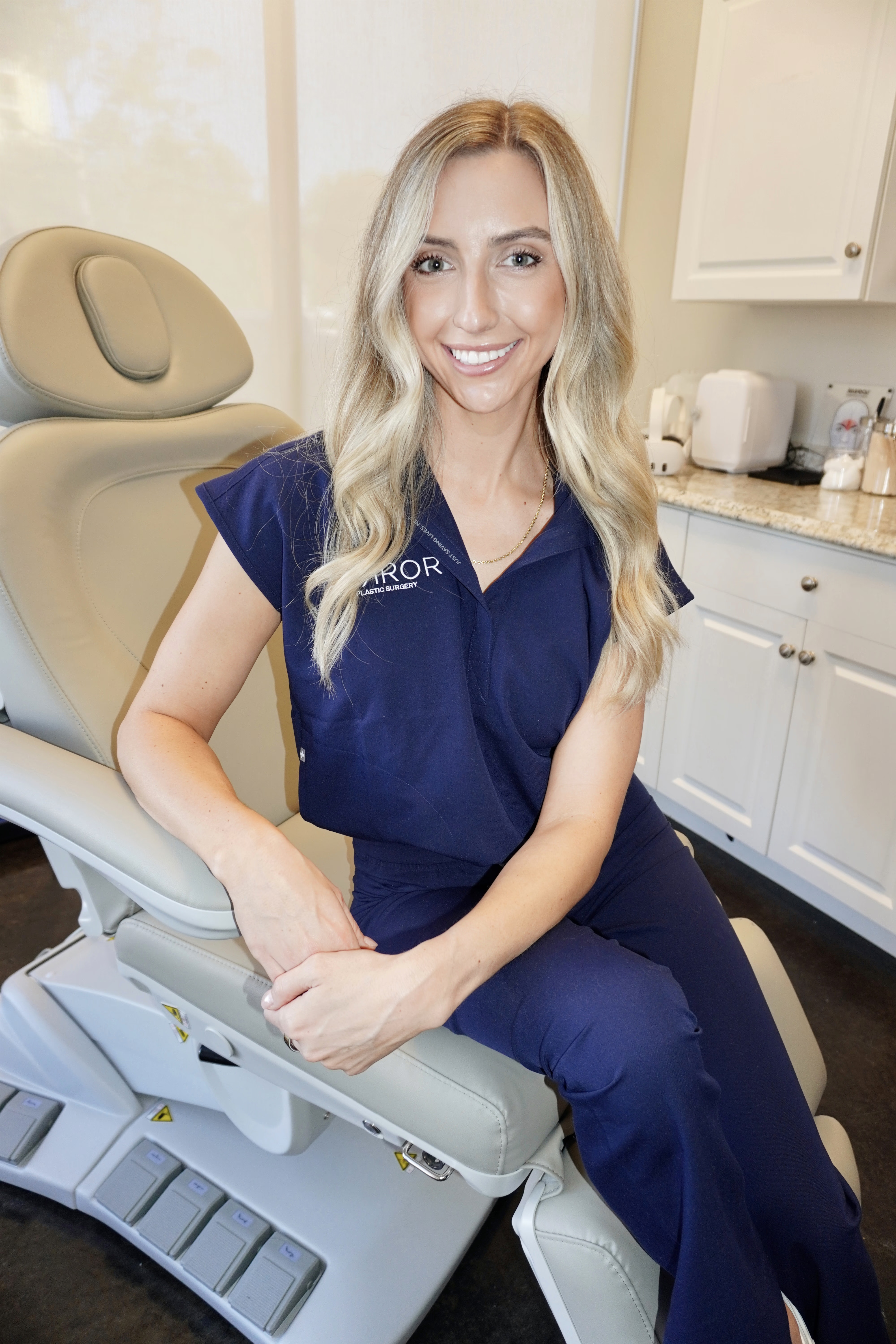
These treatments focus on reshaping and smoothing rather than simple volume addition. Strategic placement balances contours instead of creating a larger buttock. Ellie Pranckevicius, Mirror’s Aesthetic Nurse Practitioner, specializes in non-surgical BBL services with biostimulatory fillers. Her approach draws on her background in esthetics and advanced nursing, including four years in the Neuroscience ICU at Tampa General Hospital.
Non-surgical options do not suit patients who want significant volume reduction. That distinction will be addressed clearly during a thorough consultation.
Recovery Timeline and Tampa Lifestyle Planning
Surgical BBL revision usually follows a recovery arc similar to the original procedure. Most patients spend two to four weeks with restricted sitting, consistent compression garment use, and limited physical activity.1 Tampa Bay’s active lifestyle, including beach days, paddleboarding, and regular workouts, requires realistic planning around these limits.
Florida’s heat and humidity also affect wound healing and comfort in compression. Patients often do better when they schedule revision outside peak summer months. If that is not possible, they should plan for the added discomfort of wearing a compression garment in high heat and adjust outdoor time accordingly.
Non-surgical biostimulatory correction involves minimal downtime. Most patients modify activity for 24 to 48 hours, then resume normal routines. Results develop gradually over weeks to months as collagen remodels.1 A single session rarely provides full correction. A staged treatment plan usually offers more meaningful and natural-looking improvement.
How to Choose a Revision Specialist in 2026
Understanding recovery and treatment options is only part of the decision. The provider who performs your revision largely determines how safely and effectively those options are used. Revision body contouring is more technically demanding than primary surgery, so the selection criteria should reflect that reality.
Board certification in plastic surgery by the American Board of Plastic Surgery is a basic requirement. It does not, by itself, distinguish one revision surgeon from another. Beyond credentials, the key questions focus on experience, surgical volume, and candor. First, how many revision cases the surgeon performs each year, not just BBLs in general. Second, whether they run a high-volume primary BBL practice or limit their caseload to maintain focus on complex cases. Third, whether they will tell you clearly if revision is not the right path for your anatomy.
Practices that perform five to ten surgeries per day operate on a different model than those that limit the schedule to one or two. That difference affects the time available for planning, the attention to detail in the operating room, and the follow-up support you receive.
Experience Mirror’s hour-long, top-to-bottom consultation by booking an appointment with Ellie Pranckevicius, Aesthetic Nurse Practitioner for a comprehensive revision evaluation.
10-Year Outlook and Long-Term Maintenance
Grafted fat changes over time. Across a decade, fat cells that survived the original BBL respond to weight shifts, hormonal changes, and natural aging just like fat in other body areas. A result that looks well balanced after revision can shift again, especially if body weight changes significantly.
Patients considering revision should view the goal as durable improvement rather than a permanent freeze of a specific shape. Biostimulatory fillers used for non-surgical correction also need periodic maintenance as collagen remodeling cycles naturally. A long-term relationship with a provider who understands your anatomy and goals often matters more than any single corrective procedure.
Realistic Expectations for BBL Revision Results
Revision surgery can significantly improve proportion and reduce excessive projection, but it cannot guarantee a precise silhouette.1 One reason is that skin behavior after volume reduction remains partly unpredictable. Some patients experience strong retraction, while others develop residual laxity.
Asymmetry often improves but rarely reaches perfect symmetry.1 Underlying tissue structure and fat integration differ between sides, which limits how closely they can match. Even with skilled technique, some contour irregularities from the original procedure may persist, especially when early grafting created scar tissue or uneven integration that cannot be fully reversed.
The most satisfied revision patients understand these limits and focus on what is achievable for their anatomy. An honest provider will show a realistic range of outcomes for your situation, not only the most dramatic success stories.
High-Volume Practices vs. Concierge Care at Mirror
The BBL market in Florida has long been shaped by high-volume, price-driven practices. Many revision patients come from that environment and describe feeling rushed, undertreated, or underinformed about risks during their first experience.
Mirror Plastic Surgery follows a concierge model tailored to revision needs. The team limits surgical volume to one or two cases per day, allows up to an hour for initial consultations, and maintains supplier-neutral product selection. Recommendations focus on what fits your anatomy and goals, not on quotas or commissions. Dr. Akash’s training background, which includes medical device innovation work at Stanford, supports an evidence-based approach to both surgical planning and non-surgical product selection.
Next Steps for Tampa Bay BBL Revision Patients
Patients in the Tampa Bay area who are considering BBL revision benefit most from a comprehensive consultation. That visit should cover your anatomy, the details of your original procedure, and your goals for proportion and long-term maintenance. Mirror Plastic Surgery’s team provides this level of assessment with the depth and honesty that complex revision decisions require.
Frequently Asked Questions
What is the difference between a BBL revision and a BBL reversal?
A BBL reversal usually refers to aggressive removal of grafted fat to bring the buttocks as close as possible to their pre-procedure state. A BBL revision is a broader term that includes any corrective procedure aimed at improving the shape, symmetry, or proportion of a prior BBL result. Revision may involve reducing volume, redistributing it, or using non-surgical methods to soften contours. True full reversal is rarely achievable because grafted fat integrates with surrounding tissue over time. Most patients seeking a more natural, “normal-looking” butt after an overdone BBL do better with a targeted revision plan than with an attempted complete reversal.
Is non-surgical BBL correction with biostimulatory fillers safe for someone who already has grafted fat?
Biostimulatory fillers such as Radiesse and AlloClae can be used safely in patients with prior fat grafting when placed by a provider with strong anatomical knowledge of the gluteal region. The key is precise, superficial placement that avoids important vascular structures. These fillers stimulate collagen production and improve surface contour rather than adding large amounts of volume. They work well for mild asymmetry, hip dip refinement, or texture improvement in post-BBL patients. They do not replace surgical reduction when excess volume is the main concern. A thorough consultation is necessary to decide whether non-surgical correction fits your situation.
How long does recovery from BBL revision surgery take, and when can I return to normal activity in Tampa?
Recovery from surgical BBL revision usually mirrors the original procedure. Most patients avoid direct sitting pressure for two to four weeks and wear a compression garment for six to eight weeks. Light walking starts early to support circulation, while high-impact activity, swimming, and prolonged sitting remain restricted during the initial phase. For Tampa Bay patients, Florida’s heat and humidity add practical challenges. Wearing a compression garment feels harder in warm weather, and sun exposure to healing incisions should be avoided. Planning your revision timing with these factors in mind, and discussing them with your surgeon, improves recovery compliance and outcomes.
Will my BBL revision results be permanent?
Surgical revision results that involve fat removal or redistribution are long lasting but still respond to aging, weight changes, and hormonal shifts.1 Grafted fat that remains after revision behaves like fat elsewhere in the body. It expands with weight gain and shrinks with weight loss. Non-surgical biostimulatory correction requires periodic maintenance as stimulated collagen remodels over months to years. The most realistic view is that revision sets a better baseline proportion. Maintaining that baseline over a decade or more requires ongoing attention and a trusted long-term provider relationship.
How do I know if I need surgical revision or if non-surgical options are enough?
The right path depends on the degree of concern and the specific anatomical issue. Patients who want significant volume reduction, where overall buttock size is the main complaint, almost always need surgical lipo-reduction because injectables do not remove meaningful fat volume. Patients whose concerns focus on shape, surface texture, mild asymmetry, or hip contour irregularities may do well with non-surgical biostimulatory correction using Radiesse or AlloClae. Many revision patients benefit from a staged plan. Surgery addresses the primary volume problem, followed by non-surgical refinement of remaining contour issues. A comprehensive consultation that reviews your anatomy, original procedure details, and goals is the only reliable way to determine the best approach.
Disclaimer: Results may vary from person to person. Editorial content, before and after images, and patient testimonials do not constitute a guarantee of specific results.
1 Results may vary from person to person. Editorial content, before and after images, and patient testimonials do not constitute a guarantee of specific results.