
Written by: Ellie Pranckevicius, FNP-BC, Aesthetic Nurse Practitioner & Aesthetic Injector | Facial Restoration & Regenerative Injectable Specialist, Mirror Plastic Surgery | Last updated: June 28, 2026
Key Takeaways
-
The BBL safe injection technique keeps all fat or filler in the subcutaneous layer and away from or below the gluteal muscle fascia.
-
Five critical steps, including a shallow cannula angle, depth checks, 0.1 mL per-pass limits, real-time ultrasound, and 30-minute monitoring, remove pulmonary fat embolism risk.1
-
Four anatomical danger zones must be avoided: the gluteal muscle belly, sciatic notch corridor, superior gluteal vessel territory, and any plane below the gluteal fascia.
-
Non-surgical biostimulatory fillers such as Radiesse and alloClae create gluteal contour in the same safe subcutaneous plane while avoiding risks from general anesthesia, liposuction harvest, and intramuscular injection.1
-
Patients who want zero-embolism-risk gluteal contouring can schedule a consultation at Mirror Plastic Surgery for personalized, board-certified care.1
Preventing Fat Embolism During BBL
Fat embolism occurs when injected material enters a blood vessel and travels to the lungs. The following five-step protocol addresses each technical factor that increases that risk.
-
Limit cannula angle to ≤30° from the skin surface. Steep insertion angles push cannula tips toward deeper muscular planes where the superior and inferior gluteal vessels run. A shallow trajectory keeps the cannula tip in the subcutaneous fat and away from intramuscular vessels.
-
Confirm depth landmarks before every pass. Subcutaneous thickness in the gluteal region changes with each patient. The injector confirms depth using palpable bony landmarks, including the posterior superior iliac spine above and the ischial tuberosity below, before any injection begins.
-
Stage volume at ≤0.1 mL per pass. Small-volume, multi-pass placement lowers hydrostatic pressure that could push material into venous sinusoids. No single pass should exceed 0.1 mL, regardless of the total volume planned for the session.
-
Use real-time ultrasound guidance throughout the procedure. Ultrasound lets the injector see the cannula tip in real time, confirm subcutaneous placement, and catch any deep migration before injecting. This technology offers the single most powerful safeguard available.
-
Monitor the patient for at least 30 minutes after injection. Vital signs, oxygen saturation, and patient-reported symptoms stay under continuous observation after the final pass. Any change in breathing, chest discomfort, or unstable blood pressure requires immediate emergency action.
These five steps function as the minimum standard of care for any provider performing gluteal fat grafting.
Buttock Injection Danger Zones to Avoid
Knowing where not to inject is as critical as using the right technique. The following four zones stay off-limits during any gluteal augmentation procedure.
-
The gluteal muscle belly and deep intramuscular plane. The gluteus maximus contains large venous sinusoids that connect directly to the systemic circulation. Any injection into this plane carries the highest documented risk of fatal fat embolism and remains categorically contraindicated.
-
The sciatic notch corridor. The greater sciatic notch carries the sciatic nerve, the superior and inferior gluteal arteries, and the pudendal neurovascular bundle. Cannula tips must stay clearly lateral and superficial to this corridor at all times.
-
The superior gluteal vessel territory. The superior gluteal artery exits the pelvis above the piriformis muscle. Injections in the superomedial buttock risk direct arterial entry. This zone requires ultrasound confirmation of vessel location before any injection.
-
Below the gluteal fascia boundary. The deep gluteal fascia forms the lower limit of the safe injection zone. Any plane deeper than this structure, in any quadrant, lies outside the subcutaneous compartment and must be avoided. Ultrasound confirmation of fascial depth occurs before the first pass in every session.
Safe BBL Technique Checklist for Surgical Fat Grafting
The safe BBL technique combines the protocols above into a practical, six-point checklist for surgical fat grafting.
-
Cannula selection: blunt-tip, 18–22 gauge, 15–20 cm length. Blunt cannulas lower the chance of puncturing a vessel compared with sharp needles. The length range suits different body types while preserving tactile feedback.
-
Pre-procedure ultrasound mapping. Before the first pass, ultrasound maps subcutaneous depth, fascial boundaries, and any superficial vessels specific to the patient.
-
Cannula angle held at ≤30° during all passes. The injector confirms this visually and by feel. Any increase in resistance that suggests fascial contact leads to immediate withdrawal and repositioning.
-
Volume staging at ≤0.1 mL per pass with multi-pass distribution. The total session volume spreads across many low-volume passes instead of a few large bolus injections.
-
Real-time ultrasound confirmation before each deposit. The injector visualizes the cannula tip within the subcutaneous layer on ultrasound before releasing any volume.
-
Staged sessions instead of single high-volume procedures. Total volume goals divide across several appointments with healing time between them. This approach limits vascular load per session and allows tissue evaluation between visits.
Comparing Surgical BBL Risks and Non-Surgical Biostimulatory Contouring
Even when a surgeon follows strict subcutaneous-only protocols, surgical fat grafting still involves general or deep sedation anesthesia, donor-site liposuction, fat processing, and reinjection of the patient’s own fat. Each step adds its own risk. Non-surgical biostimulatory filler gluteal contouring with products such as Radiesse or alloClae removes intramuscular injection risk by design because these products are formulated for subcutaneous and supraperiosteal planes and are not indicated for intramuscular use. The table below compares how major risk categories differ between surgical and non-surgical approaches so you can see how design changes remove entire classes of risk instead of only reducing them.
|
Risk Factor |
Surgical Intramuscular BBL |
Non-Surgical Biostimulatory Filler (Radiesse / alloClae) |
Basis |
|---|---|---|---|
|
Pulmonary fat embolism |
Documented, highest mortality risk when intramuscular plane is entered |
Not applicable, no autologous fat used |
Mechanism: intramuscular venous sinusoid cannulation |
|
General anesthesia exposure |
Required for liposuction donor harvest |
Not required, performed under topical or local anesthesia |
Procedural design difference |
|
Donor-site morbidity |
Present, liposuction seroma, contour irregularity, infection risk at harvest site |
None, no harvest site |
Procedural design difference |
|
Intramuscular injection risk |
Present if depth protocols are violated |
Eliminated by product indication and injection plane |
Product labeling and injection anatomy |
Radiesse stimulates your own collagen production through calcium hydroxylapatite microspheres placed in the subcutaneous plane. alloClae, an allograft-based biostimulatory injectable, supports tissue architecture through a regenerative mechanism without any intramuscular placement. Both options allow precise, staged volume delivery with blunt cannulas in the same subcutaneous plane that safe surgical protocols use, while removing variables unique to surgical fat grafting.
Schedule your anatomy-first assessment with Ellie to determine which biostimulatory approach matches your goals.
Provider Red Flags and Mirror Plastic Surgery Safety Standards
Patients can protect themselves by screening providers for specific warning signs before any gluteal augmentation procedure.
-
No ultrasound equipment on-site. Any provider performing gluteal fat grafting or deep filler injections without real-time imaging cannot confirm subcutaneous placement and should not perform the procedure.
-
High daily procedure volume. Practices that perform five or more gluteal procedures per day cannot deliver the detailed anatomical assessment that safe injection requires. Rushed volume creates a structural safety risk.
-
Inability to explain injection depth landmarks. A qualified provider clearly describes fascial boundaries, vessel territories, and bony landmarks that apply to your anatomy before the first pass.
-
No board-certified physician oversight. Non-surgical injectors should work under direct supervision from a board-certified plastic surgeon who reviews treatment plans and can manage complications.
-
Single-session high-volume promises. Any provider who promises maximum volume in one session without staging is not following evidence-aligned protocols.
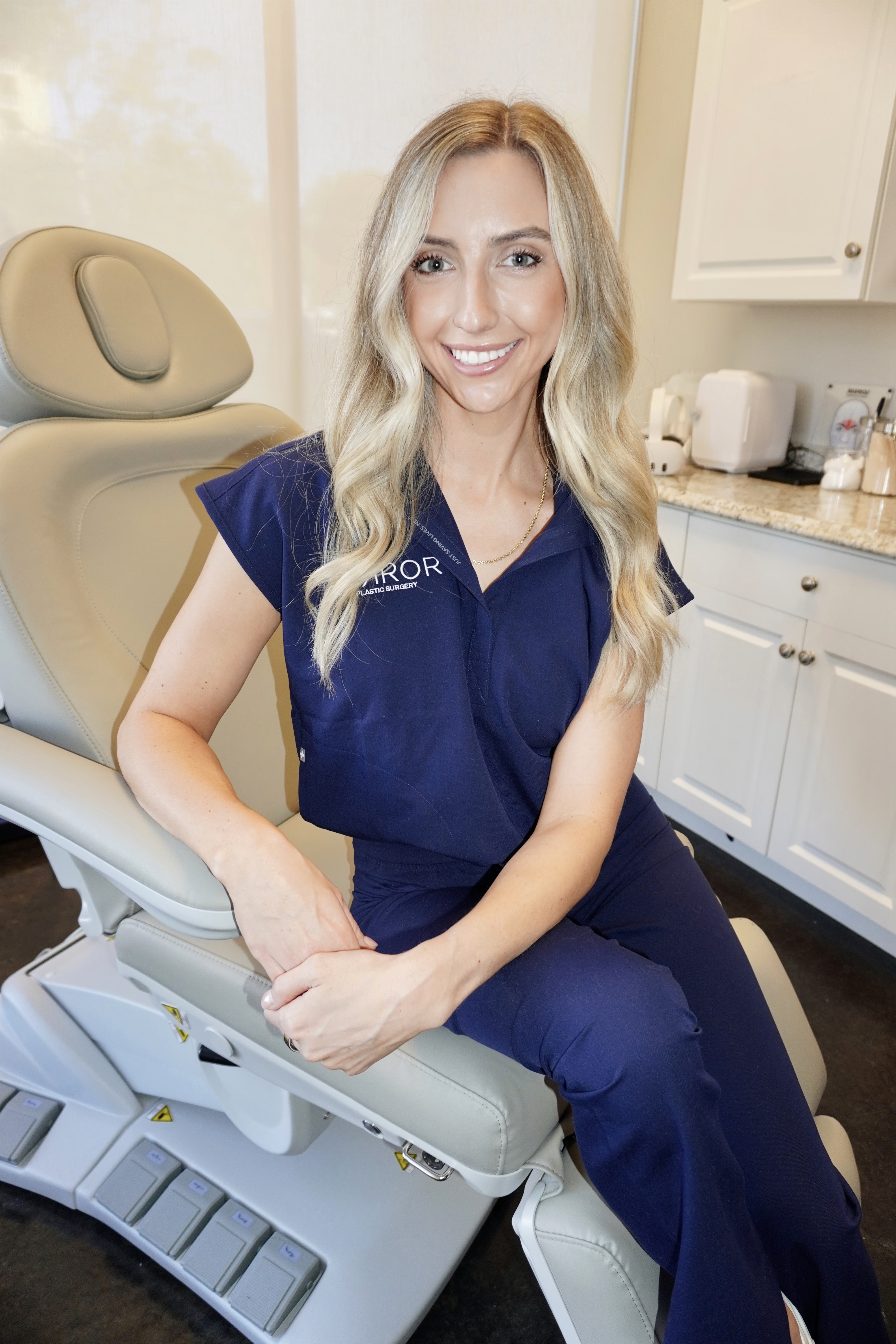
At Mirror Plastic Surgery, every non-surgical gluteal contouring treatment performed by Ellie Pranckevicius, FNP-BC, takes place under the direct oversight of Dr. Akash Chandawarkar, MD, a Harvard-educated physician, Johns Hopkins-trained plastic surgeon, and fellowship-trained aesthetic surgeon at Manhattan Eye Ear & Throat Hospital/Lenox Hill Hospital. Ellie combines 600 hours of hands-on aesthetics training, a Master’s in Nursing from the University of South Florida, and four years of Neuroscience ICU experience at Tampa General Hospital. That background in caring for critically ill patients supports the anatomical precision and emergency readiness that safe injection requires. Mirror Plastic Surgery limits gluteal procedures to one or two per day so no patient’s safety is affected by volume pressure.
Choosing a Zero-Embolism-Risk Path to Gluteal Contouring
The safe BBL technique functions as a layered system of anatomical knowledge, equipment standards, volume discipline, and real-time imaging that must work together. The subcutaneous-only rule forms the base. Cannula angle limits, depth landmark checks, per-pass volume staging, ultrasound guidance, and staged sessions build the rest of the structure. When any element is missing, risk rises quickly.
Non-surgical biostimulatory filler gluteal contouring with Radiesse or alloClae follows this same subcutaneous-only framework while avoiding added risks from general anesthesia, liposuction harvest, and fat reinjection. For patients in the St. Petersburg and Tampa Bay area who want a zero-embolism-risk path to gluteal contouring, this approach, delivered by a credentialed injector under board-certified plastic surgery oversight, reflects the current standard of care.
Disclaimer: Results may vary from person to person. Editorial content, before and after images, and patient testimonials do not constitute a guarantee of specific results.
Frequently Asked Questions
What makes a BBL injection technique genuinely safe versus just marketed as safe?
A genuinely safe BBL injection technique relies on four non-negotiable elements that work together. These include strict subcutaneous-only placement confirmed by real-time ultrasound, blunt cannulas kept at angles no greater than 30 degrees from the skin, per-pass volume limits of no more than 0.1 mL, and staged sessions instead of single high-volume procedures. Safety claims mean little without these specific controls in place. Patients should ask any provider whether ultrasound guidance is used during every pass, what their per-pass volume limit is, and how many gluteal procedures they perform per day. Providers who cannot answer clearly are not following evidence-aligned protocols.
Is a non-surgical BBL with Radiesse or alloClae actually safer than surgical fat grafting?
Non-surgical biostimulatory filler gluteal contouring removes several risk categories that always exist with surgical fat grafting, even with careful technique.1 It eliminates general anesthesia exposure, donor-site liposuction morbidity, and the possibility of intramuscular fat injection, which causes fatal pulmonary fat embolism. Radiesse and alloClae are formulated and indicated for subcutaneous placement, so the plane that surgical protocols work hard to maintain becomes the only plane these products occupy. Non-surgical options still do not fit every patient or every volume goal. A detailed consultation with a qualified provider under board-certified oversight remains the right starting point.
What credentials should I look for in a provider performing non-surgical gluteal contouring in Florida?
In Florida, non-surgical injectable procedures should be performed by a licensed advanced practice provider, such as a board-certified Family Nurse Practitioner or Physician Assistant, working under a board-certified plastic surgeon. The injector should show documented training in advanced injection anatomy, specific experience with biostimulatory fillers, and routine use of ultrasound. The supervising physician should be a board-certified plastic surgeon with fellowship training in aesthetic surgery, not a general practitioner or non-surgical specialist. At Mirror Plastic Surgery, Ellie Pranckevicius, FNP-BC, meets these standards and practices under the oversight of Dr. Akash Chandawarkar, whose training includes Harvard, Johns Hopkins, Stanford, and MEETH/Lenox Hill Hospital.
How many sessions does a non-surgical BBL typically require, and why are staged sessions safer?
Most patients need two to three non-surgical gluteal contouring sessions with biostimulatory fillers, spaced several weeks apart, to reach their goals. Staged sessions improve safety for two main reasons.1 They limit the total volume placed in a single visit, which lowers hydrostatic pressure on subcutaneous tissue and reduces theoretical vascular risk. They also allow the provider to see how your tissue responds, including symmetry, volume distribution, and collagen response, before adding more product. This stepwise approach supports more precise, natural-looking results and reflects Mirror Plastic Surgery’s focus on safety and function before aesthetics.1
What should I expect during a consultation for non-surgical BBL at Mirror Plastic Surgery?
Consultations at Mirror Plastic Surgery function as comprehensive, up-to-one-hour assessments rather than brief intake visits. Ellie performs a full anatomical evaluation of your gluteal region and reviews your goals, such as volume, symmetry correction, hip dip improvement, cellulite reduction, or a combination. She explains the physiology behind any recommended treatment, reviews the properties of the biostimulatory agents, and outlines realistic timelines for collagen stimulation and visible results. She also presents a staged session plan tailored to your anatomy. If your goals fall outside the scope of non-surgical options, the practice’s connection to Dr. Akash Chandawarkar’s surgical expertise provides an honest referral pathway instead of a treatment that does not fit your needs.
1 Results may vary from person to person. Editorial content, before and after images, and patient testimonials do not constitute a guarantee of specific results.