Written by: Dr. Akash Chandawarkar, Board Certified Plastic Surgeon, Mirror Plastic Surgery | Last updated: July 13, 2026
Key Takeaways for Post-Weight-Loss Arm Lift
- Brachioplasty removes excess, non-retracting upper arm skin after major weight loss when exercise cannot restore arm contour.
- Ideal candidates maintain stable weight for at least six months, keep BMI near or below 30, and have solid nutrition and realistic scar expectations.
- Standard versus extended techniques are chosen by mapping how far skin laxity extends, including into the armpit and lateral chest when needed.
- Scars are permanent but usually fade over 12 to 18 months with silicone care, massage, and sun protection.1 Most patients return to desk work in 1 to 2 weeks and full activity by six weeks.1
- Schedule a consultation with Dr. Akash at Mirror Plastic Surgery for a personalized, anatomy-focused plan for lasting arm contour.
How Brachioplasty Helps After Significant Weight Loss
Brachioplasty removes redundant skin and, when needed, underlying fatty tissue along the inner upper arm. After massive weight loss, skin often stretches beyond its ability to recoil. This can leave a hanging drape of tissue that causes friction, hygiene challenges, and limited clothing options.
Strong candidacy for brachioplasty after weight loss requires meeting several connected criteria that support safety and healing. Weight should remain stable for at least six to twelve months, and BMI is ideally around 30 or below to reduce surgical risk. Active smoking must stop because it impairs wound healing. Nutritional status needs to be strong, especially for post-bariatric patients who may have vitamin or protein deficiencies. Patients also need realistic expectations about permanent inner arm scars and should be in generally good health without conditions that significantly impair healing.
Schedule a candidacy evaluation with Dr. Akash to review your weight-loss history, BMI, nutrition, and arm anatomy in detail.
Timing Your Brachioplasty After Weight Loss
Most surgical teams recommend maintaining a stable, sustainable weight for at least six months before body contouring procedures, including brachioplasty. This approach aligns with American Society of Plastic Surgeons guidance. The six-month stability window allows the body to settle after weight reduction and gives a clearer view of which areas still bother you. For bariatric patients, this period also supports stabilization of nutritional levels that are essential for healing.
Ideal candidates usually stay within 10 to 15 pounds of their goal weight and maintain a BMI around 30 or below. This range supports safer anesthesia, more predictable healing, and more precise contour planning.
Patients taking GLP-1 medications such as semaglutide who are still actively losing weight are generally not ready for surgery. Those who have stopped the medication should wait until weight stabilizes. Operating while weight is still changing increases surgical risk and makes long-term results less predictable.
Post-bariatric patients often need to show adequate nutritional status before brachioplasty. Deficiencies in protein, iron, vitamin D, or B12 can impair wound healing. Pre-operative lab work to check these levels is standard for this group.
Standard vs Extended Brachioplasty for Your Arm Contour
Standard brachioplasty places an incision along the inner upper arm from the armpit toward the elbow. This approach works best when laxity is moderate to significant but limited to the inner arm. The resulting scar runs along the medial arm and usually hides when the arms rest at the sides.
Extended brachioplasty becomes appropriate when excess skin continues into the armpit and toward the side chest. This pattern is common after major weight loss. The extended approach uses a longer incision to smooth the transition from arm to torso and avoid leaving a visible “step-off” of loose tissue. The trade-off is a larger scar footprint in exchange for more complete correction.
The choice between standard and extended brachioplasty depends on the true pattern of skin laxity, not on a preference for a shorter scar. Selecting a short incision when laxity extends beyond the arm can leave leftover tissue and an uneven result. At Mirror Plastic Surgery, Dr. Akash performs an anatomy-first evaluation that maps the full distribution of excess skin before finalizing any incision design.
Expected Brachioplasty Scars and Their Healing Timeline
Brachioplasty scars are permanent, and clear expectations about this point improve satisfaction. The scar usually runs along the inner arm and, in extended cases, continues onto the lateral chest wall.
Scars from brachioplasty typically fade over 12 to 18 months.1 They often start red or pink, then soften into a paler, thinner line. Proper surgical technique and consistent aftercare, including silicone therapy and sun protection, support this process.
Scar aftercare protocol generally includes:
- Daily silicone sheeting or gel once incisions are fully closed and dry
- Gentle scar massage to soften underlying tissue
- Regular sun protection with SPF 30 or higher over the scar for at least one year
- Compression garment use for three to six weeks after surgery
Recovery Milestones and Time Off Work After Brachioplasty
Brachioplasty recovery usually involves moderate tightness and aching rather than sharp pain.1 Many patients rate discomfort around 4 to 6 out of 10 during the first few days.1 Prescription pain medication often controls symptoms for three to five days, and most patients switch to acetaminophen or ibuprofen within one week.1
- Days 1–3: Tightness, a pulled sensation with arm extension, swelling, bruising, and numbness or altered sensation near the incision are common. Drains, if used, are usually removed within this period or at the first follow-up visit.
- Days 4–7: Lifting more than 5 pounds must be avoided during the first four weeks. Light walking is encouraged. Many patients no longer need prescription pain medication by the end of week one.
- Weeks 1–2: Most patients return to desk work within one to two weeks.1 Driving can resume once you are off narcotics and can grip the wheel and check mirrors comfortably.
- Weeks 2–4: Overhead reaching, pushing, and heavy lifting should still be avoided. Swelling usually peaks between days three and seven, with most of it resolving by two to four weeks.
- Weeks 4–6: Many patients receive clearance for full routines, including heavy lifting and exercise, by week six.1 Those with manual labor jobs need explicit surgeon clearance.
- Months 3–18: Final scar maturation usually occurs between 12 and 18 months.1 Mild residual swelling can linger for three to six months.1
Insurance and Medical Necessity for Brachioplasty
Most post-weight-loss body contouring procedures, including brachioplasty, are considered cosmetic and paid out of pocket. Coverage is possible in select cases but requires strict proof of medical necessity that many patients do not meet.
Anthem considers brachioplasty medically necessary only when redundant skin causes significant functional impairment. Examples include interference with daily activities or persistent dermatitis, cellulitis, or ulcerations that continue despite appropriate medical treatment.
Cigna and similar insurers also require documentation of functional problems or chronic skin conditions that have not improved with conservative care. For bariatric patients, insurers often require a period of weight stability before reviewing coverage.
Documentation commonly required for prior authorization includes:
- Medical records from a primary care physician or dermatologist confirming chronic skin conditions
- Clinical photographs of the affected area
- Records of prescribed topical antifungals, corticosteroids, or antibiotics
- Notes describing mobility or hygiene limitations caused by excess skin
- For bariatric patients, documentation from the bariatric team confirming complete and stable weight loss
Arm lift and thigh lift procedures are almost always classified as cosmetic. Insurance coverage for limb skin removal is rare because severe medical complications, such as those seen with an abdominal pannus, are less common in the arms and thighs. Patients should confirm their plan’s criteria directly with their insurer before surgery.
How Weight Changes After Surgery Affect Results
Brachioplasty results are long lasting because the removed skin does not grow back.1 Significant weight gain of about 20 pounds or more can still change the appearance by adding fat back to the arms. Smaller fluctuations of 5 to 10 pounds usually do not cause noticeable contour changes.1
Brachioplasty improves loose skin but cannot stop future aging or major weight shifts. Large gains or losses after surgery can alter arm shape again.1 Surgeons usually delay any revision brachioplasty for at least 12 months to allow full healing and scar maturation before deciding on further correction.
Choosing a Brachioplasty Surgeon You Trust
Surgeon selection strongly influences safety, scarring, and overall satisfaction. Several qualifications help identify a well-trained brachioplasty surgeon.
- Board certification by the American Board of Plastic Surgery, which requires accredited residency training and rigorous written and oral exams
- Fellowship training in aesthetic surgery beyond residency
- Hospital privileges that provide a safety net for rare complications
- A practice model that limits daily surgical volume to allow focused, individualized care
- Transparent, anatomy-based consultations that cover technique options, scar placement, and realistic outcomes
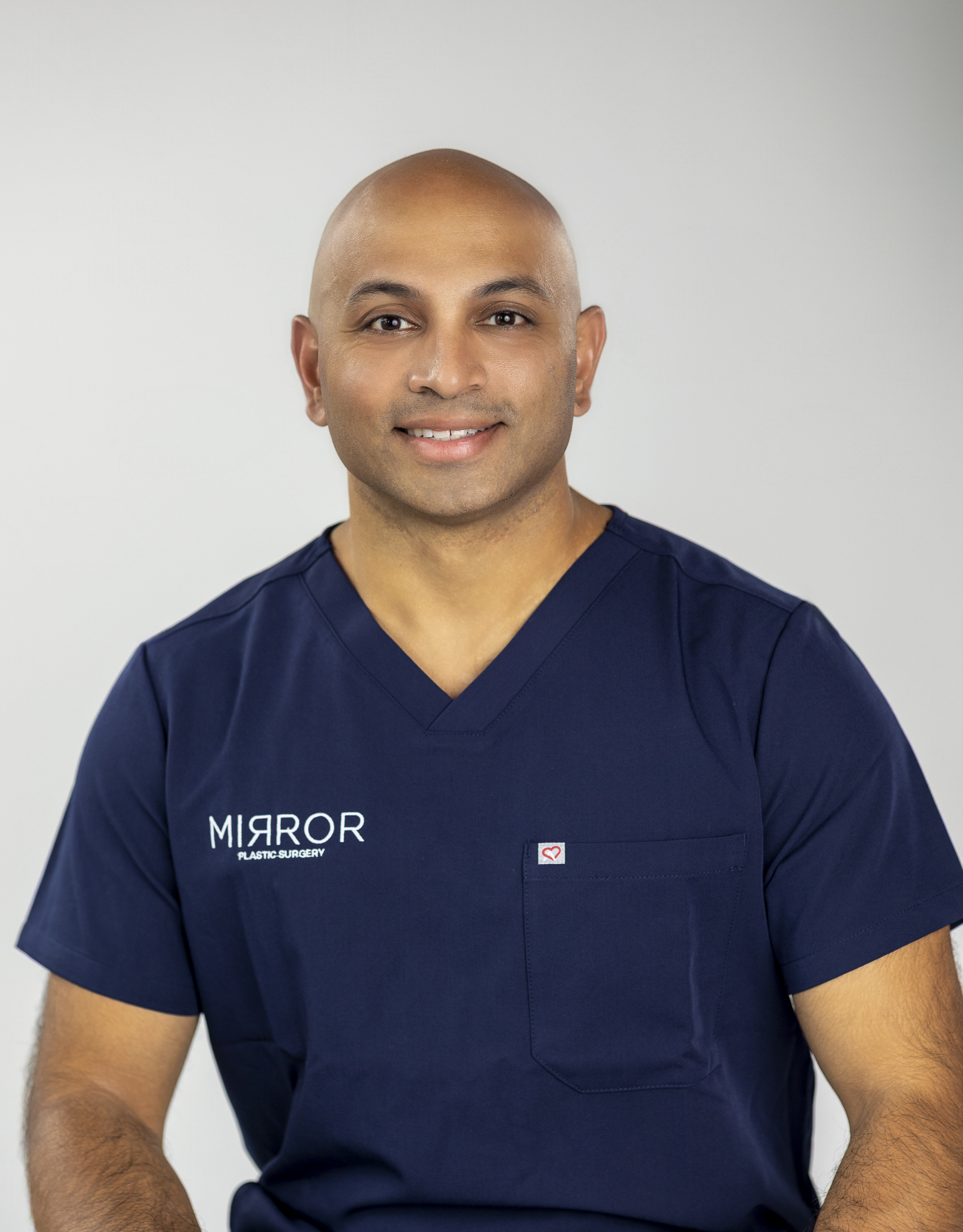
Dr. Akash at Mirror Plastic Surgery completed a seven-year integrated plastic and reconstructive surgery residency at Johns Hopkins University and an aesthetic surgery fellowship at Manhattan Eye, Ear and Throat Hospital (MEETH), a highly competitive program for advanced body contouring. He has appeared on Newsweek’s America’s Best Plastic Surgeons list for two consecutive years, including 2025. Mirror Plastic Surgery performs one to two surgeries per day, which keeps the entire team focused on each patient before, during, and after surgery, in contrast to high-volume centers that perform many more operations daily.
Meet with Dr. Akash to review your anatomy, weight-loss history, and which brachioplasty approach best matches your pattern of skin laxity.
Tampa Bay Logistics and Aftercare Considerations
Mirror Plastic Surgery is located at 780 4th Ave S, St. Petersburg, FL 33701, and serves the greater Tampa Bay region. All procedures take place in accredited facilities with board-certified physician anesthesiologists. Post-operative visits are structured to monitor wound healing, drain removal, compression garment use, and the start of scar care within a concierge model that emphasizes continuity of care over volume.
Tampa’s warm, sunny climate makes sun protection especially important. Patients should plan consistent SPF coverage over incision lines for at least twelve months after surgery to reduce the risk of hyperpigmentation and support smoother scar maturation.
Frequently Asked Questions About Brachioplasty
How painful is brachioplasty recovery?
Most patients describe brachioplasty recovery as tightness and soreness rather than sharp pain.1 Prescription pain medication usually manages discomfort for three to five days. After that, most patients switch to acetaminophen or ibuprofen. By the end of week two, discomfort typically becomes mild and does not interfere much with daily activities.1 Patients who have also had abdominoplasty often report that arm lift recovery feels easier than tummy tuck recovery.
Is there an age limit for brachioplasty after weight loss?
No fixed upper age limit exists for brachioplasty. Candidacy depends on overall health, healing capacity, nutrition, and weight stability rather than age alone. Older patients may need more detailed medical clearance, especially if they have cardiovascular or metabolic conditions related to prior obesity. Every patient, regardless of age, benefits from a thorough pre-operative evaluation.
Will insurance cover my brachioplasty?
Insurance coverage for brachioplasty is uncommon and requires clear documentation of medical necessity. Insurers usually look for persistent functional problems such as chronic skin infections, dermatitis, or mobility limits caused by excess arm skin that have not improved after at least three months of conservative treatment. Most insurers, including Anthem and Cigna, classify brachioplasty as cosmetic when these conditions are not present. Bariatric surgery patients often must wait at least 18 months after surgery and maintain six months of weight stability before coverage is considered. Patients should contact their insurer and gather documentation before submitting a prior authorization request.
How long do brachioplasty results last?
Skin removed during brachioplasty does not return, so results can be long lasting when weight remains stable.1 Minor weight changes of five to ten pounds usually do not alter arm contour.1 Weight gain of 20 or more pounds can add fat back to the arms and change the appearance.1 Natural aging will gradually affect skin quality, but the structural tightening from surgery remains.1 Maintaining a stable weight with consistent nutrition and exercise offers the best chance of preserving results.
Can brachioplasty be combined with other post-weight-loss procedures?
Brachioplasty often forms part of a staged post-weight-loss contouring plan that may also include abdominoplasty, thigh lift, or breast surgery. Combining too many procedures in one session increases complication risk. Mirror Plastic Surgery prioritizes safe staging based on each patient’s health, anatomy, and recovery capacity. During consultation, Dr. Akash reviews which procedures can be safely combined and which are better separated into different operations.
Planning Your Next Step Toward Arm Contouring
Brachioplasty after weight loss offers predictable improvement when performed at the right time, with the right technique, and by a surgeon experienced in post-weight-loss anatomy. Weight stability, realistic scar expectations, and a detailed pre-operative evaluation consistently correlate with higher satisfaction.
Mirror Plastic Surgery’s concierge model, supported by Dr. Akash’s Johns Hopkins residency, MEETH aesthetic fellowship, and consecutive Newsweek recognition, is designed to provide the depth of evaluation and continuity of care that post-weight-loss patients need.
Schedule a brachioplasty consultation with Dr. Akash at Mirror Plastic Surgery in St. Petersburg, FL, to begin a thorough, anatomy-focused review of your candidacy and goals.
1 Results may vary from person to person. Editorial content, before and after images, and patient testimonials do not constitute a guarantee of specific results.