
Written by: Dr. Akash Chandawarkar, Board Certified Plastic Surgeon, Mirror Plastic Surgery | Last updated: September 9, 2026
Key Takeaways
- Semaglutide prices in Tampa Bay range from under $150 to nearly $1,865 per month, depending on what each program includes.
- Budget options often exclude labs, follow-ups, and physician oversight, while mid-range and higher-tier programs bundle these safety essentials.
- Brand-name Wegovy and Ozempic have the strongest safety and efficacy data, while compounded semaglutide carries regulatory risks and demands careful pharmacy vetting.
- Comprehensive semaglutide care includes physician consultations, baseline labs, titration management, and ongoing monitoring to support safe, effective results.1
- Physician-supervised programs with thorough monitoring offer the safest path to sustainable results, though they carry higher upfront costs than bare-bones options.1
Semaglutide Cost Comparison Tampa Bay 2026: The Price Landscape At A Glance
Tampa hosts over 40 medical weight loss clinics offering semaglutide therapy in 2026, and monthly costs vary widely by provider type, dose, and what the fee actually covers. The table below distills four primary pricing tiers in the Tampa Bay market, highlighting how headline prices often hide what is or is not included in the monthly cost. All figures are estimates based on local provider research; actual costs vary by dose, individual medical needs, and program structure.
| Provider Type | Monthly Cost Range | Typically Included | Key Caveats |
|---|---|---|---|
| Budget / Telehealth | $145–$250 | Basic consultation, medication, home delivery | Often excludes labs, meaningful follow-ups, and physician oversight |
| Mid-Range Local Clinics | $250–$600 | In-person supervision, initial labs, dose tracking | Verify what “supervision” actually means at each clinic |
| Higher-Tier / Specialized Programs | $350–$650+ | Comprehensive care, wellness add-ons (B6, NAD+), body composition tracking | Confirm whether titration and maintenance visits are covered |
| Brand-Name Self-Pay (Wegovy / Ozempic) | $1,027–$1,865 | FDA-approved pens with established safety and efficacy data | Manufacturer savings cards may reduce costs for eligible patients |
Brand-Name Semaglutide (Wegovy / Ozempic): The FDA-Approved Premium
Brand-name semaglutide remains the reference standard for proven efficacy and FDA oversight. Wegovy carries a published list price of approximately $1,349 per month, while Ozempic lists at approximately $1,027.51 per month for the 0.25/0.5 mg pen.
Novo Nordisk’s NovoCare program offers two cost-reduction pathways, and eligibility depends on insurance status. Self-pay pricing for Ozempic through NovoCare is approximately $199 per month for the first two fills, then $349 per month for the 0.25/0.5/1 mg pens and $499 per month for the 2 mg pen, through December 31, 2026. For commercially insured patients, the NovoCare Wegovy Savings Offer Program allows eligible patients to pay as little as $0 or $25 per month, but neither savings card is available to Medicare, Medicaid, or other government program beneficiaries. Florida Blue and other major commercial insurers have explicitly ended GLP-1 coverage for weight loss, which pushes many Tampa Bay patients toward compounded alternatives.
Compounded Semaglutide: Lower Cost, Higher Responsibility
Compounded semaglutide is not FDA-approved and does not undergo pre-market review for safety, effectiveness, or quality. Within this tier, three sub-tiers appear in the Tampa Bay market.
The budget end of the market warrants particular scrutiny. Compounded GLP-1 offerings below $200 per month with no labs and no real follow-up signal that someone is cutting corners. Mid-range local medical clinics in the $250–$600 range more often include in-person medical supervision, initial lab work, and dose tracking, which creates a more balanced tradeoff between cost and safety for many patients. Higher-tier or specialized programs may include comprehensive care, wellness injections such as B6 and NAD+, body composition tracking, and more intensive follow-up, and concierge-style programs in Tampa can reach $750–$1,200 monthly.
The regulatory environment surrounding compounded semaglutide has tightened significantly. The FDA resolved the semaglutide shortage in February 2025, and 503A pharmacies had until April 22, 2025, and 503B facilities until May 22, 2025, to cease compounding semaglutide copies. A narrow exception permits compounding for documented patient-specific clinical needs. As of September 3, 2026, the FDA has issued at least 55 warning letters to telehealth companies in two 2026 waves for marketing false and misleading claims about compounded semaglutide and tirzepatide. Florida’s SB 860 imposes active pharmaceutical ingredient sourcing and documentation requirements on compounded weight-loss medications, requiring pharmacies to show that ingredients are pharmaceutical-grade and properly sourced. Patients should always request a pharmacy’s 503B registration and batch testing documentation before committing to any compounded program.
For a deeper look at how compounded and brand-name semaglutide compare on safety and clinical outcomes, see our guide to compounded versus brand-name semaglutide.
What Is Included In The Price? A Detailed Cost Breakdown
Low advertised prices frequently exclude essential components of safe therapy, which creates surprise fees after commitment and shifts risk to the patient. The following checklist outlines what every medically sound semaglutide program should include.
Essential components of safe semaglutide therapy, with each element building a complete safety net:
- Initial consultation with a licensed physician or advanced practitioner, not just a questionnaire. Florida Statute 456.47 requires synchronous audiovisual consultations before prescribing GLP-1 medications, and asynchronous questionnaires do not satisfy Florida Board of Medicine standards.
- Baseline laboratory testing. The AACE 2025 consensus statement recommends a comprehensive metabolic panel, lipid panel, HbA1c, thyroid history review, and assessment of gallbladder and pancreatitis history before initiating therapy.
- The medication itself, quality-sourced, properly handled, and correctly dosed from a licensed pharmacy with verifiable batch testing.
- Syringes and supplies, including alcohol swabs, a sharps container, and injection training. Patients who skip injection training account for 30–40% of first-month adverse events, and most of these events are preventable.
- Follow-up visits. Evidence-based monitoring commonly uses visits at months 1, 3, and 6 during the initial phase, followed by quarterly check-ins and periodic lab retesting in maintenance.
- Ongoing physician support, with direct access to your provider between visits for questions, side-effect management, and dose concerns.
- Titration management. The AACE 2025 consensus statement specifies that gradual monthly dose escalation is mandatory to minimize gastrointestinal adverse events, which affect roughly a third of patients during titration.
- Nutritional and lifestyle guidance, including at least 0.7 to 1.0 grams of protein per pound of goal body weight plus two to three strength sessions per week to help prevent muscle loss on GLP-1 medications.
If a program omits these components, its advertised monthly price understates the true cost of safe, effective therapy. Book an appointment with Ellie to review your labs and goals with Dr. Akash Chandawarkar and see how a complete program is structured.
Insurance Coverage And Manufacturer Savings Programs For Tampa Bay Patients
Only approximately 23% of major health plans in Florida cover semaglutide for weight loss as of 2026. Ozempic, indicated for type 2 diabetes, receives broader coverage than Wegovy, which is indicated for weight management. Florida Blue’s prior authorization for Ozempic requires a documented type 2 diabetes diagnosis, metformin step therapy, and a clinical indication of T2D glycemic control, while weight management triggers a flat denial.
Medicare Part D covers Ozempic for type 2 diabetes with prior authorization, but Medicare beneficiaries cannot use the NovoCare savings card. Medicare Advantage plans in Florida began covering GLP-1 medications for obesity in late 2025, benefiting roughly 340,000 eligible residents in the Tampa Bay area. The NovoCare Patient Assistance Program provides Wegovy and Ozempic at no cost to qualifying uninsured or underinsured U.S. residents who meet income eligibility criteria. Patients should confirm their specific plan’s formulary and prior authorization requirements before assuming coverage or exclusion.
Telehealth Vs. In-Person Clinics In Tampa Bay: A Cost-Quality Tradeoff
Telehealth platforms offering compounded semaglutide charge $250–$450 per month all-inclusive, typically covering consultation, medication, and shipping. Most platforms do not accept insurance but provide itemized invoices for out-of-network reimbursement. These platforms offer convenience and lower costs, yet they often lack in-person physical exams and the depth of supervision that comprehensive care requires.
Approximately 78% of local weight loss clinics in Tampa now offer hybrid care models combining in-person initial consultations with virtual follow-ups. In-person physician-led clinics provide baseline labs, body composition analysis, and ongoing monitoring at a higher cost. For patients with underlying conditions, medication interactions, or concerns about side effects, in-person supervision is essential. An ER physician treating Tampa Bay patients has reported hospitalizations due to dehydration, pancreatitis, gallbladder issues, muscle loss, and rebound weight gain from poorly managed GLP-1 programs, and structured medical oversight aims to prevent these outcomes.
For guidance on what laboratory monitoring should look like throughout treatment, Mirror Plastic Surgery’s semaglutide lab guide provides a complete blood test reference.
Safety And Quality: Why The Cheapest Option Rarely Delivers The Best Value
The cost savings of compounded semaglutide come with real safety tradeoffs. The FDA has received 990 adverse event reports associated with compounded semaglutide as of May 31, 2026, many involving dosing errors from self-administration. Counterfeit peptides circulating online during the 2023–2024 shortage included saline, bacteriostatic water with no active ingredient, and in several FDA warning letters, semaglutide concentrations 40–60% below labeled strength. The American Diabetes Association formally advises against compounded GLP-1 products, citing uncertainty about their content, safety, quality, and effectiveness.
Semaglutide requires monitoring for pancreatitis, gallbladder disease, kidney function, and gastrointestinal side effects. The AACE 2025 consensus statement specifies that therapy should stop immediately if acute pancreatitis, symptomatic gallbladder disease, or significantly elevated liver enzymes develop, and these clinical signals require a physician who knows your health history to detect and address them. Skipping baseline labs or follow-up visits can turn a manageable therapy into a dangerous one.
At Mirror Plastic Surgery, board-certified physician Dr. Akash Chandawarkar leads every protocol, sources peptides from reputable providers with batch testing, and provides concierge-level support throughout treatment, including direct access via text between visits.
Questions To Ask Before You Pay: A Buyer’s Checklist For Tampa Bay Patients
Before committing to any semaglutide program in Tampa Bay, ask every prospective provider the following questions:
- Is the medication FDA-approved (Wegovy/Ozempic) or compounded? If compounded, which pharmacy fills it, and can you provide their 503B registration and batch testing certificates?
- What exactly is included in the monthly fee? Are consultation, labs, follow-ups, and supplies covered, or are they billed separately?
- Who supervises my treatment? Is a board-certified physician or licensed advanced practitioner reviewing my labs and adjusting my dose?
- Are baseline labs required before starting? What specific tests are included?
- What is the protocol if I experience side effects? Can I reach my provider between visits?
- How is dose titration handled? Will I be monitored at each escalation step?
- What happens if I need to stop treatment? Is there a step-down plan?
- Are there any hidden fees, such as shipping, consultation charges, refill fees, or cancellation penalties?
Why Choose Mirror Plastic Surgery For Semaglutide In Tampa Bay
Mirror Plastic Surgery offers physician-supervised semaglutide care that addresses every item on the checklist above. Dr. Akash Chandawarkar is a Harvard-educated, Johns Hopkins-trained plastic surgeon board-certified by the American Board of Plastic Surgery, with fellowship training in aesthetic surgery at the Manhattan Eye Ear & Throat Hospital and medical innovation training through the Stanford University Biodesign Innovation Fellowship. Dr. Akash personally designs every semaglutide and GLP-1 protocol at Mirror Plastic Surgery, ensuring individualized care rather than a one-size-fits-all approach.
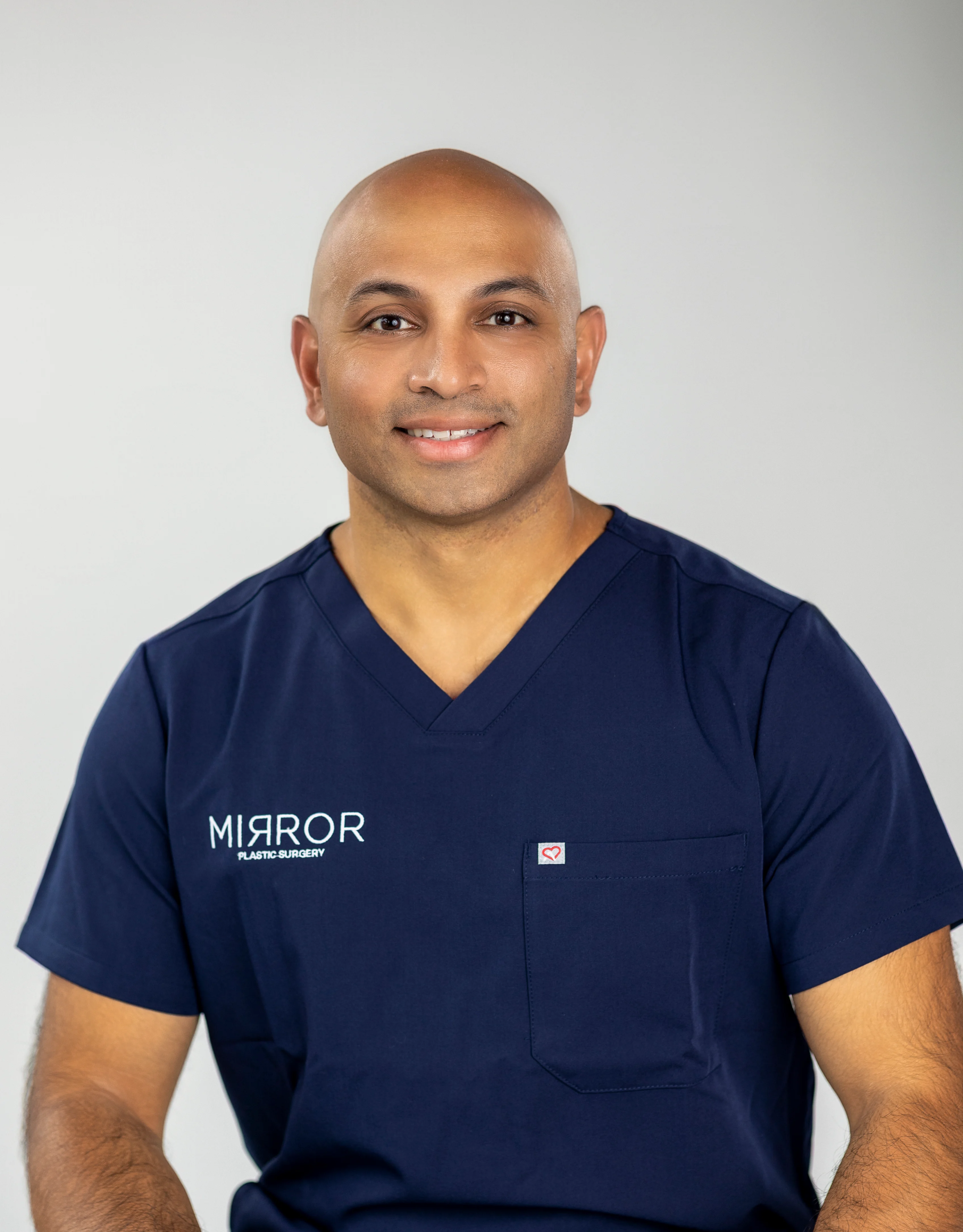
The practice’s concierge medicine philosophy includes up to an hour in the initial consultation, in-depth lab analysis covering thyroid, liver, kidney, diabetes markers, and hormone panels, and a personalized protocol built around each patient’s physiology and goals. Peptides are sourced from reputable providers with rigorous batch testing. Dr. Akash is available via text for ongoing support, refill requests, and side-effect management throughout treatment. Nutritional guidance, muscle-preservation strategies, and long-term maintenance planning are integrated into every program as core components.
Book an appointment with Ellie to explore physician-supervised semaglutide therapy in Tampa Bay and receive a personalized protocol built around your labs, health history, and goals.
Frequently Asked Questions
Is Compounded Semaglutide As Effective As Wegovy?
Compounded semaglutide contains the same active molecule as Wegovy, but it is not FDA-approved and has not undergone the same rigorous pre-market review. The 15% average weight loss at 68 weeks cited in clinical trials comes from the FDA-approved formulation studied in the STEP 1 trial, not from compounded versions, whose quality and potency vary by pharmacy.1 503B outsourcing facilities test every batch for concentration, sterility, and endotoxin levels, while 503A pharmacies are not federally required to perform potency testing on every batch. If you choose compounded semaglutide, ensure it comes from a licensed facility with documented batch testing and is prescribed under physician supervision with baseline labs and ongoing monitoring.
Can I Get Semaglutide Without Insurance?
Many Tampa Bay patients pay out-of-pocket for semaglutide, either through brand-name savings programs or compounded alternatives. As noted earlier, brand-name Wegovy lists at approximately $1,349 per month without insurance, though Novo Nordisk’s NovoCare program may reduce costs for eligible commercially insured patients or qualifying uninsured individuals through the Patient Assistance Program. Compounded semaglutide pricing varies more widely depending on provider type and what the monthly fee includes. Mirror Plastic Surgery provides personalized protocols and pricing after a comprehensive consultation, because each patient’s medical needs, dose requirements, and monitoring needs differ.
What Is The Typical Monthly Cost Of Semaglutide In Tampa?
In 2026, the Tampa Bay semaglutide market spans a wide range. Budget and telehealth programs start around $145 per month at the lowest titration doses, while mid-range local clinic programs typically fall between $250 and $600 per month. Higher-tier and specialized programs with comprehensive care, body composition tracking, and wellness add-ons can reach $650 or more monthly, and some concierge programs exceed $1,000. Brand-name Wegovy or Ozempic without insurance costs $1,027–$1,865 per month depending on the product and dose. The most important variable is what the fee includes, because programs under $200 per month that exclude labs, follow-ups, and meaningful physician oversight present an incomplete picture of the true cost of safe therapy.
What Are The Side Effects Of Semaglutide?
Gastrointestinal side effects such as nausea, vomiting, diarrhea, and constipation are the most common, occurring in 30–45% of patients during dose titration and typically resolving within four to eight weeks at each dose level. Serious but rare side effects include pancreatitis, with an incidence of approximately 0.2%, and gallbladder disease, with an incidence of approximately 1.5%. Semaglutide carries a boxed warning and is contraindicated in patients with a personal or family history of medullary thyroid carcinoma or Multiple Endocrine Neoplasia syndrome type 2 (MEN2). These risks explain why baseline labs, a thorough medical history review, and ongoing physician monitoring form the foundation of a safe program.
How Long Do I Need To Take Semaglutide?
Semaglutide functions as a chronic metabolic therapy rather than a brief intervention. The STEP 1 Extension trial found that patients regained approximately two-thirds of their lost weight within one year of stopping treatment1, which reflects that the medication corrects impaired satiety signaling that returns to baseline when the drug is removed. Most patients continue therapy for 12–24 months to achieve and consolidate weight loss, followed by a maintenance protocol. The STEP 5 trial demonstrated that 104 weeks of continued treatment maintained 15.2% weight loss1, showing durable results with ongoing therapy.1 A well-designed program includes a planned step-down or maintenance strategy from the outset, rather than an abrupt stop when a weight goal is reached.
Conclusion: Investing In Safe, Effective Semaglutide Care
The 2026 semaglutide treatment cost comparison for Tampa Bay, Florida shows a market where monthly prices span from under $150 to nearly $1,865, and where the sticker price alone reveals little about value. What matters is what the program includes, such as physician oversight, baseline and ongoing labs, quality-sourced medication with verifiable batch testing, titration management, and a provider who can see the full clinical picture. Programs that cut these components to offer a lower headline number shift risk onto the patient, while those that bundle unnecessary add-ons without transparent pricing shift cost onto the patient. The right program delivers comprehensive, medically supervised care at a price that reflects the actual work involved in keeping therapy safe and effective.
Mirror Plastic Surgery offers this type of physician-supervised, personalized approach, led by Dr. Akash Chandawarkar, with concierge-level access, in-depth lab analysis, and a long-term commitment to your health outcomes instead of a one-size-fits-all protocol. Book an appointment with Ellie today and take the first step toward a program built around you.
Disclaimer
This article is for informational purposes only and does not constitute medical advice. Individual results vary. Semaglutide is a prescription medication and should only be used under the supervision of a licensed healthcare provider. Compounded semaglutide is not FDA-approved. Always consult with a qualified physician to determine if semaglutide is appropriate for your specific health needs.
1 Results may vary from person to person. Editorial content, before and after images, and patient testimonials do not constitute a guarantee of specific results.
Peptide therapy is intended for wellness and optimization purposes and is not prescribed to diagnose, treat, cure, or prevent disease unless specifically stated. Many peptides are not FDA-approved and may be used off-label. Some have limited long-term safety data, with a potential for unknown risks, complications, or desensitization with prolonged use.