
Written by: Ellie Pranckevicius, FNP-BC, Aesthetic Nurse Practitioner & Aesthetic Injector | Facial Restoration & Regenerative Injectable Specialist, Mirror Plastic Surgery | Last updated: August 30, 2026
Key Takeaways for Autoimmune Peptide Therapy
- Autoimmune specialists use short-chain peptides to adjust T-cell activity and calm chronic inflammation without broadly suppressing the immune system. Protocols are selected and monitored using comprehensive lab panels.
- No single peptide works best for every patient. KPV, BPC-157, Thymosin Alpha-1, VIP, and GHK-Cu are the most frequently referenced options, each with specific mechanisms and dosing considerations.
- Peptide therapy carries real risks, including lack of FDA approval for autoimmune indications, quality and sourcing concerns, and limited long-term human safety data as of mid-2026.
- Peptide therapy remains strictly adjunctive for autoimmune patients and must never replace prescribed DMARDs, biologics, or specialist care. Strict contraindications apply for active flares, pregnancy, and certain medication combinations.
- At Mirror Plastic Surgery, every protocol follows a structured, lab-driven workflow with ongoing practitioner oversight led by Ellie Pranckevicius, FNP-BC, so care stays personalized and closely monitored.
Peptides Most Commonly Used for Autoimmune Inflammation
No single peptide is universally optimal. Selection depends on the condition, disease activity, current medications, and lab findings. The following peptides are most frequently referenced by specialists for autoimmune-related chronic inflammation. Each entry highlights the main mechanism, typical dosing range, and current evidence base so you can see what Ellie weighs when building a protocol.
- KPV (Lys-Pro-Val): This tripeptide fragment of alpha-melanocyte stimulating hormone is often ranked as a leading option for NF-κB-driven autoimmune inflammation. It inhibits NF-κB nuclear translocation at nanomolar concentrations and shifts macrophage polarization from M1 to M2. Typical dosing ranges from 200–500 mcg per day, taken orally or subcutaneously. A 2008 study by Dalmasso et al. showed about a 50% reduction in DSS-induced colonic MPO activity in mice through NF-κB inhibition.1
- BPC-157 (Body Protective Compound 157): This peptide focuses on tissue repair and addresses autoimmune triggers by helping repair gut barrier dysfunction that contributes to molecular mimicry. A 2025 American College of Gastroenterology systematic review of 36 studies reported healing effects across IBD and NSAID injury models.1 Typical oral dosing is 250–500 mcg once or twice daily. No published Phase III human clinical trials exist for this indication.
- Thymosin Alpha-1 (Tα1): This immunomodulator activates toll-like receptor pathways in dendritic cells, matures naive T-cells, and promotes regulatory T-cells (Tregs). These actions favor tolerance over attack. A sample specialist protocol begins at 1.6 mg subcutaneously twice weekly, then increases to 3.2 mg twice weekly after two weeks, with reassessment at eight weeks. Thymosin Alpha-1 is contraindicated in autoimmune conditions without direct medical supervision because it can amplify Th1 and CD8 activity and may worsen tissue damage where T-cells already attack healthy tissue.
- VIP (Vasoactive Intestinal Peptide): This neuropeptide has anti-inflammatory properties, modulates cytokine production, and supports regulatory immune balance. VIP is added to custom stacks at Mirror Plastic Surgery based on individual lab findings and symptom patterns.
- GHK-Cu (Copper Peptide): This peptide is primarily used to support collagen and elastin production. It also carries systemic anti-inflammatory signaling that can matter for skin-based autoimmune presentations.
Given the complexity of selecting and combining these peptides based on your autoimmune presentation, lab values, and current medications, individualized clinical assessment is essential. Schedule your personalized peptide assessment with Ellie to determine which protocols match your autoimmune profile.
Risks and Limitations of Peptide Therapy
Peptide therapy carries meaningful risks that every patient needs to understand before starting a protocol.
Regulatory status as of July 2026: None of the peptides BPC-157, KPV, or Thymosin Alpha-1 is FDA-approved for treating inflammation or autoimmune disease in the United States. On July 23, 2026, the FDA Pharmacy Compounding Advisory Committee (PCAC) voted 8–6 to recommend both BPC-157 and KPV for addition to the 503A bulks list for specific evaluated uses, including ulcerative colitis and wound healing or inflammatory conditions. However, these recommendations are non-binding and require formal FDA rulemaking before any change to compounding eligibility takes effect. Because of this regulatory complexity, clinicians must distinguish among FDA approval of finished drugs, current 503A compounding eligibility, and substances under PCAC review, since each pathway carries different legal and safety implications.
Beyond regulatory status, the practical safety profile of peptide therapy includes several material risks that every patient must weigh carefully:
- Quality and sourcing risks: Research-grade peptides are not manufactured to pharmaceutical standards, and independent testing has repeatedly found products that are underdosed, contaminated, or misidentified.
- Infection risk: Injecting non-sterile material carries infection risk that exists regardless of the peptide’s pharmacology.
- Common side effects: Reported adverse effects across peptide classes include local injection-site reactions, headache, nausea, dizziness, and fatigue.
- Unknown long-term safety: Long-term human safety data are lacking for BPC-157 and KPV, and combining immune-modulating peptides with immunosuppressive medications can create unpredictable immune effects.
- Limited clinical trials: As of mid-2026, no peptide has positive confirmatory Phase 3 trial evidence in any autoimmune disease.
At Mirror Plastic Surgery, peptides are sourced exclusively from reputable 503A-licensed compounding pharmacies with rigorous batch testing, and every protocol is supervised by Ellie Pranckevicius with ongoing lab monitoring.
Using Peptides When You Already Have an Autoimmune Disease
Peptide therapy remains strictly adjunctive for autoimmune patients. It must never replace DMARDs, biologics, or specialist care, and patients should not stop prescribed autoimmune medications to try peptides without explicit rheumatologist approval.
Contraindications include:
- Active, uncontrolled autoimmune flares
- Organ transplant patients on calcineurin inhibitors without transplant team approval
- Pregnancy or breastfeeding
- Intent to discontinue prescribed autoimmune drugs in favor of peptides
Patients with rheumatoid arthritis, lupus, psoriasis, or multiple sclerosis must consult their rheumatologist or neurologist before starting any immune-active peptide. During a flare, new peptide starts are paused until disease activity is reassessed and stabilized.
To identify these contraindications and support safe protocol initiation, the Mirror Plastic Surgery screening process includes a comprehensive review of medical history, current medications, and lab panels covering inflammatory markers such as CRP and ESR, CBC, and a comprehensive metabolic panel before any protocol begins. A common specialist workflow starts with a single peptide at the lower end of the dosing range, monitors response and tolerance for 4–8 weeks, and only then adds or adjusts additional peptides.
KPV Protocols for Gut-Driven Inflammation
KPV has a specific mechanism that makes it especially relevant to gut-based autoimmune inflammation. KPV is taken up by intestinal epithelial cells via the PepT1 transporter, suppresses NF-κB and MAPK signaling, and reduces pro-inflammatory cytokines and histologic damage in rodent colitis models. This targeted uptake allows oral dosing to deliver anti-inflammatory signaling directly at the intestinal mucosa.
Key clinical considerations for KPV in gut inflammation:
- Mechanism: Inhibits NF-κB nuclear translocation, reduces IL-1β, TNF-α, and IL-6 production, and promotes M2 macrophage polarization.
- Route: Oral capsule for gut-targeted effects and subcutaneous administration for systemic applications.
- Typical dosing: 200–500 mcg once daily, adjusted based on lab response.
- Evidence base: All human-relevant claims for KPV treating IBD, eczema, or psoriasis currently reflect extrapolation from animal and in-vitro models as of mid-2026, and no human trials have been completed.
- Integration: Commonly stacked with BPC-157 for gut barrier restoration in IBD-adjacent autoimmune presentations.
For patients with inflammatory bowel disease or gut-driven autoimmune triggers, a typical specialist combination includes BPC-157 for gut healing and barrier integrity, KPV for anti-inflammatory signaling, and Thymosin Alpha-1 for immune balance.
How Mirror Plastic Surgery Designs Your Peptide Protocol
Every protocol at Mirror Plastic Surgery follows a structured, lab-driven workflow that moves step by step from assessment to long-term monitoring.
- Comprehensive consultation (30–60 minutes): Ellie Pranckevicius begins with a detailed visit that covers full medical history, current medications, autoimmune diagnoses, prior treatment failures, GI symptoms, cardiovascular and endocrine history, and lifestyle factors such as sleep, stress, diet, and exercise load.
- Lab panel review and ordering: Ellie reviews existing labs and orders any missing baseline tests, including inflammatory markers like CRP and ESR, CBC with differential, a comprehensive metabolic panel, thyroid, liver, kidney, diabetes markers, hormone panels, and condition-specific autoantibodies.
- Peptide selection: After reviewing labs and your clinical presentation, Ellie selects from the practice’s peptide formulary, which includes BPC-157, KPV, GHK-Cu, Thymosin Alpha-1, VIP, Sermorelin and Ipamorelin, TB-500, NAD, and other options. Coordination with your rheumatologist or other specialists occurs when you are on active immunosuppressive therapy.
- Batch-tested sourcing: The team then orders your medications from licensed 503A compounding pharmacies that provide documented batch testing for purity, potency, and sterility. This approach contrasts with unregulated online sources that lack consistent quality control.
- Custom stacking and protocol design: Ellie combines peptides based on how their mechanisms align and how safe they are together. Safe stacking means starting one peptide at a time, using the lowest effective dose, and pairing that approach with pharmacy-grade sourcing. These steps work together to reduce the risk of unpredictable interactions and side effects.
- Ongoing monitoring and 24/7 concierge support: After you begin, you have direct text access to Ellie at any time for questions, symptom tracking, and refill requests. Inflammatory markers and disease-specific labs are reassessed at planned intervals, and Ellie adjusts your protocol based on objective data and your reported experience.
Start your personalized protocol with Ellie, built on your labs, your history, and your goals, not a one-size-fits-all template.
Your Care Team at Mirror Plastic Surgery
Ellie Pranckevicius, FNP-BC leads peptide therapies and non-surgical aesthetics at Mirror Plastic Surgery. She is a board-certified Family Nurse Practitioner who holds a Bachelor’s in Health Science from Boston University, completed an aesthetics licensure program, and earned both her Bachelor’s and Master’s in Nursing from the University of South Florida. Her clinical foundation includes four years in the Neuroscience ICU at Tampa General Hospital, where she managed complex patients with advanced physiological and metabolic presentations. This critical-care background gives her a depth of understanding in inflammation, metabolic health, and recovery capacity that is uncommon in wellness-focused peptide practices.
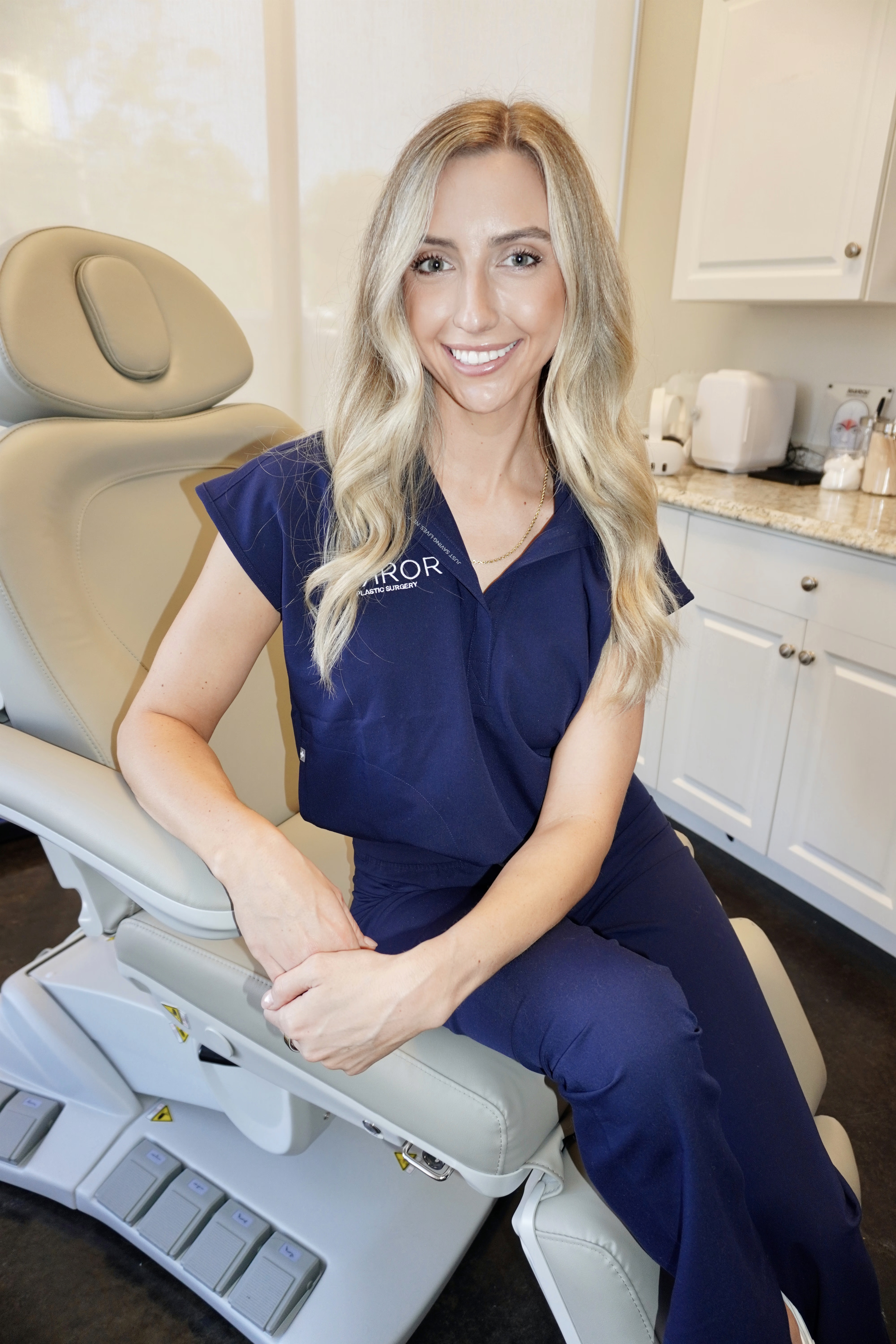
Ellie’s approach centers on education and transparency. She explains the physiology behind each recommendation in accessible terms, tells patients when a peptide is not yet necessary, and prioritizes long-term outcomes over short-term revenue. Patients have direct, 24/7 text access to Ellie throughout their protocol, with scheduled telemedicine appointments available for detailed reassessments.
Dr. Akash Chandawarkar, MD is the founder of Mirror Plastic Surgery and a Harvard-educated physician, Johns Hopkins-trained plastic surgeon, fellowship-trained aesthetic surgeon at Manhattan Eye Ear & Throat Hospital and Lenox Hill Hospital, and medical innovation-trained at Stanford University. For patients whose autoimmune or inflammatory presentations intersect with surgical or structural concerns, Dr. Akash provides an integrated pathway that spans both non-surgical peptide protocols and surgical intervention when clinically appropriate.
Frequently Asked Questions
Are peptides FDA-approved for autoimmune inflammation?
No. As detailed in the “Risks and Limitations of Peptide Therapy” section above, none of these peptides is FDA-approved for autoimmune inflammation, although the FDA Pharmacy Compounding Advisory Committee issued non-binding recommendations in July 2026. All Mirror Plastic Surgery protocols use licensed 503A compounding pharmacies with batch testing and practitioner supervision.
Can I take peptides alongside my current autoimmune medications?
Yes, but only under medical supervision. As explained in the “Using Peptides When You Already Have an Autoimmune Disease” section, peptides are strictly adjunctive and must never replace your prescribed medications. Ellie coordinates with your rheumatologist before starting any immune-active peptide and pauses protocols during uncontrolled flares until disease activity stabilizes.
How long does it take to see results from peptide therapy for inflammation?
Anti-inflammatory effects from KPV and BPC-157 may appear within two to four weeks.1 Deeper immune rebalancing through expansion of regulatory T cells and restoration of self-tolerance usually takes months.1 Thymosin Alpha-1 protocols typically run for three to six months before overall immune balance is reassessed.1 Results vary based on genetics, disease severity, lifestyle factors, and the specific peptide protocol, which is why personalized lab monitoring and ongoing practitioner oversight remain essential.1
What makes supervised peptide therapy safer than buying online?
The primary risk of purchasing peptides online is the lack of third-party quality verification. Independent testing has repeatedly found research-grade peptides that are underdosed, contaminated, or misidentified, and injecting non-sterile material introduces infection risk regardless of the peptide’s intended pharmacology. Mirror Plastic Surgery uses the licensed pharmacy sourcing described earlier, conducts baseline and periodic lab panels to screen for contraindications and monitor response, and provides 24/7 direct access to Ellie Pranckevicius throughout the protocol, which offers a level of oversight that unregulated online sources cannot match.
Next Steps with Mirror Plastic Surgery
Mirror Plastic Surgery serves patients throughout the Tampa Bay area and remotely across the United States, including Hawaii and Alaska. The consultation, protocol design, and peptide delivery process can take place entirely in person or via telemedicine.
- Address: 780 4th Ave S, St. Petersburg, FL 33701
- Phone/Text: 727-361-6515
- Email: hello@mirrorplasticsurgery.com
- Instagram: @mirrorplasticsurgery | @dr.akashplasticsurgery | @perfectlyplastics
Begin your lab-driven peptide protocol with Ellie, designed around your autoimmune profile, current medications, and long-term health goals.
Disclaimer: Peptide therapies offered at Mirror Plastic Surgery are not FDA-approved for the treatment of autoimmune diseases or chronic inflammation. All protocols are investigational and adjunctive in nature. Individual results vary significantly. Nothing in this article constitutes medical advice, and no patient should alter or discontinue prescribed medications without explicit approval from their treating physician or specialist.
Disclaimer: Mirror Plastic Surgery sources peptides from licensed 503A compounding pharmacies with documented batch testing. Compounding eligibility and regulatory status are subject to change based on ongoing FDA rulemaking. Patients are encouraged to discuss current regulatory status with Ellie Pranckevicius at the time of consultation.
1 Results may vary from person to person. Editorial content, before and after images, and patient testimonials do not constitute a guarantee of specific results.
Peptide therapy is intended for wellness and optimization purposes and is not prescribed to diagnose, treat, cure, or prevent disease unless specifically stated. Many peptides are not FDA-approved and may be used off-label. Some have limited long-term safety data, with a potential for unknown risks, complications, or desensitization with prolonged use.