
Written by: Ellie Pranckevicius, FNP-BC, Aesthetic Nurse Practitioner & Aesthetic Injector | Facial Restoration & Regenerative Injectable Specialist, Mirror Plastic Surgery
Key Takeaways
- Peptide therapy targets chronic inflammation in autoimmune conditions like rheumatoid arthritis, psoriasis, and IBD by modulating immune responses at the cellular level with fewer side effects than traditional drugs.
- Key peptides, including BPC-157 for gut and joint repair, TB500 for tissue healing, GHK-Cu for skin inflammation, and KPV for intestinal health, offer targeted relief supported by emerging research.
- Mirror Plastic Surgery’s Glow Stack combines multiple peptides for comprehensive inflammation management, tissue repair, and collagen support, showing improvements in symptoms, lab markers, and quality of life.
- Professional supervision is essential due to risks like unregulated sourcing, improper dosing, contraindications, and limited long-term data, so avoid unsupervised online purchases.
- Experience concierge peptide therapy with Ellie Pranckevicius at Mirror Plastic Surgery, with personalized protocols, lab monitoring, and nationwide remote access for safe, effective autoimmune relief.
How Chronic Inflammation Drives Autoimmune Disease
Chronic inflammation occurs when the immune system stays switched on and keeps releasing cytokines that damage healthy tissues. In autoimmune conditions like rheumatoid arthritis, the body mistakenly attacks joint tissues and creates ongoing pain and stiffness.
Psoriasis triggers excessive skin cell production through inflammatory pathways that cause plaques, redness, and itching. Inflammatory bowel diseases create persistent intestinal inflammation that many conventional treatments struggle to control.
Peptides fit this environment well because they act directly on immune signaling, support tissue repair, and lower inflammatory markers without the broad systemic suppression of many pharmaceuticals. Recent advances in peptide cellular therapy show strong potential for targeting specific inflammatory pathways while still supporting the body’s natural healing responses.
Unlike conventional treatments that often suppress entire immune functions, peptides can selectively influence inflammatory processes and spare healthy immune activity. This selectivity offers hope for patients who have had limited success or significant side effects with traditional approaches.
Learn how Mirror’s targeted protocols can address your specific inflammatory pathways through a thorough evaluation with Ellie.
Top Peptides for Chronic Inflammation and Autoimmune Conditions
Several peptides show particular promise for managing chronic inflammation and autoimmune symptoms. A clear understanding of their mechanisms helps patients and practitioners match the right peptide or combination to each condition. The following comparison highlights how each peptide targets different aspects of inflammation and autoimmune response, so you can see which options may align with your symptoms.
|
Peptide |
Key Benefits for Inflammation/Autoimmune |
Primary Applications |
|
BPC-157 |
Gut and joint repair, systemic inflammation reduction |
IBD, arthritis, tissue healing |
|
TB500 |
Soft tissue healing, wound repair |
Muscle inflammation, injury recovery |
|
GHK-Cu |
Collagen production, anti-inflammatory effects |
Skin conditions, anti-aging, and inflammation |
|
KPV |
Gut microbiome modulation |
IBD support, intestinal inflammation |
Mirror Plastic Surgery’s signature Glow Stack combines BPC-157, TB500, and GHK-Cu to address systemic inflammation while supporting collagen production and tissue repair. This layered approach targets several inflammatory pathways at once and often provides more complete relief than single-peptide protocols.
BPC-157 has gained particular attention for its gut-healing properties, with recent research supporting its use in inflammatory bowel conditions. The peptide promotes angiogenesis and tissue repair while reducing inflammatory markers throughout the digestive system.
If gut healing is your priority, discuss with Ellie whether the Glow Stack or a BPC-157-focused protocol better matches your needs during your consultation.
Schedule a visit to review your symptoms and options.
Real-World Benefits of Peptide Therapy for Autoimmune Inflammation
Patients using peptide therapy for autoimmune conditions often report meaningful reductions in symptom frequency and severity. Psoriasis patients describe less plaque formation and smoother, calmer skin. People with rheumatoid arthritis frequently notice decreased joint pain, less morning stiffness, and better mobility during flares.
Laboratory markers often improve alongside symptoms. Many patients see lower C-reactive protein levels, better lipid panels, and more favorable inflammatory cytokine profiles. Some can reduce their reliance on conventional medications under careful medical supervision, although any medication changes must occur under a provider’s guidance.
Energy levels and overall quality of life also tend to improve. Patients commonly report better sleep, greater daily activity tolerance, and more stable mood. The tissue repair properties of peptides like BPC-157 and TB-500 support faster recovery from inflammatory episodes and healthier tissues over time.
Ready to experience these quality-of-life improvements yourself? Ellie can help you identify which peptides address your most pressing symptoms and build a plan around your goals.
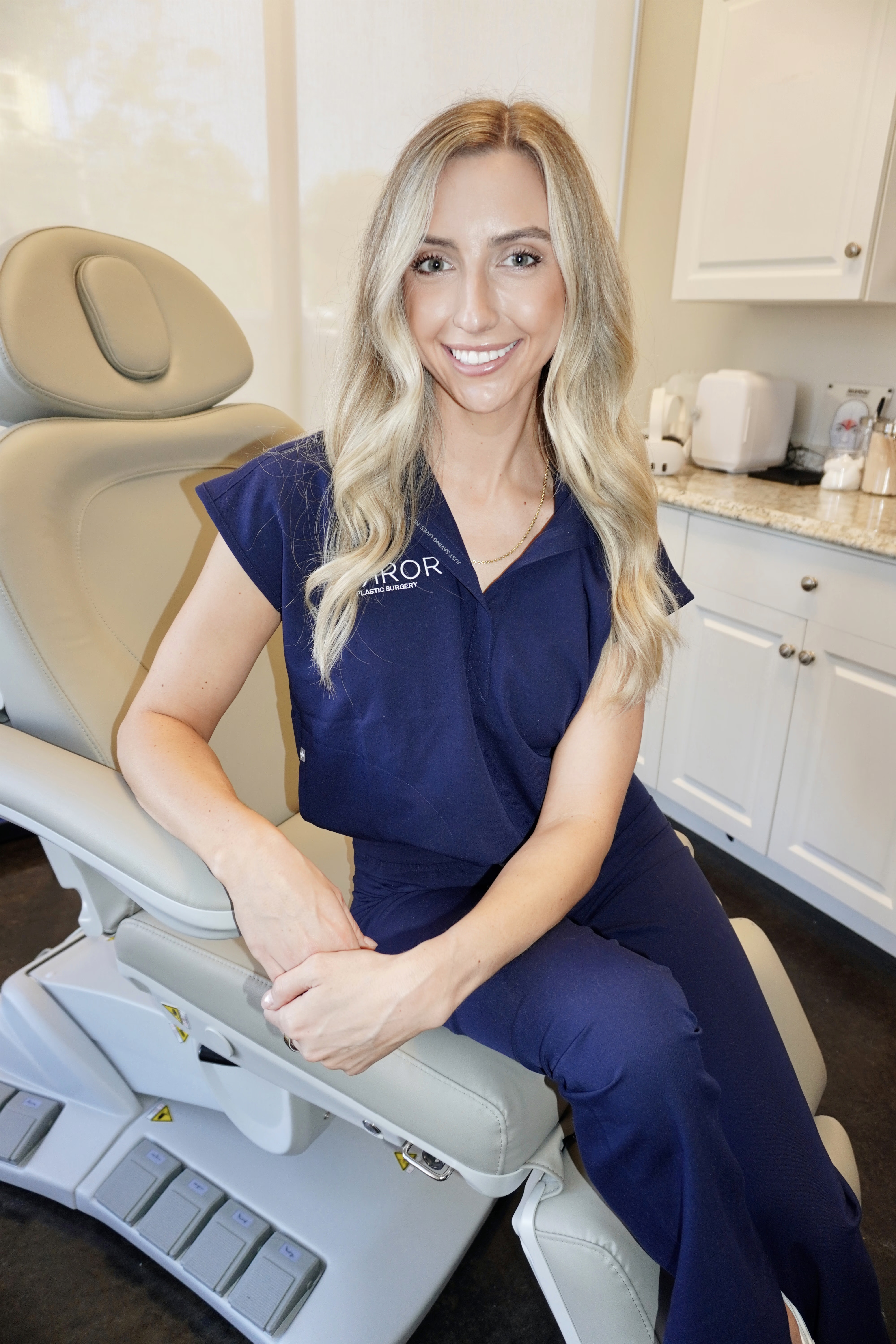
Meet Ellie Pranckevicius, Your Peptide Specialist
Ellie Pranckevicius, FNP-BC, blends critical care experience with aesthetic medicine expertise in her peptide practice. She earned her Bachelor’s in Health Science from Boston University on the premedical track, completed a rigorous aesthetics licensure program, and obtained both her Bachelor’s and Master’s in Nursing from the University of South Florida. Her four years in the Neuroscience ICU at Tampa General Hospital gave her deep insight into complex physiology and metabolic health.
Ellie’s combination of esthetician training and board-certified Family Nurse Practitioner credentials sets her apart. She understands the aesthetic outcomes patients want and the clinical science required for safe, effective results. Her educational style helps patients understand exactly what they are taking and why each peptide is chosen for their specific condition.
Risks, Contraindications, and Why Supervision Matters
Peptides generally show favorable safety profiles, yet some people should avoid or carefully reconsider therapy. Peptide therapy is contraindicated for pregnant or breastfeeding individuals, people with a history of cancer, uncontrolled endocrine disorders, or severe autoimmune conditions without specialist involvement.
Common side effects include mild injection site reactions, temporary fatigue, headaches, flushing, anxiety, or digestive upset during initial treatment phases. Most peptides appear well-tolerated in the short term, and these reactions usually resolve quickly. The greater concern involves the limited long-term safety data for many peptides, because extensive human trials remain scarce.
The unregulated online peptide market adds another layer of risk. Many products are not FDA-approved and show inconsistent purity and dosing accuracy, with testing sometimes revealing mislabeled or contaminated vials from unregulated suppliers. Professional supervision protects you through proper sourcing, accurate dosing, and structured monitoring for adverse effects.
Mirror Plastic Surgery addresses these concerns through comprehensive medical evaluation, laboratory monitoring, and pharmaceutical-grade sourcing from reputable compounding pharmacies with batch testing.
Schedule your evaluation to ensure you receive pharmaceutical-grade peptides with proper medical monitoring instead of relying on unregulated online sources.
Inside Mirror Plastic Surgery’s Concierge Peptide Therapy Process
Mirror’s process starts with a 30 to 60 minute consultation where Ellie reviews your medical history, current symptoms, and treatment goals. For inflammatory conditions, she often orders or reviews extensive laboratory panels, including thyroid function, liver and kidney markers, inflammatory indicators, and hormone levels.
Ellie then designs custom peptide protocols based on your consultation and lab results. The Glow Stack, which combines BPC-157, TB500, and GHK-Cu, targets systemic inflammation while supporting tissue repair and collagen production. Other protocols may focus on specific issues, such as gut inflammation with KPV or joint repair with BPC-157.
Patients receive clear reconstitution and administration instructions, often supported by video demonstrations for proper injection technique. The entire process can occur remotely anywhere in the United States, including Hawaii and Alaska, with peptides shipped directly to patients’ homes using appropriate cold-chain handling.
Ongoing support includes direct text access to Ellie for questions, dosing adjustments, or concerns, providing 24/7 availability so you are never navigating peptide therapy alone. Regular follow-up appointments track your progress and allow timely protocol adjustments, which keep treatment responsive to your changing symptoms.
Located at 780 4th Ave S, St. Petersburg, FL 33701, Mirror serves local patients and offers remote consultations nationwide. Whether you prefer in-person care in Florida or remote access from anywhere in the United States, call 727-361-6515 or begin your personalized protocol with Ellie online.
Choosing the Right Autoimmune Peptide Specialist
Choosing a peptide therapy provider requires careful review of credentials, experience, and approach to care. Look for board-certified practitioners with backgrounds in functional medicine, hormone therapy, or regenerative treatments. Proper sourcing from reputable compounding pharmacies, thorough medical evaluation, and consistent monitoring should form the foundation of any peptide program.
Mirror Plastic Surgery meets these standards through Ellie’s extensive clinical background, Dr. Akash Chandawarkar’s Harvard and Johns Hopkins training, and their commitment to evidence-based protocols. Their concierge model prioritizes personalized attention instead of one-size-fits-all treatment plans.
Choose Ellie for expert autoimmune peptide therapy care supported by comprehensive medical oversight and responsive, ongoing support.
Frequently Asked Questions
Are peptides only effective for weight loss?
Peptides address a wide range of health concerns beyond weight management. They are particularly helpful for inflammatory and autoimmune conditions like rheumatoid arthritis, psoriasis, and inflammatory bowel disease. Peptides can also support post-surgical recovery, neurological health, energy production, anti-aging goals, sexual wellness, and fertility concerns. Each peptide targets specific pathways, which makes them versatile tools for many health and performance goals.
What are the risks of using peptides without medical supervision?
Unsupervised peptide use carries significant risks that include unknown product quality, incorrect dosing, contamination, and lack of medical screening. Many online suppliers sell products without third-party testing or proper storage, which can lead to degraded or contaminated peptides.
Without oversight, patients may miss contraindications, drug interactions, or adverse reactions that require prompt attention. Professional supervision ensures safe sourcing, appropriate dosing, and ongoing monitoring for better outcomes.
Are peptides FDA-approved for autoimmune conditions?
Most peptides used for autoimmune inflammation are not FDA-approved for these specific indications and are prescribed off-label through compounding pharmacies. Some peptides hold FDA approval for other conditions, yet their use in autoimmune therapy reflects emerging medicine guided by research and clinical experience. This reality makes professional oversight even more critical for safe and effective use.
Will peptide therapy results vary between individuals?
Peptide therapy results vary widely between individuals. Genetics, lifestyle, diet, severity of disease, and adherence to protocols all influence outcomes. A peptide that works very well for one person may produce milder results for another. This variability highlights the need for personalized protocols based on detailed medical evaluation, laboratory testing, and ongoing monitoring.
What happens if I stop taking peptides?
When peptide therapy stops, benefits usually fade over time, similar to stopping other health interventions. If inflammation is controlled through peptide protocols, symptoms may gradually return to previous levels. Some patients maintain improvements longer than others, yet most need maintenance protocols to sustain results. The timeline for losing benefits differs by individual and by peptide, so gradual tapering and monitoring often work best when discontinuing therapy.
Conclusion: Next Steps for Autoimmune Peptide Care
Peptide therapy offers a promising path for managing chronic inflammation and autoimmune conditions when guided by qualified medical supervision. Success depends on working with specialists who understand peptide science and who provide individualized care, careful monitoring, and clear education.
Book an appointment with Ellie today to explore how Mirror Plastic Surgery’s concierge peptide therapy can support better inflammation control and a higher quality of life.
Contact Information:
Phone: 727-361-6515
Email: hello@mirrorplasticsurgery.com
Address: 780 4th Ave S, St. Petersburg, FL 33701
Instagram: @mirrorplasticsurgery, @dr.akashplasticsurgery, @perfectlyplastics
Disclaimer: Results may vary from person to person. Editorial content, before and after images, and patient testimonials do not constitute a guarantee of specific results.
Disclaimer: Peptide therapy is intended for wellness and optimization purposes and is not prescribed to diagnose, treat, cure, or prevent disease unless specifically stated. Many peptides are not FDA-approved and may be used off-label. Some have limited long-term safety data, with a potential for unknown risks, complications, or desensitization with prolonged use.