
Written by: Dr. Akash Chandawarkar, Board Certified Plastic Surgeon, Mirror Plastic Surgery
Key Takeaways
- Cheek augmentation implants create lasting facial structure using silicone or porous polyethylene, offering more permanent support than temporary fillers.
- Three main implant types, malar, submalar, and combined, target bone resorption and volume loss to restore natural midface contours.
- The procedure uses small intraoral incisions, takes 30 to 60 minutes under sedation, and most patients return to work in about one week.
- Complications such as infection or implant migration remain under 5% with expert technique, custom 3D planning, and a low-volume concierge model.
- Trust Mirror Plastic Surgery and Dr. Akash, named in America’s Best Plastic Surgeons 2025 by Newsweek for 2 years in a row, and his elite Harvard-MIT and Johns Hopkins training for safe results. Schedule your personalized assessment.
How Mirror Plastic Surgery Delivers Natural Cheek Implant Results
Mirror Plastic Surgery follows a concierge medicine model and performs only 1 to 2 surgeries each day, compared to high-volume centers that may complete 5 to 10 procedures. This low-volume structure allows hour-long anatomical consultations that uncover the real causes of rushed, unnatural results seen elsewhere.
The practice philosophy places safety first, function second, and aesthetics third, which supports natural, long-lasting outcomes that refine rather than dramatically alter facial harmony.
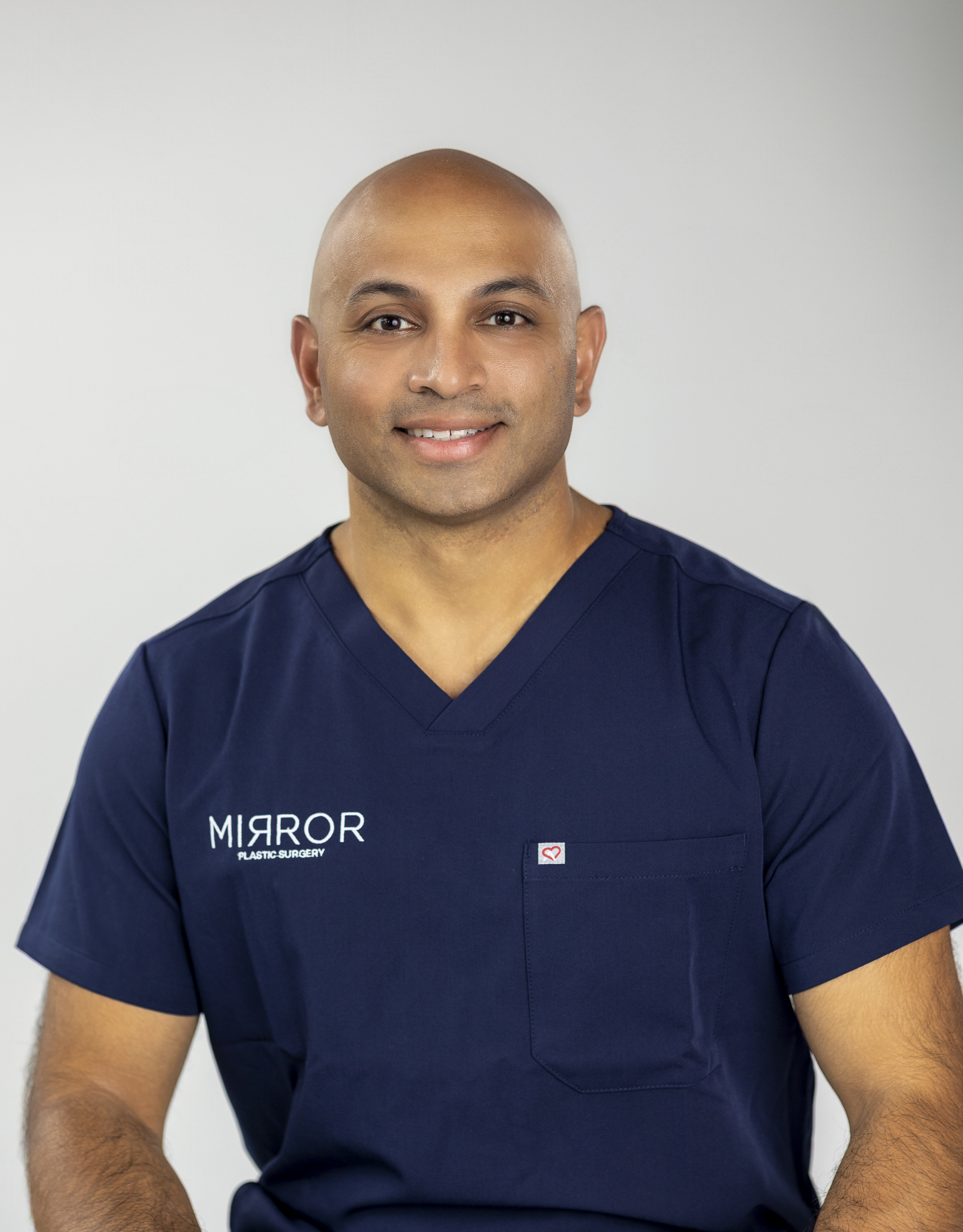
Meet Dr. Akash, Tampa Bay Cheek Implant Specialist
Dr. Akash, a Newsweek-recognized surgeon, brings elite credentials to cheek augmentation through his Harvard-MIT medical education and Johns Hopkins plastic surgery residency training. His specialized fellowship at Manhattan Eye, Ear & Throat Hospital (MEETH) focused specifically on facial enhancement procedures.
Dr. Akash advises Cypris Medical and actively contributes to developing advanced facial augmentation technologies for Tampa Bay patients who want natural, permanent results.
Explore your options with a personalized anatomical assessment from Dr. Akash.
Cheek Anatomy and Implant Material Basics
Cheek anatomy knowledge helps patients make confident decisions about implant selection. The malar region includes the prominent cheekbone area, while the submalar zone addresses volume in the lower midface.
Midface aging involves bone resorption and soft tissue descent, which create hollows that implants can restore on a permanent basis. Modern implant materials offer distinct advantages based on each patient’s anatomy and goals. The table below compares the two primary material options so you can see which characteristics match your needs and surgical plan.
|
Material |
Pros |
Cons |
Best For |
|
Silicone |
Flexible, removable, low infection risk |
Less tissue integration |
First-time patients, natural projection |
|
Medpor/Porous Polyethylene |
Tissue ingrowth, enhanced stability |
More difficult to remove |
Complex anatomy, revision cases |
Current Trends in Cheek Implant Surgery
The 2026 landscape features major advances in custom 3D-printed implants created from individual CT scans. Research shows superior outcomes with custom midface implants for complex anatomy and revision cases.
Minimally invasive intraoral approaches now represent the standard of care and avoid visible external scars. Rising patient demand centers on natural enhancement rather than dramatic transformation, which aligns closely with Mirror Plastic Surgery’s focus on subtle, functional improvement.
Types of Cheek Implants for Different Midface Needs
Three primary implant categories address distinct anatomical patterns and cosmetic goals.
1. Malar Implants: Positioned high on the cheekbone to create sharper, more defined lines. These implants enhance zygomatic prominence for patients with naturally flat bone structure or age-related volume loss in the upper midface.
2. Submalar Implants: Placed lower in the midface to add fullness and soften hollows beneath the cheekbone. They work well for correcting a gaunt appearance or rebuilding the youthful ogee curve from the lower eyelid to the upper lip.
3. Combined Malar-Submalar Implants: Offer balanced, comprehensive midface enhancement. These shell-style implants address both upper cheekbone projection and lower cheek fullness at the same time.
Before and after descriptions often highlight a shift from flat, aged midface contours to restored youthful projection with natural-appearing cheek prominence that complements existing facial features.
Cheek Implant Surgery: Step-by-Step Overview
The surgical process follows established protocols that prioritize safety and predictable results. StatPearls medical guidelines describe a standard approach that begins with intravenous sedation or general anesthesia. The surgeon then creates an intraoral incision 0.5 to 1.0 cm above the gum line, hidden inside the mouth to avoid visible scarring.
The surgeon performs precise subperiosteal dissection along the bone contours and extends to the infraorbital rim while protecting the infraorbital nerve. Manufacturer-specific sizers soaked in antibiotics confirm the fit before final implant placement. The implant is secured with titanium screws or sutures, which keep it stable and reduce migration risk. Most cheek implant procedures take 30 to 60 minutes and occur on an outpatient basis.
Cheek Implant Recovery Timeline and Home Care Tips
Most patients notice manageable swelling and bruising during the first week after surgery. Return to work usually occurs within one week, while strenuous activity is restricted for 1 to 2 weeks. Cold compresses and a soft diet help reduce discomfort and protect the incisions.
Swelling gradually improves over 1 to 3 months, revealing the final cheek contour and projection. Following post-operative instructions on diet, activity, and oral hygiene supports smoother healing and better long-term results.
Risks and How Mirror Plastic Surgery Reduces Complications
Potential complications include infection, implant migration, and asymmetry, and these occur in less than 5% of cases when surgeons follow proper protocols. Common revision reasons include poor implant selection, malposition that creates “chipmunk cheeks,” or oversizing that causes an overly masculine look.
Mirror Plastic Surgery reduces these risks through detailed preoperative ultrasound assessment, monitoring by a board-certified anesthesiologist, and meticulous surgical technique. The low-volume approach described earlier allows careful attention to detail that high-volume facilities cannot match.
Learn about our safety protocols and prevention strategies in a detailed consultation.
Alternatives to Cheek Implants
Dermal fillers provide temporary cheek enhancement that lasts 12 to 18 months but require repeated sessions and cannot match the structural projection of implants. Fat grafting uses your own tissue and can look very natural, yet absorption rates vary and sometimes require multiple treatments. Implants remain the most reliable choice for patients who want permanent, predictable cheek augmentation with consistent long-term support.
Common Patient Concerns and Misconceptions
Many patients visit Mirror Plastic Surgery after unsatisfying experiences with rushed consultations at high-volume practices. These “mill” environments often rely on cookie-cutter plans that overlook individual anatomy. Dr. Akash’s comprehensive assessment process includes detailed anatomical education, realistic expectation setting, and personalized implant selection based on bone structure, soft tissue characteristics, and aesthetic goals.
Why Tampa Bay Patients Choose Mirror Plastic Surgery
The low-volume approach described earlier ensures each patient receives individualized attention that high-volume facilities cannot provide. Dr. Akash’s elite training background, combined with the practice’s safety-first philosophy, creates an environment where natural, functional results matter more than dramatic change. Tampa Bay patients gain local access to world-class credentials, advanced imaging, and modern implant technology.
Frequently Asked Questions
What are the different types of cheek implants available?
Three main types serve different anatomical needs. Malar implants enhance upper cheekbone projection, submalar implants add lower midface fullness, and combined implants provide comprehensive enhancement.
Material options include silicone for flexibility and easier removal, or porous polyethylene for stronger tissue integration and stability. The final choice depends on your facial anatomy, cosmetic goals, and whether this is a first-time or revision procedure.
Is cheek augmentation with implants permanent?
Cheek implants provide permanent enhancement that can last for decades. Unlike temporary fillers that require repeated treatments, implants maintain their shape and position once healing finishes. Surgeons can still remove or adjust them if circumstances change or revision becomes necessary. This permanence makes careful surgeon selection and a thorough consultation essential for long-term satisfaction.
What is the typical recovery time for cheek implant surgery?
Most patients return to work within about one week, although some swelling and bruising may still be visible. Strenuous activities should be avoided for 1 to 2 weeks to reduce the risk. Final results appear over 1 to 3 months as swelling completely resolves. Closely following post-operative instructions on diet, activity limits, and oral care strongly influences healing and final outcomes.
What are the risks of cheek implants going wrong?
Potential complications include infection, implant migration, asymmetry, and nerve damage, though proper surgical technique keeps these risks minimal. As noted earlier, rates remain under 5% with experienced surgeons.
Most problems stem from inadequate planning, poor implant selection, or placement by inexperienced providers. Choosing a board-certified plastic surgeon with extensive facial surgery experience and following all pre- and post-operative instructions greatly reduces these risks.
How do I choose between malar and submalar cheek implants?
The decision depends on your specific anatomy and cosmetic goals. Malar implants work best for patients with flat or under-projected cheekbones who want sharper definition. Submalar implants treat hollowing beneath the cheekbones, often related to aging or naturally thin soft tissue. Many patients benefit from combined implants that address both regions at once for balanced, natural-looking enhancement.
Conclusion: Next Steps for Cheek Implants in Tampa
Cheek augmentation implants can deliver permanent, natural facial enhancement when performed with precise anatomical planning and a strong focus on safety. Mirror Plastic Surgery’s concierge approach gives Tampa Bay patients the in-depth assessment and individualized care needed for confident outcomes.
Start your consultation with Dr. Akash to begin your path toward safe, lasting cheek enhancement.
Disclaimer: Results may vary from person to person. Editorial content, before and after images, and patient testimonials do not constitute a guarantee of specific results.