

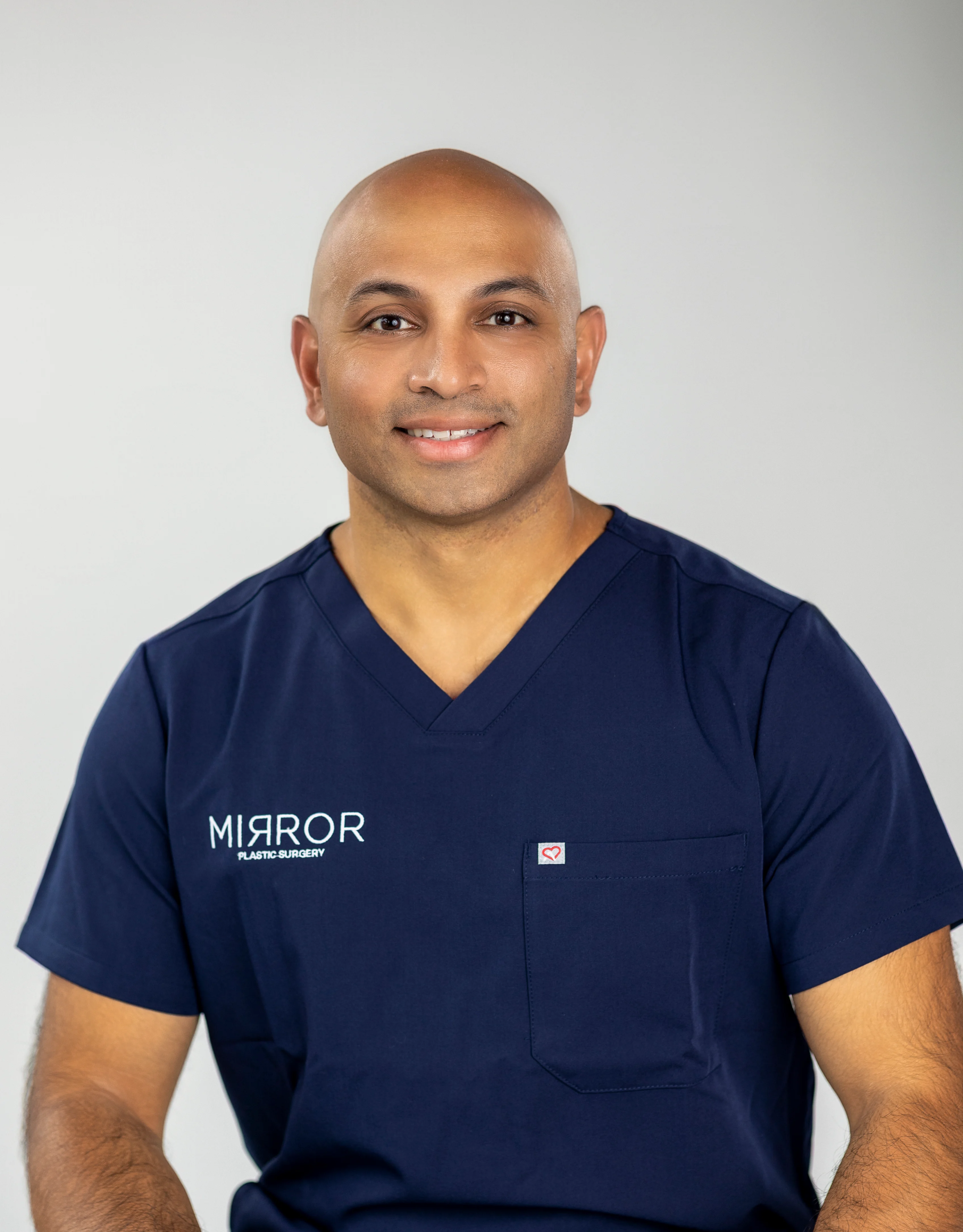
Written by: Dr. Akash Chandawarkar, Board Certified Plastic Surgeon, Mirror Plastic Surgery | Last updated: September 9, 2026
Key Takeaways
- GLP-1 medications like semaglutide and tirzepatide deliver average weight reductions of 15–21% when a physician prescribes and monitors treatment.1
- Safe programs include physician oversight, baseline lab testing, FDA-approved or compliant compounded medications, and structured follow-up.
- Compounded GLP-1 products now face strict FDA limits, and unregulated sources carry documented risks of dosing errors and adverse events.
- Long-term success depends on ongoing monitoring, resistance training, and a maintenance plan because weight regain is common after stopping therapy.
- Physician-led programs with comprehensive labs and 24/7 access offer the safest, most reliable GLP-1 experience.
What GLP-1 Medications Are And How They Work
GLP-1 (glucagon-like peptide-1) is a naturally occurring incretin hormone produced in the gut after eating. It regulates appetite by signaling fullness to the brain, slows gastric emptying, and improves insulin sensitivity. GLP-1 receptor agonists are medications that mimic this hormone and reduce hunger while helping patients feel satisfied with smaller meals.
FDA-approved options for chronic weight management include Wegovy (semaglutide), Zepbound (tirzepatide), Saxenda (liraglutide), and Foundayo (orforglipron), which became the first oral non-peptide GLP-1 receptor agonist in April 2026. In pivotal trials, tirzepatide produced an average weight reduction of 20.2% versus 13.7% for semaglutide over 72 weeks in a direct head-to-head comparison.1 Semaglutide also reduced major adverse cardiovascular events by 20% in the SELECT trial.1 GLP-1 therapy functions as chronic disease management and requires ongoing physician supervision for safe, sustainable results.
How To Choose A GLP-1 Provider In Tampa Bay: 7 Questions To Ask
These seven questions reveal the level of care and safety a provider actually delivers. High-volume clinics and online-only platforms often fall short on several of them.
- Who Will Be Supervising My Treatment? Look for board-certified physician oversight instead of care driven only by a nurse practitioner, physician assistant, or an online questionnaire. Physician-led programs carry a higher standard of accountability.
- What Lab Work Or Medical Evaluation Is Required Before Starting? Baseline labs, including thyroid, liver, kidney function, diabetes markers, and hormone panels, are essential for confirming safety and identifying contraindications. Providers who skip this step cut corners on your safety.
- Do You Offer FDA-Approved Medications, Compounded Versions, Or Both? Your provider should explain which medications are available and which option fits your medical history, goals, and budget. This conversation works best when you speak directly with a physician.
- How Do You Ensure The Quality And Safety Of Your Medications? Reputable sourcing and batch testing matter, especially for compounded options. Ask which pharmacy the practice uses and whether it holds appropriate state licensure.
- What Is The Follow-Up And Monitoring Process? Regular check-ins and repeat lab monitoring should be built into the program structure. Follow-up that appears as an optional add-on often signals a transactional model instead of true medical care.
- How Do You Handle Side Effects Or Complications? You need 24/7 access to a clinician who knows your case and can respond quickly. Call centers and generic chat bots do not provide that level of support.
- What Is The Long-Term Maintenance Plan? The STEP 1 extension trial showed patients regained approximately two-thirds of lost weight within one year of stopping semaglutide.1 A credible provider addresses maintenance and long-term planning from day one.
At Mirror Plastic Surgery in St. Petersburg, Dr. Akash Chandawarkar answers all seven with a physician-led concierge model. You receive up to an hour in consultation, comprehensive baseline labs, and 24/7 direct physician access throughout your treatment.
Schedule your GLP-1 evaluation with Dr. Akash and start a physician-led program tailored to you.
FDA-Approved Vs. Compounded GLP-1s: What Tampa Bay Patients Should Know
The regulatory landscape for GLP-1 medications shifted significantly in 2026, and clear understanding protects you from safety risks and legal gray zones.
FDA-Approved Options, including Wegovy, Zepbound, Saxenda, and Foundayo, have undergone rigorous safety and efficacy review. These medications provide the strongest evidence for outcomes and quality assurance.
Compounded GLP-1s existed primarily because of drug shortages. In April 2026, the FDA clarified that compounders may only produce copies of FDA-approved GLP-1 drugs while those drugs remain on the shortage list and must cease production once a shortage is resolved. With semaglutide and tirzepatide shortages now resolved, most mass compounding no longer meets legal requirements. 503A patient-specific compounding remains legal under narrow conditions. The pharmacy must hold appropriate state licensure, the prescription must be written for an individual patient by a US-licensed prescriber, and the compound must differ clinically from a commercially available product in a documented way.
The Risks Of Unregulated Sources are well documented. The FDA’s adverse event database has accumulated thousands of reports tied to compounded GLP-1 products, including dosing errors, severe gastrointestinal events, hypoglycemia in non-diabetic patients, and a documented cluster of deaths attributed to overdose errors.
Next-generation options such as triple agonists targeting GLP-1, GIP, and glucagon receptors are in Phase 3 clinical trials. Retatrutide produced average weight reductions of 28.3% at 80 weeks in the TRIUMPH-1 trial.1 It is not yet FDA-approved and is available only to clinical trial participants. Purchasing unverified triple-agonist peptides online exposes you to unreviewed safety and efficacy risks.
Mirror Plastic Surgery offers medically supervised access to both FDA-approved and compliant compounded options. Medications come from reputable, state-licensed pharmacies with batch-tested products, which supports both safety and effectiveness.
Costs And Insurance For GLP-1 Programs In Tampa Bay
Cost plays a major role in choosing a GLP-1 provider, and pricing often reflects how much a program invests in safety. Tampa Bay GLP-1 programs span a wide range. Compounded semaglutide typically runs $250–$400 per month, compounded tirzepatide $350–$500, and brand-name Wegovy or Zepbound $900–$1,300 per month without insurance. With commercial insurance coverage, copays often range from $25–$150 per month depending on the plan.
Insurance coverage varies considerably by payer. Most major commercial insurers in Florida cover at least one GLP-1 medication for weight loss, but they require prior authorization with documented BMI criteria and evidence of failed lifestyle interventions. Public programs are more restrictive. Florida Medicaid covers GLP-1 medications only for type 2 diabetes management. Medicare Advantage plans in Florida began covering GLP-1 medications for obesity in late 2025, benefiting roughly 340,000 eligible residents in the Tampa Bay area.
Programs priced at the very lowest end of the market often skip labs and real follow-up, which usually means safety corners get cut. Mirror Plastic Surgery provides transparent pricing and discusses financial options during your consultation, so you understand costs before starting.
The Consultation Process: Labs And Evaluation
A thorough, physician-led consultation forms the foundation of safe GLP-1 therapy. A complete visit follows a clear sequence of steps.
The consultation begins with a medical history review. This covers personal and family history of medullary thyroid carcinoma or MEN2 (absolute contraindications), pancreatitis, gallbladder disease, kidney disease, and current medications, per the 2022 AGA clinical practice guideline.
Next, your provider orders baseline lab work. At minimum, this includes a comprehensive metabolic panel for kidney and liver function, HbA1c, a lipid panel, and TSH. These tests confirm safety, identify contraindications such as severe kidney disease or untreated thyroid disorders, and establish a baseline for tracking your response. Many clinicians also add vitamin D, B12, and iron studies, particularly because 12.7% of GLP-1 users are diagnosed with a new nutritional deficiency within six months of starting treatment.
Finally, a body composition assessment measures muscle mass and strength to monitor for excessive lean mass loss during treatment, as recommended by a 2025 joint advisory from the American College of Lifestyle Medicine, American Society for Nutrition, Obesity Medicine Association, and The Obesity Society.
At Mirror Plastic Surgery, every patient receives up to an hour with Dr. Akash Chandawarkar, a board-certified plastic surgeon, Harvard Medical School graduate, and Johns Hopkins-trained physician. Comprehensive labs are reviewed or ordered, and a personalized protocol is designed around your physiology. High-volume clinics may rush this process in 15 minutes, and some online-only providers skip labs entirely, which both signal lower standards of care.
Get the comprehensive labs and evaluation you need to start GLP-1 therapy safely.
Long-Term Success: Maintenance And Monitoring
Weight regain after stopping GLP-1 therapy reflects biology rather than willpower. The 2026 TOS–OMA–OAC Expert Guidance Statement issues a strong recommendation for continued obesity medication in patients who have reached the weight maintenance phase, based on moderate-quality evidence, and explains that discontinuation consistently leads to weight regain and loss of metabolic benefit.
Ongoing monitoring should include repeat labs at 3–6 months, including HbA1c and kidney and liver function, along with annual full panels. Body composition tracking helps prevent muscle loss. Resistance training at least 2–3 times per week and protein intake of 1.2–1.6 g/kg ideal body weight support lean mass during treatment.
Mirror Plastic Surgery’s concierge model provides 24/7 direct text access to Dr. Akash, scheduled telemedicine follow-ups, and protocols adjusted based on your labs and response. This level of ongoing support helps you maintain results and protect your health over time.
Why Mirror Plastic Surgery Stands Out In The Tampa Bay Area
| Factor | Mirror Plastic Surgery | High-Volume Clinics | Online/Telehealth-Only |
|---|---|---|---|
| Medical Supervision | Board-certified physician (Dr. Akash Chandawarkar) | Often NP/PA or protocol-driven | Questionnaire-based, minimal oversight |
| Baseline Lab Work | Comprehensive panels required before starting | Variable; may be minimal | Often skipped or self-reported |
| Medication Sourcing | Reputable pharmacies with batch testing | Varies widely | Unregulated; significant quality risk |
| Follow-Up & Support | 24/7 direct physician access, concierge care | Scheduled visits, limited access | Chat-based or none |
Dr. Akash Chandawarkar is board-certified by the American Board of Plastic Surgery. He graduated from Harvard Medical School and trained at Johns Hopkins. He also has an MIT background in neuroscience and nuclear engineering. He is a Stanford Biodesign Innovation Fellowship alumnus. His practice limits itself to one to two procedures per day, which ensures every patient receives focused attention before, during, and after treatment.
Dr. Akash often advises patients when a treatment is not necessary yet and consistently prioritizes long-term results over short-term revenue. That philosophy of safety first, function second, and aesthetics third guides every GLP-1 protocol at Mirror Plastic Surgery.
Start your consultation at Mirror Plastic Surgery and explore GLP-1 medical weight loss with a physician-led team.
Frequently Asked Questions
Are GLP-1 Medications Safe?
GLP-1 medications have a strong safety record when a physician prescribes and supervises treatment. FDA-approved GLP-1 medications have undergone extensive clinical trials involving tens of thousands of participants. The most common side effects are gastrointestinal, including nausea, vomiting, diarrhea, and constipation, and these typically subside with gradual dose titration.
Serious adverse events such as acute pancreatitis or gallbladder complications occur rarely. In January 2026, the FDA finalized its evaluation of suicidal thoughts or actions in GLP-1 users and found no causal association after pooling 91 placebo-controlled trials involving over 107,000 patients. The agency removed the suicidality warning from GLP-1 labels. The boxed warning for thyroid C-cell tumors based on rodent data remains in place, and patients with a personal or family history of medullary thyroid carcinoma or MEN2 should avoid these medications.
Will I Regain Weight If I Stop Taking GLP-1?
Weight regain is common and biologically driven after discontinuation. As noted earlier, patients typically regain about two-thirds of lost weight within one year of stopping semaglutide. This pattern occurs because elevated ghrelin levels, reduced anorexigenic hormones, and a lower resting energy expenditure persist long after the medication stops.
The 2026 TOS–OMA–OAC Expert Guidance Statement recommends continued pharmacotherapy for weight maintenance and frames GLP-1 therapy similarly to blood pressure or cholesterol medication. A structured maintenance plan, like the one used at Mirror Plastic Surgery, addresses this reality from the outset.
Can I Get GLP-1 If I Do Not Have Diabetes?
Many patients qualify for GLP-1 therapy without diabetes. FDA-approved GLP-1 medications for weight management are indicated for adults with a BMI of 30 or greater, or a BMI of 27 or greater with at least one weight-related comorbidity such as hypertension, dyslipidemia, or obstructive sleep apnea, regardless of diabetes status. In the landmark STEP and SURMOUNT clinical trials, most participants did not have type 2 diabetes.
How Fast Will I See Results?
Most patients notice appetite suppression and reduced food noise within the first few weeks of starting therapy.1 Clinically significant weight loss, defined as 5% or more of body weight, typically appears within 12 weeks.1 Average total weight loss at 68–72 weeks ranges from approximately 15% with semaglutide to over 20% with tirzepatide, depending on the medication and dose.1 Individual results vary based on genetics, lifestyle, adherence, and the specific protocol designed for your physiology.1
Do I Need To Be Supervised While Taking GLP-1?
Medical supervision is essential while taking GLP-1 medications. Supervision ensures appropriate dosing, monitoring for side effects, adjustment of your plan based on lab results, and prompt management of any complications. Unsupervised use, especially of compounded products from online sources, carries significant risks, including incorrect dosing, unknown product quality, and no clinical support if problems develop.
As discussed earlier, unregulated compounded products have been linked to thousands of adverse event reports, including serious outcomes. Physician oversight provides the safety net that supports effective therapy.
Conclusion: Your Path To Safe, Sustainable Weight Loss In Tampa Bay
Choosing a GLP-1 provider in the Tampa Bay area requires close attention to medical oversight, medication quality, baseline lab testing, and a credible long-term maintenance plan. The lowest-priced option often delivers the least support and the highest risk.
Mirror Plastic Surgery offers physician-led GLP-1 medical weight loss with concierge care from Dr. Akash Chandawarkar, comprehensive lab analysis, and a personalized protocol designed around your physiology and goals. Take the first step toward safe, sustainable results with a physician-led GLP-1 program.
1 Results may vary from person to person. Editorial content, before and after images, and patient testimonials do not constitute a guarantee of specific results.
Peptide therapy is intended for wellness and optimization purposes and is not prescribed to diagnose, treat, cure, or prevent disease unless specifically stated. Many peptides are not FDA-approved and may be used off-label. Some have limited long-term safety data, with a potential for unknown risks, complications, or desensitization with prolonged use.


