

Written by: Dr. Akash Chandawarkar, Board Certified Plastic Surgeon, Mirror Plastic Surgery | Last updated: September 9, 2026
Key Takeaways
- GLP-1 medications like semaglutide and tirzepatide can produce 15–21% weight loss when paired with careful, physician-led oversight.1
- Safe care includes board-certified physician involvement, pre-treatment lab testing, personalized dosing, ongoing monitoring, and clear medication sourcing.
- Brand-name GLP-1 drugs undergo rigorous FDA testing, while compounded versions carry higher safety risks and regulatory uncertainty as of 2026.
- Costs vary widely, so value comes from quality of care and long-term support instead of price alone.
- Mirror Plastic Surgery offers concierge, physician-led GLP-1 care in St. Petersburg. Book a GLP-1 consultation to start a safe, personalized weight-loss program.
How GLP-1 Medications Support Weight Loss
GLP-1 stands for glucagon-like peptide-1, a natural hormone that helps regulate appetite, insulin secretion, and how quickly your stomach empties. Injectable GLP-1 receptor agonists mimic this hormone at therapeutic doses and steadily reduce hunger and caloric intake. The two most clinically relevant medications for weight loss in non-diabetic adults are semaglutide (Wegovy) and tirzepatide (Zepbound), both given as once-weekly subcutaneous injections, with oral options now emerging.
The efficacy data is strong. In the STEP-1 clinical trial, semaglutide at the 2.4 mg maintenance dose produced a mean total body weight loss of 14.9% over 68 weeks1. Tirzepatide, a dual GLP-1 and GIP receptor agonist, achieved 20.9% mean weight loss at the 15 mg dose over 72 weeks in the SURMOUNT-1 trial1. These results approach surgical outcomes.1 The STEP-4 trial found that patients who discontinued semaglutide regained approximately two-thirds of their lost weight within one year1. Because long-term management is essential, the right provider explains the full picture, including the risk of regain, before you start.
Start your GLP-1 evaluation at Mirror Plastic Surgery with a dedicated physician-led visit.
How To Choose A GLP-1 Provider In St. Petersburg: Five Essentials
GLP-1 clinics in St. Petersburg vary widely in safety, oversight, and follow-up. These five essentials help you separate comprehensive medical care from high-volume prescription programs.
- Physician Oversight. A board-certified physician must be directly involved in your evaluation, prescribing, and ongoing care, not merely listed on a website. Inability to identify who is responsible for your treatment signals poor oversight.
- Comprehensive Lab Testing Before Starting. Quality programs review thyroid function, liver and kidney markers, diabetes indicators, and hormone panels before prescribing. Evidence-based guidelines require pre-treatment screening for gastrointestinal history, thyroid history, gallbladder disease, eating behavior, and concurrent medications. Programs that skip labs increase the risk of missed contraindications.
- Personalized Dosing And Titration. Your protocol should match your physiology and tolerance. The 2022 AGA clinical practice guideline recommends starting all GLP-1-naïve patients at the lowest dose with slow titration, about four weeks per dose step, to prevent gastrointestinal side effects.
- Ongoing Monitoring And Follow-Up. Regular check-ins, side-effect management, and dose adjustments based on your response are essential. The 2022 AGA guideline recommends evaluating treatment response at 12–16 weeks, then continuing or escalating based on documented weight loss.
- Transparent Medication Sourcing. You should know whether you receive an FDA-approved brand-name medication or a compounded version, which pharmacy fills it, and whether batch testing occurs. A provider who refuses to answer these questions may be hiding sourcing problems that put your health at risk.
At Mirror Plastic Surgery, Dr. Chandawarkar’s concierge model addresses each of these criteria. Consultations run 30–60 minutes, comprehensive lab panels are reviewed before any protocol is designed, and patients have direct 24/7 text access to Dr. Chandawarkar throughout treatment.
Brand-Name Vs. Compounded GLP-1 Medications
Brand-name medications such as Wegovy and Zepbound have undergone rigorous clinical trials, manufacturing controls, stability testing, and bioavailability studies. Compounded versions have not gone through this level of FDA review. As of May 2026, the FDA had received over 1,700 adverse event reports associated with compounded semaglutide and tirzepatide, including dosing errors and hospitalizations, and the agency notes these figures are likely underreported because state-licensed pharmacies are not required to submit adverse event reports.
The regulatory environment continues to evolve. The FDA clarified in April 2026 that compounding pharmacies may only produce copies of approved GLP-1 drugs while those drugs remain on the FDA’s shortage database, and that once a product is no longer in shortage, pharmacies must stop manufacturing essentially identical versions or face enforcement action. A July 2026 JAMA Health Forum study found that some compounders are tweaking formulations, adding ingredients such as B vitamins, to sidestep the FDA’s copying ban.
Mirror Plastic Surgery sources medications from reputable providers with rigorous batch testing to support product quality, purity, and accurate dosing. The practice does not name specific compounding pharmacies publicly, and transparency about sourcing forms a standard part of every consultation.
How Much GLP-1 Treatment Costs In St. Petersburg
GLP-1 treatment costs depend on medication type, provider model, and insurance coverage. Cash-pay benchmarks in Florida for brand-name medications run approximately $1,349 per month for Wegovy and $1,059 per month for Zepbound, while compounded semaglutide and tirzepatide are available through various programs at lower price points. Commercial insurance copays, when coverage is approved, can be much lower.
Most major commercial insurers in Florida, including Florida Blue, Aetna, UnitedHealthcare, Cigna, and Humana, cover at least one GLP-1 medication for weight loss with prior authorization, which typically requires a documented BMI of 30 or higher, or 27 or higher with a comorbidity, and evidence of failed lifestyle interventions. Florida Medicaid does not cover GLP-1s for weight loss. Manufacturer savings programs can significantly reduce out-of-pocket costs for eligible commercially insured patients.
Value in GLP-1 treatment comes from the quality of care you receive. A lower-cost program that skips lab work, provides no physician oversight, and ships compounded medication with no follow-up is risky, not a bargain. Mirror Plastic Surgery provides personalized quotes after consultation, because every patient’s situation differs.
Discuss GLP-1 pricing and options with Mirror Plastic Surgery and receive a personalized treatment plan from Dr. Chandawarkar.
The Local GLP-1 Provider Landscape In St. Petersburg
St. Petersburg’s GLP-1 market includes national retail clinics, med spas, telemedicine platforms, and physician-led practices. These categories differ significantly in clinical oversight and follow-up. Many med spas and high-volume telehealth platforms lack direct physician involvement, comprehensive lab work, and structured monitoring. A 2026 Yale School of Medicine study published in JAMA found that 92% of online GLP-1 telehealth platforms issued a prescription, with some approvals in under five minutes, more than two-thirds required no interaction with a clinician, and nearly 87% of prescriptions were for compounded versions not FDA-approved for safety or effectiveness.
Before choosing any provider, ask these questions directly:
- Who will I see, and what are their credentials?
- Are labs required before prescribing?
- What is the follow-up protocol after I start?
- Is the medication FDA-approved or compounded, and which pharmacy fulfills it?
- How are side effects managed, and who do I contact if I have concerns?
Mirror Plastic Surgery stands apart through its concierge medicine philosophy. The practice limits itself to one to two procedures per day so every patient receives focused attention. Dr. Chandawarkar remains directly involved in every GLP-1 protocol, rather than delegating care to non-physician staff.
Red Flags When Evaluating GLP-1 Providers
Certain patterns signal a provider that prioritizes volume over safety. Watch for these warning signs:
- No lab work or physician consultation before prescribing
- One-size-fits-all dosing with no titration schedule
- No follow-up protocol or side-effect management plan
- Sourcing from unverified suppliers or refusal to identify the dispensing pharmacy
- Marketing compounded products as “FDA-approved,” “generic,” or “identical to brand”
- Guaranteed weight-loss claims or approval in minutes without meaningful clinical evaluation
- Auto-charging and auto-shipping refills with no required check-in to confirm the medication is still appropriate
Each shortcut increases the risk of poor outcomes, dosing errors, missed contraindications, and wasted money. Mirror Plastic Surgery’s physician-led, concierge model is designed to avoid these pitfalls.
Why Mirror Plastic Surgery Leads GLP-1 Care In St. Petersburg
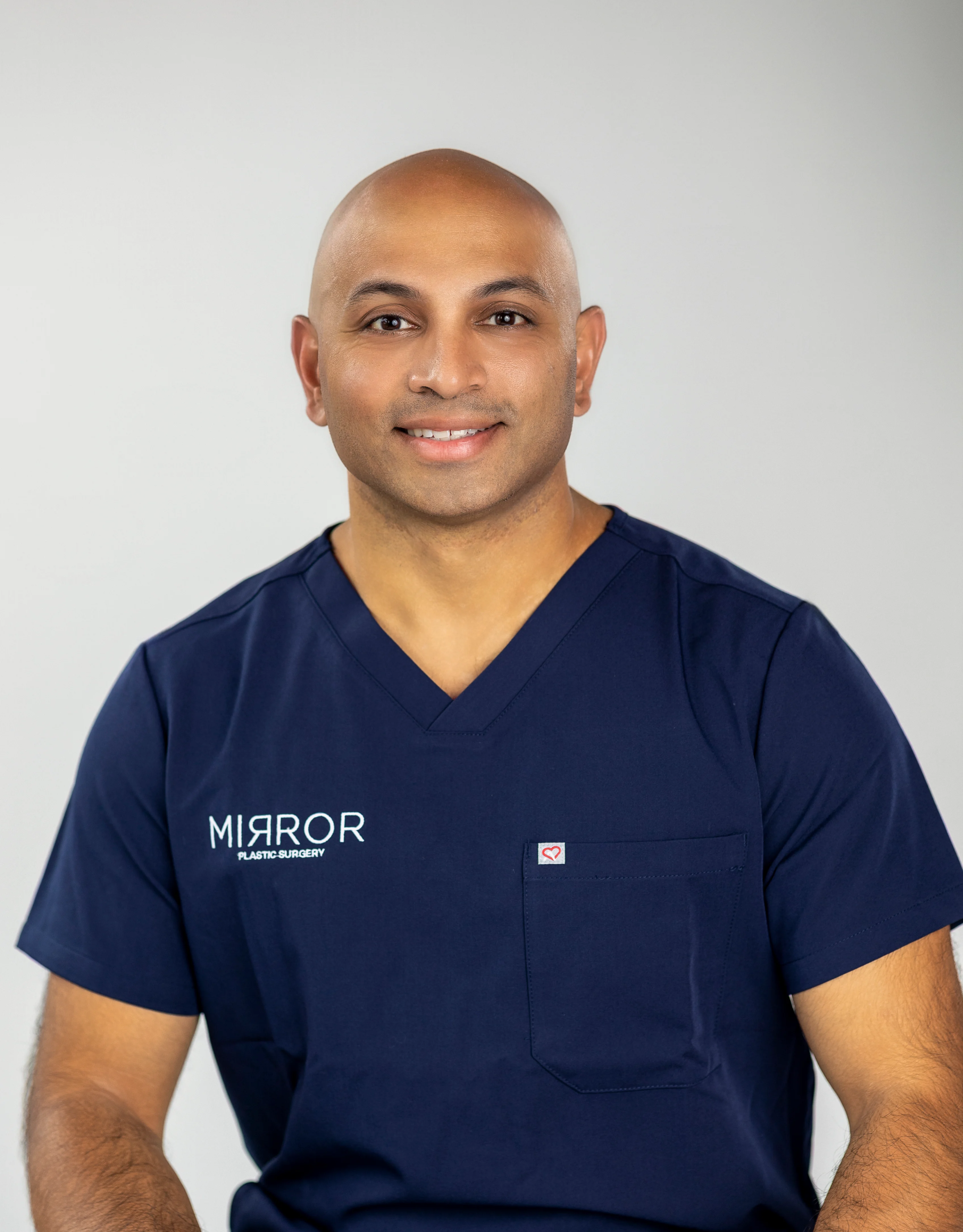
Dr. Akash Chandawarkar brings an uncommon blend of clinical training and medical innovation to GLP-1 care. He studied neuroscience and nuclear engineering at MIT. He then graduated with Honors from Harvard Medical School through the Harvard-MIT Division of Health Sciences and Technology. His seven-year integrated plastic and reconstructive surgery residency at Johns Hopkins University provided a deep understanding of physiology and metabolic health. He completed the Stanford University Biodesign Innovation Fellowship in Silicon Valley, a program that trains physician-innovators to identify unmet clinical needs and develop technological solutions, and he is board-certified by the American Board of Plastic Surgery.
Every GLP-1 patient at Mirror Plastic Surgery receives a 30–60 minute consultation, comprehensive lab analysis covering thyroid, liver, kidney, diabetes markers, and hormone panels, and a custom protocol designed around their individual physiology. Dr. Chandawarkar is available via text 24/7 for ongoing support, questions, and refill requests. The practice also offers remote consultations for patients across the United States who cannot visit the St. Petersburg office in person.
Mirror Plastic Surgery’s concierge model extends to a range of physician-led wellness services, and for weight loss the focus stays on safe, personalized GLP-1 care. Schedule a GLP-1 visit with Mirror Plastic Surgery to explore a tailored program.
Frequently Asked Questions
Here are answers to common questions about GLP-1 treatment and long-term weight management.
How Much Weight Can I Realistically Lose On GLP-1 Medications?
Clinical trials show average weight loss in the mid-teens to low twenties as a percentage of total body weight, as noted earlier.1 Real-world studies conducted without structured lifestyle intervention show 10–12% mean weight loss1, compared to higher figures in trials that included dietary counseling and exercise guidance. Your provider should set expectations around your specific health profile instead of relying only on trial averages.
Do I Need To Be On GLP-1 Medication Forever?
GLP-1 medications treat obesity as a chronic condition, similar to blood pressure or cholesterol medications. Earlier, we noted that stopping semaglutide often leads to regaining most of the lost weight, which highlights the need for long-term management. The 2026 American College of Physicians living guideline recommends semaglutide and tirzepatide as first-line medications for weight management in adults with obesity, alongside lifestyle modifications, and emphasizes shared decision-making about benefits, harms, and costs. You and your physician should decide together when and how to adjust or discontinue treatment.
Will Insurance Cover GLP-1 Weight Loss Medication In Florida?
Coverage depends on your specific plan and medical history. As covered earlier, most major Florida insurers require prior authorization with a BMI of 30 or higher, or 27 with a qualifying comorbidity, plus documentation of lifestyle efforts. Florida Medicaid does not cover GLP-1s for weight loss as of 2026 and covers semaglutide and tirzepatide only for type 2 diabetes indications. Manufacturer savings programs can reduce out-of-pocket costs for many commercially insured patients, and a quality provider helps navigate prior authorizations and appeals.
What Happens If I Miss A Dose Or Want To Stop?
For weekly GLP-1 medications like semaglutide and tirzepatide, if a dose is missed within five days of the scheduled injection, take it as soon as remembered and resume your regular schedule. If more than five days have passed, skip the missed dose entirely and resume on your original schedule, because taking two doses within 48 hours significantly increases the risk of nausea, vomiting, and other gastrointestinal side effects. If you miss three or more consecutive doses, you must restart the full titration schedule from the lowest dose to avoid severe gastrointestinal side effects. Any plan to stop treatment should be discussed with your physician in advance, since abrupt discontinuation without a strategy usually leads to rapid weight regain.
This article is for educational purposes and does not replace medical advice. Consult a qualified physician to determine if GLP-1 therapy is right for you.
1 Results may vary from person to person. Editorial content, before and after images, and patient testimonials do not constitute a guarantee of specific results.
Peptide therapy is intended for wellness and optimization purposes and is not prescribed to diagnose, treat, cure, or prevent disease unless specifically stated. Many peptides are not FDA-approved and may be used off-label. Some have limited long-term safety data, with a potential for unknown risks, complications, or desensitization with prolonged use.


