
Written by: Dr. Akash Chandawarkar, Board Certified Plastic Surgeon, Mirror Plastic Surgery | Last updated: July 6, 2026
Key Takeaways for Choosing a Transparent Surgeon
- Clear, specific risk discussions during breast augmentation consultations protect your safety and support informed decisions.
- Verify board certification and hospital privileges, and confirm the surgeon personally reviews your imaging and anatomy.
- Ask for the surgeon’s own complication and revision rates, a full FDA checklist review, and balanced discussion of BIA-ALCL and breast implant illness.
- Expect a detailed explanation of long-term maintenance, including imaging schedules and potential explant procedures, before you commit to surgery.
- Schedule a consultation at Mirror Plastic Surgery to review your goals, anatomy, and risk profile in depth.
Why Dr. Akash Focuses on Evidence and Transparency
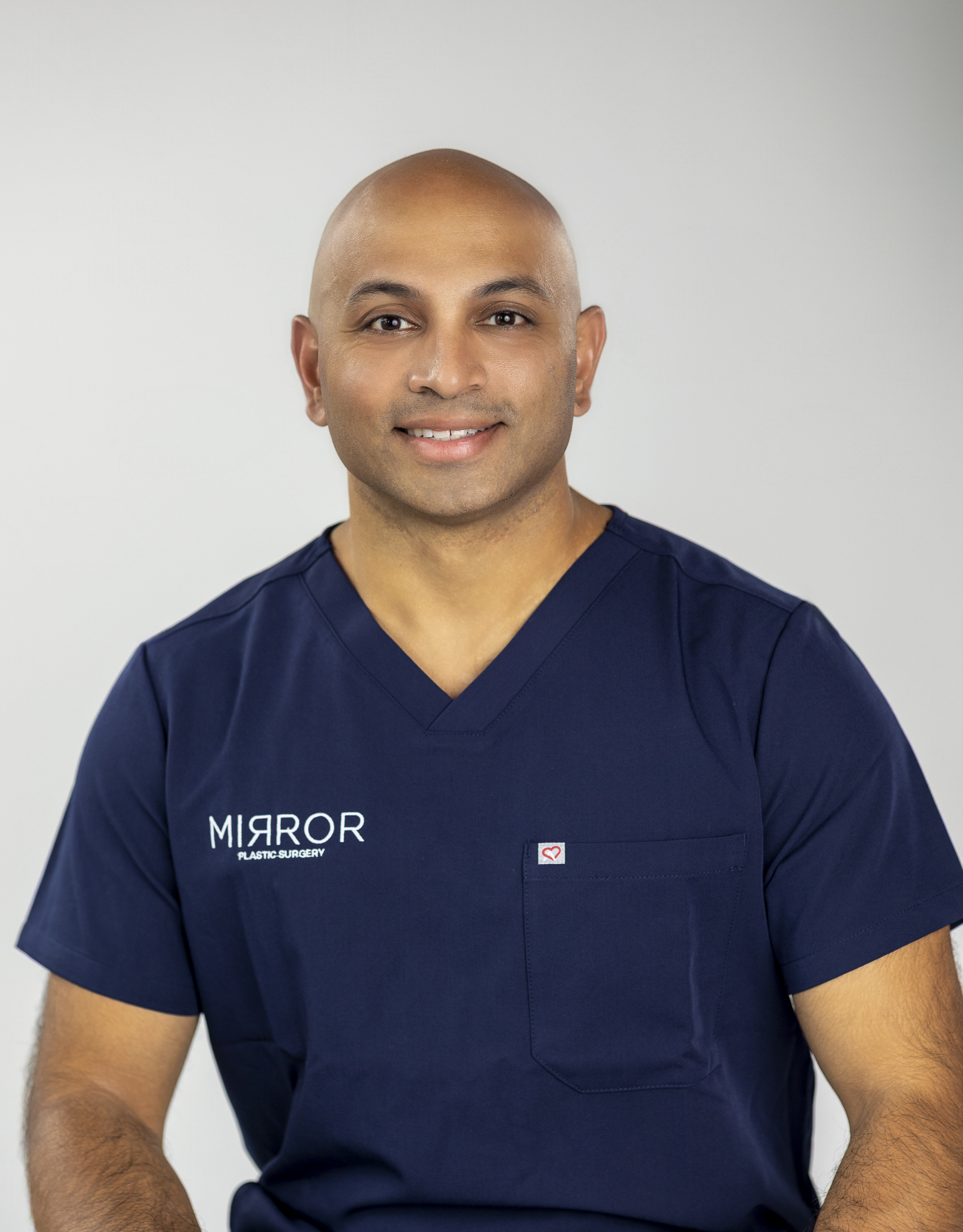
Dr. Akash completed his medical degree through the Harvard-MIT Division of Health Sciences and Technology and graduated from Harvard Medical School with Honors. He then completed a seven-year integrated plastic and reconstructive surgery residency at Johns Hopkins University. He pursued an additional aesthetic surgery fellowship at the Manhattan Eye, Ear and Throat Hospital, one of the most competitive programs in the country. He was selected to testify before the U.S. Food and Drug Administration on breast implant safety, which places him among a small group of surgeons who help shape national policy on this topic. Newsweek recognized him in America’s Best Plastic Surgeons 2025 for two consecutive years. At Mirror Plastic Surgery in St. Petersburg, Florida, he limits his schedule to one to two surgeries per day so each patient receives his full attention before, during, and after surgery.
Step 1: Confirm Board Certification and Hospital Backup
Board certification and hospital privileges form the foundation of surgical safety. The American Board of Plastic Surgery is the only board recognized by the American Board of Medical Specialties for plastic surgery certification. You can verify this in under two minutes using the ABMS public verification portal. After you confirm certification, check that the surgeon holds active admitting privileges at a local accredited hospital. Privileges require ongoing peer review and credentialing, so they are not automatic. In the Tampa Bay area, an accredited facility combined with a surgeon who has hospital privileges creates a direct pathway to hospital-level care if a rare complication occurs. Dr. Akash is board certified by the American Board of Plastic Surgery and holds hospital privileges, so continuity of care remains clear at every step.
Step 2: Make Sure the Surgeon Personally Reviews Your Imaging and Anatomy
Direct surgeon involvement in your anatomical assessment signals a commitment to individualized care. Some high-volume practices delegate pre-operative imaging review and anatomical assessment to physician assistants or patient coordinators. Ask directly who reviews your imaging and who performs your pre-operative anatomical assessment. The answer should name the operating surgeon. At Mirror Plastic Surgery, Dr. Akash conducts a comprehensive top-to-bottom anatomical evaluation for every patient, including in-office ultrasound when indicated, before he makes any surgical recommendation. Delegation of this step raises transparency concerns because the person performing your surgery may not have personally reviewed the anatomy that determines implant size, placement plane, and incision approach. Once you confirm that the surgeon handles this assessment personally, you can move to the next test of transparency: how they discuss complications and revisions.
Step 3: Ask for Personal Revision Rates and Clear Complication Plans
Personal complication data and a clear management plan reveal how a surgeon handles outcomes over time. Manufacturer post-approval studies report capsular contracture rates of approximately 19–29% over ten years, with higher rates for revision cases.1 These population-level figures provide context but do not describe the surgeon sitting in front of you. Ask your surgeon for their own revision and complication rates, not only manufacturer data. A transparent surgeon tracks this information and shares it in plain language. Also ask how complications are managed. Clarify whether the practice handles revisions in-house, how capsular contracture is graded, and what a rupture workup involves from first concern to final decision. Vague answers or redirection to brochures signal that your questions are not being taken seriously.
Step 4: Walk Through the FDA Patient Decision Checklist Together
The FDA checklist exists to standardize informed consent, so your surgeon should treat it as a conversation, not paperwork. The FDA now restricts the sale and distribution of breast implants to providers who review the patient decision checklist as part of informed consent. In 2021, the FDA required breast implant manufacturers to include information about the risk of systemic symptoms in a patient decision checklist within patient information booklets and on implant packaging warnings. Ask your surgeon to walk through each item on this checklist with you verbally, instead of handing you a document to sign quickly. The checklist covers implant types, known risks, the likelihood of additional surgeries, MRI screening recommendations, and systemic symptom risks. A surgeon who rushes this step or treats it as a formality is not meeting the standard the checklist was designed to enforce.
Step 5: Clarify BIA-ALCL Risk by Surface Type and Brand
Surface type and manufacturer choice directly affect BIA-ALCL risk, so your surgeon should explain these details clearly. Breast Implant-Associated Anaplastic Large Cell Lymphoma (BIA-ALCL) is a rare cancer of the immune system that develops in the scar tissue around a breast implant. Implant contents, whether saline or silicone, do not drive BIA-ALCL risk. The textured outer surface is the key determinant, so surface type must be part of preoperative counseling. The 2019 Allergan Biocell recall removed the highest-risk textured devices from the market, yet not all textured implants carry the same risk. Individuals with germline BRCA1 or BRCA2 pathogenic variants who underwent reconstruction with textured implants face 16 times higher risk of BIA-ALCL compared with non-carriers. Your surgeon should name the specific implant brand, model, and surface type they recommend and explain why that choice fits your situation. They should also describe BIA-ALCL symptoms, primarily late-onset swelling or fluid accumulation around the implant, so you know what to watch for over time.
Step 6: Talk About Breast Implant Illness With Evidence and Empathy
Balanced discussion of breast implant illness shows respect for both current science and patient experience. Breast Implant Illness (BII) is a patient-reported condition that includes symptoms such as fatigue, brain fog, joint and muscle pain, hair loss, rashes, and sleep disturbances. BII does not yet have an official medical diagnosis because universally accepted diagnostic criteria are still lacking, and major medical societies have not published treatment guidelines as of February 2026. A transparent surgeon explains this evidence balance clearly. They acknowledge that symptoms reported by patients with suspected BII are real and deserve careful evaluation, even while research continues. A surgeon who claims BII is not real or purely psychological raises a red flag. A surgeon who states that BII is definitively proven and cured by one operation also overstates the evidence. The accurate position recognizes ongoing research and patient experience at the same time.
Step 7: Understand Long-Term Imaging and Possible Explant Surgery
Long-term maintenance expectations reveal whether a surgeon is honest about the full lifecycle of implants. Breast implants are not lifetime devices, and a transparent surgeon states this clearly before surgery. The FDA recommends that patients with silicone gel-filled breast implants receive their first MRI or ultrasound screening 5–6 years after implantation and then every 2–3 years to monitor for silent rupture. If a surgeon does not explain this imaging schedule before surgery, or frames implants as a one-time decision, that gap signals a transparency problem. Ask about the explant process as well. Clarify what removal involves, what happens to the capsule, and when en bloc capsulectomy is truly indicated. Understanding the realistic possibility of future surgery belongs in the initial consent conversation, not in a later surprise.
Red Flags That Suggest Sales Pressure or Risk Minimization
Patterns of behavior during consultation can reveal whether a practice prioritizes sales over safety. A surgeon who pivots away from complication questions to before-and-after photos is redirecting, not answering. This kind of evasion often appears alongside vague reassurances such as “capsular contracture rarely happens here” that are not backed by personal data. These tactics share a common goal, which is to move you toward a decision before you have fully evaluated the risks. Rushed consultations under 30 minutes for a surgical procedure also signal a problem because informed consent requires time. Pressure to book on the same day, package pricing that bundles procedures without individual risk assessment, or staff-led consultations where the surgeon appears only briefly all point to a volume-driven model. High-volume practices that perform five to ten surgeries daily limit the time available for the detailed conversations that complex surgery requires.
Tampa Bay Details: Facility Accreditation and Anesthesia Team
Local facility standards and anesthesia staffing affect your safety just as much as the surgeon’s skill. In the Tampa Bay area, outpatient surgical facilities are not uniformly accredited. Accreditation by the American Association for Accreditation of Ambulatory Surgery Facilities (AAAASF), the Accreditation Association for Ambulatory Health Care (AAAHC), or The Joint Commission requires specific safety, staffing, and equipment standards. Confirm that your procedure will take place in an accredited facility and that your surgeon uses a board-certified physician anesthesiologist, not a nurse anesthetist working without physician oversight. Mirror Plastic Surgery operates within accredited surgical facilities and uses board-certified physician anesthesiologists for every procedure. Dr. Akash’s hospital admitting privileges in the Tampa Bay area add another safety layer that many outpatient surgeons do not maintain.
Printable Transparency Checklist for Your Consultation
A structured checklist helps you compare surgeons on facts instead of feelings. Bring these questions to your consultation and pay attention to how clearly and completely each one is answered. Confirm whether the surgeon is board certified by the American Board of Plastic Surgery and verify this independently. Ask if the surgeon holds active local hospital admitting privileges. Clarify who personally reviews your imaging and performs your pre-operative anatomical assessment. Request the surgeon’s personal capsular contracture, rupture, and revision rates. Ask whether the surgeon will walk through the FDA patient decision checklist item by item. Identify the specific implant brand, model, and surface type recommended, and ask why it was chosen. Discuss how the practice screens for and manages BIA-ALCL and how the surgeon approaches breast implant illness symptoms. Review the recommended post-operative imaging schedule and ask what the explant process involves and when removal is advised.
Common Myths About What Surgeon Transparency Looks Like
Several common assumptions can distract from the real signs of transparency. Board certification is necessary but not sufficient, because it confirms training but not how much time a surgeon spends on risk counseling. Certification also does not guarantee a thorough discussion of revision realities. Price does not reliably predict transparency or complication rates either. A higher surgical fee does not ensure a more complete informed consent process, and a lower fee does not automatically mean higher risk. The structure of the consultation and the surgeon’s willingness to answer specific questions with specific answers matter more. Patients who equate price or branding with safety may overlook the more meaningful indicators described in this guide.
How Mirror Plastic Surgery Connects Safety, Function, and Aesthetics
Mirror Plastic Surgery follows a clear sequence of priorities: safety first, function second, aesthetics third. For breast augmentation, this means implant selection, placement plane, and incision approach are based on anatomy and long-term function before aesthetic preferences are refined. Dr. Akash’s low-volume practice model, with one to two surgeries per day, reflects this philosophy in daily operations. This structure preserves time for detailed pre-operative assessment, careful intraoperative technique, and attentive post-operative follow-up. Many patients who experienced rushed consultations elsewhere describe the depth of anatomical discussion at Mirror Plastic Surgery as the factor that changed their decision.
Conclusion and Your Next Step
Finding a breast augmentation surgeon who discusses implant risks transparently requires active vetting. Verify board certification and hospital privileges yourself. Confirm that the surgeon personally reviews your anatomy. Ask for personal complication data instead of relying only on manufacturer statistics. Request a verbal walkthrough of the FDA patient decision checklist. Learn how BIA-ALCL risk varies by surface type, discuss breast implant illness with evidence balance, and clarify a long-term maintenance plan before surgery. These seven steps help you distinguish a surgeon committed to informed consent from one focused on volume.
Dr. Akash brings the credentials and FDA testimony experience detailed at the beginning of this guide to every consultation at Mirror Plastic Surgery. The practice is located at 780 4th Ave S, St. Petersburg, FL 33701, and serves patients throughout the Tampa Bay area.
Frequently Asked Questions
What is the difference between a board-certified plastic surgeon and a cosmetic surgeon for breast augmentation?
Board certification by the American Board of Plastic Surgery requires completion of an accredited plastic surgery residency, passage of written and oral examinations, and ongoing continuing medical education. The term “cosmetic surgeon” does not carry an equivalent standardized credential. Physicians from many specialties, including family medicine or obstetrics, can legally perform cosmetic procedures after short courses. For breast augmentation, which involves implant selection, anatomical assessment, surgical technique, and long-term complication management, the depth of training required by ABPS certification directly affects patient safety. Verifying certification through the ABMS public portal takes under two minutes and remains the single most important credential check before you schedule a consultation.
How should a surgeon talk about breast implant illness during a consultation?
A surgeon who provides balanced, evidence-based counseling on breast implant illness acknowledges that BII is a patient-reported condition with real symptoms such as fatigue, brain fog, joint pain, hair loss, and rashes. That same surgeon also explains that BII does not yet have an official medical diagnosis or universally accepted diagnostic criteria as of 2026, and major medical societies have not issued formal treatment guidelines. The surgeon should note that BII has been reported with all implant types, including saline and smooth-surface silicone, and that symptoms can appear soon after surgery or many years later. They should outline evaluation and management options, including the possibility of explantation, while being honest that symptom improvement after removal is common but not guaranteed.1 A surgeon who dismisses BII entirely or presents it as a fully defined disease with a guaranteed surgical cure is not reflecting current evidence accurately.
What imaging is required after breast augmentation, and who schedules it?
As discussed in Step 7, the FDA recommends the first MRI or ultrasound screening 5–6 years after placement of silicone gel-filled breast implants and every 2–3 years thereafter to monitor for silent rupture. Silent rupture produces no symptoms but can be detected on imaging, and this schedule applies regardless of implant brand or surface type. Responsibility for scheduling and tracking this imaging is shared. The surgeon should establish the protocol and explain it clearly before surgery, and the patient should keep the implant device information card, which lists the manufacturer, model, and lot number. At Mirror Plastic Surgery, post-operative imaging expectations are reviewed during the pre-operative consultation so patients understand the full maintenance commitment before they consent.
What does BIA-ALCL risk mean for a patient choosing smooth implants today?
BIA-ALCL is a rare cancer of the immune system that is associated primarily with textured-surface breast implants. The 2019 Allergan Biocell recall removed the highest-risk textured devices from the U.S. market. Smooth-surface implants have not shown the same association with BIA-ALCL, and many surgeons, including Dr. Akash, prefer smooth implants for this and other reasons. For patients choosing smooth implants from manufacturers with strong post-market safety data, current evidence does not indicate a meaningful BIA-ALCL risk.1 Patients with BRCA1 or BRCA2 pathogenic variants who are considering reconstruction after mastectomy face a much higher risk profile with textured implants and should discuss this genetic factor explicitly with their surgeon. Surface type therefore matters, and any surgeon who does not address it by name during consultation is omitting a clinically relevant part of informed consent.
Why does Mirror Plastic Surgery limit surgeries to one or two per day?
This low-volume schedule reflects Mirror Plastic Surgery’s safety-first philosophy in daily practice. High-volume practices that perform five to ten surgeries per day divide the team’s attention across many patients, which compresses time for pre-operative preparation, intraoperative precision, and immediate post-operative monitoring. By limiting daily surgical volume, Dr. Akash keeps his full focus, and the focus of his team, on each individual patient throughout the day. This model also supports hour-long consultations before any surgical recommendation, which allows enough time for detailed anatomical assessment and thorough risk discussion for complex breast surgery decisions.
1 Results may vary from person to person. Editorial content, before and after images, and patient testimonials do not constitute a guarantee of specific results.