

Written by: Dr. Akash Chandawarkar, Board Certified Plastic Surgeon, Mirror Plastic Surgery | Last updated: September 9, 2026
Key Takeaways
- Concierge semaglutide therapy is physician-led and personalized, unlike generic online clinics or protocol-driven med spas.
- This model matters in Tampa Bay, where high obesity rates make safe, clinically supervised weight loss especially important.
- Dr. Akash Chandawarkar’s advanced training supports Mirror Plastic Surgery’s concierge semaglutide and GLP-3R programs, with up to one-hour consultations and 24/7 direct physician access.
- Mirror Plastic Surgery stands out through mandatory baseline lab review, individualized dosing schedules, ongoing monitoring, and access to next-generation GLP-3R peptides when appropriate.
Patients seeking physician-led, lab-driven weight-loss care in the Tampa Bay area can schedule a personalized consultation at Mirror Plastic Surgery to begin a protocol built around their physiology and goals.
What Concierge Semaglutide Therapy Involves
Semaglutide is a GLP-1 receptor agonist that mimics the body’s glucagon-like peptide-1 hormone. It enhances glucose-dependent insulin secretion, suppresses glucagon, slows gastric emptying, and activates satiety centers in the brain. These mechanisms produce meaningful, sustained reductions in appetite and body weight.1 The STEP-1 trial published in the New England Journal of Medicine demonstrated an average 14.9% body weight reduction at 68 weeks on semaglutide 2.4 mg versus 2.4% on placebo.1
The concierge model turns this medication into a fully supervised medical program. Many online prescription mills rely on questionnaire-only intake and automated refills. Numerous med spas follow fixed, calendar-based protocols with limited physician involvement. A true concierge practice instead builds every element of care around the individual patient’s physiology, labs, and goals.
At Mirror Plastic Surgery, Dr. Chandawarkar personally reviews each patient’s baseline labs and tailors the dosing and titration schedule to their tolerance and response. Patients receive direct access to their physician, not a call center, and protocols follow individual needs rather than a one-size-fits-all template.
Book An Appointment With Ellie To Start Your Personalized Consultation.
How To Choose A Provider: Five Essential Questions
Before committing to any semaglutide program, Tampa Bay residents should ask these five questions. A genuinely physician-led practice will answer each one clearly and confidently, and the answers reveal whether you are getting a prescription or a true clinical partnership.
- Are You A Board-Certified Physician?
Board certification signals rigorous training, peer accountability, and adherence to clinical standards. Dr. Chandawarkar is board-certified by the American Board of Plastic Surgery, with a seven-year integrated plastic and reconstructive surgery residency at Johns Hopkins University. - Do You Require Lab Testing Before Starting?
Baseline labs, including thyroid function, liver and kidney markers, a comprehensive metabolic panel, lipid profile, HbA1c, and hormone panels, support safe prescribing. Mirror Plastic Surgery reviews existing labs or orders new ones as needed before any protocol begins. - How Do You Personalize Dosing?
Protocols should follow a patient’s physiology, not a fixed calendar. Dr. Chandawarkar customizes every plan based on lab results, individual tolerance, and ongoing weight-loss response. He adjusts titration speed and complementary therapies as needed. - What Ongoing Support Is Available?
Direct physician access defines concierge care. Mirror Plastic Surgery patients have 24/7 text access to Dr. Chandawarkar, rather than routing questions through a call center or coordinator. - Do You Offer Alternatives Like GLP-3R?
Next-generation peptide options can help patients who experience significant side effects on traditional GLP-1s. Mirror Plastic Surgery is one of the few practices in the Tampa Bay area offering GLP-3R as an alternative or complement to semaglutide.
Mirror Plastic Surgery meets every standard in this checklist. Practices that avoid direct answers or rely on vague language about “physician oversight” deserve careful scrutiny.
Brand-Name And Compounded Semaglutide For Tampa Patients
FDA-approved semaglutide products, Wegovy for weight management and Ozempic for type 2 diabetes, are manufactured by Novo Nordisk under strict current Good Manufacturing Practice (cGMP) standards. These medications have extensive clinical trial data and ongoing post-marketing safety surveillance. Compounded semaglutide is prepared by licensed pharmacies and has not undergone FDA pre-market review of the finished product for safety, effectiveness, or quality.
The FDA declared the national semaglutide shortage resolved in February 2025, which ended the broad shortage exemption that had permitted widespread compounding. Under current law, compounded semaglutide is available only as an individualized formulation for a specific patient under Section 503A. This requires the prescriber to document a clinically meaningful reason, such as an intolerance to a branded inactive ingredient or a non-standard dose requirement. As of July 2025, the FDA had received over 605 adverse event reports involving compounded semaglutide, including hospitalizations linked to dosing errors from patients drawing their own doses from multi-dose vials.
GLP-3R represents a newer generation of peptide therapy. It works through a mechanism similar to GLP-1 and is reported to produce fewer gastrointestinal side effects, reduce the risk of muscle wasting, and support broader metabolic indications such as insulin resistance and cardiovascular risk factors. Dr. Chandawarkar sources GLP-3R from reputable providers with batch testing and presents it as a considered clinical option, not a marketing slogan. Patients should understand that GLP-3R, like other compounded peptides, is not FDA-approved for all uses, and outcomes vary by individual.
The Role Of Lab Testing And Ongoing Monitoring
Semaglutide functions as a medical therapy, not a quick shot without follow-up. Safe, effective treatment requires a thorough baseline assessment and structured ongoing monitoring, which questionnaire-only telehealth platforms cannot provide at the same standard.
Before starting semaglutide, Mirror Plastic Surgery runs a standard panel to rule out contraindications and establish a safe baseline. These labs include:
- Comprehensive metabolic panel (liver and kidney function)
- Lipid profile
- Hemoglobin A1c (HbA1c)
- Thyroid function (TSH)
- Baseline lipase (to evaluate pancreatitis risk)
- Hormone panels where clinically indicated
Dr. Chandawarkar uses these results to tailor the protocol, including starting dose, titration speed, and any complementary therapies. Ongoing monitoring tracks weight, vitals, labs, and medication reconciliation throughout the program. This approach matters because, as patients lose weight, other medications such as blood pressure drugs, insulin, and thyroid medications may require adjustment. Structured GLP-1 programs recheck weight, vitals, and adherence at defined intervals during the first six months, then quarterly, with periodic lab retesting during maintenance.
Book An Appointment With Ellie And Get A Lab-Driven Protocol Built Around Your Physiology.
Telehealth And In-Person Care In Florida
Florida Statute 456.47 permits telehealth prescribing of non-controlled medications, and semaglutide is not a controlled substance. Florida law requires documentation of BMI of at least 30, or at least 27 with a weight-related comorbidity, written informed consent, and re-evaluation at least every three months. A synchronous audio-visual visit satisfies the standard-of-care requirement, while a static questionnaire rubber-stamped by a clinician does not.
Many patients benefit from an in-person initial evaluation that video alone cannot match. This visit allows a comprehensive physical assessment, body composition analysis, and a face-to-face discussion of medical history, current medications, and long-term goals. Mirror Plastic Surgery offers in-person consultations at their St. Petersburg location, serving patients across Tampa, St. Pete, Clearwater, and the broader Tampa Bay area. The practice also provides remote services for patients across the United States, including Hawaii and Alaska.
Spotlight On Mirror Plastic Surgery’s Concierge Approach
The telehealth discussion raises a key question about who is truly qualified to oversee this therapy. Dr. Akash Chandawarkar’s credentials are uncommon in any medical specialty, including weight loss medicine. He studied neuroscience and nuclear engineering at MIT before graduating with Honors from Harvard Medical School through the Harvard-MIT Division of Health Sciences and Technology. His clinical training included a seven-year integrated plastic and reconstructive surgery residency at Johns Hopkins University. He then completed aesthetic surgery fellowship training at the Manhattan Eye Ear and Throat Hospital and Lenox Hill Hospital in New York.
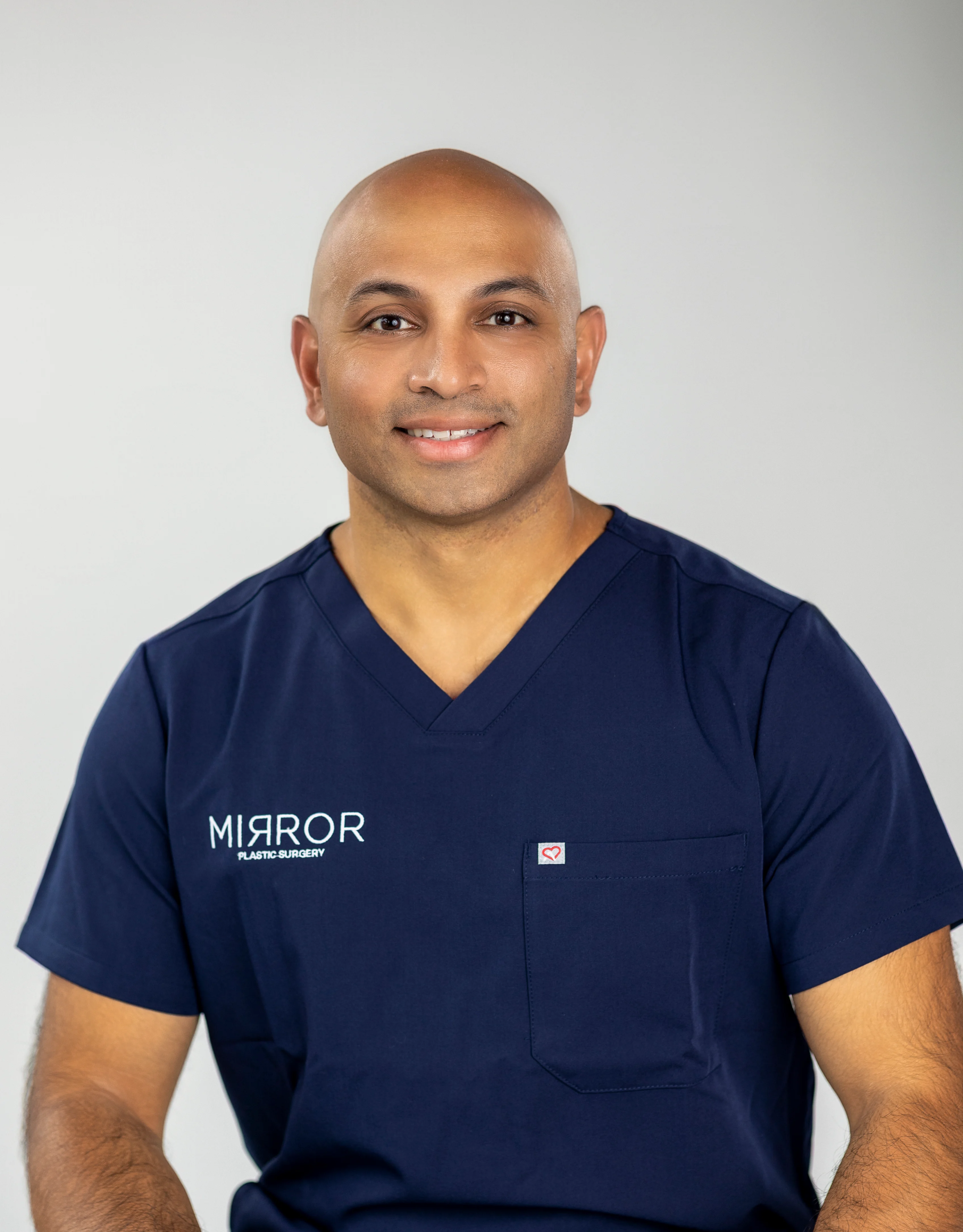
He also completed the Stanford University Biodesign Innovation Fellowship, a program that trains physician-innovators to identify unmet clinical needs and develop technological solutions. He serves on the advisory boards of several companies developing emerging medical technologies.
This background shapes how Mirror Plastic Surgery approaches weight loss. The practice limits itself to one to two surgeries per day so the entire clinical team can focus on each patient before, during, and after any procedure. Non-surgical programs, including semaglutide and GLP-3R therapy, receive the same concierge standard. Consultations run up to an hour, every protocol is built around the patient’s labs and physiology, and Dr. Chandawarkar remains personally reachable throughout.
Mirror’s peptide offerings extend beyond weight loss. The practice’s “Glow Stack,” which combines GHK-CU, BPC-157, and TB500, addresses systemic inflammation, collagen and elastin production, and soft tissue recovery. Patients pursuing weight loss often benefit from complementary peptide support for inflammation reduction and skin health as their body composition changes. Some patients who combine GLP-3R therapy with the Glow Stack have reported positive outcomes, including weight reduction and improvements in metabolic markers, though individual results vary.1
Dr. Chandawarkar’s guiding philosophy places safety first, function second, and aesthetics third. Every recommendation is grounded in the patient’s labs, history, and realistic goals.
Cost Considerations For Concierge Semaglutide Care
Concierge semaglutide therapy represents an investment in safety, personalization, and accountability rather than a simple medication subscription. The Tampa Bay market includes low-cost telehealth platforms with minimal oversight and comprehensive physician-led programs that include labs, ongoing monitoring, and direct physician access. As one Tampa Bay medical director has noted, if a clinic offers compounded GLP-1 medication with no labs and no real follow-up, “the math on that should make you pause. Somebody is cutting corners somewhere.”
Mirror Plastic Surgery provides personalized quotes after consultation, because each patient’s protocol, including dosing, duration, complementary therapies, and monitoring frequency, is unique. The standard of care remains consistent: physician-led, lab-driven, and personally supervised from the first visit through long-term maintenance.
Frequently Asked Questions
Is Semaglutide Safe For Weight Loss?
Semaglutide is safe for weight loss when a qualified physician prescribes and monitors it. The STEP clinical trial program, mentioned earlier, showed significant weight loss with a well-characterized side-effect profile. The most common side effects, including nausea, diarrhea, constipation, and vomiting, are dose-dependent and typically improve after four to eight weeks at a stable dose. Serious events, including acute pancreatitis and gallbladder disease, are rare but documented, which is why baseline lab screening and ongoing monitoring remain essential parts of any responsible program. Semaglutide is contraindicated in patients with a personal or family history of medullary thyroid carcinoma or MEN2 syndrome, and patients should avoid it during pregnancy.
How Quickly Will I See Results?
Most patients notice appetite suppression within the first week at the starting dose.1 Clinically meaningful weight loss, defined as 5% or more of body weight, typically appears by weeks 8 to 12 at therapeutic doses.1 The pace of loss varies based on individual physiology, adherence to lifestyle recommendations, and the specific protocol prescribed. Dr. Chandawarkar monitors response at defined intervals and adjusts dosing based on results rather than a fixed calendar.
What Happens If I Stop Taking Semaglutide?
Studies consistently show that patients who stop semaglutide without a structured maintenance plan regain roughly two-thirds of their lost weight within a year.1 This pattern reflects the return of impaired satiety signaling when the medication is removed. Long-term, maintenance-focused care is a core principle of Mirror Plastic Surgery’s concierge model. Dr. Chandawarkar builds a planned exit and maintenance strategy into every protocol from the outset.
Can I Use Telehealth For Semaglutide In Florida?
Florida law permits telehealth prescribing of GLP-1 medications, which are not controlled substances. The law requires documented BMI of 30 or higher, or 27 with a weight-related comorbidity, written informed consent, and re-evaluation at least every three months. A synchronous audio-visual visit satisfies the standard-of-care requirement. An in-person initial evaluation is still recommended for patients who want a comprehensive physical assessment, body composition analysis, and a thorough review of their medical history and current medications. Mirror Plastic Surgery offers both in-person consultations in St. Petersburg and remote services across the United States.
What Is GLP-3R?
GLP-3R is a newer-generation peptide similar in mechanism to GLP-1, the well-established class that includes semaglutide. As discussed earlier, GLP-3R is a newer peptide with a potentially better side-effect profile and broader metabolic benefits.1 Mirror Plastic Surgery offers GLP-3R as an alternative or complement to traditional semaglutide, sourced from reputable providers with batch testing. As with all peptide therapies, GLP-3R is not FDA-approved for all uses, and individual results vary.
How Is Mirror Plastic Surgery Different From Online Clinics?
Online clinics often rely on questionnaire-based intake, automated refills, and limited physician involvement after the initial prescription. Mirror Plastic Surgery provides physician-led care with comprehensive baseline labs, personalized dosing and titration, 24/7 direct text access to Dr. Chandawarkar, and quality-sourced peptides with batch testing. Every protocol is designed around the individual patient’s labs and physiology, and Dr. Chandawarkar remains personally involved throughout the program.
Conclusion: Choosing Concierge Weight Loss Care In Tampa
Semaglutide is a powerful clinical tool, and outcomes depend heavily on the physician who manages it. In Tampa’s expanding weight loss market, where telehealth platforms, med spas, and online prescription mills compete for the same patients, the concierge standard separates a simple prescription from a long-term partnership.
Mirror Plastic Surgery, under Dr. Akash Chandawarkar’s leadership, delivers that standard through exceptional training, comprehensive lab-driven protocols, 24/7 physician access, and a next-generation GLP-3R offering that most Tampa practices do not provide. This combination creates a rigorous, personalized approach to physician-supervised weight loss in the region.
Ready to experience the difference of true concierge care? Book An Appointment With Ellie At Mirror Plastic Surgery Today.
Medical Disclaimer
Results vary. Semaglutide and peptides are not FDA-approved for all uses. Medical supervision is essential. This article is for educational purposes and does not constitute medical advice.
1 Results may vary from person to person. Editorial content, before and after images, and patient testimonials do not constitute a guarantee of specific results.
Peptide therapy is intended for wellness and optimization purposes and is not prescribed to diagnose, treat, cure, or prevent disease unless specifically stated. Many peptides are not FDA-approved and may be used off-label. Some have limited long-term safety data, with a potential for unknown risks, complications, or desensitization with prolonged use.


