
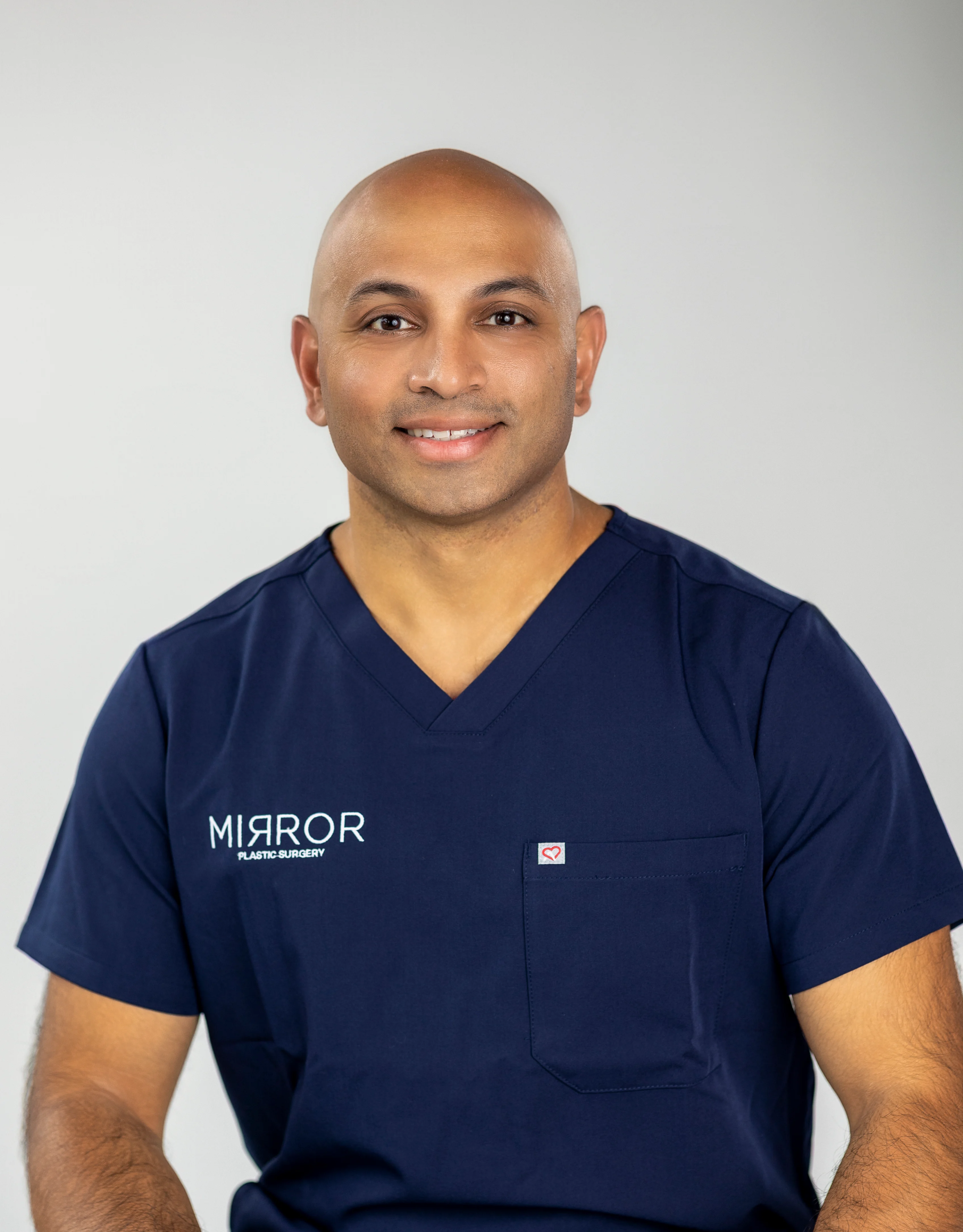
Written by: Dr. Akash Chandawarkar, Board Certified Plastic Surgeon, Mirror Plastic Surgery | Last updated: September 9, 2026
How This Guide Helps You Choose Safely
Choosing a safe semaglutide clinic in Tampa Bay starts with three essentials. You need to understand what separates high-quality providers, how compounded medications differ from FDA-approved options, and which questions reveal a clinic’s true standards. This guide walks through each step so you can compare clinics with confidence and see where Mirror Plastic Surgery fits in that landscape.
How We Evaluated Semaglutide Clinics in the Tampa Bay Area
This guide prioritizes medical rigor over marketing claims or patient volume. Clinics were assessed across five dimensions:
- Physician Credentials and Direct Involvement, meaning a board-certified physician personally oversees each patient’s protocol
- Medication Sourcing Transparency, including clear disclosure of FDA-approved versus compounded medication and the specific compounding pharmacy
- Baseline Lab Testing Requirements, such as comprehensive panels for thyroid, liver, kidney, diabetes markers, and hormone levels before treatment begins
- Ongoing Monitoring Frequency, with attention to whether structured follow-up is mandatory during dose titration
- Personalization of Protocols, including dose adjustments based on individual physiology rather than a fixed template
This framework reflects the clinical expertise of Dr. Akash Chandawarkar. His background spans MIT neuroscience, Harvard Medical School, a seven-year Johns Hopkins plastic surgery residency, and a Stanford Biodesign Innovation Fellowship. Clinics were not evaluated on advertising budget, only on the quality and safety of patient care.
Semaglutide Clinic Types in St. Petersburg and Tampa
The Tampa Bay semaglutide market falls into three main categories. Knowing how each category operates helps you quickly place any clinic you encounter and understand its likely strengths and gaps.
Physician-Led Concierge Practices
Physician-led concierge practices represent the highest standard of medical weight management. Defining characteristics include direct oversight by a board-certified physician, comprehensive initial consultations lasting 30 to 60 minutes, and mandatory baseline lab panels covering thyroid, liver, kidney, diabetes markers, and hormone levels. Dosing is personalized to each patient’s physiology, and patients have ongoing access to the supervising physician between visits.
Mirror Plastic Surgery exemplifies this model. Dr. Chandawarkar personally conducts each consultation and reviews lab results before any protocol begins. He remains available to patients via text 24 hours a day, seven days a week. The same concierge philosophy that limits Mirror to one or two surgical cases per day also guides its medical weight management programs. Every semaglutide protocol is built around the patient’s labs and physiology rather than a standardized template.
Telehealth-First Providers
Telehealth platforms emphasize convenience and lower price points, but clinical oversight varies widely. A July 2026 Yale University secret shopper study published in JAMA found that 92% of 49 online telehealth sites prescribed a GLP-1 medication after only a questionnaire, and two-thirds required no direct interaction with a clinician. Half of the sites did not ask about eating disorders, which matters because GLP-1s can worsen disordered eating in vulnerable patients.
Some telehealth providers maintain strong standards with licensed physicians, mandatory labs, and structured follow-up. Patients considering this route should verify physician oversight, pharmacy accreditation, and whether baseline lab work is required rather than optional.
Med-Spas and Wellness Centers
Med-spas typically offer nurse-administered injections under a medical director who may be off-site or minimally involved in individual care. Quality varies significantly. Patients should verify the supervising provider’s credentials, confirm that this provider personally conducts the initial evaluation, and ensure that baseline labs are required before treatment begins. A University of Colorado study published in JAMA Health Forum in July 2026 found that some medical spas and weight loss clinics sourced compounded GLP-1s from pharmacies lacking licenses for sterile compounding, several of which had recent disciplinary actions or FDA warning letters.
| Evaluation Criteria | Mirror Plastic Surgery (Physician-Led) | Telehealth-First Providers | Med-Spas & Wellness Centers |
|---|---|---|---|
| Physician Involvement | Direct oversight by board-certified MD for every protocol | Variable, often NP or PA with remote physician supervision | Variable, often an off-site medical director with limited individual involvement |
| Baseline Lab Testing | Comprehensive panels required before treatment initiation | Often questionnaire-based, labs frequently optional | Inconsistent, some require panels, others skip them entirely |
| Medication Sourcing | FDA-compliant, batch-tested from reputable pharmacies with transparent sourcing | Compounded, pharmacy transparency varies by platform | Compounded, sourcing often undisclosed |
| Follow-Up & Monitoring | 24/7 concierge access to physician, structured monitoring throughout titration | Scheduled telehealth check-ins, voluntary models correlate with 40%+ discontinuation by week 12 | Monthly visits typical, depth and physician involvement vary |
Compounded vs. FDA-Approved Semaglutide in 2026
Wegovy (semaglutide) is the FDA-approved medication for chronic weight management, administered as a weekly injection and approved for adults and adolescents ages 12 and older. Compounded semaglutide differs in a key way. It is not FDA-approved for any use and does not undergo FDA testing for safety, effectiveness, or quality.
The regulatory landscape tightened considerably in 2026. On April 30, 2026, the FDA proposed excluding semaglutide, tirzepatide, and liraglutide from the 503B Bulks List, finding no clinical need for outsourcing facilities to compound these drugs from bulk substances. Earlier, in March 2026, the FDA issued 30 warning letters to telehealth companies for making misleading claims that compounded GLP-1 products were equivalent to FDA-approved drugs.
Safety data on compounded GLP-1s raises concern. A 2026 pharmacovigilance study published in Expert Opinion on Drug Safety, analyzing over 81,000 FDA Adverse Event Reporting System reports, found that compounded GLP-1 products were associated with 6.34 times higher odds of suicidality, 2.35 times higher odds of hospitalization, 19 times higher odds of contamination, and nearly 49 times higher odds of preparation errors compared with brand-name drugs. Ninety-five percent of adverse events with compounded GLP-1s were related to how the product was dosed or administered, and the FDA has received reports of patients accidentally taking 10 to 20 times the intended dose from multi-dose vials, leading to hospitalizations.
Mirror Plastic Surgery responds to these risks by sourcing from reputable providers with rigorous batch testing and transparent quality standards. Continuous physician oversight helps catch and manage adverse events early.
Cost Considerations for Semaglutide Treatment in St. Petersburg and Tampa
Semaglutide program costs in Tampa Bay depend on medication type, provider oversight, lab work, and follow-up structure. Brand-name Wegovy carries a list price of approximately $1,349 per month without insurance. Local programs span a wide range of prices based on provider type, medication format, and included services.
Price alone does not reliably signal quality. Extremely low prices often signal higher risk. As one Tampa-area physician has noted, clinics offering compounded GLP-1 medications without labs or meaningful follow-up are likely cutting corners somewhere. As noted in the comparison table, voluntary follow-up models see 40%+ discontinuation by week 12, while mandatory monthly check-ins during months one through six maintain adherence rates above 85%.1
Mirror Plastic Surgery provides transparent, personalized quotes after consultation so patients understand exactly what is included, including medication, labs, physician oversight, and follow-up. For a detailed breakdown of Tampa Bay semaglutide program costs, see the Semaglutide Treatment Cost Comparison: Tampa Bay 2026 resource.
What to Ask Before Choosing a Semaglutide Clinic
Arriving with clear questions helps you evaluate any semaglutide clinic in St. Petersburg or Tampa. A legitimate clinic will answer each one directly and transparently, and vague or evasive responses signal concern.
- Who will supervise my treatment, and what are their credentials?
- Do you use FDA-approved or compounded semaglutide?
- If compounded, which pharmacy do you use, and is it 503A or 503B accredited?
- What baseline lab tests do you require before starting?
- How often will I be monitored during dose titration?
- What is included in the quoted price, including medication, labs, and visits?
- How do you handle side effects, and who do I contact?
- What is your follow-up protocol after I reach my goal weight?
- Are you available for questions between scheduled visits?
- Can I see a certificate of analysis for my specific medication batch?
A certificate of analysis showing HPLC purity data and endotoxin testing is the single most useful quality checkpoint before starting any compounded peptide therapy. Any clinic unwilling to provide one warrants serious scrutiny.
Why Direct Physician Supervision Protects Semaglutide Patients
Board-certified physician oversight functions as a clinical safeguard for semaglutide treatment. Semaglutide is contraindicated in patients with a personal or family history of medullary thyroid carcinoma or Multiple Endocrine Neoplasia syndrome type 2 (MEN 2), and a questionnaire-only intake process cannot reliably screen for these issues. Gastrointestinal side effects affect the majority of patients taking semaglutide1, and safe management of nausea, vomiting, and dehydration requires a physician who understands the patient’s full clinical picture.
Compounded semaglutide may come in varied concentrations and multi-dose vials, creating documented dosing error risks that physician oversight can help prevent. The manifesto indicates that lab panels are reviewed or ordered for weight loss or certain inflammatory conditions, but does not specify the exact tests or state they are medically necessary before starting GLP-1 therapy.
Dr. Chandawarkar’s training at MIT, Harvard Medical School, Johns Hopkins, and Stanford Biodesign supports a deep understanding of physiology and metabolism. His approach mirrors his surgical philosophy. He explains the physiology behind each recommendation so patients understand what they are taking and why. He also tells patients when a service is not yet necessary, prioritizing long-term outcomes over short-term revenue. For a broader overview of physician-supervised peptide and weight management therapy at Mirror Plastic Surgery, see the Best Semaglutide & Peptide Therapy Clinic in Tampa resource.
How to Choose a Semaglutide Clinic: Practical Scenarios
The right semaglutide clinic depends on the level of medical oversight and personalization you want. Three common scenarios cover most patients.
- For in-person, physician-led care with comprehensive lab analysis and 24/7 concierge support: Mirror Plastic Surgery offers this model. Dr. Chandawarkar personally oversees every semaglutide protocol from initial labs through maintenance.
- For a telehealth-only option: Select a reputable platform and independently verify physician oversight, pharmacy accreditation (503A or 503B), and mandatory baseline lab requirements before committing.
- For a med-spa option: Confirm the supervising provider’s credentials, ensure they conduct the initial evaluation personally, and verify that baseline labs are required rather than optional.
Your Next Step Toward Safe, Effective Weight Loss
In a Tampa Bay market with more than 40 semaglutide providers, the physician behind the protocol creates the real difference. Comprehensive baseline labs, transparent medication sourcing, mandatory monitoring, and direct physician access form the foundation of a quality program.
Mirror Plastic Surgery, under Dr. Chandawarkar’s leadership, offers a medically rigorous and personally attentive semaglutide program in the St. Petersburg and Tampa area. Every protocol begins with an in-depth consultation, proceeds through comprehensive lab analysis, and includes 24/7 concierge access to the physician throughout the patient’s journey.
Frequently Asked Questions
Is Compounded Semaglutide Safe?
Compounded semaglutide is not FDA-approved and has not undergone FDA review for safety, effectiveness, or quality. The FDA resolved the semaglutide shortage in early 2025, and in April 2026 proposed excluding semaglutide from the 503B Bulks List, which would significantly restrict large-scale compounding. A 2026 pharmacovigilance study in Expert Opinion on Drug Safety found compounded GLP-1 products associated with substantially higher odds of suicidality, hospitalization, contamination, and preparation errors compared with brand-name drugs. Compounded semaglutide can be managed more safely when it comes from a licensed 503A or 503B pharmacy dispensing the FDA-approved base molecule under direct physician supervision. Risks rise when oversight is absent, pharmacy sourcing is undisclosed, and baseline labs are skipped. At Mirror Plastic Surgery, every compounded medication is sourced from reputable providers with rigorous batch testing, and every patient is monitored by Dr. Chandawarkar throughout their protocol.
How Much Does Semaglutide Cost in St. Petersburg?
Semaglutide program costs in the St. Petersburg and Tampa Bay area vary based on medication type, level of physician oversight, whether baseline lab work is bundled or billed separately, and the frequency and depth of follow-up visits. Brand-name Wegovy carries a higher list price than compounded alternatives, although insurance coverage can reduce out-of-pocket costs for eligible patients. Compounded versions are available at lower price points, yet the lowest-cost options in the market, especially those without labs or structured follow-up, create clinical risk rather than value. Quality programs include medication, physician oversight, baseline labs, and structured monitoring in a transparent, all-in quote. Mirror Plastic Surgery provides personalized quotes after consultation so patients understand exactly what is included before committing to any protocol.
What Qualifications Should a Semaglutide Provider Have?
Any licensed MD, DO, nurse practitioner, or physician assistant can legally prescribe semaglutide, but legal authority differs from deep expertise in metabolic health and weight management. Board certification through the American Board of Obesity Medicine (ABOM) is not legally required but signals specialized competence and reduces clinical risk. For patients seeking the highest standard of care, a board-certified physician with direct involvement in each protocol, rather than a remote medical director reviewing charts, sets the appropriate bar. Prescribers should conduct a thorough initial evaluation covering medical history, contraindication screening, baseline lab review, and a detailed discussion of risks, benefits, and alternatives. Follow-up should be structured and mandatory during dose titration. Dr. Chandawarkar’s credentials, including American Board of Plastic Surgery certification, Harvard Medical School training, Johns Hopkins residency, and Stanford Biodesign Fellowship, represent a level of clinical and scientific rigor that is uncommon in the Tampa Bay weight management market.
What Red Flags Should I Watch for When Choosing a Semaglutide Clinic?
Several warning signs suggest a clinic prioritizes volume or revenue over safety. Lack of live interaction with a licensed provider before prescribing semaglutide is a major concern, as is a prescription generated after only a brief questionnaire with no lab requirement. Clinics that cannot or will not name their compounding pharmacy, or that cannot provide a certificate of analysis for the specific medication batch, operate without the transparency safe compounding requires. Guaranteed weight-loss numbers, marketing language such as “research semaglutide,” and pricing that seems implausibly low relative to the services described all warrant skepticism. At Mirror Plastic Surgery, every patient receives a direct consultation with Dr. Chandawarkar, a comprehensive lab review, and full transparency about medication sourcing before any protocol begins.
1 Results may vary from person to person. Editorial content, before and after images, and patient testimonials do not constitute a guarantee of specific results.
Peptide therapy is intended for wellness and optimization purposes and is not prescribed to diagnose, treat, cure, or prevent disease unless specifically stated. Many peptides are not FDA-approved and may be used off-label. Some have limited long-term safety data, with a potential for unknown risks, complications, or desensitization with prolonged use.