
Written by: Ellie Pranckevicius, FNP-BC, Aesthetic Nurse Practitioner & Aesthetic Injector | Facial Restoration & Regenerative Injectable Specialist, Mirror Plastic Surgery | Last updated: July 28, 2026
Key Takeaways
- A true dermal filler specialist in 2026 holds verified Florida licensure, works under documented physician supervision, and maintains complication protocols including on-site hyaluronidase.
- Before booking, apply a three-column evaluation framework covering regulatory compliance, red-flag indicators, and credential tier to every provider you consider.
- Florida law restricts who may inject fillers: only MDs, DOs, ARNPs under collaborative agreements, or RNs under direct physician orders and supervision are legally permitted.
- High-risk indicators include short consultations, single-brand lock-in, missing hyaluronidase, absent vascular occlusion protocols, and lack of documented good-faith examinations.
- For a compliant, anatomy-first treatment plan led by Ellie Pranckevicius, FNP-BC under physician oversight, book a consultation with Mirror Plastic Surgery.
How to Evaluate Any Local Injector: A Scannable Comparison Framework
Apply this three-column framework to every provider before you schedule an appointment.
| Evaluation Dimension | What to Verify | Why It Matters |
|---|---|---|
| Regulatory Compliance | Active Florida license, documented delegation or collaborative agreement, medical director on record | Florida treats dermal fillers as prescription medical devices requiring lawful delegation and supervision, and non-compliance can lead to regulatory penalties. |
| Red-Flag Indicators | Consult length under 20 minutes, single-brand lock-in, no hyaluronidase on-site, no vascular occlusion protocol | Selecting an experienced provider who maintains hyaluronidase on-site and provides 24/7 emergency contact instructions is the single most effective risk-reduction strategy. |
| Credential Tier | MD/DO, board-certified dermatologist or plastic surgeon, or specialized NP/PA under physician oversight | Supervision exists on a spectrum, and nominal supervision is most associated with adverse events. |
Florida Regulatory Clarity: Who May Legally Inject Dermal Fillers
In Florida, neurotoxins and dermal fillers may be administered by a physician (MD or DO), an ARNP under a physician protocol, a physician assistant under physician delegation, or a registered nurse under a physician order and supervision. Each role carries distinct documentation requirements.
A licensed MD or DO must serve as medical director for Florida med spas and supervise all medical services including dermal fillers. Violations of these requirements can constitute practicing medicine without a license and may result in penalties under Florida law.
In Florida, dermal filler injections are regulated as medical procedures under the authority of the Florida Board of Medicine, Board of Nursing, and Department of Health. Physician-led oversight reduces risk by ensuring that the provider who authorizes treatment also holds full complication-management authority, which is why compliant practices implement documented complication management protocols and ensure staff training in recognition and response.
Schedule your compliant consultation with Ellie to receive a physician-overseen treatment plan tailored to your anatomy.
Can Nurses Inject Fillers in Florida?
The regulatory framework above confirms that multiple license types may legally inject fillers in Florida, but requirements differ by credential. In Florida, dermal filler injections may be delegated to registered nurses under physician delegation, written protocols or standing orders, and physician supervision, as determined on a case-by-case basis via Board declaratory statements. However, the scope remains narrow.
RN delegation and supervision for administering dermal fillers must come from a physician, not from an ARNP, per the Florida Board of Nursing. Aesthetic injection by an RN in Florida occurs under physician standing orders or delegation with appropriate training and patient assessment.
ARNPs occupy a distinct and higher tier under this framework. Florida ARNPs may inject dermal fillers without a supervising physician physically present, provided they maintain a written collaborative practice agreement that specifically authorizes neuromodulators and fillers and the physician remains available for consultation by phone or electronic means.
Red-Flag Checklist Derived from 2025–2026 Patient Reports
The following indicators signal elevated risk at any injector practice. Verify each point before committing to treatment.
- Consultations lasting 15 minutes or less with no full-face assessment
- Volume-driven upselling without documented anatomical rationale
- Single-brand lock-in that limits product selection to one manufacturer
- No standardized before-and-after photography protocol
- No hyaluronidase on-site and no written vascular occlusion emergency protocol
- No documented good-faith examination prior to injection, the leading cause of state board action against aesthetic practices
- Inability to name the supervising physician or produce a collaborative agreement
- No 24/7 emergency contact number provided to patients post-treatment
- Instructor-led training certificates presented as equivalent to board certification or expanded scope
- Many FDA MAUDE adverse event reports for dermal fillers relate to injuries from technique and oversight rather than device malfunctions, so technique and oversight drive most complications.
Understanding Product Selection: How Long Do Dermal Fillers Really Last?
Once you confirm a provider’s regulatory compliance and credential tier, you can evaluate how they select products for your goals. Radiesse (CaHA) results typically last 12–18 months, and Sculptra (PLLA) results last 24–36 months.1 Longevity varies by product type and facial zone.
Age-related facial changes include bone loss, fat pad descent, ligament loosening, and skin descent, so practitioners must select fillers based on rheology to provide structural support in specific areas rather than simply filling lines. An anatomy-first approach plans treatment in stages, matches product to zone, and builds results over time instead of maximizing volume in a single session.
Injector Credential Hierarchy: 2026 Ranking Table
This table ranks injector tiers by training depth, supervision level, complication management capacity, and revision prevention capability.
Natural-Looking Lip Filler: Typical Volume and Anatomy-First Planning
Lips typically require 1 syringe for initial augmentation.1 Volume alone does not determine a good result. An anatomy-first approach begins with a full-face assessment to evaluate lip-to-face proportion, vermillion border definition, and philtral column structure before any product is selected.
A proper filler consultation starts with a conversation about what the patient likes about their appearance and what level of change feels comfortable, followed by a full-face assessment rather than focusing on a single area. Supplier-neutral product selection, which draws from the full range of available formulations, ensures the product’s rheology matches the tissue zone instead of defaulting to whatever a practice has in highest supply.
Overfilling the lips is one of the clearest signs of a volume-driven rather than anatomy-driven approach. In a global survey of 12,000 consumers, 74% wanted undetectable results and 71% feared looking fake or overdone. Staged, conservative dosing with reassessment between sessions aligns with these preferences and consistently produces more natural outcomes than single-session maximization.
Long-Term Maintenance Reality and Treatment Planning
Given the longevity timelines above, patients should plan for touch-ups at intervals that match their chosen product’s lifespan. Understanding these timelines before your first treatment helps you judge whether a provider’s recommended plan is realistic and whether their follow-up protocols match actual product behavior.
Three core principles now shape dermal filler treatment plans: prioritizing structure over volume, favoring gradual biostimulation over instant results, and strategically dissolving old filler before adding new filler when needed. Ellie Pranckevicius applies these principles to reduce the need for frequent corrections and approaches aesthetics the way dentistry approaches oral health. Professional treatments deliver results, and lasting outcomes depend on patient education and consistent home-care maintenance between visits.
Questions to Ask Your Injector
Use this seven-item checklist at every consultation to evaluate any injector before committing to treatment.
- What is your exact vascular occlusion protocol, and is hyaluronidase kept on-site? Any credible practice can answer this immediately.
- Who is the supervising physician, and what does your collaborative or delegation agreement cover? Verify the agreement specifically names aesthetic injectables.
- How many hours of documented hands-on anatomical training have you completed, and with whom? Weekend certificates without supervised clinical hours are insufficient.
- Are you supplier-neutral, or do you have a preferred-brand arrangement? Product selection should follow patient anatomy, not vendor contracts.
- What is your revision and complication policy, and what is your 24/7 emergency contact number? Early vascular occlusion intervention within 1–4 hours is critical to preventing tissue necrosis.
- Do you use standardized before-and-after photography for every patient? Consistent documentation is a baseline quality indicator.
- How do you approach continuing education, and what advanced training have you completed in the past 12 months? Ongoing education maintains skills and keeps providers current with products and techniques.
Bring this checklist to your consultation with Ellie—Mirror Plastic Surgery welcomes every question on it.
Why Mirror Plastic Surgery’s Concierge Model Stands Apart
Mirror Plastic Surgery’s non-surgical injectable services are led by Ellie Pranckevicius, FNP-BC, an Aesthetic Nurse Practitioner operating under the physician oversight of Dr. Akash Chandawarkar, a Harvard-educated, Johns Hopkins-trained plastic surgeon with fellowship training at Manhattan Eye Ear & Throat Hospital. This structure places Mirror at the top tier of the credential hierarchy described above.
Ellie’s background is uncommon in the Tampa Bay market. She holds a Bachelor’s in Health Science from Boston University, completed a 600-hour aesthetics licensure program, and earned both her Bachelor’s and Master’s in Nursing from the University of South Florida. Four years in the Neuroscience ICU at Tampa General Hospital sharpened her clinical judgment and physiological understanding before she transitioned into aesthetic medicine. That dual esthetician-and-advanced-nursing foundation produces a depth of skin and subdermal anatomy knowledge that single-track training programs cannot replicate.
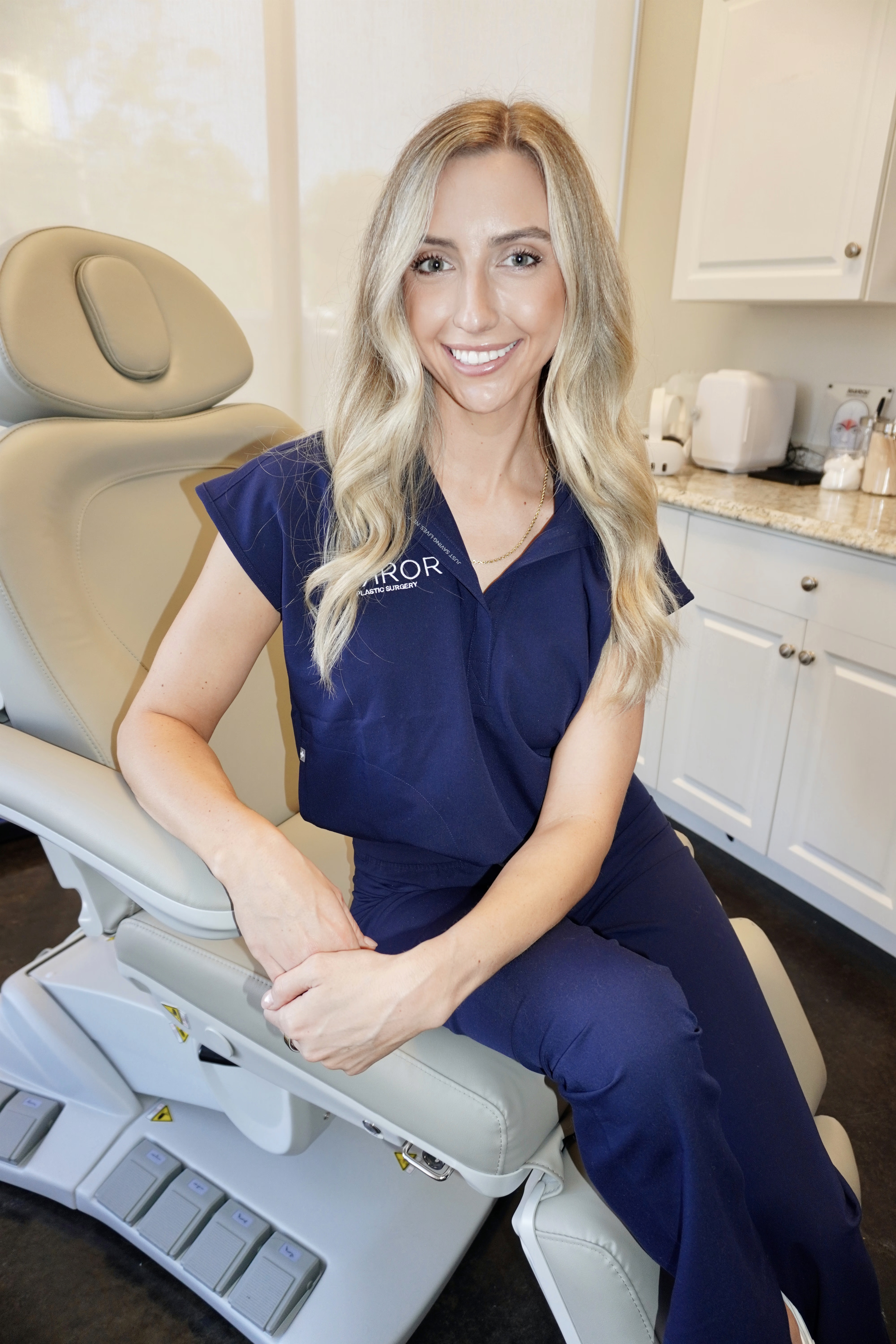
Mirror’s concierge model differs structurally from high-volume practices in several measurable ways.
- Consultations extend up to one hour and cover emotional drivers, long-term goals, and a top-to-bottom anatomical assessment
- The practice is supplier-neutral, so product selection follows patient anatomy, not vendor arrangements or quota incentives
- Ellie focuses first on restoring foundational facial characteristics before considering volume augmentation, which prevents the asymmetry and overdone appearance that isolated single-area injections produce
- Growing patient interest in dissolving older or poorly placed filler reflects a focus on revision prevention, enabling less filler overall and more strategic placement, a philosophy Mirror applies from the first visit
- Dr. Akash’s surgical capability provides a direct escalation pathway for any case that moves beyond non-surgical scope
Ellie is currently welcoming new clients seeking full-face restorative treatments and non-surgical BBL services using biostimulatory fillers such as Radiesse.
Conclusion: Your Evaluation Framework Recap
Three pillars determine whether a dermal filler specialist in St. Petersburg, Florida meets the 2026 standard of care.
First, regulatory compliance: verify active Florida licensure, a documented collaborative or delegation agreement naming aesthetic injectables, and a physician medical director in good standing. Second, credential depth: prioritize providers operating under physician-level oversight with documented anatomical training, complication protocols, and hyaluronidase on-site. Third, practice philosophy: choose an injector who conducts full-face assessments, selects products based on your anatomy rather than inventory, and plans treatment in stages rather than maximizing volume in a single session.
Mirror Plastic Surgery’s concierge model, led by Ellie Pranckevicius under the oversight of Dr. Akash Chandawarkar, is built on all three pillars. The practice is located at 780 4th Ave S, St. Petersburg, FL 33701 and can be reached at 727-361-6515 or hello@mirrorplasticsurgery.com.
Start your personalized, anatomy-first treatment plan with a consultation at Mirror Plastic Surgery.
Frequently Asked Questions
Can a nurse practitioner legally inject dermal fillers in Florida without a physician present?
Yes, under specific conditions. A Florida ARNP (Advanced Registered Nurse Practitioner) may administer dermal fillers without the supervising physician physically on-site, provided a written collaborative practice agreement is in place that specifically authorizes neuromodulators and fillers and the physician remains available for consultation by phone or electronic means. This differs from an RN, who requires a physician order and more direct supervision. Ellie Pranckevicius, FNP-BC, operates under this framework at Mirror Plastic Surgery, with Dr. Akash Chandawarkar serving as the overseeing physician, which ensures full regulatory compliance and an immediate surgical escalation pathway when needed.
What should I expect during a dermal filler consultation at Mirror Plastic Surgery?
Mirror Plastic Surgery’s consultations function as comprehensive, top-to-bottom assessments that can extend up to one hour. Ellie begins by understanding your emotional drivers for seeking treatment and your long-term aesthetic goals. She then conducts a detailed anatomical evaluation of the full face, not just the area of immediate concern, using structured diagnostic frameworks to identify areas of volume loss, asymmetry, or structural change. You receive an honest, evidence-based treatment plan that explains the rationale behind every recommended product or procedure. Ellie is known for transparency, including advising patients when an expensive service is not yet necessary. The consultation remains supplier-neutral, so product recommendations follow your anatomy rather than any vendor arrangement.
How do I know if a dermal filler practice in St. Petersburg is operating legally?
Several verification steps apply. First, confirm that the practice has a licensed Florida MD or DO serving as medical director who is actively practicing and in good standing, not a nominal figurehead. Second, ask the injector to identify their license type and the specific collaborative or delegation agreement that authorizes them to perform aesthetic injectables. Third, confirm that a good-faith examination by a physician, ARNP, or PA precedes your treatment, because Florida law requires this before any injectable procedure. Fourth, verify that hyaluronidase is kept on-site and that a written vascular occlusion emergency protocol exists. As of 2026, Florida’s Medical Spa Prescription Drug Oversight Act also requires med spas handling prescription medications like dermal fillers to obtain a license from the Florida Board of Pharmacy. Any practice that cannot answer these questions clearly warrants caution.
What is the difference between a high-volume med spa and Mirror Plastic Surgery’s concierge model?
High-volume practices typically prioritize throughput, often scheduling multiple patients per hour with brief consultations, standardized treatment protocols applied across patients regardless of individual anatomy, and product selections influenced by supplier arrangements. Mirror Plastic Surgery limits itself to one to two surgical cases per day and applies the same focused attention to non-surgical treatments. Consultations last up to one hour. Ellie conducts a full-face assessment before recommending any treatment, focuses on foundational restoration before volume augmentation, and selects products based solely on patient anatomy and goals. The practice’s physician oversight structure, with Dr. Akash Chandawarkar available as a surgical resource, also provides a level of complication management capacity that injector-only practices cannot offer.
How does Mirror Plastic Surgery approach natural-looking lip augmentation?
Ellie’s approach to lip augmentation begins with the full face, not the lips in isolation. She evaluates lip-to-face proportion, philtral column structure, vermillion border definition, and the relationship between the upper and lower lip before selecting any product. Because Mirror is supplier-neutral, product choice is based on the rheological properties best suited to the tissue zone rather than defaulting to a single brand. Initial treatment is typically conservative, with staged reassessment between sessions. This approach aligns with 2026 patient preference data showing that most aesthetic patients want undetectable results and fear looking overdone. Ellie considers volume augmentation only after foundational restoration is addressed, which prevents the disproportionate or “duck lip” appearance associated with isolated, volume-first injection strategies.
Disclaimer: Results may vary from person to person. Editorial content, before and after images, and patient testimonials do not constitute a guarantee of specific results.
1 Results may vary from person to person. Editorial content, before and after images, and patient testimonials do not constitute a guarantee of specific results.