
Written by: Dr. Akash Chandawarkar, Board Certified Plastic Surgeon, Mirror Plastic Surgery | Last updated: July 5, 2026
Key Takeaways
- Choosing a rhinoplasty surgeon based only on photos risks breathing problems and poor long-term results.1 Tampa Bay patients benefit from a structured seven-step verification process.
- Advanced anatomical expertise means mastery of nasal valves, skin thickness, ethnic variations, and structural techniques that protect function while refining appearance.
- Double board certification in plastic surgery and otolaryngology, Rhinoplasty Society membership, and meaningful revision case volume signal genuine structural mastery.
- Patients should review before-and-after photos for preserved tip projection, natural alar width, and ethnic contour consistency, then ask targeted questions about valve function, grafting rationale, and skin thickness.
- Schedule your hour-long anatomical assessment with Dr. Akash at Mirror Plastic Surgery to walk through this framework in detail.
What Advanced Anatomical Expertise Actually Means
Advanced anatomical expertise in rhinoplasty extends far beyond reshaping the external profile. It includes a working command of the internal and external nasal valves, the ability to assess skin thickness and predict how it will respond to structural changes, and a nuanced understanding of ethnic variation in cartilage architecture and soft tissue. It also reflects a commitment to long-term functional stability rather than short-term cosmetic change. The nasal valves (external and internal), with the internal nasal valve as the primary regulator, form the narrowest portion of the nasal airway and account for over half of total nasal airway resistance, a fact that surgeons focused purely on surface aesthetics often underweight. A surgeon with true anatomical depth treats the nose as a functional organ first and an aesthetic structure second.
Step 1: Verify Double Board Certification in Plastic Surgery and Otolaryngology
Board certification in Otolaryngology and Head & Neck Surgery is particularly relevant for rhinoplasty because it confirms deep anatomical knowledge crucial for both functional and aesthetic outcomes. When a surgeon holds dual certification in plastic surgery and otolaryngology or facial plastic and reconstructive surgery, it signals a training pathway that addresses nasal anatomy at the structural level. A double board-certified surgeon has completed rigorous training that includes medical school, residency in plastic surgery, and specialized training in otolaryngology or facial plastic surgery. Verify credentials directly through the American Board of Plastic Surgery or the American Board of Facial Plastic and Reconstructive Surgery, not only through the practice website.
Step 2: Confirm Rhinoplasty Society Membership and Annual Case Volume
The Rhinoplasty Society offers active membership via application to board-certified plastic or facial plastic surgeons with at least two years of active practice who demonstrate a profound interest in rhinoplasty. Membership is peer-reviewed rather than self-reported, which adds an independent layer of quality control. Ask the practice directly whether the surgeon is a member and confirm this through the Society’s directory. Also ask what percentage of the surgeon’s rhinoplasty caseload involves primary procedures versus revisions. A meaningful revision volume shows that the surgeon regularly manages complex, scarred anatomy, which serves as a reliable proxy for structural mastery.
Step 3: Clarify Structural Versus Reduction Technique Preference
Reduction rhinoplasty removes cartilage and bone to create a smaller profile. Structural rhinoplasty preserves or rebuilds the internal framework using grafts that maintain valve support and long-term shape. Preservation rhinoplasty requires specialized training and significant experience, with a steeper learning curve than traditional techniques, and the number of expert surgeons worldwide remains limited. Ask your surgeon directly, “Do you prefer structural or reduction techniques, and why?” A surgeon committed to anatomical integrity will describe how they protect the internal valve during tip refinement and dorsal work. Vague answers about “customizing each case” without structural specifics signal a red flag.
Step 4: Screen for Meaningful Revision Rhinoplasty Experience
Revision rhinoplasty ranks among the most technically demanding procedures in facial surgery. Scar tissue distorts landmarks, cartilage grafts must compensate for prior over-resection, and valve collapse from previous surgery must be identified and corrected. A surgeon who regularly performs revisions has operated inside noses where anatomy has been altered, which provides the most rigorous test of structural knowledge. Ask for an estimate of the surgeon’s annual revision volume and request before-and-after cases that specifically involve revision patients with breathing complaints. If a practice cannot produce these cases, the revision experience is likely limited.
Step 5: Evaluate Before-and-After Photos for Structural Support and Ethnic Contours
Before-and-after photos should reveal structural integrity, not just a smaller profile. When reviewing a surgeon’s portfolio, look beyond profile reduction to markers of long-term support. Start by checking whether tip projection holds over time in follow-up photos taken at one year or beyond, because loss of projection suggests inadequate cartilage support. Next, evaluate whether alar base width remains natural and consistent with the patient’s facial proportions, since over-narrowing often reflects a templated rather than individualized approach. For patients with thin skin, surgeons should recommend a conservative, smooth bridge height to avoid visible implant boundaries; for patients with thick skin, adequate structural support is needed to define the tip. Finally, ask whether the photos represent patients with similar skin thickness and ethnic background to your own, because these factors shape both technique and expected outcomes. A portfolio that shows only one nose type across diverse patients suggests generic planning rather than anatomy-based design.
Step 6: Ask Targeted Anatomy-Focused Questions
Specific questions during consultation help reveal whether a surgeon’s anatomical knowledge is operational or superficial. Bring the following list with you and use it as a script.
- “How will you assess my nasal valve function before surgery, and will you use the Cottle or modified Cottle maneuver?” The Cottle and modified Cottle maneuvers are standard clinical tools for confirming nasal valve dysfunction, and a surgeon unfamiliar with them lacks functional assessment basics.
- “What is my skin thickness, and how does it affect your technique and graft selection?”
- “Will my procedure require septal, conchal, or costal cartilage grafting, and what is your rationale for each?” Essential consultation questions include whether the procedure will require conchal, septal, or costal cartilage grafting and what the benefits are in the specific case.
- “How will you preserve or restore my internal nasal valve angle during tip work?”
- “How do you account for my ethnic nasal anatomy in your surgical plan?”
These questions are designed to distinguish surgeons who understand nasal anatomy at an operational level from those with only surface familiarity. A surgeon with advanced anatomical expertise will answer each question with clear, specific explanations, while generic responses suggest limited depth.
Step 7: Confirm Hospital Privileges and Complication Management Protocols
Hospital privileges require independent credentialing by a hospital’s medical staff committee, a verification process separate from board certification. A surgeon with active privileges has been reviewed by peers for surgical outcomes, ethics, and competence. Ask which hospital the surgeon holds privileges at and confirm this independently. Also ask how the practice manages rare but serious complications, including who the anesthesiologist is, whether the facility is accredited, and what escalation protocol applies if an intraoperative issue arises. Safety infrastructure should be confirmed before any aesthetic discussion begins.
Red Flags: When High Volume Replaces Careful Assessment
High-volume practices often sacrifice depth of assessment for speed. A practice performing five to ten surgeries daily cannot provide the pre-operative anatomical evaluation that rhinoplasty demands. Short consultations that last only 15 to 20 minutes leave no time to evaluate nasal valve function, document skin thickness, discuss cartilage grafting rationale, or review ethnic anatomical considerations. Limited time at this stage produces a surgical plan built on assumptions instead of individualized anatomy. Practices that limit surgical volume to allow extended consultation time are structurally positioned to deliver the depth of assessment that reduces revision risk.1 In rhinoplasty, volume rarely serves as a proxy for quality.
Expert Context: Dr. Akash’s Gold-Standard Pedigree
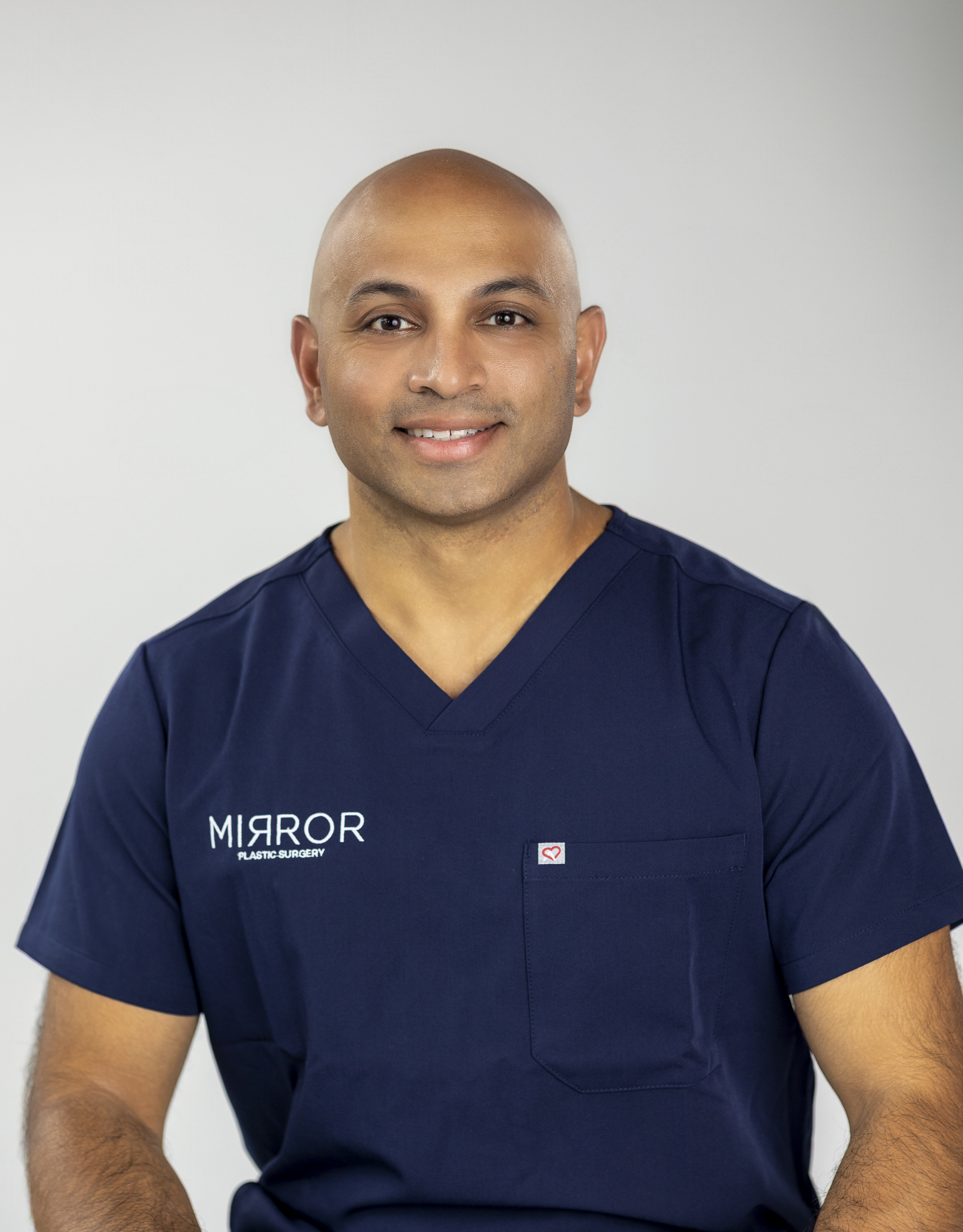
Dr. Akash brings a training background that directly addresses every criterion in this checklist. He completed his medical degree through the Harvard-MIT Division of Health Sciences and Technology, graduating from Harvard Medical School with Honors. His seven-year integrated plastic and reconstructive surgery residency at Johns Hopkins University included complex reconstruction across the Johns Hopkins Hospital, the R Adams Cowley Shock Trauma Center, and the Curtis National Hand Center. He then completed a competitive aesthetic surgery fellowship at the Manhattan Eye, Ear and Throat Hospital (MEETH), one of the most selective programs in the country for advanced facial surgery training. His background also includes the Stanford University Biodesign Innovation Fellowship, which trained him in evidence-based clinical innovation. Dr. Akash is a leading researcher on the application of artificial intelligence for objective analysis in rhinoplasty and has presented at The Rhinoplasty Society Annual Meeting. He has been named in America’s Best Plastic Surgeons 2025 by Newsweek for 2 years in a row. At Mirror Plastic Surgery in St. Petersburg, he performs one to two surgeries per day and dedicates up to an hour per consultation, a structural commitment to the anatomical depth this checklist describes.
Common Misunderstandings About Rhinoplasty Surgeon Qualifications
Many patients assume that all board-certified plastic surgeons have equivalent rhinoplasty expertise. Board certification by the American Board of Plastic Surgery confirms broad surgical competence. Board certification by the American Board of Plastic Surgery requires either 6 years of integrated residency training or 3 years of independent plastic surgery training (after prior surgical residency), plus passage of both oral and written exams. This credential does not verify rhinoplasty-specific volume, structural technique preference, or nasal valve expertise. A second common misunderstanding is that revision rates do not matter when selecting a surgeon. Revision rhinoplasty rates in the broader surgical community vary widely, and a surgeon who cannot discuss their own revision volume transparently is not providing enough information for an informed decision. Revision experience functions as a credential rather than a liability.
Printable Verification Checklist You Can Bring to Consultations
This checklist condenses the seven verification steps into a single tool you can print, bring to consultations, and use to compare surgeons side by side.
- ☐ Step 1: Verify double board certification (plastic surgery plus otolaryngology or facial plastic surgery) through official board websites.
- ☐ Step 2: Confirm Rhinoplasty Society membership and ask for a primary versus revision case volume breakdown.
- ☐ Step 3: Ask whether the surgeon prefers structural or reduction techniques and request a specific explanation for your anatomy.
- ☐ Step 4: Request revision rhinoplasty before-and-after cases involving breathing complaints.
- ☐ Step 5: Evaluate portfolio photos for preserved tip projection, natural alar width, and ethnic contour consistency at one-year follow-up.
- ☐ Step 6: Ask targeted questions on nasal valve assessment, skin thickness, and cartilage grafting rationale.
- ☐ Step 7: Confirm hospital privileges, facility accreditation, and complication management protocols.
Conclusion: Use This Seven-Step Framework to Protect Your Outcome
Rhinoplasty does not function as a commodity procedure. The difference between a result that holds for decades and one that requires revision within five years often comes down to the depth of anatomical assessment performed before a single incision.1 This seven-step framework gives patients in Tampa Bay and beyond a concrete, repeatable process for confirming that a surgeon’s expertise matches their claims. Mirror Plastic Surgery in St. Petersburg is built around this standard, with concierge-level anatomical assessment, a safety-first philosophy, and a surgeon whose credentials have been independently verified at every stage of training.
Frequently Asked Questions
What is the difference between a structural rhinoplasty and a reduction rhinoplasty, and which is safer long-term?
Reduction rhinoplasty removes cartilage and bone to create a smaller or narrower profile. While effective for certain presentations, aggressive reduction can weaken the internal nasal valve, narrow the airway, and cause the tip to lose projection over time as remaining cartilage shifts. Structural rhinoplasty, by contrast, preserves or rebuilds the nasal framework using cartilage grafts, often harvested from the septum, ear, or rib, to maintain valve support and long-term shape stability. For patients concerned about breathing function or seeking results that age naturally, structural techniques generally provide more reliable long-term outcomes.1 The appropriate approach depends on the individual’s anatomy, skin thickness, and goals, so a thorough pre-operative assessment remains essential before any technique is selected.
How do I know if a rhinoplasty surgeon truly understands ethnic nasal anatomy?
Ask the surgeon directly how they account for ethnic variation in their surgical planning. A surgeon with genuine expertise will discuss differences in cartilage strength and flexibility, alar base width relative to facial proportions, skin thickness and its effect on tip definition, and nasolabial angle targets that align with the patient’s heritage rather than a single aesthetic template. Review their portfolio specifically for patients with a similar ethnic background to your own and assess whether results look natural and proportionate or whether they follow a single nose type regardless of the patient’s features. Surgeons who have trained at programs with diverse patient populations and who have presented research on ethnic rhinoplasty are better positioned to individualize their approach.
Why does consultation length matter when choosing a rhinoplasty surgeon?
The consultation is where the surgical plan takes shape. A thorough rhinoplasty assessment requires evaluation of the external and internal nasal valves, documentation of skin thickness, review of prior surgical history when relevant, discussion of cartilage grafting options, and alignment of the surgical approach with the patient’s functional and aesthetic goals. This process cannot be completed in 15 to 20 minutes. Practices that perform five to ten surgeries daily and allocate minimal consultation time are structurally unable to deliver this depth of assessment. A consultation of up to an hour, the standard at Mirror Plastic Surgery, provides the time needed to build a surgical plan grounded in the patient’s individual anatomy rather than a generalized protocol.
What questions should I ask about nasal valve function during a rhinoplasty consultation?
Ask the surgeon whether they will perform a clinical assessment of your nasal valve function before surgery, including the Cottle or modified Cottle maneuver, which uses lateral cheek traction or internal cartilage support to determine whether the valve contributes to any breathing difficulty. Ask whether they use validated symptom tools such as the Nasal Obstruction Symptom Evaluation scale to document baseline breathing function. Ask how they will protect or restore the internal nasal valve angle during tip refinement and whether any planned grafts, such as spreader grafts or alar batten grafts, are specifically intended to support valve function. A surgeon who cannot answer these questions with specificity is not operating at the level of anatomical expertise that complex rhinoplasty demands.
Is Dr. Akash at Mirror Plastic Surgery board certified, and what makes his rhinoplasty training distinctive?
Dr. Akash is board certified by the American Board of Plastic Surgery. His rhinoplasty training stands out for several reasons. His medical education through the Harvard-MIT Division of Health Sciences and Technology integrated rigorous scientific research with clinical medicine from the outset. His seven-year integrated plastic and reconstructive surgery residency at Johns Hopkins, one of the most comprehensive programs in the country, was followed by a dedicated aesthetic surgery fellowship at the Manhattan Eye, Ear and Throat Hospital, where advanced facial surgery techniques including rhinoplasty receive primary focus. He has presented rhinoplasty research at The Rhinoplasty Society Annual Meeting and serves as a leading researcher on AI-based objective analysis in rhinoplasty. As noted earlier, he has received national recognition for his surgical excellence. He maintains the low-volume, extended-consultation model described earlier, which ensures every patient receives the anatomical depth their procedure requires.
1 Results may vary from person to person. Editorial content, before and after images, and patient testimonials do not constitute a guarantee of specific results.