

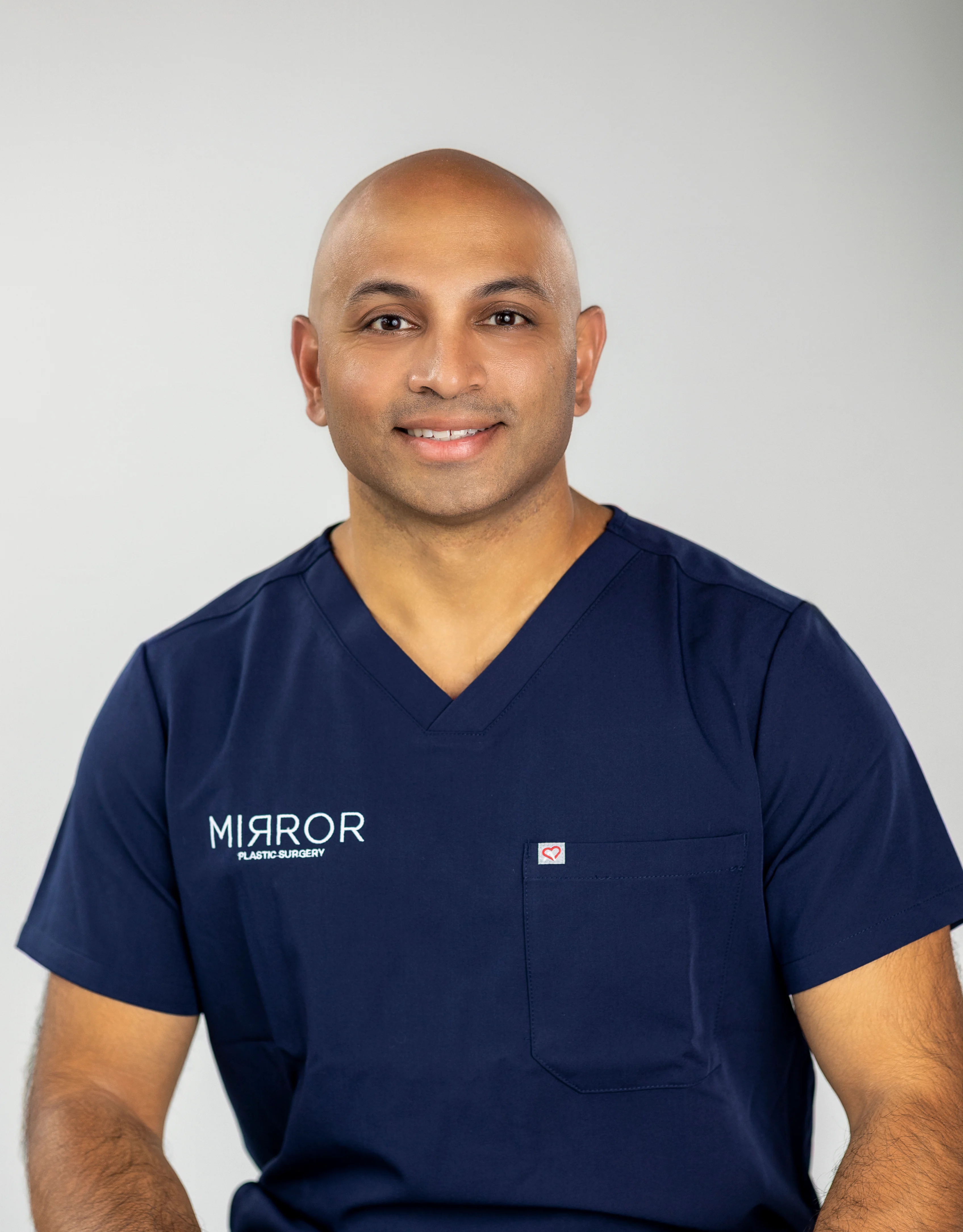
Written by: Dr. Akash Chandawarkar, Board Certified Plastic Surgeon, Mirror Plastic Surgery | Last updated: September 9, 2026
Key Takeaways On Hip Dip Filler Cost
- Hip dip filler treatment typically costs $2,000 to $10,000+ based on vial count, product type, provider expertise, and location.
- Most patients need 8–10 vials of Sculptra or Radiesse across 2–3 sessions, with mild cases as low as 4–6 vials and dramatic reshaping sometimes exceeding 20 vials.
- Board-certified plastic surgeons usually charge $700–$1,200 per vial and offer higher safety, deeper anatomical knowledge, and better complication management than most medspas.
- Additional costs such as numbing, touch-up sessions, and facility fees can increase the final bill by 20–30%, so clear, written pricing matters.
- Get a personalized hip dip filler quote from Dr. Akash at Mirror Plastic Surgery based on your anatomy, goals, and budget.
Hip Dip Filler Cost Breakdown
Hip dip filler is priced per vial or syringe, not per treatment area. Total cost depends on how much product your anatomy requires for a smooth, balanced contour. The table below summarizes the main cost components based on current published pricing data.
| Cost Component | Price Range | Key Factors |
|---|---|---|
| Consultation Fee | $0–$300 | Often credited toward treatment, confirm policy upfront |
| Cost Per Vial (Sculptra) | $600–$1,200 | Higher in coastal metros, premium for physician injectors |
| Cost Per Vial (Radiesse) | $600–$900 | Regional variation, hyperdilute protocols may differ |
| Total Treatment Cost | $2,000–$10,000+ | Vial count (typically 8–10 total for most patients), sessions required |
Published pricing guides place Sculptra at $800–$1,200 per vial, while clinical cost analyses report board-certified dermatologists and plastic surgeons charging $700–$900 per vial. Most patients require 8–10 vials total across two to three sessions, placing typical total costs between $4,800 and $9,000 before additional fees are added.
Hip Dip Filler Consultation Cost And What To Expect
Consultation fees range from free at some high-volume medspas to $100–$300 at premium physician-led practices. A thorough consultation should include a physical assessment of hip dip depth and asymmetry, a discussion of your goals, product recommendations, a preliminary vial estimate, and a clear written quote.
At Mirror Plastic Surgery, Dr. Akash Chandawarkar’s concierge medicine approach allows up to an hour for a top-to-bottom assessment, which goes far beyond the 10–15 minute visits common in high-volume settings. Many practices credit consultation fees toward treatment, and patients should confirm this policy before booking.
How Many Vials Of Sculptra Or Radiesse Most Patients Need
Vial count represents the single largest driver of total treatment cost. Clinical guides and published protocols converge on a typical range of 8–10 total vials across 2–3 sessions for most patients. Smaller frames with mild dips may need only 4–6 vials, while patients seeking dramatic reshaping may require 20 or more vials over multiple sessions.
Dr. Akash uses biostimulatory fillers, Sculptra and Radiesse, for hip dips because collagen stimulation creates natural-feeling, longer-lasting volume compared with many traditional fillers. Filler comparison data show that Sculptra typically lasts longer than Radiesse, which affects long-term value as well as upfront cost.
Estimated vial counts by correction level:
- Mild correction: 4–6 vials total (2–3 per side)
- Moderate correction: 8–10 vials total (4–5 per side)
- Dramatic correction: 10–20+ vials total across multiple sessions
Schedule a consultation with Dr. Akash for a personalized vial estimate based on your anatomy and desired level of change.
Five Main Factors That Affect Hip Dip Filler Cost
Provider Expertise And Credentials
Sculptra pricing analyses show board-certified plastic surgeons and dermatologists charging $1,000–$1,200+ per vial, compared with $600–$900 at many medspas. This higher rate reflects advanced anatomical training, stronger complication management skills, and more consistent outcomes. Dr. Akash Chandawarkar, a Harvard-educated, Johns Hopkins-trained, board-certified plastic surgeon, also serves on the advisory boards of Merz Aesthetics (Radiesse) and Tiger Aesthetics, which keeps him closely involved with biostimulatory filler research and innovation.
Geographic Location
ASPS data cited in cost guides show filler prices in New York and Los Angeles running 40–65% above the national average. In 2026, Tampa Bay Sculptra pricing usually falls in the mid-range at $800–$1,000 per vial. Practices in South Tampa, Hyde Park, and Westchase may charge 10–15% more, which still often represents a value compared with coastal metro pricing for patients seeking physician-led care.
Product Type
Published filler comparisons place Sculptra at $600–$1,200 per vial and Radiesse at $600–$900 per syringe. Sculptra’s longer-lasting results can improve cost-effectiveness over time, even when the upfront price per vial runs higher than Radiesse.
Volume Required
Hip dip depth, width, and asymmetry directly determine how many vials you need. Clinical reviews note that deeper or wider depressions require more product, and asymmetry can mean extra vials on one side. Only an in-person assessment can accurately quantify this volume.
Number Of Sessions
Biostimulatory fillers work best when treatment is staged. Treatment protocols typically involve 2–3 sessions spaced 6–8 weeks apart, and each visit adds to the total cost. Working with a board-certified injector also reduces the risk of issues such as vascular occlusion or nodule formation, which can require additional corrective care.
Hidden Hip Dip Filler Costs To Watch For
Patient education resources highlight several fees that often do not appear in initial quotes. Common additional costs include:
- Numbing cream or local anesthesia: $50–$150
- Touch-up sessions: often billed at the full per-vial rate
- Post-treatment follow-up appointments: usually free within 30 days
- Facility fees: uncommon but possible in hospital-based practices
A quoted “$2,400 for Sculptra” can become $3,000–$3,500 once consultation, numbing, and follow-up are included. To avoid these surprises, Mirror Plastic Surgery provides transparent, written quotes after consultation with no hidden fees, reflecting a supplier-neutral, evidence-based philosophy and a commitment to clear communication.
Long-Term Value: Is Hip Dip Filler Worth The Cost?
Longevity research shows Sculptra results holding for up to 24 months or longer, with final results settling 3–6 months after the last session.1 At a total investment of $4,800–$9,000 that lasts 2 or more years, the monthly cost often falls between $200 and $375, which compares favorably with shorter-lasting options that require frequent retreatment.
Cost comparisons support the idea that longer-lasting Sculptra results can improve value over time despite higher upfront pricing. For context, surgical fat transfer (BBL) costs $8,000–$20,000 as a single procedure and carries higher risk. Published safety analyses estimate BBL mortality at 1 in 3,000–15,000 procedures, while non-surgical hip dip filler offers a safer option for appropriately selected patients.
How To Choose A Hip Dip Filler Provider
A structured decision framework based on expert provider-selection recommendations focuses on the following criteria:
- Board certification in plastic surgery or dermatology rather than general “aesthetic medicine” training
- A dedicated hip dip portfolio with at least 10 before-and-after photos
- Ultrasound guidance or advanced anatomical training
- Clear, written pricing without asterisks or hidden fees
- A follow-up policy that addresses touch-up needs in the initial quote
Patients should stay cautious around medspas that advertise steep discounts, since these often involve changing the product or using a less-experienced injector. It also helps to avoid providers who push large product volumes at the first visit or refuse to share unedited before-and-after photos, because these patterns suggest a focus on volume over safety.
Dr. Akash Chandawarkar meets each of these criteria. He completed a fellowship in aesthetic surgery at Manhattan Eye Ear & Throat Hospital/Lenox Hill Hospital. He also serves on advisory boards for Merz Aesthetics and Tiger Aesthetics. Together, these credentials make him one of the most qualified hip dip filler providers in the Tampa Bay region.
His concierge medicine philosophy includes hour-long consultations, a safety-first mindset, and unbiased product recommendations. Patients receive honest guidance on whether hip dip filler fits their anatomy and which products align with their goals.
Plan a consultation with Dr. Akash at Mirror Plastic Surgery to review your options and design a tailored treatment plan.
Frequently Asked Questions
Is Hip Dip Filler Worth It?
For patients with mild-to-moderate hip dips, biostimulatory fillers provide a safe, non-surgical alternative to BBL surgery. Longer-lasting Sculptra results make the cost comparable to other long-term aesthetic treatments when viewed on a monthly basis. Suitability depends on anatomy, skin elasticity, and expectations, so a detailed consultation with a board-certified plastic surgeon remains essential.
How Long Do Hip Dip Fillers Last?
Sculptra results typically last 24–36 months, while Radiesse often lasts 12–18 months.1 Because biostimulatory fillers stimulate your own collagen, results develop gradually over 3–6 months and can persist for years1 with proper technique and product choice. Final Sculptra results usually appear 3–6 months after the last session1, rather than immediately after injection.
How Many Vials Of Sculptra Will I Need For Hip Dips?
Most patients need 8–10 vials total across 2–3 sessions, with published protocols ranging from 4 vials for subtle refinement to 20 or more vials for dramatic reshaping. Smaller frames with mild dips may need only 4–6 vials, while more extensive changes require higher volumes. A board-certified plastic surgeon will assess your anatomy and provide a personalized estimate, which offers the most reliable basis for budgeting.
Do Hip Dip Fillers Hurt?
Most patients tolerate treatment well. Numbing cream and local anesthesia are commonly used, and many biostimulatory fillers contain lidocaine for added comfort. The procedure usually takes 60–90 minutes from start to finish, and most patients return to normal daily activities the next day, with minor swelling or bruising resolving within 1–3 days.
Are Hip Dip Fillers Safe?
When performed by a board-certified plastic surgeon or dermatologist, hip dip filler has a strong safety profile.1 The injection area, the lateral trochanteric depression, contains only small superficial vessels, which makes it anatomically safer than deeper gluteal procedures1. Vascular occlusion occurs in fewer than 1 in 1,000 cases1.
All fillers used for hip dips are administered off-label in the United States, so provider expertise and anatomical knowledge play a central role in safety and results. Nodule formation is a known risk with biostimulatory fillers and is minimized through proper dilution, correct injection depth, and appropriate post-treatment massage.
Conclusion: Choosing Safe, Transparent Hip Dip Filler Care
Hip dip filler consultation and treatment usually cost between $2,000 and $10,000 or more, depending on vial count, product choice, and provider expertise. Hidden fees can add 20–30% to quoted prices, and choosing an under-qualified provider can create additional financial and medical risk. Working with a board-certified plastic surgeon such as Dr. Akash Chandawarkar supports safety, natural-looking results, and clear pricing for candidates who are a good fit.
Mirror Plastic Surgery’s concierge medicine philosophy emphasizes education, honest recommendations, and long-term follow-up instead of quick, high-volume procedures. Every patient receives a comprehensive, hour-long assessment and a written quote with no hidden fees, which helps support informed decisions and better outcomes.
Schedule your hip dip filler consultation with Dr. Akash at Mirror Plastic Surgery to receive a personalized, transparent treatment quote based on your anatomy and goals.
Disclaimer: Results may vary from person to person. Editorial content, before and after images, and patient testimonials do not constitute a guarantee of specific results.
1 Results may vary from person to person. Editorial content, before and after images, and patient testimonials do not constitute a guarantee of specific results.


