

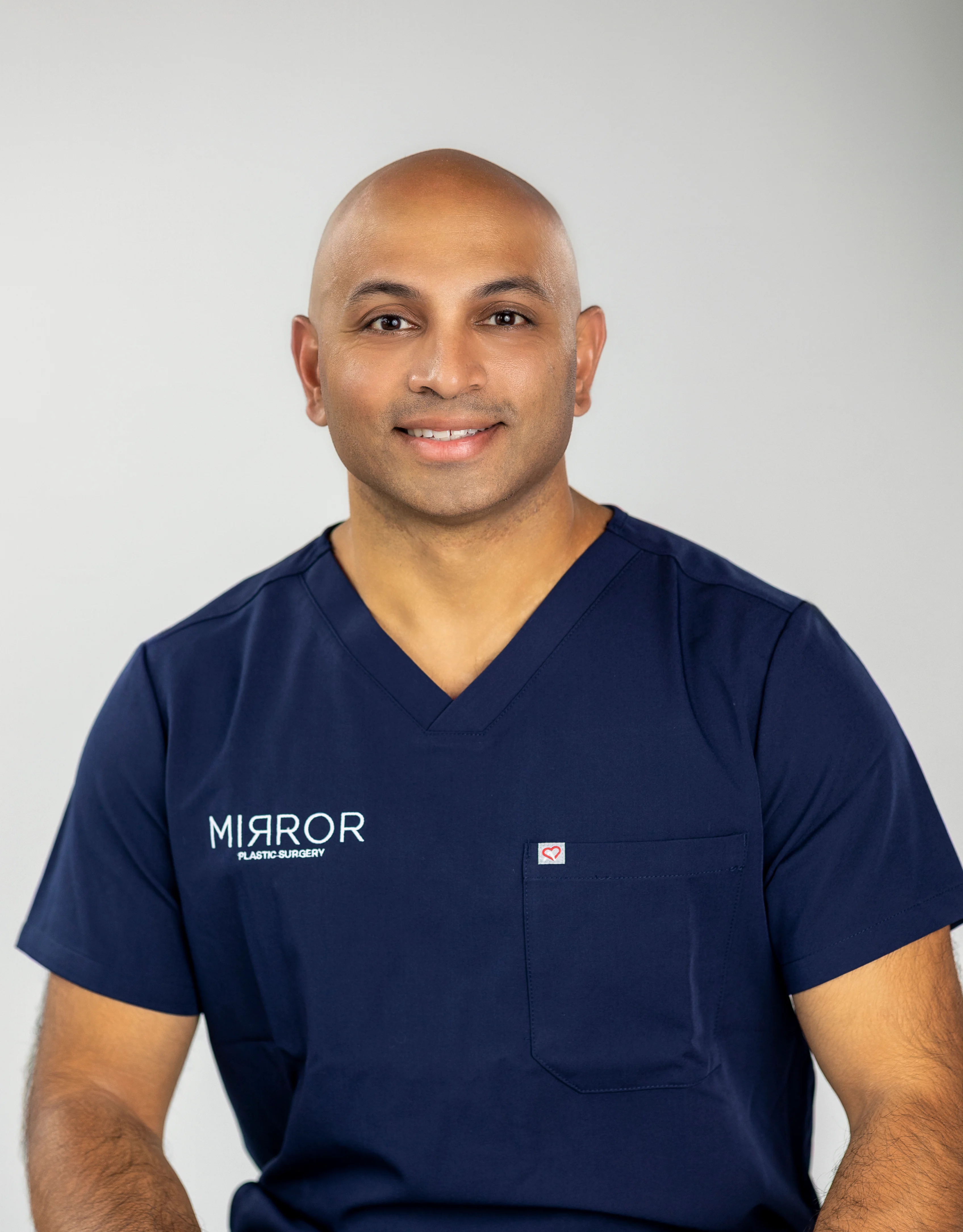
Written by: Dr. Akash Chandawarkar, Board Certified Plastic Surgeon, Mirror Plastic Surgery | Last updated: September 9, 2026
Key Takeaways
- Hip dip filler is a non-surgical injectable treatment using biostimulatory fillers like Sculptra or Radiesse to smooth the inward hip curve and create a more contoured silhouette.
- Patient satisfaction stays high when skilled, anatomically trained injectors use the right product and technique.1
- Cost is the most common complaint, with full treatment plans typically ranging from $4,000–$9,000 depending on filler type and number of vials.
- Provider expertise is the strongest predictor of outcomes. Board certification, specific hip dip experience, and proper injection technique significantly reduce risks and improve results.
Methodology: How We Analyzed The Evidence
This report combines patient-reported outcomes from public forums such as Reddit’s r/PlasticSurgery and RealSelf, video testimonials, and peer-reviewed studies. Primary clinical sources include a 2026 multicenter retrospective review of 498 patients treated with poly-L-lactic acid in nonfacial areas, a 2026 Journal of Cosmetic Dermatology vascular complications review, and FDA adverse event data. All patient quotes referenced are paraphrased or short excerpts used for illustration. Clinical analysis was provided by Dr. Akash Chandawarkar, board-certified by the American Board of Plastic Surgery.
What Real Patients Report: The Good, The Mixed, And The Cautious
Patient reviews across Reddit, RealSelf, and YouTube consistently fall into three themes.
Positive themes reported:
- Improved confidence and satisfaction with natural-looking results when treated by skilled, anatomically trained injectors1
- Strong appreciation for biostimulatory fillers, particularly Sculptra and Radiesse, which build gradual, collagen-stimulated volume instead of an immediate, artificial look1
- Gratitude for minimal downtime compared to surgery, with most patients returning to work the following day
Mixed or negative themes reported:
- Cost complaints dominate: Patients often discover that hip dips require far more product than they expected. Treatment often requires 4–10 or more vials per session, so the total investment becomes a significant financial commitment that surprises many first-time patients.
- Variable longevity: Some patients feel disappointed when results fade faster than they hoped, especially when providers used fillers poorly suited to this area.
- Provider skill gaps: Several reviews describe underwhelming or uneven results from injectors without specific body-contouring experience or deep anatomical knowledge of the hip region.
The clinical data closely mirrors these patient stories. A 2026 multicenter retrospective review of 498 patients treated with poly-L-lactic acid (Sculptra) in nonfacial areas, where the gluteal and hip dip region accounted for 60.3% of 1,651 treatment sessions, reported no serious adverse events. The most common side effect was injection-site bruising (5.0%), with nodules in only 0.2% of cases. Positive narratives reflect what happens when the right product pairs with the right technique. Negative experiences usually appear when one of those pieces is missing.
Schedule a personalized hip dip assessment with Dr. Akash Chandawarkar at Mirror Plastic Surgery.
Cost Analysis: What Patients Actually Pay
Cost is the most consistent complaint in patient reviews and the most common source of sticker shock. The table below shows that Sculptra and Radiesse are the recommended biostimulatory options, while hyaluronic acid fillers cost more over time and are unsafe for hip dips. Hyaluronic acid fillers appear here for reference only and are not considered safe practice for hip dip augmentation or recommended at Mirror Plastic Surgery.
| Cost Factor | Sculptra (PLLA) | Radiesse (CaHA) | Hyaluronic Acid (Not Recommended) |
|---|---|---|---|
| Price per vial/syringe | $700–$1,200 | $600–$900 | $500–$800 |
| Typical vials needed | 8–20 total (2–3 sessions) | 4–8 per session | 10–30 mL |
| Total treatment cost | $7,000–$9,000 typical | $4,000–$8,000 | $12,000–$16,000 |
| Longevity | Up to 2+ years | 12–18 months | 6–12 months |
Hidden costs can add 20–30% to quoted prices. These often include:
- Consultation fees ($100–$300)
- Numbing agents ($50–$150)
- Touch-up sessions
These extras mean a single quoted figure rarely reflects the true all-in investment. To avoid surprise bills, Mirror Plastic Surgery provides each patient with a personalized, itemized quote after a thorough consultation. The team recommends the amount and type of product that match your anatomy and goals, rather than a volume target.
Longevity Analysis: How Long Results Last In Real Life
Hip dip filler results typically last 12–18 months with Radiesse and up to 2 years or more with Sculptra, based on clinical studies and patient reports.1 Hyaluronic acid fillers last only 6–12 months and are not recommended for hip dips. Biostimulatory fillers last longer because they stimulate collagen production, so results extend beyond the lifespan of the product itself.
The mechanism difference explains this gap. Sculptra’s PLLA microparticles disappear within about 9 months, while the new collagen matrix can remain stable for up to 2 years or longer. Radiesse provides immediate volume from its gel carrier and then its calcium hydroxylapatite microspheres stimulate collagen that lasts 12–18 months. Hip fillers also tend to last longer than facial fillers because the hip area has lower blood flow, which slows metabolic breakdown.
Patient timelines match this clinical picture. Sculptra results build gradually over 3 to 6 months as collagen forms around the injection sites, with final outcomes visible around month 6.1 Younger patients and athletes with higher metabolic rates may metabolize filler more quickly, so this factor deserves discussion during consultation.
Are Hip Dip Fillers Worth It? An Evidence-Based Verdict
Hip dip fillers can be a strong choice for patients who want a non-surgical option with minimal downtime, although results vary.1 Biostimulatory fillers like Radiesse and Sculptra provide longer-lasting outcomes, and a full Sculptra treatment plan typically totals $7,000–$9,000. A board-certified plastic surgeon can evaluate whether your anatomy and goals match this approach.
The long-term cost picture matters. Over 10 years, Sculptra usually requires about 4–5 treatment cycles, while Radiesse requires 6–8 cycles. Sculptra often becomes the more cost-efficient biostimulatory option over time despite its higher per-session cost. Surgical fat transfer carries a one-time cost of $6,500–$14,000, with results that remain largely stable once fat survival is established. For good surgical candidates, fat transfer becomes cost-competitive with fillers at roughly the 5–7 year mark.
The non-surgical route still appeals to many patients. It avoids anesthesia and extended recovery, does not require donor fat, and uses an anatomically safer injection plane than BBL surgery. The evidence supports fillers as a legitimate, high-satisfaction option when both product and provider are well chosen.
Safety Analysis: What The Evidence Shows About Risks
Hip dip filler has a favorable safety profile compared with surgical alternatives when performed correctly. Key risk points from peer-reviewed literature include the following:
- Vascular occlusion: Vascular complications from HA and CaHA fillers are rare, with reported incidences below 0.1%. However, they remain the primary feared safety issue because they can lead to tissue ischemia and necrosis. Risk rises with high injection pressure, large bolus volumes, and limited anatomical awareness.
- Nerve injury and migration: These are technique-related risks. Filler should be placed strictly in the subcutaneous fat layer above the muscle fascia using a long blunt-tipped cannula to avoid deeper neurovascular structures.
- Nodule formation: Nodules occurred in only 0.2% of cases in the 2026 multicenter PLLA study when modern dilution protocols were followed, including reconstituting each vial with 8–10 mL of sterile water and allowing at least 12 hours of standing time.
- Anatomic advantage over BBL: Hip dip filler is injected into the lateral trochanteric depression, where vessels average under 0.9 mm, compared with the large gluteal veins (up to 13.65 mm) that make BBL surgery risky, with mortality estimated at 1 in 3,000 to 1 in 15,000.
At Mirror Plastic Surgery, Dr. Akash Chandawarkar personally performs all injections. As a board-certified plastic surgeon with a detailed command of subdermal anatomy, he uses the technique and dilution protocols that current evidence identifies as central to safe outcomes.
Discuss your hip dip anatomy and safety questions directly with Dr. Akash during a dedicated consultation.
Hip Dip Filler Vs. Fat Transfer (BBL): How They Compare
The choice between hip dip filler and surgical fat transfer depends on your anatomy, goals, and risk tolerance. The evidence supports a clear role for each option.
Hip dip filler advantages:
- Non-surgical treatment with no general anesthesia and minimal downtime, with most patients returning to work the next day
- Anatomically safer than BBL because of the subcutaneous injection plane and smaller surrounding vessels
- No donor fat requirement, which makes it practical for lean patients
- Gradual, adjustable results with Sculptra
Hip dip filler limitations:
- Temporary results that require maintenance every 12–24 months
- High cumulative cost over 5 or more years compared with a single surgical procedure
- Volume ceiling, since fillers refine and correct but do not create dramatic projection
Fat transfer (BBL) advantages:
- Clinical studies show an average fat survival rate of 60–80%, and surviving fat behaves like normal body tissue long term1
- One-time cost with durable results once fat survival is established
- Ability to create meaningful contour transformation rather than subtle correction alone
Fat transfer limitations:
- Requires general anesthesia and 2–4 weeks of restricted activity
- Requires sufficient donor fat, and a BMI under 20 usually indicates limited reserves
- Includes rare but serious risks such as fat embolism
- Leaves 20–40% of transferred fat unlikely to survive, so final volume remains partly unpredictable
Lean patients considering a surgical BBL may hear that they lack sufficient donor fat, which makes filler the more realistic option. Patients who want subtle, targeted correction of hip dips, rather than full buttock transformation, often find that filler meets their goals without surgical risk or extended recovery.
How To Choose A Safe Provider For Hip Dip Filler
Patient reviews consistently show that provider selection has the strongest impact on outcome quality. The checklist below comes from safety literature and recurring themes in patient experiences.
- Board certification in plastic surgery or dermatology, instead of only “aesthetic medicine” or general nursing credentials
- Specific hip dip experience and at least 10 before-and-after photos of hip dip treatments, not just general body contouring
- Product selection expertise with a clear preference for biostimulatory fillers (Sculptra, Radiesse) and an explanation of the anatomical reasoning
- Blunt cannula technique with demonstrated anatomical expertise; ultrasound guidance further reduces vascular risk
- Transparent, itemized pricing that covers all vials, sessions, and follow-up care, rather than a low headline number that excludes key costs
- Comprehensive consultation of at least 30 minutes, including a full review of your anatomy, goals, and candidacy
Mirror Plastic Surgery’s approach meets and exceeds these benchmarks. Consultations can last up to an hour and include a top-to-bottom anatomical assessment and an honest discussion of realistic outcomes. Dr. Akash Chandawarkar holds board certification from the American Board of Plastic Surgery, completed fellowship training in aesthetic surgery at Manhattan Eye Ear & Throat Hospital/Lenox Hill Hospital, and serves on the advisory boards of Merz Aesthetics (Radiesse) and Tiger Aesthetics (AlloClae). This involvement keeps him at the forefront of biostimulatory filler innovation. Every injection is performed by Dr. Akash himself rather than delegated to support staff.
Arrange a consultation with Ellie to experience Mirror Plastic Surgery’s safety-first approach, including evidence-based planning and clear communication.
Frequently Asked Questions
How Much Does Hip Dip Filler Cost?
A complete Sculptra treatment plan for hip dips typically requires 8–20 vials across 2–3 sessions, with per-vial pricing varying by location and provider expertise. Radiesse-based correction usually needs fewer sessions but more frequent maintenance. Hidden costs such as consultation fees, numbing agents, and touch-up sessions can add meaningfully to the quoted price. At Mirror Plastic Surgery, each patient receives a personalized, itemized quote after a thorough consultation, and recommendations reflect your anatomy rather than sales quotas. As detailed in the cost analysis above, full Sculptra plans often total in the $7,000–$9,000 range.
How Long Do Hip Dip Fillers Last?
Sculptra results can last 2 years or longer, with the collagen matrix it stimulates persisting after the PLLA microparticles dissolve. Radiesse typically lasts 12–18 months and provides immediate volume along with collagen stimulation. Both biostimulatory fillers outlast hyaluronic acid options, which are not recommended for this area. Maintenance sessions usually occur every 12–24 months depending on the product, your metabolic rate, and your activity level. Younger patients and athletes often metabolize filler more quickly.
Is Hip Dip Filler Safe?
When a board-certified plastic surgeon uses biostimulatory fillers in the subcutaneous plane with a blunt cannula, hip dip filler shows a favorable safety profile. As noted earlier, the 2026 multicenter study of 498 patients reported no serious adverse events, with bruising as the most common side effect. The hip dip injection site is anatomically safer than the deep gluteal planes used in BBL surgery because the surrounding vessels are significantly smaller. Serious complications remain rare but possible, which makes board-certified provider selection the most important safety decision.
What Is The Difference Between Sculptra And Radiesse For Hip Dips?
Sculptra (poly-L-lactic acid) works entirely through collagen biostimulation and does not provide immediate volume on the treatment day. Results build over 3–6 months and can last 2 years or more, so providers often prefer it for larger-volume correction across both hip dips. Radiesse (calcium hydroxylapatite) offers immediate visible volume from its gel carrier while also stimulating collagen, with results lasting 12–18 months. Neither product can be dissolved with hyaluronidase, which makes provider expertise and correct dilution protocols essential. Dr. Akash Chandawarkar, a Merz Aesthetics advisory board member for Radiesse, selects between these products based on each patient’s anatomy and goals.
Can Hip Dip Filler Be Reversed?
Biostimulatory fillers such as Sculptra and Radiesse cannot be dissolved enzymatically the way hyaluronic acid fillers can. This irreversibility makes product selection and provider expertise crucial. If results are unsatisfactory or complications occur, management options are more limited and may include corticosteroids, dilute saline injections, or, in rare cases, surgical intervention. Mirror Plastic Surgery prioritizes a detailed pre-treatment assessment so your anatomy and expectations are clear before the first injection, which remains the most effective form of complication prevention.
Conclusion: The Evidence-Based Bottom Line
The overall body of patient evidence for hip dip filler shows high satisfaction when a suitable biostimulatory filler is placed by a provider with genuine anatomical expertise. The recurring complaints in patient reviews, including unexpected cost, variable longevity, and skill gaps, stem from the wrong provider or the wrong product rather than the procedure itself. A board-certified plastic surgeon who performs injections personally, follows evidence-based dilution protocols, and builds a plan around your specific anatomy plays a central role in achieving a positive outcome.
Ready to see whether hip dip filler fits your goals and budget? Schedule a personalized, evidence-based consultation with Ellie and Dr. Akash at Mirror Plastic Surgery.
Disclaimer: Results may vary from person to person. Editorial content, before and after images, and patient testimonials do not constitute a guarantee of specific results.
1 Results may vary from person to person. Editorial content, before and after images, and patient testimonials do not constitute a guarantee of specific results.


