
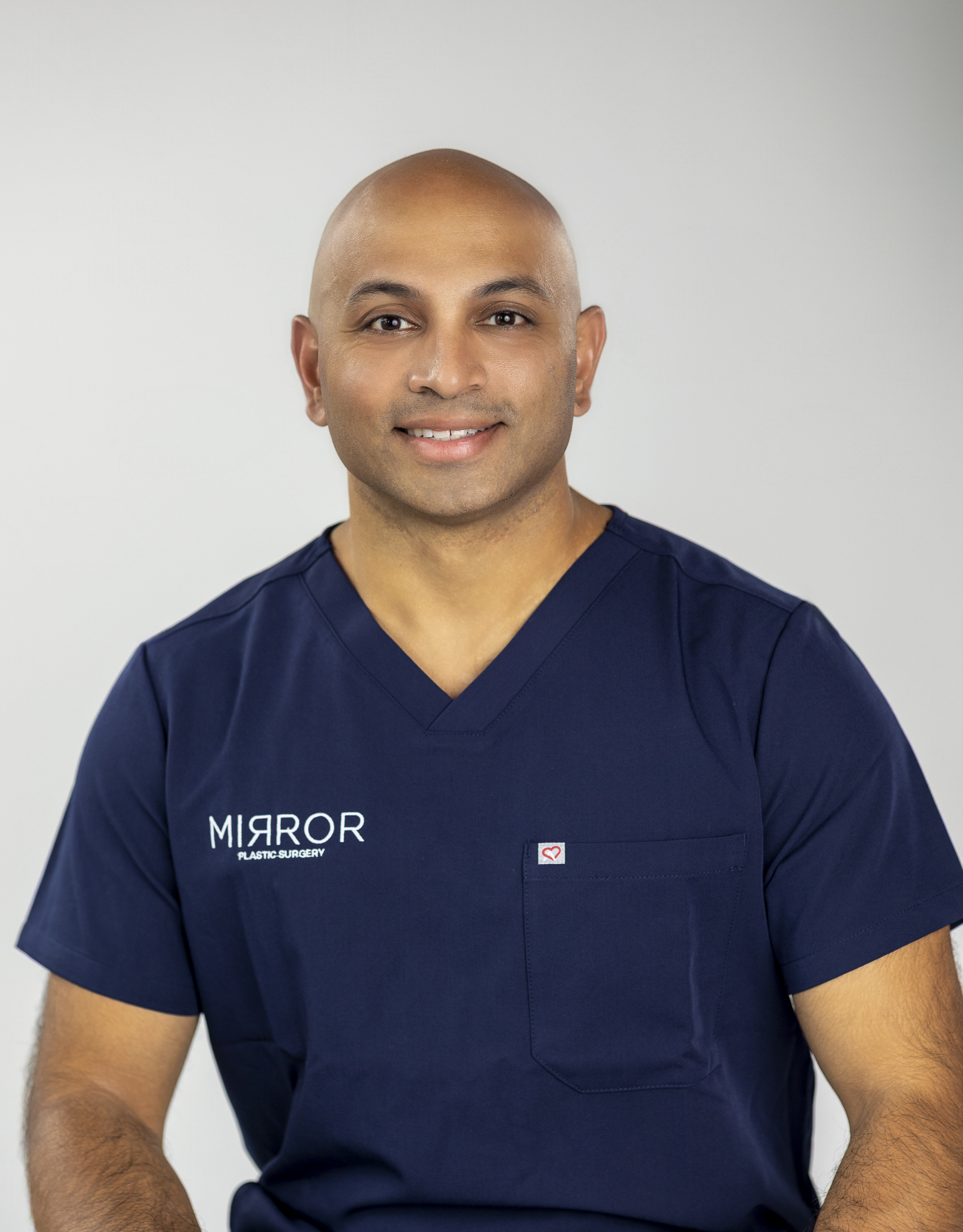
Written by: Dr. Akash Chandawarkar, Board Certified Plastic Surgeon, Mirror Plastic Surgery
Key Takeaways
- 2026 FDA guidelines recommend ultrasound screening every 2 to 3 years after implantation and confirm that routine 10-year implant replacement is unnecessary, favoring evidence-based monitoring over preventive surgery.
- Choose American Board of Plastic Surgery certified surgeons in low-volume practices that perform 1 to 2 surgeries daily and offer 45 to 60 minute consultations with in-office ultrasound for stronger safety and outcomes.
- The 45-55 rule guides natural breast proportions, with 45% of volume above the nipple and 55% below, while advanced implants like Motiva and modern techniques can reduce capsular contracture risks to about 1.3%.
- Dr. Akash Chandawarkar combines Harvard-MIT training, a Johns Hopkins residency, and FDA testimony experience with a Safety First philosophy at Mirror Plastic Surgery.
- Experience concierge-level, safety-focused breast augmentation by booking a consultation with Mirror Plastic Surgery for personalized planning and predictable results.
Why Mirror Plastic Surgery Uses a Concierge Model
Mirror Plastic Surgery follows a concierge medicine model that sharply contrasts with high-volume practices. Many clinics perform 5 to 10 surgeries daily, while Mirror limits the schedule to 1 or 2 procedures per day so each patient receives focused attention and safer care. This structure directly addresses the higher complication risks that can occur in rushed, high-volume environments.
The practice follows a Safety First, Function Second, Aesthetics Third philosophy that keeps patient well-being at the center of every decision. The team uses advanced in-office diagnostic tools such as ultrasound for precise pre-operative assessment, operates only in accredited surgical facilities, and works with board-certified physician anesthesiologists. These protocols work together to lower complication risks.
Mirror’s consultation process often lasts up to an hour, which differs from the 15-minute visits common in many busy practices. This extended time allows for a careful anatomical assessment, a clear discussion of risks, and a personalized treatment plan that reflects each patient’s goals and medical history.
Meet Dr. Akash and His Credentials
Dr. Akash Chandawarkar brings elite training and deep implant safety expertise to every breast augmentation. He studied neuroscience and nuclear engineering at MIT, then graduated with honors from Harvard Medical School through the Harvard-MIT Division of Health Sciences and Technology program.
He completed a seven-year integrated plastic and reconstructive surgery residency at Johns Hopkins University, followed by a focused aesthetic surgery fellowship at Manhattan Eye, Ear and Throat Hospital. He also finished the Stanford University Biodesign Innovation Fellowship, which trained him to develop new technologies that solve real clinical problems.
Dr. Akash’s commitment to implant safety extends into national conversations. He has provided testimony to the FDA on breast implant safety and serves on advisory boards for Motiva breast implants and Tiger Aesthetics’ AlloClae technology. His certification by the American Board of Plastic Surgery confirms that he meets rigorous standards for surgical skill and patient safety.
His surgical technique emphasizes precise implant placement, use of high-quality cohesive gel implants, and careful methods that reduce capsular contracture and bacterial contamination. He frequently performs revision surgeries for problems such as malposition and contracture and often repositions implants above the muscle while preserving natural breast tissue to support long-term results.
Core Breast Augmentation Concepts Explained
Clear terminology helps patients make confident decisions during consultations. The 45-55 rule describes an aesthetic guideline where 45% of breast volume sits above the nipple and 55% below. This proportion tends to create natural, youthful contours that research consistently rates as most attractive.
Board certification plays a major role in safety. American Board of Plastic Surgery certification requires extensive training in both reconstructive and aesthetic surgery. Some cosmetic surgery certifications involve less training and narrower experience. Implant shape also matters. Anatomical or “teardrop” implants aim to mimic natural breast contours, while round implants can create a fuller upper pole.
Capsular contracture remains one of the main complications after breast augmentation, with FDA data showing about 7.2% occurrence in primary augmentations. Modern surgical protocols can lower this rate to about 1.3%. Ultrasound imaging offers about 95% sensitivity for detecting implant rupture, which makes it a powerful tool for planning surgery and monitoring implants over time.
Patients benefit from asking targeted questions during consultation. Key topics include surgeon credentials, yearly breast augmentation volume, revision rates, safety protocols, and before-and-after photos of patients with similar anatomy. Patients should also ask about hospital privileges, accredited facility use, and specific techniques used to reduce complications.
2026 Breast Implant Updates and Technology
The 2026 breast implant landscape features meaningful advances in technology and regulation. FDA approval of Mentor MemoryGel™ Enhance implants introduced larger volume options up to 1445 cc with more cohesive gel for better shape retention and customized base widths, which can help in reconstruction and complex revision cases.
Current FDA surveillance guidance favors imaging-based monitoring instead of automatic implant replacement at fixed intervals. Women who have no implant problems generally do not need removal, because surgical risks can exceed theoretical implant risks. This approach supports individualized care based on symptoms and imaging rather than arbitrary timelines.
Newer technologies such as Motiva implants and AlloClae fat integration systems aim to improve safety and create softer, more natural results. Low-volume practices that follow strict protocols show excellent outcomes, with infection rates reported as low as 0.38%. These developments highlight the value of choosing surgeons who stay current with research and place safety ahead of case volume.
How to Vet a Breast Augmentation Surgeon
Start by confirming American Board of Plastic Surgery certification on the board’s official website. This step verifies that the surgeon has completed comprehensive training in both reconstructive and cosmetic procedures.
Next, evaluate consultation quality. Expect a 45 to 60 minute visit that includes a full anatomical exam, a clear review of risks, and a customized plan. Very short 15-minute consultations rarely allow enough time to understand your anatomy or answer detailed questions.
Ask about diagnostic tools, especially ultrasound. Advanced practices use in-office ultrasound to map tissue thickness, identify any existing issues, and plan implant position with greater precision.
Review practice volume and philosophy. Practices that perform 1 or 2 surgeries per day usually have more time for careful planning, meticulous technique, and attentive follow-up than centers that schedule 5 to 10 procedures daily.
Request details about safety protocols, including accredited facility use, board-certified anesthesiologist involvement, and infection prevention steps. Surgeons should share complication and revision rates openly. Book a consultation with Dr. Akash to see this safety-focused process in person.
Common Breast Augmentation Pitfalls
Many patients experience rushed 15-minute consultations that barely address anatomy or safety. These brief visits often signal high-volume practices that prioritize throughput over individualized care, which can affect outcomes.
Some providers without proper board certification may advertise lower prices but lack the depth of training needed for safe breast augmentation. The belief that all surgeons offer similar skills can push patients toward decisions based only on cost instead of safety and experience.
Certain practices place aesthetics ahead of safety and function, which can result in complications or unnatural shapes. The old idea of routine 10-year implant replacement conflicts with current FDA guidance, yet some providers still promote unnecessary surgeries.
Mirror Plastic Surgery follows an anatomy-driven, evidence-based approach that focuses on careful evaluation, appropriate candidate selection, and long-term health rather than short-term profit.
Frequently Asked Questions
How long is a breast implant consultation?
A thorough breast implant consultation usually lasts 45 to 60 minutes. This time allows for a detailed anatomical exam, a clear review of risks, and a tailored surgical plan. The surgeon can explain implant options, describe techniques, and answer safety questions. Short 15-minute visits rarely provide enough information for informed decisions. Careful planning during consultation strongly influences safety and final results.
What should I ask during a breast augmentation consultation?
Ask whether the surgeon is certified by the American Board of Plastic Surgery and how many breast augmentations they perform each year. Request before-and-after photos of patients with similar body types. Discuss safety protocols, including hospital privileges, accredited facility use, anesthesia providers, and infection prevention steps.
Ask about ultrasound availability, implant selection strategy, and long-term follow-up plans. Review realistic expectations, possible complications, and revision policies. Skilled surgeons welcome detailed questions and answer with clear, evidence-based information.
How does the 45-55 breast rule work?
The 45-55 rule describes a proportion where 45% of breast volume sits above the nipple and 55% below when viewed from the side. This balance tends to create a natural, youthful look. Surgeons use this guideline to choose implant size, shape, and placement that match each patient’s frame.
Ratios near 50-50 can appear overly round, while 40-60 can look bottom-heavy or saggy. By planning around the 45-55 guideline, surgeons aim for results that enhance the body rather than overpower it.
What are the benefits of ultrasound before surgery?
Pre-operative ultrasound gives a detailed view of breast tissue without radiation. Surgeons can measure tissue thickness, identify variations, and plan implant position more accurately. Ultrasound can also reveal existing breast conditions that may affect surgery.
This imaging creates a baseline for future monitoring, since ultrasound detects many implant issues with high sensitivity. Practices that use in-office ultrasound often achieve more precise planning and safer outcomes.
How do low-volume and high-volume practices differ?
Low-volume practices usually perform 1 or 2 surgeries per day, which lets surgeons focus fully on each case. They can spend more time on planning, careful technique, and follow-up care. High-volume centers that schedule 5 to 10 procedures daily may face time pressure and surgeon fatigue, which can affect complication rates.
Research shows that low-volume practices often report lower infection rates, fewer revisions, and higher patient satisfaction. Concierge-style models emphasize quality and individualized care over sheer case numbers.
Choosing Mirror Plastic Surgery in Tampa Bay
Selecting a breast augmentation surgeon requires close attention to training, safety systems, and consultation depth. The 2026 FDA guidance supports careful pre-operative assessment and ongoing monitoring instead of automatic implant replacement.
Mirror Plastic Surgery and Dr. Akash offer a safety-first, concierge-level experience in Tampa Bay backed by top-tier credentials and modern technology. Book a consultation with Dr. Akash to receive a detailed, evidence-based plan that respects your safety, function, and aesthetic goals.
Disclaimer: Results may vary from person to person. Editorial content, before and after images, and patient testimonials do not constitute a guarantee of specific results.