
Written by: Ellie Pranckevicius, FNP-BC, Aesthetic Nurse Practitioner & Aesthetic Injector | Facial Restoration & Regenerative Injectable Specialist, Mirror Plastic Surgery | Last updated: August 10, 2026
Key Takeaways
- Luxury concierge aesthetic medicine limits daily procedures and extends consultation times to prioritize safety and anatomy over sales.
- Concierge models often involve higher costs and limited availability, but Mirror Plastic Surgery removes membership tiers and upselling for clear, personalized pricing.
- Extended consultations support full-body health and facial anatomy assessments, which reduces overcorrection risk and improves long-term results.1
- Physician-led oversight and supplier-neutral product selection distinguish concierge clinics like Mirror Plastic Surgery from many high-volume medspas that lack safeguards.
- Patients seeking personalized, anatomy-driven care in St. Petersburg can book a consultation with Mirror Plastic Surgery for unhurried, honest aesthetic guidance.
Concierge Aesthetic Medicine Trade-Offs: Cost and Access
The main trade-off in concierge aesthetic medicine involves access and cost structure. Annual membership fees in concierge medical aesthetics can range from $2,000 to more than $25,000 depending on tier, with individual treatments billed separately at member-discounted rates. Appointment availability stays limited because patient panels are capped to allow longer visits instead of the shorter appointments common in high-volume settings.
Insurance does not cover elective aesthetic procedures regardless of practice model. Neuromodulators, dermal fillers, and non-surgical body contouring are considered cosmetic and remain self-pay in every setting, concierge or otherwise.
Mirror Plastic Surgery responds to these realities with full transparency. The practice does not use membership tiers, opaque upselling, or quota-driven product recommendations. Each patient receives a personalized quote during consultation based on individual anatomy and goals, not a one-size-fits-all package.
Concierge Med Spa Value: Why Patients Pay More
The U.S. concierge medicine market was valued at approximately $7.25 billion in 2024 and is projected to reach $19.36 billion by 2034, with a compound annual growth rate of 10.36%. This growth reflects patients who have experienced the limits of high-volume care and are choosing longer, more personalized visits.
Aesthetic clinics with active loyalty or membership programs often retain more patients and report higher patient lifetime value than clinics that offer only à la carte services. These numbers reflect a simple pattern: patients who feel understood return and refer friends and family.
The value of a concierge model extends beyond retention statistics. Systemic health factors such as low ferritin, elevated cortisol, estrogen decline, and vitamin D deficiency affect collagen synthesis, healing speed, and the longevity of results from collagen-stimulating procedures and dermal fillers. A 15-minute high-volume appointment cannot meaningfully evaluate these variables. Longer consultations also allow providers to assess facial anatomy as a connected system of bone, muscle, fat, and skin. This approach reduces the risk of overcorrection and the need for revision.1
Concierge Medicine vs. High-Volume Medspa: How the Models Differ
The structural differences between a concierge aesthetic clinic and a high-volume medspa appear across several measurable dimensions. The table below compares these models using published data.
| Dimension | Concierge Aesthetic Clinic (Mirror Plastic Surgery) | High-Volume Medspa | Source |
|---|---|---|---|
| Consultation length | Up to 60 minutes with comprehensive anatomical assessment | Typically 15–20 minutes | Zest Clinic 2026 Guide |
| Product selection | Supplier-neutral products chosen for individual anatomy | Product mix often influenced by brand contracts and incentives | MedSpot Consultation Guide |
| Safety oversight | Physician-led with a board-certified plastic surgeon on-site | 70% of U.S. medspas lack any physician practice affiliation | AMA Issue Brief |
Concierge aesthetic clinics like Mirror Plastic Surgery also deliberately limit daily procedure volume. This structure supports extended consultations and thorough anatomical assessment. High-volume medspas often schedule procedures in shorter blocks to maximize daily patient count.
This difference in structure creates a real safety gap. Research analyzing state regulations has found that many states have limited or no specific regulations or laws governing medical spas. At the federal level, the FDA issued its first Drug Supply Chain Security Act warning letter to a medical spa in April 2026 after finding the facility administered significantly more Botox than it had purchased from authorized sources. Research published in PMC comparing physician and non-physician cosmetic care reported that adverse events such as burns and discolorations occurred more often among patients treated by non-physicians than by physicians.
Popular Concierge Med Spa Treatments at Mirror
Mirror Plastic Surgery’s injectable menu reflects the evidence-based trends shaping aesthetic medicine in 2026.
Neuromodulators
Ellie administers Botox, Dysport, Xeomin, Daxxify, and Jeuveau for the face, neck, masseters, TMJ, and trapezius muscles. Natural-look micro-dosing, often called baby Botox, uses lower doses placed strategically to preserve natural movement and has become a leading 2026 patient request. This technique requires advanced facial anatomy knowledge, which is why Ellie’s combined background in esthetics and ICU nursing is essential for performing these subtle treatments safely.
Dermal Fillers and Biostimulatory Injectables
The filler landscape in 2026 is increasingly biostimulatory. A 2025 systematic review following PRISMA 2020 guidelines assessed PLLA- and CaHA-based collagen biostimulators for efficacy, durability, and safety. Mirror’s formulary includes Radiesse (CaHA), Juvederm, RHA, Versa, Restylane, and Evolysse, with products selected for each patient’s anatomy rather than supplier contracts.
GLP-1 medication-induced facial volume loss has increased demand for mid-face volumization with dermal fillers in 2026. Ellie addresses this trend through a full-face restorative assessment framework that prioritizes foundational restoration before any volume augmentation.
Non-Surgical BBL
Ellie’s non-surgical Brazilian Butt Lift uses Radiesse and AlloClae to contour the gluteal area, smooth cellulite, reduce the appearance of stretch marks, and correct hip dips. Expert consensus describes non-surgical BBL using injectable biostimulatory fillers as generally well tolerated with minimal downtime and a strong safety profile. Most patients require two to four treatment sessions spaced four to six weeks apart for gradual collagen-driven changes in gluteal volume and contour.1 Expert consensus also notes that PLLA gluteal injections should only be performed by physicians with advanced training in gluteal anatomy and injection technique.
The Mirror Difference: Training, Assessment, and Honest Guidance
Mirror Plastic Surgery’s clinical standard is set by Dr. Akash Chandawarkar. He is a Harvard-educated physician, a Johns Hopkins-trained plastic surgeon, a fellowship-trained aesthetic surgeon at the Manhattan Eye Ear & Throat Hospital (MEETH)/Lenox Hill Hospital, and trained in medical device innovation at Stanford University. His role as the surgical anchor of the practice allows Ellie’s non-surgical work to transition seamlessly into surgical care when a patient’s goals call for that step.
Ellie Pranckevicius, FNP-BC, brings a credential profile that is rare in aesthetic medicine. Her path includes a Bachelor’s in Health Science from Boston University, 600 hours of hands-on esthetics licensure training, and both Bachelor’s and Master’s degrees in Nursing from the University of South Florida. She then spent four years in the Neuroscience ICU at Tampa General Hospital. That ICU experience, which involved managing critically ill patients with complex physiology, supports the clinical judgment needed to assess risk, recognize contraindications, and respond to complications that purely cosmetic training often does not cover.
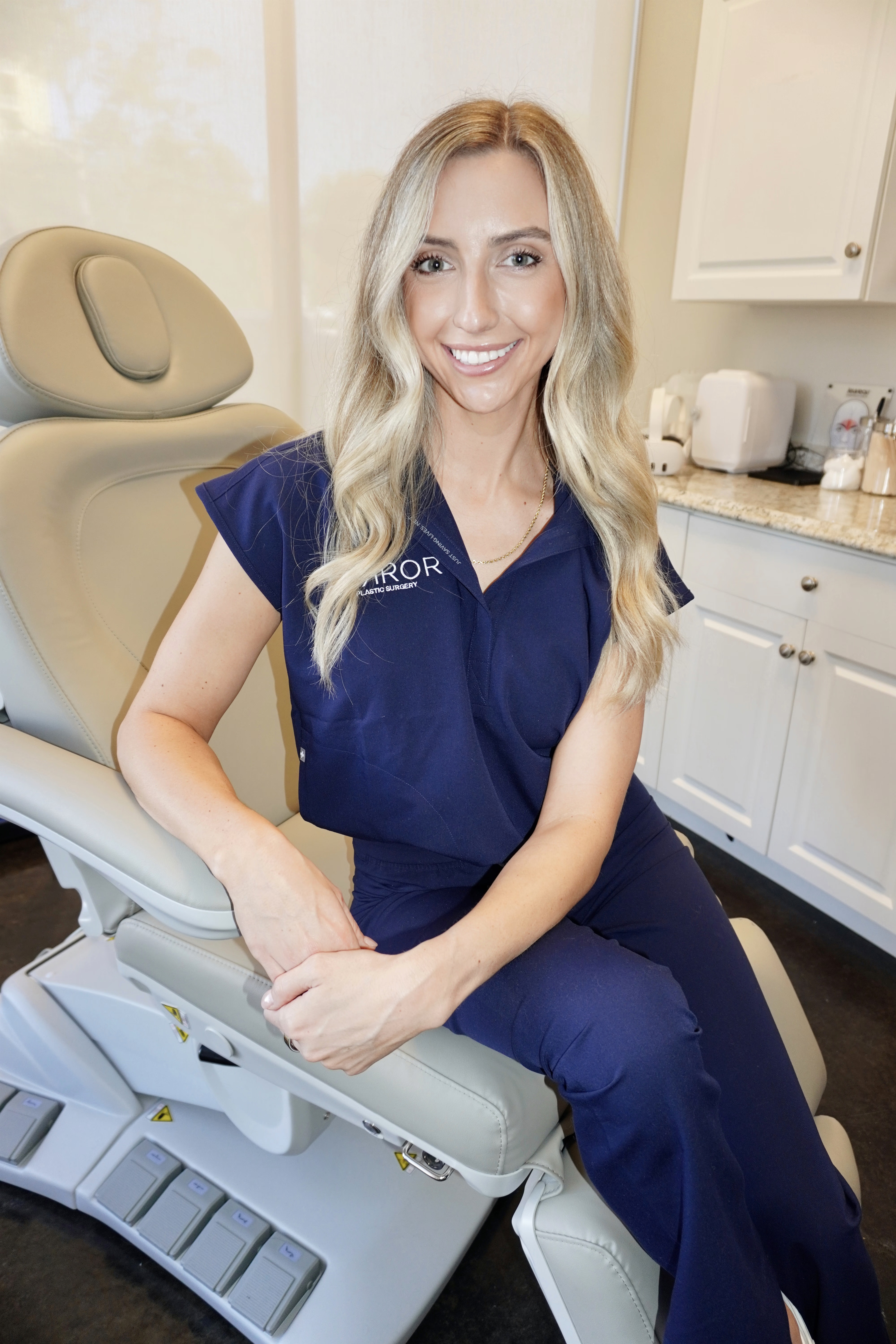
Every new patient at Mirror begins with a top-to-bottom assessment that can extend to a full hour. Neuromodulator placement and dermal filler selection require extended observation of a patient’s unique facial movements, expressions, and anatomy during thorough consultations to achieve subtle, natural outcomes and avoid overcorrection. Ellie follows this standard by evaluating the face at rest, in motion, and in different lighting. She explains how treatment in one area affects adjacent regions and prevents isolated-injection errors that create asymmetry and an overdone appearance.
Ellie also tells patients when they do not need a procedure yet. That level of transparency, including recommending against an expensive service when anatomy does not warrant it, forms the foundation of Mirror’s long-term patient relationships.
Insurance Realities and Long-Term Maintenance Planning
Elective aesthetic procedures such as neuromodulators, dermal fillers, non-surgical BBL, energy-based skin tightening, and resurfacing treatments are not covered by health insurance in any practice setting. Since these services function as self-pay investments, patients benefit from evaluating providers based on long-term value rather than initial price alone.
Long-term maintenance is where the concierge model shows its clearest financial logic. A rushed single-session treatment that produces an unnatural result or requires early revision often costs more over time than an evidence-based plan executed correctly from the start. A provider who recommends more than two to three treatments during a first visit without knowing the patient’s goals, budget, or treatment response is pattern-matching to revenue rather than individual anatomy. Mirror’s supplier-neutral stance removes that incentive and keeps recommendations focused on what each patient’s anatomy needs.
Ellie approaches maintenance the way a dentist approaches oral health. Professional treatments create results, and lasting outcomes depend on understanding and consistent at-home care. Every patient leaves with a clear treatment timeline, realistic expectations, and an explanation of the physiology behind each recommendation.
Frequently Asked Questions
Are concierge med spa treatments covered by insurance?
No. Elective aesthetic procedures including neuromodulators, dermal fillers, non-surgical BBL, laser resurfacing, and body contouring are classified as cosmetic and are self-pay in every practice setting. This remains true whether the clinic operates on a concierge or high-volume model, and health insurance does not reimburse these treatments.
How do I choose the right aesthetic provider in St. Petersburg, Florida?
Start by verifying that the injector holds active advanced nursing or physician licensure and that a board-certified physician provides on-site medical oversight. Confirm that the clinic uses FDA-approved or authorized products rather than compounded alternatives of uncertain origin. Ask how many times the provider has performed the treatment you are considering, what their complication management protocol includes, and whether they carry reversal agents such as hyaluronidase for hyaluronic acid fillers. A provider who cannot answer these questions directly, or who pressures you toward same-day treatment without a thorough consultation, should be considered a red flag.
What makes a non-surgical BBL safe?
Safety in non-surgical BBL depends on the injector’s depth of gluteal anatomy knowledge, the products used, and the clinical setting. Radiesse (CaHA) and AlloClae are the evidence-supported biostimulatory options for gluteal contouring at Mirror Plastic Surgery. The procedure should take place in a physician-supervised medical setting, never in a non-clinical environment. The staged protocol mentioned earlier, typically two to four sessions over several months, is essential for safety, and any provider promising dramatic single-session results warrants scrutiny.
How long do biostimulatory filler results last?
Longevity varies by product and individual biology. Published research indicates that PLLA- and CaHA-based biostimulators can produce improvements in skin quality that last for many months.1 Results are influenced by systemic factors such as hormonal status, nutritional markers, and skin quality.1 Ellie evaluates these factors during the initial assessment to set realistic expectations and choose appropriate treatment timing.
What should I expect during my first consultation at Mirror Plastic Surgery?
The initial consultation is a structured, unhurried conversation and physical assessment that can extend to a full hour. Ellie will ask about your aesthetic goals and the emotions behind them, review your medical and treatment history, and evaluate your facial or body anatomy at rest and in motion. She explains the physiological rationale for each recommendation and does not pressure you toward same-day treatment. If your anatomy does not yet warrant a specific procedure, she will say so and explain why.
Conclusion: Selecting a Concierge Aesthetic Clinic in St. Petersburg
The U.S. med-spa industry has eclipsed $17 billion with more than $1 billion in annual growth and approximately 10,500 med spas operating nationwide, yet many states still have limited regulations governing these facilities. High visibility and large volume do not guarantee safety or expertise.
Mirror Plastic Surgery holds a distinct position in St. Petersburg as a concierge practice that limits daily procedures by design, begins every consultation with anatomy, and ends each visit with clear, honest guidance. The combination of physician leadership and an injector with ICU and esthetics training creates a level of clinical depth that many patients notice immediately. For people who have experienced rushed consultations, opaque upselling, or results that required correction, this difference often feels significant.
Disclaimer: Results may vary from person to person. Editorial content, before and after images, and patient testimonials do not constitute a guarantee of specific results.
1 Results may vary from person to person. Editorial content, before and after images, and patient testimonials do not constitute a guarantee of specific results.