
Written by: Ellie Pranckevicius, FNP-BC, Aesthetic Nurse Practitioner & Aesthetic Injector | Facial Restoration & Regenerative Injectable Specialist, Mirror Plastic Surgery | Last updated: September 4, 2026
Key Takeaways
- Youthful restoration combines medical-grade skincare, advanced treatments, and peptide therapies to address visible skin aging and systemic cellular decline.
- Medical-grade topical peptides like GHK-Cu deliver clinically proven improvements in collagen density, elasticity, and wrinkle reduction that surpass typical over-the-counter products.1
- Systemic peptide therapies such as GHK-Cu, BPC-157, TB500, NAD+, and Sermorelin/Ipamorelin target inflammation, mitochondrial energy, and tissue repair throughout the body.
- Medically supervised protocols with lab-guided personalization and ongoing practitioner support are essential for safety and consistent results.
What Is Youthful Restoration?
Youthful restoration is a holistic medical approach that addresses both visible and internal signs of aging. It combines medical-grade skincare, advanced treatments, and peptide therapies to restore skin elasticity, collagen production, and cellular energy.
Effective restoration treats external skin changes and internal cellular aging at the same time. Biological drivers of aging include declining collagen production, rising systemic inflammation, and diminishing cellular energy. Surface-level products cannot correct these deeper changes. GHK-Cu plasma concentrations decline by more than half between age 20 and age 60, from roughly 200 nanograms per milliliter at age 20 to under 80 nanograms per milliliter after age 60, tracking the loss of regenerative capacity that defines aging tissue. This pattern explains why the most effective protocols pair topical strategies with systemic interventions instead of relying on a single approach.
Topical Strategies: Medical-Grade Skincare and Peptides
Topical care creates the foundation for visible skin improvement. Over-the-counter skincare is formulated for broad, mass-market use. OTC products must be safe enough to sell without professional guidance, which results in gentler formulas and lower concentrations of active ingredients that typically work on the epidermis to improve surface texture and hydration rather than driving structural change. Medical-grade formulations use advanced delivery systems that move active ingredients into deeper layers of the dermis where collagen renewal and repair occur.
Among topical peptides, GHK-Cu (copper peptide) has the strongest published human clinical evidence. A 2024 randomized controlled trial of 60 women aged 40 to 65 found that twice-daily application of 0.1% GHK-Cu cream for 12 weeks produced a 31% wrinkle reduction and 28% improvement in skin elasticity, with collagen density increasing 15.6% by ultrasound assessment compared to placebo.1 A separate biopsy study found that GHK-Cu improved collagen production in 70% of participants versus 50% for vitamin C cream and 40% for retinoic acid.1
GHK-Cu and retinoids support skin health through different pathways. Retinol binds to retinoic acid receptors to accelerate cell turnover, while GHK-Cu signals through a broader growth-factor-like mechanism that stimulates matrix synthesis without exfoliation, making them complementary rather than competing actives. Retinoids are also associated with significant irritation. A 48-week double-blind trial found that both 0.1% and 0.025% tretinoin produced statistically significant erythema and scaling versus vehicle. The higher concentration caused significantly greater irritant side effects, an irritation profile not reported in GHK-Cu research.
Compared to vitamin C, GHK-Cu offers a distinct mechanism of action. Vitamin C supports collagen synthesis indirectly by neutralizing free radicals and acting as a cofactor for collagen-producing enzymes. GHK-Cu works through copper-mediated enzyme activation and direct gene regulation. This mechanism promotes fibroblast proliferation and migration, upregulates collagen synthesis, and downregulates matrix metalloproteinase activity, reversing several age-related changes in fibroblast function. The two actives perform best in separate application steps, as GHK-Cu shows reduced stability in the presence of high-concentration ascorbic acid in the same container.
Topical peptides improve the skin’s surface and structure, yet they do not resolve systemic inflammation, hormonal shifts, or mitochondrial decline. Addressing those deeper drivers requires a systemic approach that complements topical care.
Systemic Approaches: Peptide Therapies for Youthful Restoration
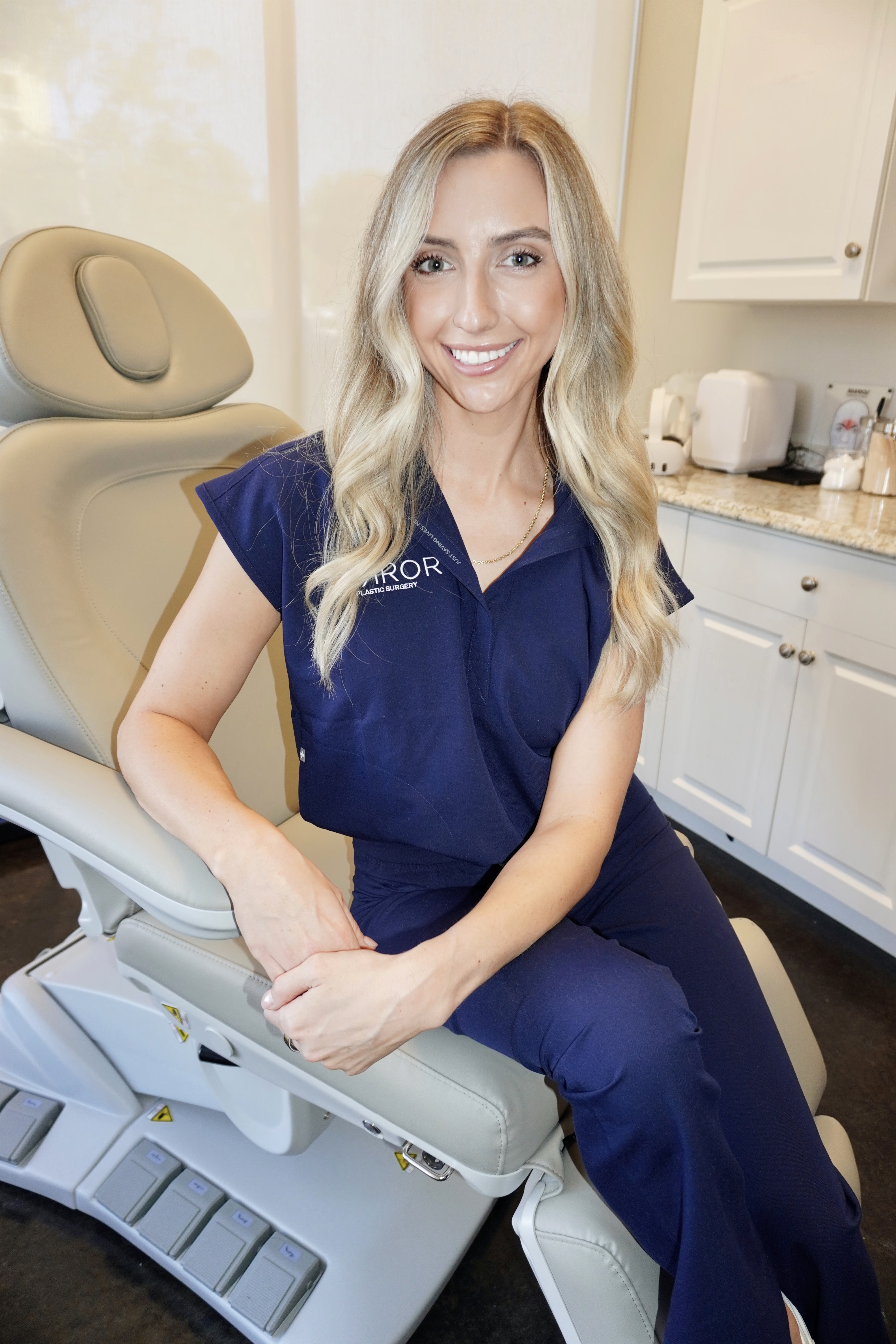
Systemic peptide therapies address this internal side of aging by working at the cellular level. They reduce inflammation, support collagen production, increase energy, and restore overall vitality. At Mirror Plastic Surgery, Ellie Pranckevicius, FNP-BC, leads peptide protocols. Her four years in the Neuroscience ICU at Tampa General Hospital provide a strong foundation in physiology, metabolic health, and recovery. Every protocol is personalized based on lab results and medical history.
The following peptides form the core of Mirror Plastic Surgery’s youthful restoration offerings:
- GHK-Cu (Copper Peptide): The foundational anti-aging peptide. Published research using the Broad Institute’s Connectivity Map estimates that GHK-Cu influences the expression of more than 4,000 human genes. This activity affects approximately 31.2% of the human genome. Systemically, it supports collagen and elastin production, skin, hair, and nail health, and has demonstrated anti-inflammatory effects. It is available as part of Mirror Plastic Surgery’s Glow Stack.
- BPC-157 (Body Protective Compound 157): Targets systemic inflammation and supports muscle, tendon, ligament, and joint repair. Used individually or as part of the Glow Stack.
- TB500 (Thymosin Beta-4): Addresses soft tissue inflammation and wound repair, rounding out the Glow Stack’s anti-inflammatory approach.
- NAD+ (Nicotinamide Adenine Dinucleotide): Targets cellular mitochondria for increased energy production. A 2026 PRISMA-guided systematic review covering 33 human intervention studies found that NAD-related compounds consistently demonstrate biochemical target engagement in humans, raising circulating or cellular NAD-related metabolites.
- Sermorelin/Ipamorelin: Growth hormone-releasing peptides that stimulate natural growth hormone production, supporting muscle retention and fitness goals.
Ellie reviews each patient’s complete medical history and orders appropriate lab panels before designing a custom peptide stack. Patients receive direct, ongoing support throughout their protocol, including 24/7 text access to Ellie. Care is available in St. Petersburg and remotely across the United States.
Medical-Grade Skincare vs. Over-the-Counter Products
Medical-grade and over-the-counter skincare differ most in ingredient strength, delivery systems, and supporting data. Retinol concentrations in professional lines commonly run 0.5% to 1.0% versus 0.1% or less at retail, and medical-grade formulations can exceed FDA cosmetic concentration caps for ingredients like glycolic acid (under 10%) and salicylic acid (2% for OTC cosmetics).
“Medical grade” is not a term regulated by the FDA, and there is no official certification or legal standard a product must meet to carry the label. High-quality medical-grade products stand out through physician formulation, clinical testing with published data, full disclosure of ingredient concentrations, and distribution through licensed professionals who can guide safe use. Medical-grade skincare can cause temporary irritation or purging when first starting due to higher potency, and a professional can help phase in active ingredients safely.
For basic cleansers and simple moisturizers, the performance gap between medical-grade and OTC products is often small. The premium becomes worthwhile for treatment products such as retinoids, brightening agents, growth factors, and peptide formulations. In these categories, concentration and delivery system determine whether a product produces measurable structural change or primarily affects the skin’s surface. As discussed earlier, pairing these targeted topicals with systemic therapies creates a more complete youthful restoration plan.
Safety and Supervision: Why Medical Guidance Matters
Safe peptide therapy depends on proper sourcing, dosing, and medical oversight. The FDA has issued warning letters to peptide sellers noting that injectable products “can pose risks of serious harm to users” because they bypass some of the body’s key defenses and “can lead to serious and life-threatening conditions” if contaminated or improperly manufactured. Health Canada has issued advisories cautioning consumers to “think twice before injecting peptides bought online” and emphasizing that “unauthorized products can seriously harm you.”
Quality failures in the unregulated market occur frequently. A Texas lab reported that a third of the peptide samples they test fail identity, purity, or quantity checks. The FDA’s Adverse Event Reporting System includes records of a life-threatening incident and a hospitalization linked to suspected contamination in BPC-157, and a physician reported a patient who experienced heavy metal poisoning from peptide injectables.
At Mirror Plastic Surgery, peptides come from reputable providers with rigorous batch testing. Ellie Pranckevicius conducts comprehensive consultations that include lab panels to screen for pre-existing conditions and contraindications before any protocol begins. When surgical expertise is needed, Dr. Akash Chandawarkar, a Harvard-educated, Johns Hopkins-trained plastic surgeon with fellowship training at Manhattan Eye Ear & Throat Hospital, provides that additional layer of care.
How to Choose a Provider for Youthful Restoration
Choosing the right provider shapes both your safety and your results. A high-quality, medically supervised practice shares several key traits that go beyond basic credentials.
Experienced practitioners conduct comprehensive consultations and order appropriate lab panels before designing any protocol. They create personalized protocols based on individual health profiles rather than relying on one-size-fits-all approaches. They also source peptides from reputable suppliers with documented batch testing for identity, purity, and quantity.
Ongoing support and direct communication throughout treatment help you navigate dosing, side effects, and expectations. Transparent, honest conversations about what each therapy can achieve keep goals realistic and build trust.
Mirror Plastic Surgery follows this model. Ellie Pranckevicius offers 30–60 minute consultations, reviews complete medical histories, orders relevant lab panels, and remains available via text for ongoing support. The practice serves patients in the Tampa Bay area and remotely across the United States, including Hawaii and Alaska.
Frequently Asked Questions
Are peptides FDA-approved?
Many peptides used in wellness and anti-aging protocols are not regulated as FDA-approved drugs. They have, however, been used extensively worldwide, with clinical research spanning over a decade. The main concern involves products from unregulated sources that lack quality control. At Mirror Plastic Surgery, Ellie Pranckevicius conducts an in-depth consultation that may include lab panels, sources peptides exclusively from providers with known quality and batch testing, and provides medical supervision before, during, and after therapy.
What results can I expect from peptide therapy for youthful restoration?
Results vary by individual, the specific peptides used, and the conditions addressed. Some patients report early improvements in inflammation and energy within the first week. Skin and collagen benefits, including better elasticity, firmness, and fine line depth, typically develop over 8 to 12 weeks of consistent use.1 A personalized protocol based on lab results and medical history helps align expectations with your unique biology, lifestyle, and peptide stack.
Will I lose the benefits if I stop taking peptides?
Peptide benefits gradually fade when treatment stops, similar to other health regimens.1 For example, systemic inflammation that improved during a protocol often returns to baseline without ongoing support. Many patients choose a maintenance protocol to sustain gains. Ellie discusses long-term strategies with each patient during consultation and follow-up visits.
Are peptides only for weight loss?
Peptides support far more than weight management. At Mirror Plastic Surgery, protocols target systemic inflammation and autoimmune conditions, support post-surgical and injury recovery, improve skin aging through collagen and elastin production, increase cellular energy via mitochondrial support, manage anxiety and depression, enhance sexual wellness, and support fertility. GHK-Cu and NAD+ focus on skin health and cellular energy, while peptides like BPC-157 and TB500 concentrate on inflammation and tissue repair.
Is it safe to buy peptides online?
Buying peptides online carries significant risk due to poor quality control. As noted earlier, many products lack third-party testing, so contents, sterility, and dose remain uncertain. There is also no professional oversight of dosing or screening for contraindications. Medical supervision ensures vetted products, appropriate dosing, and protocols matched to your health profile. Mirror Plastic Surgery sources peptides from reputable providers with rigorous batch testing and offers comprehensive oversight throughout treatment.
Conclusion: Your Path to Youthful Restoration
Youthful restoration works best as a coordinated plan that blends topical and systemic strategies. This combined approach addresses declining collagen and skin elasticity, reduced cellular energy, and systemic inflammation. Topical medical-grade peptides like GHK-Cu deliver measurable improvements in skin texture, firmness, and collagen density when used consistently at clinically validated concentrations. Systemic peptide therapies extend those benefits deeper, targeting inflammation, mitochondrial function, and tissue repair throughout the body.
The safest and most effective path involves medical supervision, personalized protocols grounded in lab data, and ongoing support from a qualified practitioner. Mirror Plastic Surgery provides this structure, with Ellie Pranckevicius leading peptide protocols and Dr. Akash Chandawarkar offering surgical expertise when needed.
Start your personalized youthful restoration consultation with Mirror Plastic Surgery.
Contact Information
Mirror Plastic Surgery is located at 780 4th Ave S, St. Petersburg, FL 33701. To schedule a consultation, call 727-361-6515 or email [email protected]. Follow us on Instagram at @mirrorplasticsurgery, @dr.akashplasticsurgery, and @perfectlyplastics.
Disclaimers
The information provided in this article is for educational purposes only and does not constitute medical advice, diagnosis, or treatment. Peptide therapies discussed herein are not FDA-approved for the indications described. Individual results vary. Consult a qualified healthcare provider before beginning any new treatment protocol. Mirror Plastic Surgery sources peptides from reputable compounding providers; however, patients should be aware that many peptides remain outside FDA regulatory frameworks. This content is not intended to replace a comprehensive medical consultation.
1 Results may vary from person to person. Editorial content, before and after images, and patient testimonials do not constitute a guarantee of specific results.
Peptide therapy is intended for wellness and optimization purposes and is not prescribed to diagnose, treat, cure, or prevent disease unless specifically stated. Many peptides are not FDA-approved and may be used off-label. Some have limited long-term safety data, with a potential for unknown risks, complications, or desensitization with prolonged use.