
Written by: Ellie Pranckevicius, FNP-BC, Aesthetic Nurse Practitioner & Aesthetic Injector | Facial Restoration & Regenerative Injectable Specialist, Mirror Plastic Surgery | Last updated: September 8, 2026
Key Takeaways
- Restorative medicine is an integrative approach that identifies and corrects underlying imbalances instead of only suppressing symptoms.
- It differs from regenerative and functional medicine by focusing on whole-person wellness through nutrition, lifestyle, and emerging therapies like peptides.
- Common treatments include nutritional therapy, targeted supplementation, mind-body practices, and peptide protocols that support healing and healthy function.
- A thorough consultation involves comprehensive history review, lab testing, and personalized treatment planning with a qualified practitioner.
How Restorative, Regenerative, And Functional Medicine Compare
The terms restorative, regenerative, and functional medicine often appear together, yet they represent distinct approaches with different philosophies and treatment tools.
Restorative medicine focuses on restoring the body’s natural structure and function through integrative therapies. It combines conventional medical practices with complementary approaches like nutrition, lifestyle modifications, and targeted supplementation to address root causes of dysfunction. The goal is to help the body heal itself by creating the conditions it needs to function well.
Regenerative medicine takes a more interventionist approach and focuses on repairing or replacing damaged tissues and organs. Canada’s Drug Agency defines regenerative medicine as the branch of medicine that develops methods to regrow, repair, or replace damaged or diseased cells, organs, or tissues, including the generation and use of therapeutic stem cells, tissue engineering, and the production of artificial organs, with the goal of restoring functional capacity by stimulating or replicating the body’s own repair mechanisms or through external therapeutic strategies.
Functional medicine emphasizes a systems-based approach to identifying and addressing root causes of disease. A peer-reviewed study from the Cleveland Clinic Center for Functional Medicine, published in JAMA Network Open, found that functional medicine care significantly improved patient-reported outcomes among more than 7,000 patients with chronic conditions compared to those in a conventional family health center, with 31% achieving clinically meaningful improvements using validated NIH PROMIS measures.1
The table below summarizes the key differences across these three approaches and shows how restorative medicine serves as the broadest umbrella term.
| Aspect | Restorative Medicine | Regenerative Medicine | Functional Medicine |
|---|---|---|---|
| Primary Focus | Restoring natural function and balance | Repairing or replacing damaged tissue | Identifying root causes of disease |
| Core Philosophy | Support the body’s innate healing capacity | Stimulate or replicate repair mechanisms | Systems-based, personalized analysis |
| Typical Treatments | Nutrition, lifestyle changes, supplements, peptides | Stem cell therapy, tissue engineering, gene therapies | Comprehensive lab testing, targeted interventions |
| Time Horizon | Ongoing wellness support | Procedure-oriented with recovery period | Long-term lifestyle and biochemical correction |
These approaches often overlap in practice. Restorative medicine functions as the broadest umbrella term and incorporates elements of both functional and regenerative care while keeping attention on whole-person wellness.
Common Restorative Medicine Treatments And Approaches
Restorative medicine uses a range of treatments that support the body’s natural healing mechanisms. The most common modalities include the following.
- Nutritional Therapy And Dietary Modifications: Food choices directly influence inflammation and cellular repair. Adopting a Mediterranean diet has demonstrated prominent reductions in inflammatory biomarkers, including IL-6 (mean difference: −1.07 pg/mL), IL-1β (mean difference: −0.46 pg/mL), and C-reactive protein (mean difference: −1.00 mg/L), according to a 2022 systematic review and meta-analysis in Advances in Nutrition.1
- Lifestyle Interventions: Daily habits shape inflammatory load and recovery capacity. Sleep deprivation under six hours per night raises CRP within one week, while moderate-intensity movement of 150 minutes per week significantly reduces systemic inflammation.1
- Targeted Supplementation: Evidence-based supplements can reinforce dietary changes and address specific deficiencies. Omega-3 at 2–3 g/day produces a 5–15% reduction in C-reactive protein levels, while curcumin at 1,500 mg/day reduces CRP roughly 10–15% in trials.1
- Mind-Body Practices: Nervous system regulation influences pain, inflammation, and healing. An individual patient data meta-analysis of 39 randomized controlled trials involving 20,827 patients found that acupuncture was superior to both sham acupuncture and no-acupuncture controls for chronic musculoskeletal pain, osteoarthritis, chronic headache, and shoulder pain, with effects persisting at one year.1
- Peptide Therapy: This emerging restorative approach uses short chains of amino acids to signal specific cellular functions. Under medical supervision, peptide protocols can support inflammation reduction, tissue repair, energy levels, and skin health.
For a deeper look at how peptides support skin rejuvenation, Mirror Plastic Surgery’s guide Youthful Restoration: A Medical Guide To Rejuvenating Skin provides additional clinical context on collagen-focused approaches.
What To Expect In A Restorative Medicine Consultation
A restorative medicine consultation offers a slower, more detailed experience than a typical brief office visit. The focus stays on understanding your full health picture and building a tailored plan.
Comprehensive Medical History Review: Your practitioner takes time to understand your complete health history, including past diagnoses, surgeries, medications, family history, and lifestyle factors. This initial conversation typically lasts 30–60 minutes.
Discussion Of Symptoms And Goals: You describe what bothers you and what you hope to change. Your goals, such as relief from chronic inflammation, support for an autoimmune condition, or anti-aging benefits, guide the treatment plan.
Laboratory Testing: Many restorative medicine practitioners order comprehensive lab panels to identify underlying imbalances. For conditions like weight management or inflammatory issues, this often includes thyroid, liver, kidney, diabetes markers, and hormone panels. At Mirror Plastic Surgery, Ellie Pranckevicius reviews existing lab results or orders new testing before recommending any treatment protocol.
Personalized Treatment Planning: Quality restorative medicine avoids one-size-fits-all protocols. Your practitioner develops a customized plan based on your physiology, lab results, and health goals and explains the reasoning behind each recommendation.
Questions worth asking a potential provider include the following.
- What is your primary board certification and in which specialty?
- What tests do you typically order before recommending treatments?
- How do you tailor treatments to individual needs?
- How do you ensure the quality and safety of supplements or therapies you recommend?
- What are the realistic timelines for seeing results?
- How do you handle follow-up care and ongoing monitoring?
Book an appointment with Ellie to experience a concierge-level restorative medicine consultation that includes in-depth lab analysis and a personalized protocol built around your specific health profile.
Insurance And Restorative Medicine Coverage
Insurance coverage for restorative medicine varies widely and depends on the specific treatments involved. Some conventional elements, such as physician visits and certain laboratory tests, may be covered when billed through standard medical codes. Many complementary therapies fall outside typical coverage.
- Nutritional counseling and dietary programs often receive limited or no coverage.
- Supplements and nutraceuticals almost never receive insurance reimbursement.
- Peptide therapy generally requires out-of-pocket payment.
- Mind-body practices like yoga and meditation rarely receive coverage, although some plans now include acupuncture.
Before scheduling a consultation, contact both your insurance provider and the practitioner’s office to clarify what services may be covered and what you should expect to pay out-of-pocket. Many practices offer transparent pricing and payment plans for services outside insurance.
How To Find A Qualified Restorative Medicine Practitioner
Finding a qualified restorative medicine practitioner requires careful vetting because the field lacks a single credentialing standard. Practitioners often come from different disciplines and bring varied training and experience.
Key credentials to look for include the following.
- Primary Board Certification: A 2024 ABMS narrative review found that board certification is associated with improved patient safety, better clinical outcomes, lower healthcare costs, and reduced risk of physician disciplinary actions. Look for practitioners who hold board certification in a recognized specialty such as internal medicine, family medicine, or nursing.
- Additional Training: Many restorative medicine practitioners pursue extra certifications in integrative, functional, or anti-aging medicine. The Institute for Functional Medicine’s IFMCP certification program requires candidates to document a minimum of 1,000 functional medicine patient encounters before sitting for the exam.
- State Licensure: Verify that your practitioner holds an active, unrestricted license in your state through state medical board websites, which also display any disciplinary actions.
Red flags to avoid include the following.
- Practitioners who use “board-certified” without specifying which board or specialty certified them
- Clinics that offer a price, treatment plan, and credit card form before asking about medical history, previous treatments, imaging, medications, or goals
- Providers who promise specific outcomes or guarantee results
- Practices that discourage questions about credentials, sourcing, or safety protocols
- High-pressure sales tactics such as same-day commitment requirements or “book today and save” offers
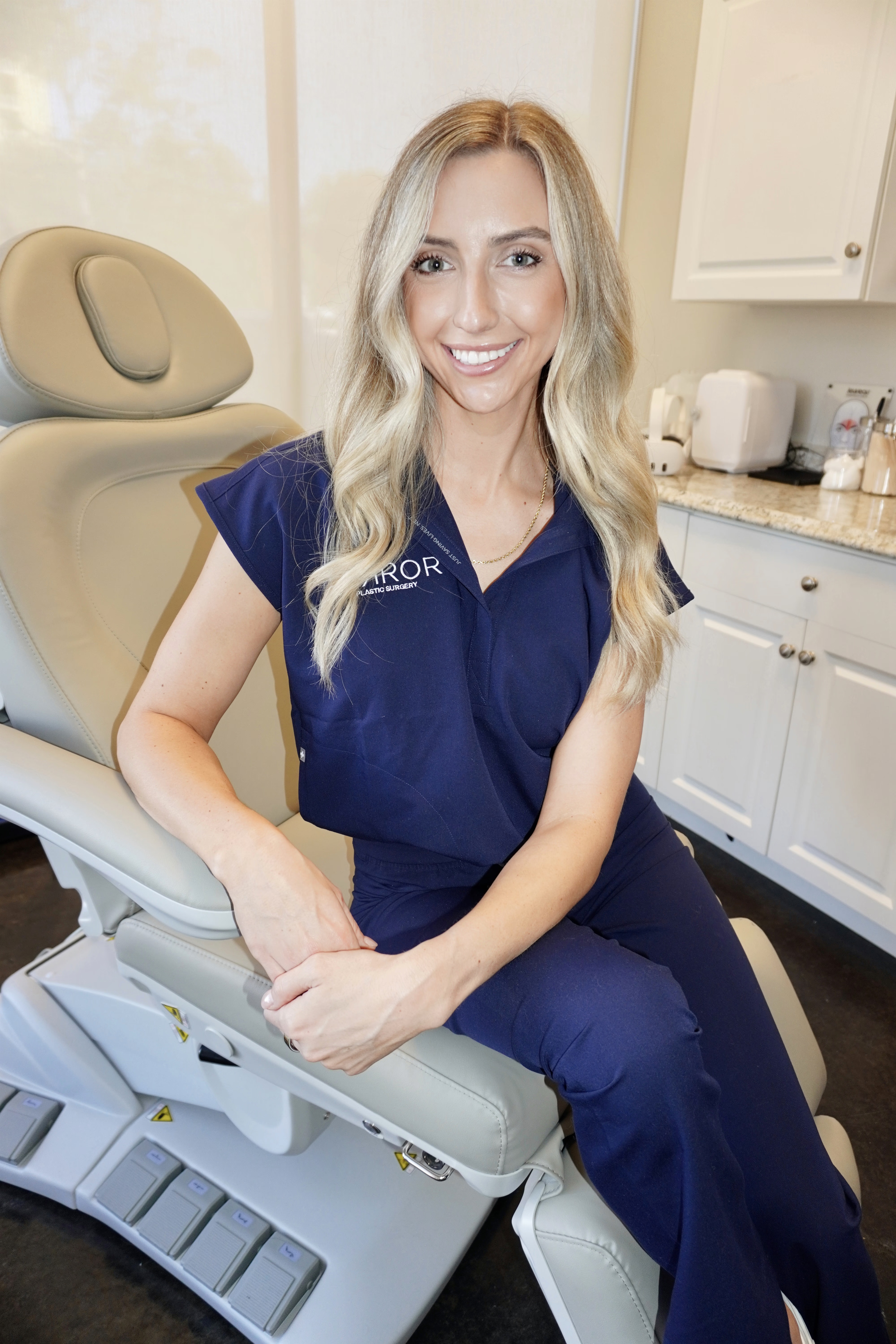
Mirror Plastic Surgery in St. Petersburg, FL exemplifies a supervised, credential-transparent approach. Their peptide therapy program is led by Ellie Pranckevicius, FNP-BC, a board-certified Family Nurse Practitioner with a Bachelor’s in Health Science from Boston University, a Master’s in Nursing from the University of South Florida, and four years of Neuroscience ICU experience at Tampa General Hospital. Her clinical depth and esthetician background give Ellie a dual perspective on aesthetic goals and the clinical science required to reach them safely.
The Role Of Peptides In Restorative Medicine
Peptide therapy represents one of the most promising emerging tools in restorative medicine. Peptides are short chains of amino acids that act as signaling molecules and instruct cells to perform specific functions. They work with the body’s natural systems to promote healing and support healthy function.
Peptides support restorative medicine goals across several domains.
- Reducing Inflammation: Peptides like BPC-157 and TB-500 target systemic inflammation and support muscle, tendon, ligament, and joint repair.
- Promoting Tissue Repair: Post-surgical peptide protocols can reduce inflammation and accelerate healing.1 This approach complements Mirror Plastic Surgery’s surgical offerings, as explored further in the practice’s Muscle Repair: 3 Phases & Peptide Therapy Guide.
- Enhancing Energy: NAD+ targets cellular mitochondria, increases energy production, and supports cellular-level anti-aging.
- Supporting Skin Health: GHK-Cu (copper peptide) promotes collagen and elastin production and addresses skin aging at the cellular level.
- Weight Management: Newer GLP-3R formulations support weight management with reportedly fewer gastrointestinal side effects than earlier versions and also address insulin resistance and cardiovascular risk factors.1
Safety considerations play a central role in any honest discussion of peptide therapy. The FDA’s Pharmacy Compounding Advisory Committee met in July 2026 to review evidence for seven peptides, including TB-500 and BPC-157, and the FDA’s own review found that data for these peptides comes primarily from preclinical animal studies and remains quite limited for humans. This regulatory gap means the primary risk involves obtaining products from unregulated sources without medical supervision.
At Mirror Plastic Surgery, peptides are sourced from reputable providers who undergo rigorous batch testing to ensure product quality, purity, and accurate dosing. Every protocol begins with a comprehensive consultation and, when appropriate, lab panels. Ellie remains available via direct text communication throughout the patient journey for ongoing support and monitoring.
Book an appointment with Ellie to learn whether a supervised peptide therapy protocol aligns with your health goals.
Frequently Asked Questions
What Does “Restorative” Mean In Medical Terms?
In medical contexts, “restorative” refers to treatments or approaches that aim to repair, heal, and support the body’s natural function. Restorative medicine seeks to identify and correct underlying causes of illness rather than simply managing symptoms. The philosophy applies across multiple disciplines, from nutritional medicine to emerging biotechnologies like peptide therapy.
Is Restorative Medicine Legitimate?
Restorative medicine is a legitimate approach to healthcare when practiced by qualified, licensed practitioners. While the term itself is not a recognized medical specialty with a single credentialing body, it encompasses evidence-based practices including nutritional therapy, lifestyle interventions, targeted supplementation, and emerging therapies like peptides. The growing adoption of complementary health approaches, used by 36.7% of U.S. adults as of 2022 NHIS data, reflects increasing mainstream acceptance of integrative care models. Patients should verify practitioner credentials, confirm state licensure, and seek providers who emphasize evidence-based practices and comprehensive medical evaluation before recommending any treatment.
How Is Restorative Medicine Different From Functional Medicine?
Restorative medicine is a broader umbrella term that includes various integrative approaches to restoring the body’s natural function, such as nutritional interventions, lifestyle medicine, mind-body practices, and emerging therapies. Functional medicine is a specific systems-based approach within that broader landscape and focuses on identifying root causes of disease through comprehensive testing, genetics, environment, and lifestyle analysis. Functional medicine represents one pathway within restorative medicine, and restorative medicine also includes regenerative approaches and other integrative modalities that functional medicine does not always address.
Can Restorative Medicine Help With Chronic Inflammation?
Restorative medicine offers multiple evidence-based approaches for addressing chronic inflammation. As noted earlier, the Mediterranean diet significantly reduces key inflammatory markers. Targeted supplements like omega-3 fatty acids and curcumin show measurable anti-inflammatory effects at appropriate doses. Peptide therapy can also target systemic inflammation, with peptides like BPC-157 and TB-500 supporting tissue repair and modulating inflammatory responses. A qualified restorative medicine practitioner uses lab testing to identify your specific inflammatory markers and builds a protocol tailored to your physiology.
Are Restorative Medicine Treatments Safe?
When provided by qualified practitioners using evidence-based protocols, restorative medicine treatments are generally safe. Safety depends on the specific treatment, the practitioner’s qualifications, the quality of products used, and appropriate patient screening. As discussed earlier, the primary safety risk with peptides involves unregulated sourcing. Patients should verify practitioner credentials, ask about product sourcing and batch testing, and ensure a comprehensive medical evaluation is completed before beginning any restorative medicine protocol. Legitimate practitioners also provide clear follow-up care and monitoring throughout treatment.
Disclaimer: Results may vary from person to person. Editorial content and patient testimonials do not constitute a guarantee of specific results. Peptide therapy is intended for wellness and optimization purposes and is not prescribed to diagnose, treat, cure, or prevent disease unless specifically stated. Many peptides are not FDA-approved and may be used off-label. Some have limited long-term safety data, with a potential for unknown risks, complications, or desensitization with prolonged use.
1 Results may vary from person to person. Editorial content, before and after images, and patient testimonials do not constitute a guarantee of specific results.
Peptide therapy is intended for wellness and optimization purposes and is not prescribed to diagnose, treat, cure, or prevent disease unless specifically stated. Many peptides are not FDA-approved and may be used off-label. Some have limited long-term safety data, with a potential for unknown risks, complications, or desensitization with prolonged use.