
Written by: Ellie Pranckevicius, FNP-BC, Aesthetic Nurse Practitioner & Aesthetic Injector | Facial Restoration & Regenerative Injectable Specialist, Mirror Plastic Surgery | Last updated: July 27, 2026
Key Takeaways
- Physician-supervised collagen peptide therapy uses clinically guided dosing and lab-driven customization to stimulate collagen synthesis and skin remodeling more reliably than retail supplements.
- Measurable improvements in skin elasticity typically begin within 4–8 weeks, with wrinkle reduction and hydration gains continuing through 12 weeks under supervised protocols.1
- GHK-Cu supplementation under medical oversight replenishes declining peptide levels to address structural causes of skin laxity and sagging.1
- Supervised protocols mitigate risks associated with OTC collagen peptides, including contamination, inconsistent dosing, and lack of contraindication screening.
- Schedule a personalized consultation at Mirror Plastic Surgery to determine whether a lab-guided GHK-Cu protocol is right for your skin goals.
Timeline for Collagen Peptides and Skin Elasticity
The timeline for measurable skin improvement depends on delivery method, molecular weight, and the specific peptide used. The core mechanism starts at the fibroblast level. Absorbed collagen-derived dipeptides such as Pro-Hyp reach peak blood concentrations 60–120 minutes after oral intake and stimulate fibroblast proliferation and hyaluronic acid synthesis. This activity provides a direct mechanistic link to increased skin collagen density and elasticity. GHK-Cu stimulates collagen synthesis at concentrations as low as 10⁻¹² to 10⁻¹¹ M in fibroblast-culture studies, while also supplying copper as a cofactor for lysyl oxidase, the enzyme that cross-links collagen and elastin into mechanically stable fibers.
Clinical trial data show a consistent window for visible change.1 A 2026 randomized, double-blind, placebo-controlled trial of 75 healthy adults found that a liposomal collagen tripeptide formulation produced increases in dermal collagen density, hydration, and elasticity with a greater magnitude of improvement than the nonliposomal formulation across the 8-week period. A separate 2026 RCT of sedentary middle-aged women found that bioactive collagen peptides led to improvements in facial wrinkles, skin elasticity, and hydration. Plasma TGF-β and Klotho levels rose significantly after 12 weeks in a dose-dependent manner, indicating activation of regenerative and anti-aging pathways.
Clinical study data establish a consistent improvement window, with measurable changes appearing as early as week 2 and continuing through week 12 under supervised protocols.1 The table below outlines the specific biological events and measurable markers at each milestone.
Supervised GHK-Cu Therapy and Skin Sagging
Supervised GHK-Cu protocols target the structural deficit underlying skin laxity, which is declining endogenous GHK levels. Plasma levels of GHK decline from approximately 200 ng/mL at age 20 to roughly 80 ng/mL by age 60. This decline in the copper-binding peptide discussed earlier correlates with reduced skin repair capacity, collagen synthesis, and wound healing efficiency. Replenishing this peptide under clinical oversight restores fibroblast signaling that supports structural remodeling over time.
Outcomes vary by individual baseline, adherence, and maintenance protocol. No therapy guarantees complete reversal of sagging.1 Results require ongoing support to sustain.
| Timepoint | Biological Event | Measurable Marker | Supporting Evidence |
|---|---|---|---|
| Week 2 | Fibroblast activation, early Pro-Hyp plasma accumulation | Subjective reduction in loss of elasticity, early hydration signal | Lin et al. 2026 RCT: significant elasticity signal from Week 2 with liposomal delivery |
| Week 4 | Collagen type I/III upregulation, glycosaminoglycan synthesis increase | Improved skin luminance and tone evenness, reduced dullness | Lin et al. 2026: significant luminance and tone improvements at Week 4 vs. placebo |
| Week 8 | Elastin cross-linking via lysyl oxidase, MMP/TIMP remodeling balance | Statistically significant elasticity gain, wrinkle area reduction | Lin et al. 2026: significant wrinkle area reduction and elasticity advantage vs. placebo (p < 0.05) |
| Week 12 | TGF-β and Klotho pathway activation, dermal density consolidation | Reduced wrinkle number and length, improved elasticity and hydration scores | Paula-Vieira et al. 2026 RCT: significant wrinkle, elasticity, and hydration improvements at 12 weeks (p < 0.0065) |
| Post-Week 12 Maintenance | Sustained fibroblast signaling, prevention of matrix regression | Maintained elasticity and hydration scores with continued protocol | Benefits plateau around 6 months and require ongoing supplementation to maintain outcomes |
Risks of Unsupervised Collagen Peptide Use
Collagen supplements are classified as dietary supplements rather than drugs and are not required to prove efficacy or obtain pre-market approval for label claims, but manufacturers must follow cGMP requirements that include routine testing for identity, purity, strength, and contaminants before sale. This regulatory structure still leaves meaningful quality and safety gaps that physician oversight helps address.
| Factor | Physician-Supervised Protocol | OTC Supplement | Evidence |
|---|---|---|---|
| Sourcing & Batch Testing | Reputable suppliers with documented batch testing for purity and accurate dosage | No pre-market testing required, quality varies considerably across brands | Third-party testing is the primary quality assurance mechanism for OTC products, and product quality plus bioactive peptide content vary considerably across brands |
| Contamination Risk | Sterile sourcing, contamination risk mitigated by clinical-grade supply chain | Independent testing has identified heavy metal contamination, especially in marine-sourced products | Independent testing has identified heavy metal contamination, mismatched amino acid profiles, and inconsistent hydroxyproline content in commercial collagen supplements |
| Dosing Customization | Lab-guided dose selection based on individual biomarkers, cofactor status (vitamin C, zinc), and health history | Fixed serving sizes, most provide 2.5–15 g per serving, which may overlap with or exceed effective trial doses | Most commercial collagen supplements provide 2.5–15 g per serving, overlapping or exceeding the 2.5–10 g doses used in many skin trials |
| Bioavailability Verification | Molecular weight confirmed, cofactors (vitamin C, zinc) assessed and supplemented as needed | No standardization of bioactive peptide content, results from one product cannot be assumed for another | No standardization of bioactive peptide content exists across commercial collagen products, which increases outcome variability in unsupervised OTC settings |
| Contraindication Screening | Full medical history review, lab panels, screening for kidney disease, medication interactions, and allergens | No screening, populations including those with kidney disease, on blood thinners, or with fish allergies face unmitigated risks | People with chronic kidney disease should exercise particular caution, and documented interactions include reduced absorption of quinolone antibiotics and bisphosphonates when calcium-containing collagen supplements are taken concurrently |
| Ongoing Monitoring | 24/7 concierge access to practitioner, structured follow-up and protocol adjustment | No clinical oversight, no mechanism to detect adverse responses or adjust protocol | Clinician-guided use reduces avoidable risks through medical history review, baseline labs, conservative protocol design, and structured monitoring |
GHK-Cu and related peptides are not FDA-regulated as drugs. Howard Sklamberg, former FDA deputy commissioner, states that purchasing peptides without physician involvement risks toxic contaminants and that compounded versions from pharmacies carry quality-control concerns when produced in large quantities. Physician supervision cannot change the regulatory category of these compounds, yet it substantially reduces the quality and safety risks associated with unsupervised use by controlling sourcing, dosing, and monitoring.
How the GHK-Cu Glow Stack Works in Real Life
The GHK-Cu Glow Stack combines GHK-Cu, BPC-157, and TB-500 into a single supervised protocol that targets systemic inflammation, collagen and elastin production, and skin, hair, and nail health. This practical example shows how physician supervision addresses the quality and safety concerns described above while also tailoring treatment to individual biology.
The protocol is structured around four clinical pillars that build on each other to support both safety and results.
- Baseline lab panels. Prior to initiation, the practitioner reviews thyroid, liver, kidney, hormone, and inflammatory markers (including hs-CRP) to identify cofactor deficiencies such as vitamin C or zinc that limit collagen synthesis efficacy and to screen for contraindications. These baseline values create the foundation for individualized dosing decisions.
- Batch-tested sourcing. Once contraindications are ruled out, peptides are sourced exclusively from reputable suppliers with documented batch testing for purity, potency, and accurate dosage. This step directly addresses the contamination and mislabeling risks present in the OTC market.
- Individualized dosing and stacking. With clean sourcing confirmed, dose selection for GHK-Cu and companion peptides is calibrated to the patient’s lab results, health history, and aesthetic goals rather than a fixed retail serving size. Differences in hydrolysis methods, source species, and molecular weight distributions across commercial collagen products produce varying peptide profiles and absorption efficiencies, supporting the value of lab-guided, physician-supervised protocol customization. This customization helps the protocol address the specific deficiencies identified in the initial labs.
- 24/7 concierge monitoring. Throughout the protocol, patients have direct text access to the practitioner, with structured follow-up to assess response, adjust dosing based on real-time feedback, and manage any emerging concerns. This monitoring keeps the protocol aligned with the patient’s evolving needs.
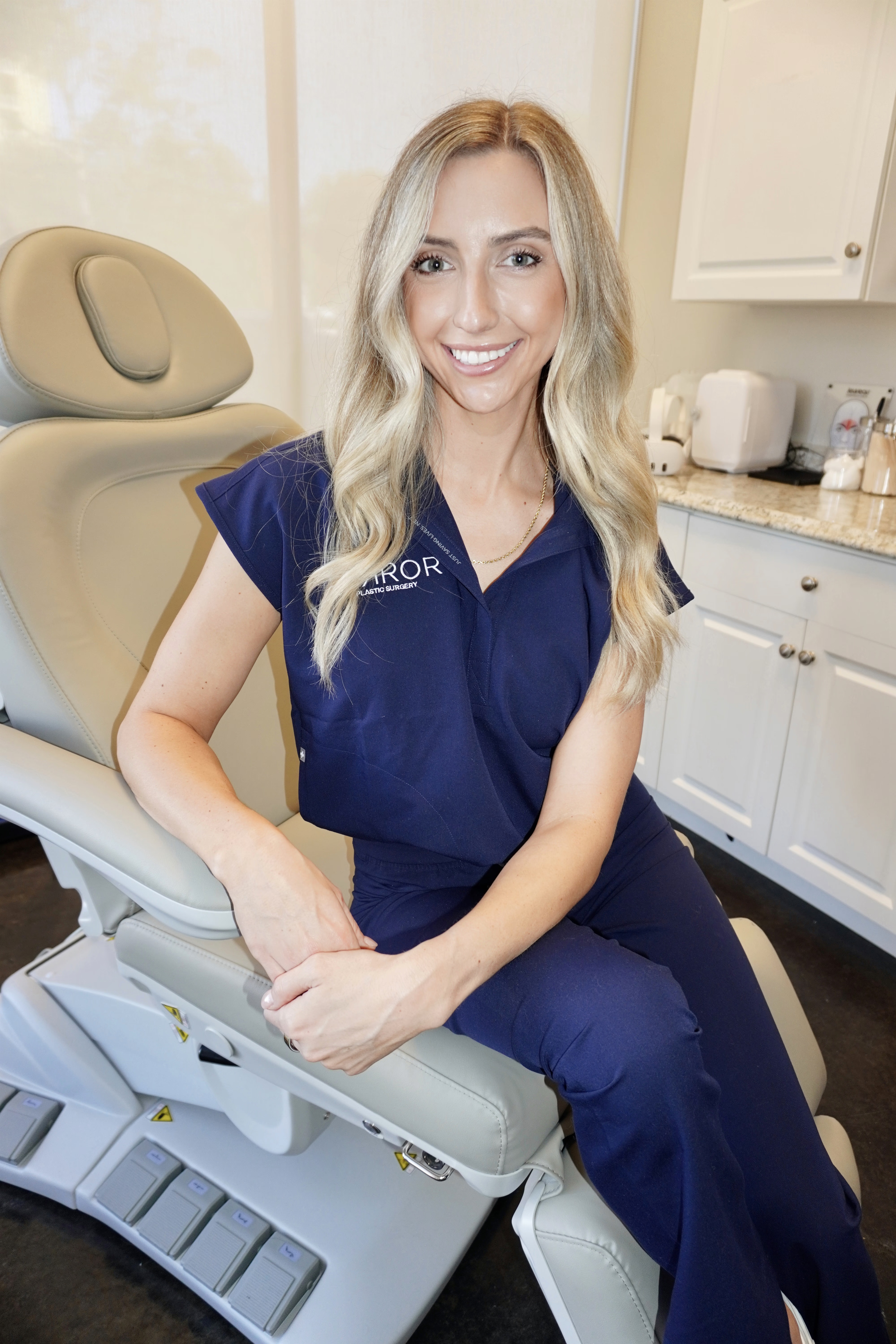
About the Lead Practitioner: The lead practitioner for peptide therapies and non-surgical aesthetics is a board-certified Family Nurse Practitioner. She holds a Bachelor’s in Health Science from Boston University and both a Bachelor’s and Master’s in Nursing from the University of South Florida. Her clinical foundation includes four years in the Neuroscience ICU at Tampa General Hospital, where she developed advanced expertise in physiology, metabolic health, and recovery. Her career then expanded at a high-end medical spa in Boston, providing a rare dual command of skin physiology and advanced clinical science. Her approach is rooted in education and transparency. She explains the mechanism behind every recommendation and clearly states when a service is not yet necessary for a patient.
Frequently Asked Questions
What happens if I stop the GHK-Cu protocol?
Stopping a GHK-Cu protocol gradually reduces the fibroblast-stimulating signal that drives collagen and elastin synthesis. The structural improvements accumulated during the protocol do not disappear immediately. Without ongoing peptide signaling, the natural age-related decline in collagen production resumes. Most patients transition to a maintenance protocol at a lower frequency to preserve gains. Ellie designs maintenance schedules based on individual response data collected during the active protocol period.
Can GHK-Cu therapy be combined with microneedling or laser treatments?
GHK-Cu is frequently used alongside energy-based and mechanical skin treatments in clinical aesthetic settings. Microneedling and laser procedures create controlled dermal injury that upregulates the wound-healing cascade. GHK-Cu’s ability to accelerate the transition from the inflammatory to the proliferative phase and to stimulate collagen type I and III synthesis makes it a logical adjunct. Timing and sequencing of the peptide protocol relative to in-office procedures should be determined by your practitioner based on your specific treatment plan and skin condition.
Who should avoid or use extra caution with collagen peptide or GHK-Cu therapy?
Certain populations require additional screening or should avoid these therapies without specialist guidance. These include:
- Individuals with chronic kidney disease, due to the additional protein load and hydroxyproline metabolism producing oxalate
- Pregnant or breastfeeding women, for whom safety data from clinical trials are absent
- Individuals with fish or shellfish allergies considering marine-sourced collagen peptides
- Patients on quinolone antibiotics or bisphosphonates, where calcium-containing collagen supplements may reduce drug absorption
- Individuals with a history of certain autoimmune conditions or active cancers, who require case-by-case clinical evaluation
Mirror Plastic Surgery’s intake process includes a comprehensive medical history review and lab panels to identify these contraindications before any protocol begins.
Will everyone see the same results from a supervised GHK-Cu protocol?
Results differ from person to person. Outcomes vary based on genetics, baseline skin condition, age, lifestyle factors, adherence, and the specific protocol design.1 Clinical trial data consistently show that skin improvements from collagen peptide supplementation are more pronounced in women over 40 compared with younger participants. Dose, molecular weight, and cofactor status also influence the magnitude of response. Mirror Plastic Surgery’s lab-guided approach aims to identify and address the individual variables most likely to affect your outcome, rather than applying a one-size-fits-all protocol.
Are GHK-Cu and the Glow Stack peptides FDA-approved?
GHK-Cu and the peptides in the Glow Stack are not FDA-approved drugs. They are used in clinical and research settings globally, with a body of in vitro, animal, and human data supporting their mechanisms and safety profile at appropriate doses. The primary risk associated with these compounds usually relates to source quality rather than the peptides themselves. Mirror Plastic Surgery addresses this directly by sourcing exclusively from reputable suppliers with documented batch testing, conducting thorough medical screening before initiation, and providing continuous clinical oversight throughout the protocol.
How does a physician-supervised protocol compare with a high-quality OTC collagen supplement?
A physician-supervised protocol differs from OTC collagen at multiple levels. OTC products are not required to match label claims, verify molecular weight, or test for heavy metal contamination before sale, while batch-tested clinical sourcing removes much of this uncertainty. Effective dosing for skin outcomes depends on molecular weight, cofactor status, and individual biomarkers that cannot be assessed without lab panels. GHK-Cu functions as a fibroblast signaling molecule that upregulates collagen synthesis genes rather than simply supplying substrate, and its clinical application requires practitioner judgment about stacking, sequencing, and monitoring that retail products cannot provide. Contraindication screening for kidney disease, medication interactions, and allergen risk also requires a clinical intake process that OTC purchasing bypasses entirely.
1 Results may vary from person to person. Editorial content, before and after images, and patient testimonials do not constitute a guarantee of specific results.
Peptide therapy is intended for wellness and optimization purposes and is not prescribed to diagnose, treat, cure, or prevent disease unless specifically stated. Many peptides are not FDA-approved and may be used off-label. Some have limited long-term safety data, with a potential for unknown risks, complications, or desensitization with prolonged use.