
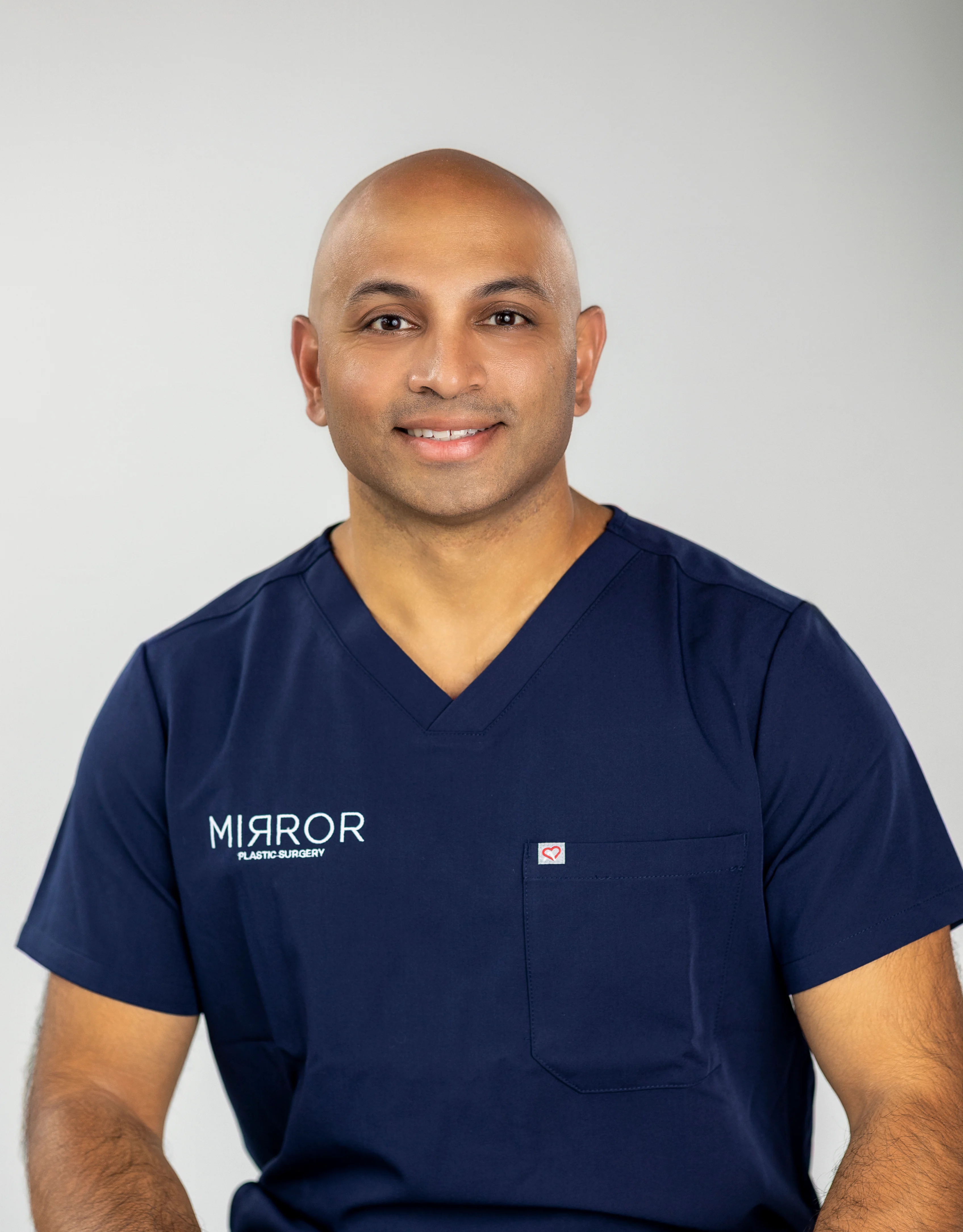
Written by: Dr. Akash Chandawarkar, Board Certified Plastic Surgeon, Mirror Plastic Surgery | Last updated: September 9, 2026
Key Takeaways
- Kybella is the only FDA-approved injectable for reducing moderate-to-severe submental fat and works by triggering an inflammatory response that causes common, temporary side effects such as swelling, bruising, and numbness.
- Most side effects, including swelling (87%), bruising (72%), and numbness (66%), are expected and manageable. They usually resolve within one to two weeks, although numbness can last beyond 30 days in about 42% of patients.
- Serious complications such as marginal mandibular nerve injury (4%) and difficulty swallowing (2%) are rare and technique-dependent. They typically resolve on their own when injections stay within the FDA-defined submental grid and are performed by qualified providers.
- Thoughtful aftercare with ice packs, head elevation, avoiding blood thinners, and not massaging the area helps limit swelling and bruising during the first week of recovery.
- Choosing a board-certified plastic surgeon with deep anatomical knowledge is the most effective way to minimize risks. Schedule your personalized consultation at Mirror Plastic Surgery to review your anatomy and treatment options.
How Kybella Works Inside The Body
Kybella is a synthetic form of deoxycholic acid, a molecule the body naturally produces to break down dietary fat. When injected into the submental fat pad, it disrupts fat cell membranes through adipocytolysis, which is the physical destruction of fat cells. The body then clears the cellular debris over the following weeks through its normal inflammatory response.
This inflammatory process creates the side effects patients feel. The same response that destroys fat cells also causes swelling, firmness, and tenderness in the treated area. Kybella is administered in sessions spaced at least one month apart. Most patients need two to four sessions, and the FDA label allows up to six.
Common Kybella Side Effects
The pivotal double-blind, placebo-controlled clinical trials for Kybella followed 513 treated subjects. The side effects below are common, temporary, and closely tied to the fat-destroying mechanism of the drug. They can sound alarming, yet they are expected and usually manageable with proper care.
- Swelling (Edema): The most common side effect, affecting roughly 87% of patients in clinical trials. Swelling peaks 24–48 hours after treatment and can be significant, often called the “bullfrog” appearance. It subsides over one to two weeks, with residual puffiness fading over several additional weeks.
- Bruising (Hematoma): Affects approximately 72% of patients. Bruising occurred in 70% of placebo patients in trials, which shows that bruising relates mostly to the needle rather than the drug itself. Bruising usually clears within one to two weeks.
- Pain And Tenderness: Reported by about 70% of patients. Pain is usually mild to moderate and responds well to over-the-counter acetaminophen. Discomfort typically eases within a few days.
- Numbness: Affects roughly 66% of patients, versus only 6% on placebo, and reflects the drug’s effect on small sensory nerves. Numbness can last for several weeks and, in about 42% of patients, continues beyond 30 days before fully resolving.
- Redness (Erythema): Occurs in about 27% of patients and usually fades within a few days.
- Firmness Or Hardness (Induration): Affects approximately 23% of patients. Firm patches or small nodules under the chin are expected as the body clears destroyed fat cells and can last four to twelve weeks before softening.
Schedule a personalized Kybella consultation to review your anatomy and what your specific recovery is likely to involve.
Serious Kybella Risks And Complications
Kybella carries a small risk of two serious complications: nerve injury in the jaw and difficulty swallowing. If you notice an uneven smile, facial muscle weakness, or trouble swallowing after treatment, contact your doctor right away. These complications occur in single-digit percentages of trial patients and are largely technique-dependent.
Marginal Mandibular Nerve Injury
The marginal mandibular nerve runs along the jawline and controls the muscles of the lower lip and smile. Injections placed too close to this nerve can cause temporary weakness or asymmetry, such as an uneven smile or difficulty pulling the lower lip down. In pivotal clinical trials, this occurred in 4% of treated patients (20 of 513). Every case resolved on its own without surgery, with a median recovery time of 44 days (range: 1–298 days).
Key risk factors include injections placed too close to the nerve, injections lateral to the treatment grid or near the mandibular border, and inaccurate technique in the submental area. The risk is anatomical. Injections outside the FDA-defined submental grid or by providers without deep anatomical knowledge carry a higher chance of nerve injury.
Dysphagia (Difficulty Swallowing)
Dysphagia occurred in 2% of Kybella trial patients (10 of 513). It developed in the setting of significant injection-site swelling that mechanically interfered with swallowing. All cases resolved spontaneously, with a median duration of 3 days (range: 1–81 days). The FDA contraindicates Kybella in patients with current or prior swallowing difficulties, because treatment can worsen that condition.
Other Rare Complications
Postmarketing reports and the FDA label describe additional uncommon events. These include injection-site ulceration or tissue necrosis, usually from injections placed too superficially, infection that can progress to cellulitis requiring antibiotics, injection-site alopecia, and scarring. These events are rare and largely preventable with proper technique and correct injection depth.
How Long Kybella Side Effects Last: A Recovery Timeline
Week 1: The Bullfrog Phase
Swelling peaks around 24 to 48 hours after treatment, then decreases over days 4–7. Residual swelling and firmness continue to improve over weeks 2–4. During the first several days, many patients describe a “bullfrog” look under the chin, which is expected and temporary. Ice packs, head elevation, and avoiding strenuous activity help manage discomfort. Bruising may be visible. Most patients plan social downtime of 5–7 days.
Weeks 2–4: Gradual Improvement
Swelling visibly subsides during this period, although some puffiness and firmness can remain. Numbness may continue as the nerves recover. Most side effects resolve within roughly one treatment interval of about 28 days, which matches the inflammatory and adipocytolytic mechanism of deoxycholic acid.
Weeks 4–12: Results Emerge
Results may be seen as early as 4 to 6 weeks, with full results from a session typically visible at 12 weeks.1 As swelling clears, the body finishes clearing destroyed fat cells and the neck contour becomes more defined. Firmness or small nodules can persist but soften gradually. The prolonged numbness seen in a minority of patients, including the 42% mentioned earlier, continues to improve over time.
Kybella Vs. Alternatives: Side Effect Comparison
No head-to-head clinical trials directly compare Kybella with CoolSculpting or liposuction for submental fat reduction. Comparisons rely on separate trial profiles and patient-reported outcomes rather than randomized studies.
Kybella Vs. CoolSculpting: Kybella causes more pronounced, visible swelling that often requires several days of social downtime after each session. CoolSculpting (cryolipolysis) usually involves minimal downtime with temporary redness, numbness, and tingling that rarely disrupt daily activities. CoolSculpting carries a rare risk that Kybella does not: paradoxical adipose hyperplasia (PAH), where treated fat enlarges instead of shrinking, occurring in approximately 1 in 2,000 to 1 in 4,000 treatments and often requiring surgical correction. Kybella is suited for smaller or irregularly shaped submental fat deposits that applicator-based devices cannot grip well. Its advantage lies in customizable injection placement.
Kybella Vs. Submental Liposuction: Liposuction is a surgical procedure that requires anesthesia, small incisions, and 1–2 weeks of recovery. Risks include infection, hematoma, seroma, and contour irregularities. Kybella avoids surgical risks but involves repeated sessions with cumulative swelling. A patient who needs four sessions may experience 4–8 total weeks of swelling compared with 1–2 weeks after a single liposuction procedure. A 2025 comparative analysis using deep learning and natural language processing of patient reviews found higher satisfaction with liposuction (83.4% positive) than Kybella (55.2%), although this reflects patient-reported experience rather than a direct adverse-event trial. For larger fat volumes, liposuction may be more efficient. For moderate fat with good skin elasticity, Kybella offers a non-surgical option.
How To Manage Kybella Side Effects At Home
Knowing what to expect during recovery is only part of the process. Simple at-home steps can ease discomfort and support smoother healing.
- Ice Packs: Apply ice packs for 15–20 minutes at a time during the first 24–48 hours. Cooling helps limit swelling and reduces soreness in the treated area.
- Head Elevation: Sleep with your head propped on two or three pillows for the first two to three nights. Elevation encourages fluid to drain away from the chin and can reduce morning puffiness.
- Avoid Strenuous Exercise: Skip vigorous workouts, saunas, and hot tubs for 72 hours. Heat and heavy exertion increase blood flow, which can worsen swelling and bruising.
- Skip Blood Thinners And Alcohol: Avoid aspirin, ibuprofen, and other NSAIDs for about four days, unless your doctor requires them for another condition. These medications and alcohol can increase bruising by affecting blood clotting.
- Do Not Massage The Area: Refrain from pressing, rubbing, or massaging the treated area for at least 7–10 days. Massaging can push the deoxycholic acid beyond the submental fat pad and may affect nearby nerves or skin.
- Use Acetaminophen For Discomfort: Choose Tylenol for post-treatment soreness, following package directions or your doctor’s guidance. Avoid NSAIDs as noted above to help limit bruising.
When To Call Your Doctor
Contact your provider right away if you notice any of the following warning signs after Kybella treatment:
- Difficulty swallowing that persists beyond a day, or any difficulty breathing
- An uneven smile, drooping corner of the mouth, or weakness in lower facial muscles
- Open sores, skin breakdown, or drainage at the injection site
- Signs of infection such as spreading redness, warmth, hardening, or fever
- Pain that becomes more intense after 72 hours instead of gradually improving
How To Choose A Qualified Provider To Minimize Risks
Kybella’s safety profile depends heavily on injector skill. Kybella is a cytolytic drug that lyses cells by chemistry rather than by targeting a specific cell type. If it strays outside the submental fat pad, it can damage skin cells, small blood vessels, or nerves that control the lower face. The label warns that it “can also destroy other types of cells, such as skin cells, if it is inadvertently injected into the skin.”
The submental area contains critical structures, including the marginal mandibular nerve, salivary glands, lymph nodes, and the platysma muscle. Precise injection depth, spacing, and grid placement require strong command of this anatomy. Injecting too close to the inferior border of the mandible risks injuring the marginal mandibular nerve. Board-certified plastic surgeons with extensive injection experience understand both where to inject and where to avoid.
Dr. Akash Chandawarkar is a board-certified plastic surgeon with Harvard education, Johns Hopkins training, and fellowship training in aesthetic surgery at the Manhattan Eye Ear & Throat Hospital. His research, published in the Aesthetic Surgery Journal, examines the comparative landscape of submental fat reduction. His philosophy of safety first, function second, and aesthetics third guides every injection at Mirror Plastic Surgery. The practice’s concierge approach includes hour-long consultations, a top-to-bottom anatomical assessment, and honest, unbiased guidance about whether Kybella is the right treatment for each patient.
Request a Kybella consultation to receive a personalized assessment from a board-certified plastic surgeon with detailed knowledge of submental anatomy.
Frequently Asked Questions
Does Kybella Have Long-Term Side Effects?
Clinical follow-up studies up to four years show no new safety concerns emerging after the treatment course. Side effects lasting beyond 30 days occur in a minority of patients, most often numbness, swelling, pain, and firmness, and they continue to resolve over time. Kybella permanently destroys treated fat cells, which do not regenerate. Long-term results remain stable in patients who maintain a consistent weight.1
Can Kybella Cause Nerve Damage?
As noted earlier, marginal mandibular nerve injury occurs in a small percentage of patients and typically resolves within several weeks. The main symptoms include an uneven smile or lower lip weakness. A qualified provider who understands submental anatomy and follows the FDA-defined submental grid can significantly reduce this risk. Choosing a board-certified plastic surgeon remains the most effective way to protect the nerve.
How Many Kybella Treatments Will I Need?
Most patients need two to four sessions spaced at least one month apart. The FDA label allows up to six sessions. Approximately 41% of patients achieve their desired results in fewer than six treatments.1 The exact number depends on submental fat volume, individual anatomy, and your aesthetic goals, which Dr. Akash Chandawarkar reviews during a comprehensive consultation at Mirror Plastic Surgery.
Is Kybella Painful?
Patients usually feel a burning or stinging sensation during injection that lasts a few minutes. Post-treatment soreness is common and is reported by many patients, yet it is typically manageable with over-the-counter acetaminophen and improves within a few days. For most people, the “bullfrog” swelling phase during the first week feels more uncomfortable than the injections themselves.
Who Is Not A Good Candidate For Kybella?
Kybella is contraindicated in patients with active infection at the injection site or current and prior difficulty swallowing. Caution is appropriate for patients on blood thinners or with bleeding disorders, significant skin laxity under the chin, prior neck surgery, or prominent platysmal bands. Pregnant or breastfeeding women should not receive treatment. Patients whose submental fullness comes mainly from skin laxity, platysmal banding, or submandibular gland enlargement often benefit more from surgical options such as a neck lift. A candid consultation with a board-certified plastic surgeon is the most reliable way to determine candidacy.
Making An Informed Decision
Kybella is an effective, FDA-approved treatment for submental fat and has a well-defined side effect profile. Most reactions, including swelling, bruising, numbness, and firmness, are common, temporary, and manageable with proper aftercare. Serious risks such as nerve injury and dysphagia are rare and largely preventable when an experienced provider performs injections within FDA-defined anatomical boundaries.
The single most consequential decision in a Kybella treatment is who holds the needle. A board-certified plastic surgeon with command of submental anatomy can turn Kybella into a safe, predictable treatment with results that match your goals. At Mirror Plastic Surgery, Dr. Akash Chandawarkar brings Harvard education, Johns Hopkins training, and fellowship-level aesthetic surgery expertise to every injection within a concierge practice model that limits daily procedures so each patient receives focused attention before, during, and after treatment.
Explore Kybella Before-And-After Results from Mirror Plastic Surgery to see how outcomes look in real patients.
Schedule Your Kybella Consultation At Mirror Plastic Surgery
If you are considering Kybella and want an honest, surgeon-authored assessment of your risks and options, Mirror Plastic Surgery offers detailed expertise and personalized care. Dr. Akash Chandawarkar’s hour-long, top-to-bottom consultation focuses on whether Kybella fits your anatomy and goals or whether another approach would serve you better. Call 727-361-6515 or schedule your appointment online to visit 780 4th Ave S, St. Petersburg, FL 33701.
Start your Kybella consultation and take the first step toward a safe, informed experience with a board-certified plastic surgeon.
Disclaimer: Results may vary from person to person. Editorial content, before and after images, and patient testimonials do not constitute a guarantee of specific results.
1 Results may vary from person to person. Editorial content, before and after images, and patient testimonials do not constitute a guarantee of specific results.