
Written by: Ellie Pranckevicius, FNP-BC, Aesthetic Nurse Practitioner & Aesthetic Injector | Facial Restoration & Regenerative Injectable Specialist, Mirror Plastic Surgery | Last updated: September 7, 2026
Key Takeaways
- Hair restoration includes a full range of surgical and non-surgical options tailored to the cause, pattern, and stage of hair loss.
- Surgical techniques such as FUE and FUT create lasting coverage for patients with stable loss and adequate donor hair. Medications and PRP support early-stage treatment and long-term maintenance.
- Recovery timelines, graft survival, and long-term results depend on technique choice, surgeon expertise, and consistent follow-up care.1
- Age does not determine candidacy. Hair-loss stability, donor-hair quality, overall health, and expectations guide treatment planning.
- Candidacy is determined by hair-loss stability, donor-hair quality, overall health, and realistic expectations, not age alone.
Why Hair Loss Happens: Causes And Patterns
Identifying the cause of hair loss guides every treatment decision. A therapy that helps one mechanism may fail or create problems for another.
- Genetics (androgenetic alopecia): This is the most common cause in men and women. Dihydrotestosterone (DHT) gradually shrinks sensitive follicles, which changes how hair grows. In men, this usually creates a receding hairline and crown thinning described by the Norwood scale. In women, it more often causes diffuse thinning with a preserved hairline, described by the Ludwig scale.
- Hormonal changes: Thyroid imbalance, pregnancy, menopause, and androgen shifts can speed up shedding through pathways that differ from classic pattern loss. These cases often respond best to a mix of medical and hormonal management.
- Medical conditions: Autoimmune disorders such as alopecia areata, scalp infections, and chronic illness can create patchy or irregular loss. These patterns often call for targeted medical or immunologic treatment before any surgical plan.
- Stress and lifestyle: Telogen effluvium causes diffuse shedding after physical or emotional stress and often reverses once the trigger is addressed. Nutritional gaps in iron, vitamin D, or protein, along with certain medications, can also weaken hair and shape the treatment approach.
A professional evaluation separates these causes and supports a plan that matches the specific mechanism behind your hair loss.
Surgical Hair Restoration Options
Surgical hair restoration offers lasting coverage for pattern hair loss. It suits patients with sufficient donor hair and a stable pattern. Two primary techniques dominate modern practice.
Follicular Unit Extraction (FUE)
FUE removes individual follicular units from the donor area, usually the back and sides of the scalp, and places them into thinning regions. The technique leaves tiny dot-like micro-scars that remain hard to see, even with short hair. According to the 2025 ISHRS Practice Census, FUE now accounts for 85.4% of all male hair transplant procedures worldwide, reflecting strong patient and surgeon preference. A typical session involves 2,000–3,000 grafts. Most patients return to normal activity within 7–10 days.1
Follicular Unit Transplantation (FUT)
FUT removes a thin strip of scalp from the donor area, then the team dissects it into individual follicular units under a microscope and places them into recipient sites. The technique leaves a linear scar that may show with very short haircuts. FUT’s share of procedures declined from approximately 40% in 2012 to an estimated 9–14% in 2024, yet it still plays a key role. A single FUT session can yield 3,500–4,500 grafts, which helps patients with advanced loss who want maximum coverage in one procedure. Recovery usually takes 10–14 days.1
FUE Vs. FUT: Key Differences At A Glance
| Factor | FUE | FUT |
|---|---|---|
| Scarring | Tiny dot-like micro-scars | Single linear scar |
| Grafts per session | 2,000–3,000 typical | 3,500–4,500 possible |
| Recovery time | 7–10 days | 10–14 days |
| Best for | Short hairstyles, smaller sessions, scar-conscious patients | Maximum graft yield, advanced loss stages |
A 2026 meta-analysis of 42 studies found graft survival rates of 91.3% for FUE versus 89.7% for FUT, a statistically non-significant difference.1 Surgeon experience and graft-handling protocols therefore influence outcomes more than technique alone. At Mirror Plastic Surgery, all surgical procedures are performed by Dr. Akash Chandawarkar, a Harvard-educated, Johns Hopkins-trained plastic surgeon with fellowship training in aesthetic surgery at Manhattan Eye Ear & Throat Hospital (MEETH)/Lenox Hill Hospital.
Non-Surgical Hair Restoration Options
Non-surgical therapies support early-stage loss, post-surgical maintenance, and patients who prefer to avoid surgery. These treatments manage progression and improve existing hair rather than permanently restoring lost density.
FDA-Approved Medications
- Minoxidil (topical): This over-the-counter foam or solution is applied daily. It stimulates follicle activity and improves scalp blood flow. Results usually appear within 3–6 months.1 Generic minoxidil offers a widely accessible option.
- Finasteride (oral): This prescription medication blocks DHT, the hormone that drives pattern loss. It is FDA-approved for men. Generic finasteride is available by prescription. Stopping treatment reverses its benefits over about 12 months, so steady use supports lasting results.1
Platelet-Rich Plasma (PRP) Therapy
PRP starts with a small blood draw. The team processes the sample to concentrate platelets and growth factors, then injects the solution into the scalp to stimulate follicles. A 2026 prospective, randomized, double-blind clinical trial found that PRP combined with concentrated growth factor (CGF) produced greater increases in hair count and density than PRP alone, with higher patient satisfaction. A standard initial plan includes 3–4 sessions, followed by maintenance every 4–6 months.
Mirror Plastic Surgery also offers peptide therapies such as GHK-Cu (Copper Peptide), which supports hair, skin, and nail health. These treatments can complement PRP within a broader wellness protocol.
Low-Level Laser Therapy (LLLT)
At-home devices and in-office treatments use red-light wavelengths to stimulate cellular activity inside follicles. LLLT works best as a supplement to medications or PRP. Results are usually modest compared with those primary treatments.1
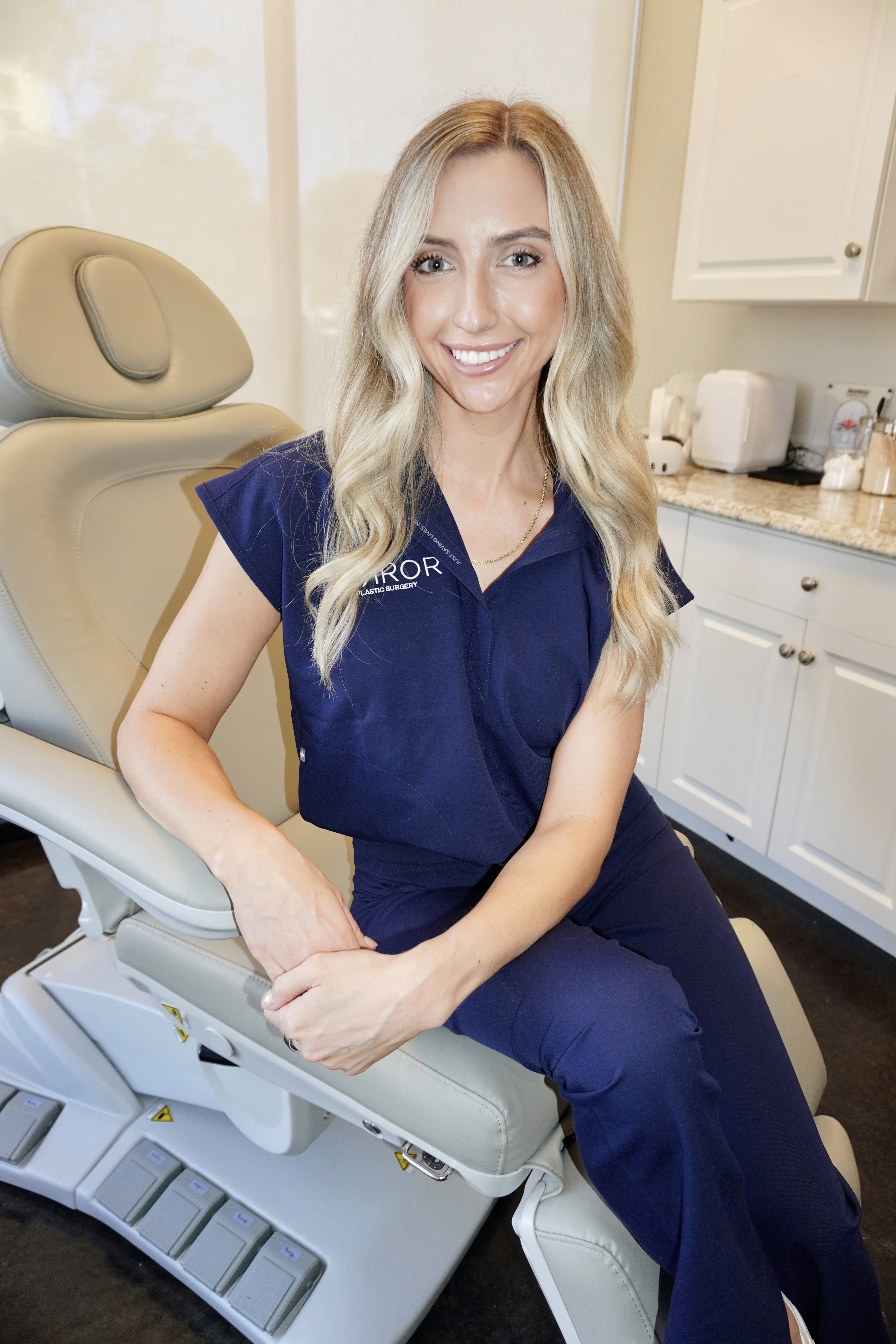
At Mirror Plastic Surgery, non-surgical and regenerative therapies are led by Ellie Pranckevicius, FNP-BC, a board-certified Family Nurse Practitioner with four years of experience in the Neuroscience ICU at Tampa General Hospital and advanced training in aesthetic medicine. Ellie builds individualized protocols based on a detailed evaluation.
Personalized Hair Restoration Plans And Consultation
Every hair restoration plan at Mirror Plastic Surgery begins with a detailed consultation. The team reviews your medical history, examines your scalp and donor area, and discusses your goals.
During this visit, you receive a customized treatment outline and a personalized quote based on your pattern, hair characteristics, and chosen therapies. This approach keeps planning transparent and tailored to your needs.
What To Expect: Recovery, Results, And Long-Term Outlook
Surgical Recovery Timeline
- Days 1–3: Swelling, scabbing, and tenderness are common. Most patients return to desk work within a week.
- Weeks 2–4: Transplanted hairs shed in a normal process called shock loss. This stage does not signal failure.
- Months 3–4: New growth starts to emerge from transplanted follicles.
- Months 6–9: Most patients see clear, visible improvement.
- Months 12–18: Final results become fully established.1
Non-Surgical Timelines
- Medications: Visible change usually appears within 3–6 months of consistent use.
- PRP: Density improvement builds over 3–6 months after the initial series. Ongoing maintenance helps sustain results.
What Happens 10 Years After A Hair Transplant?
Transplanted follicles are genetically resistant to DHT and follow the principle of donor dominance first described by Dr. Norman Orentreich in 1959. They keep the characteristics of their original site wherever they are placed. A 10-year retrospective analysis found that transplanted follicles in the frontal and mid-scalp zones maintained over 90% of their original density at the decade mark.1
The main long-term variable is the native hair around the transplant. Patients who stop medical therapy often see continued thinning in untreated areas, which can create contrast with the denser transplanted zone. Patients who stay on finasteride or minoxidil usually preserve a more even result. Ongoing follow-up with a qualified provider supports proactive adjustments over time.
Am I A Good Candidate? Age, Hair Loss Stage, And Donor Hair
Age does not limit hair restoration surgery. The International Society of Hair Restoration Surgery confirms there is no upper age limit, and men in their 50s, 60s, and 70s often achieve excellent results when they are healthy and have adequate donor hair.1 Several factors guide candidacy.
- Stability of hair loss: Many ethical surgeons look for 12–18 months of stability before surgery. Operating on rapidly changing loss can create unnatural patterns later.
- Donor hair quality: Surgeons assess follicular density, hair caliber, scalp laxity, and miniaturization in the donor zone. Around 80 follicles per square centimeter often serves as a common minimum threshold.
- Overall health: Cardiovascular status, healing capacity, and current medications, especially blood thinners, are reviewed during pre-operative screening.
- Realistic expectations: Surgery restores density in treated areas. Medical management still plays a role in slowing future native hair loss.
Over 58.7% of male surgical hair restoration patients fall between ages 30 and 49, which forms the core demographic. Younger patients with early or rapidly progressing loss often start with medical therapy to stabilize their pattern before surgery.
Choosing A Hair Restoration Provider In St. Petersburg: Questions To Ask
Choosing the right provider shapes your experience and your results. The questions below help you evaluate any practice you are considering.
- What are your credentials and specific experience in hair restoration surgery?
- Do you offer both surgical and non-surgical options, or will you refer me elsewhere for treatments outside your scope?
- How do you personalize treatment plans based on my hair loss pattern, donor area, and long-term goals?
- What is your approach to aftercare and long-term follow-up?
- Can I see before-and-after photographs of patients with a similar hair type, loss pattern, and skin tone at 12 or more months after treatment?
Here is how Mirror Plastic Surgery answers those questions for its St. Petersburg and Tampa Bay patients.
- Concierge philosophy: Consultations can last up to an hour and include one-on-one time with your provider. The practice limits itself to one to two surgeries per day to maintain focus before, during, and after each procedure.
- Expert team: Dr. Akash Chandawarkar leads surgical procedures. Ellie Pranckevicius, a board-certified FNP with Neuroscience ICU and aesthetic medicine experience, leads non-surgical and regenerative therapies.
- Safety-focused care: The team prioritizes patient well-being and designs every plan around safety and function, rather than procedural volume.
- Evidence-based communication: Guidance centers on current data and honest expectations, including clear explanations when a procedure does not align with your needs.
Your Hair Restoration Journey Starts Here
Hair restoration is a personal journey, and the right plan depends on your pattern, biology, goals, and timing. A thorough consultation with a qualified provider gives you a clear roadmap.
Mirror Plastic Surgery serves patients throughout St. Petersburg, Tampa Bay, and the surrounding Florida region with concierge-level care, expert medical supervision from Dr. Akash Chandawarkar and Ellie Pranckevicius, and personalized treatment plans that emphasize long-term outcomes.
Start your hair restoration journey with a personalized consultation at Mirror Plastic Surgery.
Mirror Plastic Surgery is located at 780 4th Ave S, St. Petersburg, FL 33701. Reach the team by phone at 727-361-6515 or by email at [email protected].
Disclaimer: Results may vary from person to person. Editorial content, before and after images, and patient testimonials do not constitute a guarantee of specific results.
Frequently Asked Questions
What Is The Best Method Of Hair Restoration?
No single method works best for every person. The ideal approach depends on the cause and pattern of hair loss, the quality and quantity of donor hair, lifestyle, and long-term goals. For patients with pattern hair loss and sufficient donor supply, FUE is the most widely performed technique because it leaves minimal scarring and allows versatile recovery. FUT remains useful for patients who need maximum graft yield in one session. Non-surgical options such as FDA-approved medications and PRP support early-stage loss, maintenance after surgery, and patients who prefer non-surgical care. A comprehensive evaluation by a qualified provider identifies the right combination for your situation.
Is 40 Too Old For A Hair Transplant?
Age alone does not disqualify anyone from hair restoration surgery. As mentioned earlier, the ISHRS confirms no upper age limit for surgery, and patients in their 40s, 50s, 60s, and beyond often achieve excellent outcomes when they are healthy and have adequate donor hair. Patients in their 30s and 40s often make strong candidates because their pattern is more established, which supports long-term planning. Pre-operative screening for cardiovascular health, medications, and healing capacity becomes more detailed after age 55, yet these factors usually guide preparation rather than block treatment. The key questions involve stability of loss, donor hair quality, and expectations.
How Long Do Hair Transplant Results Last?
Transplanted hair follicles are genetically resistant to the DHT that causes pattern loss, so they usually keep growing for life. As noted earlier, transplanted follicles retain over 90% of their density at 10 years.1 The main long-term variable is the surrounding native hair, which can keep thinning if you skip maintenance medications. Patients who stay on finasteride or minoxidil tend to preserve their overall aesthetic result more effectively. Long-term follow-up with a knowledgeable provider supports timely adjustments as your hair changes.
Why Should I Choose Professional Care Over At-Home Hair Loss Products?
At-home products such as laser caps, topical serums, and over-the-counter minoxidil can support a broader plan, yet they cannot match the precision of medically supervised care. Professional evaluation identifies the cause of hair loss, which guides which treatments are likely to work. A provider can assess donor hair, classify your pattern, order lab work, and design a protocol that targets the root mechanism.
Medically supervised PRP, for example, uses standardized protocols and is administered by a trained clinician. This allows for close monitoring and plan adjustments, a level of precision and accountability that no at-home device can match. For patients considering surgery, surgeon experience and graft-handling protocols strongly influence graft survival and long-term satisfaction.
Can Women Undergo Hair Restoration Surgery?
Women can undergo hair restoration surgery, although candidacy criteria differ from those for men. Female pattern hair loss often appears as diffuse thinning rather than a receding hairline. Many women with hair loss have diffuse unpatterned alopecia, in which the donor area also shows miniaturization, making surgical harvest unreliable.
Women who qualify for surgery usually have a stable, patterned loss with a well-preserved donor zone. Female surgical hair restoration patients now represent approximately 15% of all surgical hair restoration cases. Non-surgical options, including topical minoxidil (FDA-approved for women), PRP, and regenerative peptide therapies, often serve as first-line treatments and can create meaningful improvement when used consistently under medical supervision.
1 Results may vary from person to person. Editorial content, before and after images, and patient testimonials do not constitute a guarantee of specific results.
Peptide therapy is intended for wellness and optimization purposes and is not prescribed to diagnose, treat, cure, or prevent disease unless specifically stated. Many peptides are not FDA-approved and may be used off-label. Some have limited long-term safety data, with a potential for unknown risks, complications, or desensitization with prolonged use.