
Written by: Dr. Akash Chandawarkar, Board Certified Plastic Surgeon, Mirror Plastic Surgery | Last updated: September 9, 2026
Key Takeaways
- GHRP-2 and GHRP-6 remain banned under FDA Category 2 restrictions and cannot be legally compounded or prescribed in Florida as of 2026.
- Legal alternatives such as Sermorelin, Ipamorelin, CJC-1295, and Tesamorelin are available through physician-supervised consultations and licensed compounding pharmacies.
- A compliant Florida peptide consultation requires six documented steps: scheduling with a licensed physician, medical history review, baseline lab testing, personalized assessment, prescription, and ongoing medical oversight.
- Florida law (SB 1842) now mandates at least one in-person evaluation annually for telehealth peptide prescriptions, making fully remote providers non-compliant.
- Schedule your consultation at Mirror Plastic Surgery to receive safe, legal, and physician-led peptide therapy tailored to your muscle-maintenance goals.
The 2026 GHRP Ban: Why Your Old Approach No Longer Works
In February 2026, HHS Secretary Robert F. Kennedy Jr. announced that approximately 14 of the 19 peptides on the FDA’s Category 2 restricted compounding list would move back to Category 1, allowing compounding with a prescription. GHRP-2 and GHRP-6 were among the five peptides expected to remain restricted under Category 2, so they continue to be excluded from legal compounding in the United States.
The practical consequence is clear. As of August 2026, GHRP-2 and GHRP-6 remain on the FDA’s active Category 2 list and are not legally compoundable. A substance on this list is not legally compoundable while it remains there. Online retailers still selling these peptides operate illegally, and any clinic prescribing them exposes both itself and its patients to serious regulatory and health risk.
This ban applies specifically to these two peptides. Other growth hormone secretagogues remain available through supervised medical care, and Mirror Plastic Surgery can guide you through each step of that process.
What GHRP Peptides Are And Why GHRP-2 And GHRP-6 Were Banned
Growth Hormone Releasing Peptides (GHRPs) are short amino acid chains that stimulate the pituitary gland to release natural growth hormone. This supports muscle mass maintenance, recovery, and body composition.1 These peptides mimic ghrelin, a hormone that signals the pituitary to produce GH pulses, so they offer a targeted, physiologically grounded way to support the GH axis.
GHRP-2 and GHRP-6 were added to the FDA’s Category 2 list of bulk substances that may present significant safety risks on September 29, 2023, on immunogenicity and aggregation grounds, and they remain on the active list as of 2026. The FDA defines a Category 2 substance as one that “may be eligible for inclusion on the 503A bulks list” but for which the FDA “has identified significant safety risks relating to the use of these substances in compounding pending further evaluation.” A substance on this list is not legally compoundable.
AJMC’s coverage of the FDA’s peptide regulatory action and Holt Law’s 2026 regulatory analysis both confirm that this restriction applies to GHRP-2 and GHRP-6 rather than the entire class of growth hormone secretagogues. Legal alternatives remain available through a properly supervised consultation.
Start your legal peptide consultation with Ellie to explore safe options with a physician who follows current FDA guidance.
Florida Consultation Requirements For GHRP Peptides: The 6-Step Process
A compliant Florida peptide consultation follows a structured, documented process. Licensed Florida physicians can prescribe compounded peptides when they use them for legitimate medical purposes, supported by proper documentation, patient evaluation, informed consent, and ongoing monitoring. The six required steps are:
- Schedule a consultation with a board-certified Florida physician who specializes in peptide therapy and holds an active Florida medical license.
- Complete a comprehensive medical history review, including current medications, existing conditions, and specific muscle mass and fitness goals.
- Undergo required baseline lab testing, including IGF-1 levels, thyroid panel, liver and kidney function, fasting glucose, and hormone panels.
- Receive a personalized assessment of your candidacy and a discussion of permitted GHRP alternatives based on your labs and physiology.
- Obtain a prescription for a legal GHRP (for example, Ipamorelin or Sermorelin) dispensed by a licensed Florida compounding pharmacy with third-party batch testing.
- Receive detailed training on reconstitution, dosing, and self-administration, followed by ongoing medical supervision and repeat testing.
Permitted GHRP Alternatives For Muscle Mass In Florida
Several growth hormone secretagogues remain legally prescribable in Florida through licensed compounding pharmacies. Each option differs in mechanism, half-life, and suitability for specific health profiles. Your physician will match these characteristics to your labs, health history, and goals during a supervised consultation. The most commonly used permitted alternatives include:
- Ipamorelin: A GHRP-selective ghrelin mimetic that stimulates GH release with minimal impact on cortisol or prolactin, making it a preferred agent for patients on antipsychotics or chronic corticosteroids. It is often paired with CJC-1295 for a synergistic effect. Note that ipamorelin acetate currently appears on the FDA’s Category 2 list, so your physician will confirm the precise compoundable form and current regulatory status at the time of your consultation.
- Sermorelin: A GHRH analog, specifically a 29-amino-acid fragment of endogenous GHRH, that was FDA-approved as Geref for pediatric growth hormone deficiency and later withdrawn from the market for commercial reasons, not safety, and remains prescribable as a compounded medication. Many Florida peptide clinics use it for body composition, sleep, and recovery goals rather than as a narrow muscle-maintenance drug.
- CJC-1295: A GHRH analog with a longer half-life that can be combined with Ipamorelin for a synergistic approach to GH stimulation. CJC-1295 combined with Ipamorelin can produce a 50–100% IGF-1 rise over 3–6 months.1 Regulatory status should be confirmed with your physician at consultation, as the compounding landscape continues to evolve.
- Tesamorelin: The only FDA-approved GH secretagogue, indicated for HIV-associated lipodystrophy, with documented effects on visceral fat that may support muscle preservation in appropriate candidates.1
Sermorelin and Ipamorelin are the most commonly prescribed growth hormone secretagogues for muscle maintenance in Florida. Your protocol should always reflect your baseline labs and clinical picture rather than a generic, one-size-fits-all plan.
Required Labs And Medical Oversight For Safe Peptide Therapy
A responsible Florida physician orders baseline labs before prescribing any GHRP peptide. IGF-1 is the single most important test before starting any GH peptide protocol, serving as the best surrogate marker for GH axis activity because growth hormone is secreted in pulses, making a single serum GH reading clinically unreliable. The critical baseline tests include:
- IGF-1 levels to assess GH axis activity
- Thyroid panel (TSH, Free T3, Free T4), because hypothyroidism blunts pituitary GH secretion and reduces GH receptor sensitivity, so treating thyroid dysfunction before or alongside peptide therapy significantly improves outcomes.1
- Liver enzymes (AST, ALT, GGT), since liver dysfunction directly affects IGF-1 production, and a low IGF-1 in a patient with liver disease may reflect hepatic impairment rather than GH deficiency
- Fasting glucose and insulin to evaluate metabolic health and identify contraindications
- Comprehensive metabolic panel and CBC to round out your safety profile
Medical oversight protects your health as well as your legal standing. Gray-market peptide products from wellness clinics, online retailers, and vendors marketing vials as “for research use only” lack quality controls, sterility guarantees, and pharmacovigilance oversight. Independent lab testing has found bacterial contamination severe enough to cause septic reactions, along with heavy metal and solvent residue and doses below label claims.
The Florida Board of Medicine holds physicians to general standards of care, including documented diagnosis, informed consent, and appropriate follow-up. A physician who skips these steps falls short of that standard, and a patient who bypasses them takes on serious, avoidable risk.
Telehealth And In-Person Peptide Consultations In Tampa/St. Petersburg
Florida’s regulatory environment now places clear limits on telehealth peptide prescribing. Florida’s SB 1842, signed into law in March 2026, requires that patients receiving prescriptions for compounded peptides through telehealth have at least one in-person evaluation annually with a licensed physician in Florida, with enforcement beginning July 1, 2026. Telehealth-only providers that never require an in-person visit now operate outside Florida law, even if they advertise nationwide access.
SB 1842 also requires that the prescribing physician hold a Florida license, not merely interstate compact recognition, for any prescriptions for compounded peptides dispensed from a Florida-licensed 503A pharmacy. This change significantly affects out-of-state telehealth platforms that target Florida patients.
Mirror Plastic Surgery offers remote consultations across the United States. Tampa Bay residents also benefit from in-person consultations at the St. Petersburg office at 780 4th Ave S, St. Petersburg, FL 33701. An in-person visit with Dr. Akash Chandawarkar includes a thorough 30–60 minute assessment of your history, goals, and physiology and fully satisfies Florida’s in-person evaluation requirement while aligning with the practice’s concierge philosophy.
Schedule your in-person or remote visit with Dr. Akash to move forward within Florida’s current rules.
Cost Considerations And Red Flags To Avoid
Peptide therapy costs vary based on the specific peptide, dosage, and duration of your protocol. Mirror Plastic Surgery provides a personalized quote after the initial consultation so you understand the full investment before beginning treatment. Every patient’s protocol is unique, and pricing reflects that individuality.
When you evaluate any Florida peptide provider, watch for these red flags:
- Online retailers still selling GHRP-2 or GHRP-6, since these peptides remain on the FDA’s active Category 2 list and are not legally compoundable
- Clinics that prescribe peptides without requiring baseline lab work
- Providers who do not offer ongoing support or follow-up testing
- Telehealth-only services that never require an in-person visit, which now conflicts with Florida’s SB 1842
- “Research chemical” websites that sell peptides without a prescription, where many peptides are marketed as “for research use only” or “not for human consumption,” creating serious legal risks when promoted for health or medical benefits
- Providers who cannot name their compounding pharmacy or produce a lot-specific certificate of analysis, even though a legitimate clinic answers that question in one email
Choosing a supervised, licensed provider like Mirror Plastic Surgery protects your health and keeps your care aligned with both federal FDA rules and Florida’s SB 1842 requirements.
Why Mirror Plastic Surgery Is The Best Choice For Your GHRP Consultation
Mirror Plastic Surgery delivers concierge, physician-led peptide therapy for patients in the Tampa/St. Petersburg area. The practice focuses on safety, legality, and measurable results at every step:1
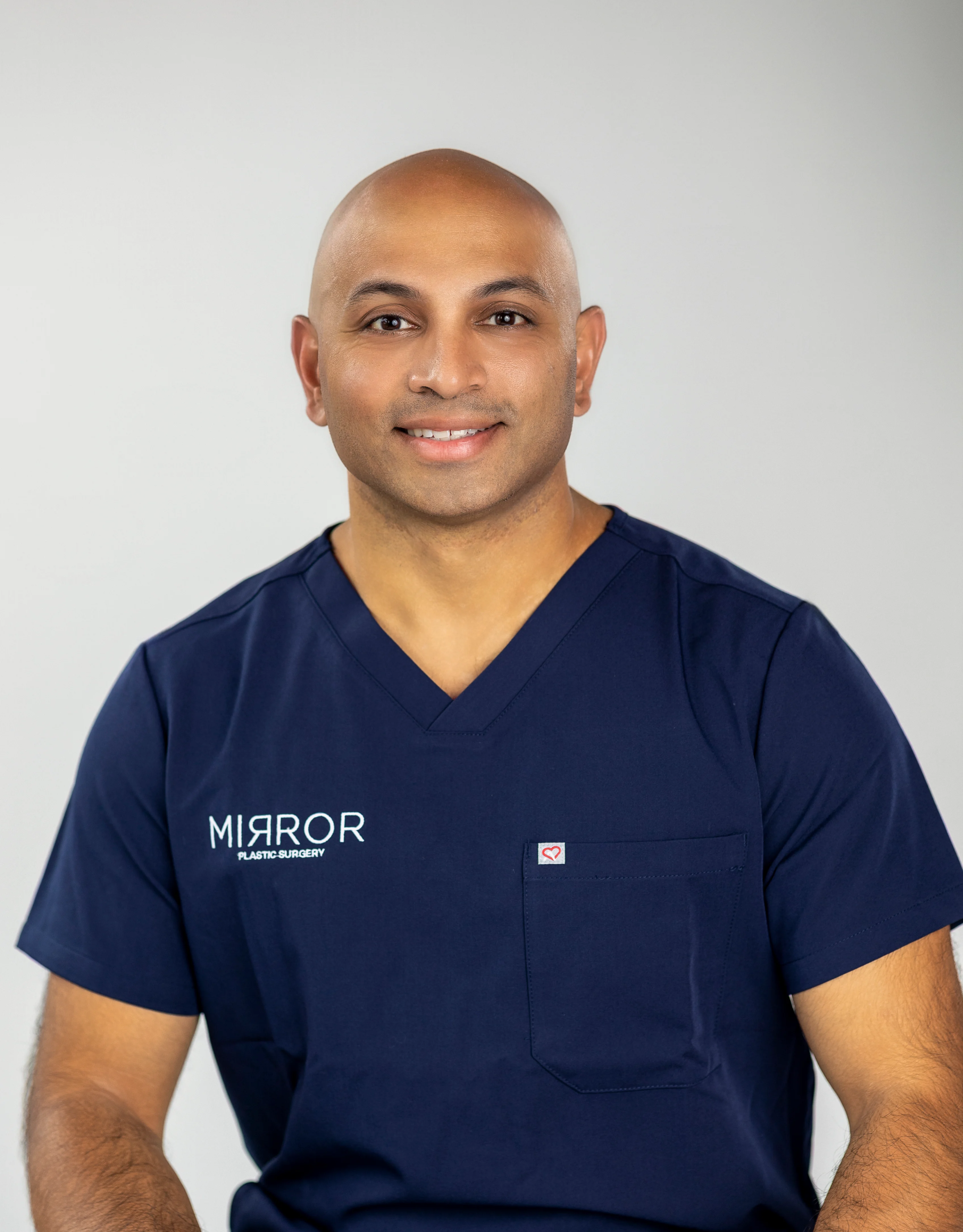
- Physician-Led Care: Dr. Akash Chandawarkar, MD, is board-certified by the American Board of Plastic Surgery, Harvard Medical School-educated through the Harvard-MIT Division of Health Sciences and Technology, and Johns Hopkins-trained through a seven-year integrated plastic and reconstructive surgery residency. He personally reviews every lab result and designs each protocol.
- Concierge Model: You get 30–60 minute consultations, 24/7 text access to Dr. Akash, and ongoing support throughout your treatment, which contrasts sharply with volume clinics that rush patients through questionnaires.
- Personalized Protocols: Custom peptide stacks reflect your labs, physiology, and goals. The practice avoids generic, one-size-fits-all regimens.
- Quality Sourcing: Peptides come exclusively from reputable compounding pharmacies with rigorous batch testing and certificates of analysis, which clearly separates compliant care from gray-market risk.
- Local Presence: In-person consultations at 780 4th Ave S, St. Petersburg, FL 33701, serve the entire Tampa Bay area and satisfy Florida’s SB 1842 in-person evaluation requirement.
- Innovation-Driven Perspective: Dr. Akash completed the Stanford University Biodesign Innovation Fellowship and brings a forward-looking, evidence-based approach to every protocol he designs.
Begin your safe, legal peptide therapy journey today and see how a tailored protocol can support your muscle-maintenance goals.1
Frequently Asked Questions
Are GHRP Peptides Legal In Florida In 2026?
GHRP-2 and GHRP-6 are banned under FDA Category 2 restrictions and cannot be legally compounded or prescribed in Florida. Permitted alternatives, including Sermorelin and, depending on specific forms and current regulatory status, Ipamorelin and CJC-1295, remain legally prescribable by licensed Florida physicians through compliant compounding pharmacies. The regulatory landscape continues to evolve, so working with a physician who tracks FDA guidance is essential. Your physician will confirm the exact legal status of each peptide at the time of your consultation.
What Peptides Can I Take For Muscle Mass After The GHRP-2 And GHRP-6 Ban?
Sermorelin is a widely used GHRH analog for body composition and recovery, as discussed earlier. Ipamorelin and CJC-1295 are also common options, although your physician must confirm their precise compoundable forms and current regulatory status. Tesamorelin, the only FDA-approved GH secretagogue, may suit select patients. The right choice depends on your baseline labs, health history, and goals, so a physician-supervised consultation is the necessary first step.
Do I Need Lab Work Before Starting Peptide Therapy?
Yes. A responsible physician orders baseline labs before prescribing any GHRP peptide. The minimum panel includes IGF-1, a thyroid panel (TSH, Free T3, Free T4), liver enzymes (AST, ALT, GGT), fasting glucose and insulin, and a comprehensive metabolic panel with CBC. IGF-1 is the single most important marker because it reflects integrated GH axis activity over the prior 12–24 hours and is far more clinically reliable than a random GH draw. These labs identify contraindications, establish your baseline, and allow your physician to design a protocol calibrated to your actual physiology.
Can I Do A Telehealth Consultation For Peptides In Florida?
Yes. Florida’s SB 1842, signed into law in March 2026 with enforcement beginning July 1, 2026, now requires at least one in-person evaluation annually for patients receiving compounded peptide prescriptions through telehealth. The prescribing physician must also hold an active Florida license, not just interstate compact recognition, for prescriptions dispensed from a Florida-licensed 503A pharmacy. Mirror Plastic Surgery offers both in-person consultations at its St. Petersburg location and remote consultations across the United States, so your care remains fully compliant with Florida’s current requirements.
What Are The Risks Of Buying Peptides Online Without Supervision?
Risks from unsupervised online peptide purchases are significant and well documented. Unregulated products lack quality control, sterility guarantees, and batch testing. Independent laboratory analysis of gray-market peptide products has found bacterial contamination severe enough to trigger septic reactions, heavy metal and solvent residue, and doses that fall well below label claims. Without a physician, no one screens for contraindications, monitors for side effects, adjusts dosing based on lab results, or checks for drug interactions. Buying peptides online also creates legal risk because prescription-only compounded peptides sold as “research chemicals” or “not for human use” occupy a gray market that Florida law does not permit for human therapeutic use.
Conclusion: Your Legal Path To Muscle Maintenance In Florida
The 2026 FDA restrictions on GHRP-2 and GHRP-6 closed the door on unregulated peptide use and created a clearer safety framework. Legal, effective alternatives remain available through supervised medical care, and the consultation process in Florida becomes straightforward when you work with the right physician: a licensed Florida MD, baseline labs, a personalized protocol, and ongoing oversight.
Mirror Plastic Surgery offers concierge, physician-led peptide therapy in the Tampa/St. Petersburg area. With Dr. Akash Chandawarkar’s credentials, protocols built on your lab results, and a commitment to sourcing only from compliant compounding pharmacies with verified certificates of analysis, you can maintain muscle mass with confidence while staying within the law.
Schedule your consultation and move forward with safe, legal peptide therapy when you are ready.
This article is for educational purposes and does not replace medical advice. Consult a qualified physician to determine if peptide therapy is right for you.
1 Results may vary from person to person. Editorial content, before and after images, and patient testimonials do not constitute a guarantee of specific results.
Peptide therapy is intended for wellness and optimization purposes and is not prescribed to diagnose, treat, cure, or prevent disease unless specifically stated. Many peptides are not FDA-approved and may be used off-label. Some have limited long-term safety data, with a potential for unknown risks, complications, or desensitization with prolonged use.