
Written by: Ellie Pranckevicius, FNP-BC, Aesthetic Nurse Practitioner & Aesthetic Injector | Facial Restoration & Regenerative Injectable Specialist, Mirror Plastic Surgery | Last updated: August 6, 2026
Key Takeaways for Natural, Long-Term Filler Results
- Match filler G-prime (stiffness) to the target tissue layer and depth to support natural movement and reduce stiffness or migration.1
- Limit volume to conservative amounts per session, then reassess at three weeks before adding more product to reduce gradual overfilling risk.1
- Start with one syringe or less for first-time patients, and focus on precise placement and tissue response instead of chasing full correction in one visit.
- Use supplier-neutral product selection and full-face proportion assessment so results follow your anatomy instead of a preset volume target.
- Schedule a consultation with Mirror Plastic Surgery to receive a personalized, staged filler plan that keeps your features balanced and proportionate.
How an Overfilled Face Actually Appears in Real Life
An overfilled appearance usually develops slowly across several sessions. It builds through repeated top-ups, mismatched product stiffness, and treating isolated areas without checking full-face balance. Common signs include round, apple-shaped cheeks that look inflated instead of lifted, loss of natural shadow under the cheekbone, and a “chipmunk” look when you smile.
Lip overfilling creates lips that look stiff or sausage-shaped, with loss of the natural Cupid’s bow. A visible shelf or ridge above the upper lip often appears when filler migrates beyond the vermilion border. Across the face, you may see uniform fullness with almost no natural shadows, sometimes called “pillow face” or “filler fatigue.” Many patients seek a new provider once they notice this pattern.
High cumulative filler volumes across the face can signal that additional injections now carry a higher risk of overfilling. Photo comparisons to images from one and three years earlier help reveal gradual changes that daily mirror checks miss because your eyes adapt over time.
Is One Syringe Enough for a Natural Start?
Understanding how overfilling develops makes starting volume especially important. For most first-time patients treating a single zone, one syringe or even half a syringe is the right starting point. The first session focuses on accurate placement, tissue response, and building a base for later refinement, not maximum correction. Ellie Pranckevicius, FNP-BC, structures every treatment plan around two non-negotiable rules: match G-prime to the tissue layer, and keep each session’s volume conservative with a three-week reassessment before adding more product.
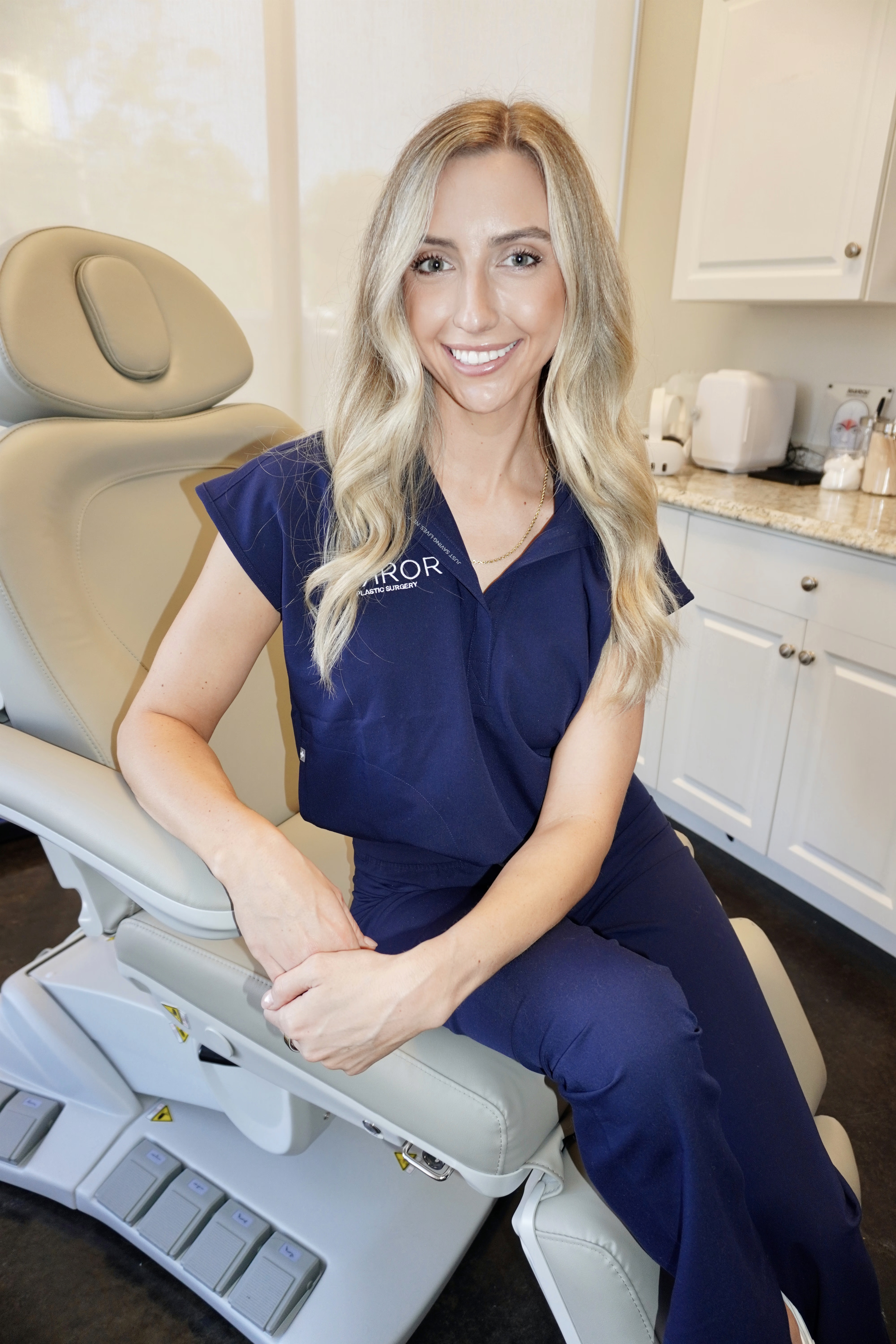
For first-time lip patients, volume usually stays between 0.5 and 1 mL per session. In patients in their 20s, Ellie uses conservative volumes for lips and chin when the goal is aesthetic enhancement rather than structural repair. Starting conservatively and reassessing sets the standard that prevents the slow buildup that creates an overfilled look.1
Schedule your full-face assessment to receive a staged treatment plan built around your anatomy, not a volume quota.
Matching Filler Stiffness to Each Facial Zone
G-prime (G’) describes how firmly a filler gel holds its shape when stressed. It is measured in Pascals (Pa) and reflects how much the gel resists deformation and then springs back. Matching G-prime to the tissue layer is the most critical technical choice in filler selection. Lower-G-prime products blend better in mobile, thin-skin areas such as the lips and tear troughs. Higher-G-prime products create lift and contour where the face needs structural support.
| Zone | Recommended G-prime Range | Tissue Depth | Rationale |
|---|---|---|---|
| Lips | 50–150 Pa (low) | Superficial dermis / submucosa | Soft, cohesive, pliable product supports natural movement. High G-prime creates firmness and poor long-term comfort. |
| Tear Troughs | <100 Pa (very low) | Pre-periosteal / deep dermis | Very thin skin needs low-hydrophilicity filler to avoid the Tyndall effect and ridging. Nasolabial-grade products carry the highest complication risk here. |
| Nasolabial Folds & Marionette Lines | 150–350 Pa (medium) | Mid-dermis | These folds move constantly, so filler must flex and recover during expression. High-G-prime structural products can look static and unnatural. |
| Cheeks / Midface | 350 Pa+ (high to very high) | Sub-SMAS / periosteal | Vertical lift and shape retention against tissue weight require high stiffness. Medium G-prime products tend to spread instead of projecting. |
| Jawline | 350–600 Pa (high) | Periosteal | The jawline needs firm support against gravity and facial movement. Calcium hydroxylapatite options can also stimulate long-term collagen. |
| Chin (periosteal) | >600 Pa (very high) | Periosteal | Projection, shape retention, and resistance to sideways spread call for the firmest available formulations. |
| Temples | 150–400 Pa (medium to medium-high) | Deep fat / sub-fascial | Precise placement matters because of the middle temporal artery. The product must resist drifting into nearby planes. |
Matching these specific G-prime needs across several facial zones requires access to a wide range of filler options. Because Mirror Plastic Surgery is a supplier-neutral practice, Ellie selects from products such as Juvederm, RHA, Versa, Restylane, Radiesse, and Evolysse based on which rheological profile fits your anatomy. Brand quotas and supplier incentives never drive these choices. This approach defines anatomy-first injection and separates it from volume-driven med-spa treatment.
Get your supplier-neutral product plan matched to your tissue layers and facial zones.
Starting Volumes by Area for Different Faces
Facial aging affects four main layers: bone, fat pads, muscle, and skin quality. Bone resorption, fat pad atrophy and shift, muscle tone loss, and collagen and elastin decline appear at different stages of life. Conservative starting volumes respect this layered complexity. An individualized plan must consider age, facial assessment, and anatomy together, because a 30-year-old and a 60-year-old rarely need the same depth or volume.
Ellie’s starting-volume framework by zone:
- Lips: 0.5–1 mL maximum per session for first-time patients.
- Tear troughs: A fraction of a syringe per side, followed by a two-week review before adding more product.
- Cheeks (30s–40s): 1–2 mL as a preventive starting point, and 2–4 mL for structural rebuilding in the 40s using deep-plane techniques.
- Nasolabial folds: 0.5–1 mL as a conservative starting volume.
- Jawline: 2–3 mL for structural framework, staged across sessions.
- Temples: 1–2 mL, placed with care because of nearby vessels.
The three-week reassessment allows the product to integrate fully, swelling to settle, and any asymmetry to show before more volume is considered. The same volume in the same location can look very different from one person to another because of underlying structure. Ellie’s hour-long top-to-bottom assessment reviews facial proportions, fat compartments, skin thickness, and symmetry before she selects any product.
Key Questions to Ask Any Filler Injector
Your outcome depends on how your injector makes decisions as much as on the filler itself. Before you proceed with treatment, ask:
- What is your anatomy training background? Injectors without formal medical or advanced nursing credentials may lack the subdermal knowledge needed for safe periosteal or sub-SMAS placement.
- How do you choose a filler for my specific area? A qualified injector should discuss tissue depth, G-prime needs, and your anatomy instead of using one brand for every zone.
- Are you supplier-neutral, or do you have brand quotas? Quota-driven practices may suggest products based on contracts rather than your facial structure.
- Do you perform a full-face proportion assessment before treating one area? Treating a single spot without viewing the whole face often leads to asymmetry and overfilling.
- What is your staged treatment protocol, and when do you reassess? Skipping a follow-up visit before adding more product increases cumulative volume risk.
- How do you track cumulative volume over time? Rising full-face filler totals provide an objective warning that further injections may tip into overfilling.
At Mirror Plastic Surgery, Ellie’s initial consultation can last up to an hour. She explores your motivations, long-term goals, full facial anatomy, and a structured diagnostic assessment before recommending treatment. She will tell you clearly if a procedure is not yet appropriate, which supports long-term trust that high-volume clinics rarely match.
Preventing Long-Term Volume Creep
MRI imaging studies show that hyaluronic acid fillers can remain in facial tissues for at least two years without fully breaking down. This duration is much longer than the often-quoted 3 to 12 months and means repeat treatments usually add to what is already present. Each session builds on a residual base that never fully cleared, which explains volume creep.
The overfilled look usually appears after several sessions. It stems from repeatedly treating the same area, ignoring facial proportions, layering too much product, and following social media trends instead of facial harmony.
Evidence-based maintenance principles to prevent volume creep:
- Use photo comparisons to images from one and three years earlier as an objective baseline. Daily observers adapt visually to gradual changes within weeks, so external photo review gives a more accurate picture of change and guides when treatment is truly needed.
- Treat only when a clear structural indication appears on those comparisons. Place small volumes in the correct anatomical planes and space sessions far enough apart to observe tissue response. This conservative rhythm ensures each visit addresses a real deficit rather than a perceived fade.
- Prioritize foundational restoration before adding volume. Ellie first addresses bone support, fat compartment loss, and skin quality so each syringe serves a defined anatomical purpose and avoids the rounded, heavy look seen in overfilled faces.
- Follow a structured maintenance schedule with planned reassessment instead of automatic top-ups. This structure keeps cumulative volume in check and aligns treatment with your long-term goals.
- Recognize when to pause. Warning signs include moving from yearly injections to quarterly visits and shifting from seeking improvement to feeling that previous results have “disappeared.” These patterns signal a need to reassess rather than add more filler.
Frequently Asked Questions About Filler Volume and Safety
Is 2 syringes of filler a lot?
Two syringes, or 2 mL, in a single session sit on the higher side for a first-time patient treating one or two zones. For a full-face plan spread across several sessions, 2 mL total is conservative and reasonable. Placement, depth, and staging matter more than the number alone. Two syringes used in staged sessions across the cheeks and jawline can create a natural structural result. Two syringes placed in the lips in one visit would overfill most patients.
Does cheek filler make you look older?
Cheek filler can make you look older when placed too superficially, chosen with too little G-prime, or used in excess. That combination creates a round, heavy midface. High-G-prime filler placed at sub-SMAS or periosteal depth, in conservative amounts, restores vertical projection and bony definition that fade with age.1 Matching product stiffness to the deep tissue layer and building structure before adding volume keeps the result lifted instead of puffy.1 Ellie’s method follows this sequence to support a younger, refreshed appearance.1
What is the best filler for older skin?
No single filler works best for all older patients. The right product depends on which tissue layer needs support. In patients in their 40s and beyond, bone loss, fat pad shift, and collagen decline often occur together. A layered plan usually includes high-G-prime structural fillers at periosteal depth for cheeks, chin, and jawline, medium-G-prime flexible fillers for dynamic folds, and low-G-prime soft fillers for fine lines and the periorbital area. Biostimulatory products such as Radiesse can also stimulate collagen over time and improve tissue quality, not just volume. Ellie selects from the full product range based on your anatomy instead of favoring a single brand.
Will one syringe of Voluma make a difference?
Juvederm Voluma XC suits midface volume restoration very well. One syringe placed strategically at the correct depth can create a visible yet natural improvement in cheek projection and midface support for mild to moderate volume loss.1 Patients with more advanced structural change often use the first syringe to establish a base for a staged plan. The three-week follow-up after that first syringe is the right time to decide whether more product is appropriate, not the treatment day itself.
How do you know if filler has migrated?
Filler migration shows up differently by area. In the lips, it appears as blurred vermilion borders, a ridge or shelf above the upper lip, and persistent uneven puffiness. Under the eyes, migration or overload looks like puffiness that extends into the lower eyelid or upper cheek and often appears worse in the morning. In the cheeks, displaced product can sit too far forward or too low, creating unnatural fullness. In many cases, what looks like migration is actually cumulative product buildup within compartments plus fluid retention from the hydrophilic filler. If you suspect migration, schedule an evaluation with a qualified injector who can examine the tissue by touch and, when needed, use imaging before placing any additional filler.
The Two Rules Behind Natural, Never-Overfilled Results
Every natural filler outcome depends on two core rules: proper G-prime matching and staged volume limits with reassessment.1 These rules come from evidence and anatomy, not personal style. They separate anatomy-first injection from volume-focused treatment.
At Mirror Plastic Surgery in St. Petersburg, Ellie Pranckevicius, FNP-BC, applies both rules within a concierge model. She begins with an hour-long full-face assessment, uses supplier-neutral product selection, and schedules a three-week follow-up before considering more volume. Your plan centers on your anatomy, your proportions, and your long-term goals instead of a syringe count.
Start your anatomy-first filler plan at Mirror Plastic Surgery, designed to keep your results natural over the long term.
Disclaimer: Results may vary from person to person. Editorial content, before and after images, and patient testimonials do not constitute a guarantee of specific results.
1 Results may vary from person to person. Editorial content, before and after images, and patient testimonials do not constitute a guarantee of specific results.