
Written by: Ellie Pranckevicius, FNP-BC, Aesthetic Nurse Practitioner & Aesthetic Injector | Facial Restoration & Regenerative Injectable Specialist, Mirror Plastic Surgery | Last updated: August 15, 2026
Key Takeaways
- Copper peptides GHK-Cu and AHK-Cu strengthen follicles by activating Wnt/β-catenin signaling, upregulating VEGF and IGF-1, suppressing TGF-beta1, and extending the anagen phase.
- Visible density improvements typically begin between weeks 8–12, with full results assessed at 16–24 weeks of consistent use.1
- GHK-Cu and minoxidil act on different biological pathways, so they can work together rather than replace each other.
- Topical copper peptides have a favorable safety profile but still require screening for Wilson’s disease, pregnancy, and copper metabolism disorders.
- Schedule a consultation with Ellie at Mirror Plastic Surgery to see whether a copper peptide protocol fits your hair restoration plan.
How GHK-Cu Reactivates Dormant Follicles
GHK-Cu can reactivate dormant follicles under specific biological conditions, with evidence from multiple research groups over three decades.
Animal studies show that topical GHK-Cu can increase hair follicle size and trigger follicles to move from telogen into anagen.1 Mouse models demonstrate anagen re-entry with histologic evidence of a larger dermal papilla area.1 In the 2007 Pyo et al. study, AHK-Cu (10^{-12}–10^{-9} M) stimulated elongation of human hair follicles ex vivo and proliferation of dermal papilla cells in vitro.1
The Wnt/β-catenin pathway sits at the center of follicle stem cell activation. A 2024 mouse study by Liu et al. used a GHK-Cu-loaded ionic liquid microemulsion and showed preclinical hair-growth effects.
Triggering follicles to re-enter anagen is only part of the story. Those follicles must also survive and function in a healthier environment once active. GHK-Cu supports that follicular environment through several parallel mechanisms:
- GHK-Cu stimulates VEGF, FGF-7/KGF, and IGF-1 through transcription factor activation in fibroblasts and dermal papilla cells, which supports perifollicular blood supply and extends anagen duration.
- GHK-Cu downregulates pro-inflammatory cytokines such as TNF-alpha and IL-6 and inhibits TGF-beta1, a cytokine that promotes perifollicular fibrosis and scarring around hair follicles.
- GHK-Cu reduces androgen receptor gene expression in human follicle dermal papilla cells, which may decrease follicle sensitivity to DHT without directly blocking the hormone.
- GHK-Cu upregulates IGF-1 in tissue culture models and activates PI3K/Akt and MAPK pathways in dermal papilla cells, promoting survival and resistance to apoptosis triggered by DHT or oxidative stress.
AHK-Cu, a related synthetic tripeptide (Ala-His-Lys), works through overlapping but distinct mechanisms. The 2007 Pyo et al. study also found that AHK-Cu reduced apoptosis and increased beta-catenin expression in dermal papilla cells, which helps explain its follicle-elongation effects.
For adults with inflammation-driven or age-related thinning, these pathways create a meaningful set of targets that differ from conventional pharmaceutical options.
Timeline: When Copper Peptides Strengthen Follicles
Response timelines depend on individual physiology, baseline follicle density, and whether copper peptides are used alone or with other therapies. The table below summarizes findings from published research and serves as a general framework rather than a guarantee.
| Timeframe | Expected Changes | Evidence Basis |
|---|---|---|
| Weeks 1–4 | Scalp gene activation; no visible change typical | Research suggests GHK-Cu can modulate follicle-cycling genes |
| Weeks 4–6 | Reduced shedding; improved scalp vitality | Early signs such as reduced shedding and improved scalp vitality may appear within 4–6 weeks |
| Weeks 8–12 | Initial density improvements; measurable shaft diameter changes | Small clinical studies of copper peptides showed a 30–40% increase in hair density over 2–6 months; most participants notice initial changes around weeks 8–121 |
| Weeks 16–24 | Sustained density gains; full assessment window | Small clinical trials have reported increases in hair-shaft density and reductions in daily shedding over 24 weeks1 |
These timelines assume consistent use, and discontinuation typically reverses gains within months for most patients, making ongoing maintenance essential regardless of where you fall in the 12–24 week assessment window. Lab results, hormonal status, and degree of follicle miniaturization all influence individual response.
Side Effects and Safety of Copper Peptides
Topical GHK-Cu has been used in cosmetic products with no serious adverse events documented in published literature, including clinical studies on aged skin. Across copper peptide studies, adverse events were limited to mild transient erythema in up to 12% of subjects, with no systemic toxicity reported.
Specific contraindications and monitoring considerations include:
- Individuals with Wilson’s disease or other copper metabolism disorders should avoid GHK-Cu until specific safety data is available, as the copper complex has affinity similar to albumin’s copper transport site.
- No safety data exists for GHK-Cu use during pregnancy or breastfeeding. The copper component raises additional concerns about excessive copper exposure, so use should be avoided unless benefits clearly outweigh unknown risks.
- Systemic administration of GHK-Cu has not been adequately studied in humans for safety or efficacy. Human systemic use should be considered experimental and limited to controlled research settings.
- GHK-Cu modulates over 4,000 human genes and affects pathways including collagen synthesis, metalloproteinase activity, immune cell attraction, and angiogenesis, which supports a cautious approach to systemic exposure.
Medical supervision allows pre-treatment screening of copper metabolism markers, current medications, and relevant lab panels. These safeguards are not available when peptides are sourced without clinical oversight.
Complete a safety screening with Ellie before starting any copper peptide protocol.
Copper Peptides Compared With Minoxidil
GHK-Cu and minoxidil address hair loss through different upstream mechanisms, which makes them potentially complementary rather than interchangeable.
Minoxidil remains the gold-standard first-line evidence-based agent for androgenetic alopecia, with FDA approval since 1988/1991 and numerous randomized controlled trials showing measurable regrowth after 4–6 months. GHK-Cu functions as a gene-modulating, angiogenic, anti-inflammatory agent that stimulates dermal papilla cells and promotes extracellular matrix remodeling. Minoxidil acts primarily as a vasodilator and potassium channel opener that extends the anagen phase.
While minoxidil has a larger evidence base, small clinical studies have shown improvements in hair density with GHK-Cu for androgenetic alopecia.1
These distinct mechanisms matter when considering combination therapy. Minoxidil and GHK-Cu both increase VEGF but through different upstream routes, with minoxidil acting through ATP-sensitive potassium channel opening and HIF-1α activation, and GHK-Cu directly stimulating VEGF gene expression. This pattern suggests potential additive effects when used together. Dermatologists report anecdotal success using minoxidil in the morning and GHK-Cu serum in the evening, although no published randomized trials on the combination exist.
GHK-Cu acts mainly on the follicular environment through repair, microcirculation support, and anti-inflammatory effects rather than directly countering DHT-driven miniaturization. This profile makes it a strong candidate for inflammation-driven or age-related thinning when layered onto established therapies.
The Glow Stack: Peptide Combination for Hair and Inflammation
Many adults aged 35–55 experience hair thinning that involves systemic inflammation, so treating only the scalp microenvironment may not be enough. Mirror Plastic Surgery’s Glow Stack addresses both local follicle biology and systemic inflammatory load through three complementary peptides.
The Glow Stack combines GHK-Cu, BPC-157, and TB500:
- GHK-Cu drives the follicle-specific mechanisms described throughout this article, including Wnt/β-catenin activation, VEGF upregulation, TGF-beta1 suppression, and dermal papilla cell survival.
- BPC-157 (Body Protective Compound 157) targets systemic inflammation affecting muscle, tendon, ligament, and joint tissue, which can reduce the inflammatory burden that impairs scalp health and follicle cycling.
- TB500 (Thymosin Beta-4) supports soft tissue repair and wound healing, complementing GHK-Cu’s extracellular matrix remodeling at the follicle level.
Experienced practitioners usually limit peptide stacks to 2–4 compounds to keep response tracking clear and maintain tolerability. They often start with a core compound and then add complementary layers one at a time. The Glow Stack follows this principle, with GHK-Cu as the primary follicle agent and BPC-157 and TB500 addressing the systemic environment that influences scalp health.
About Ellie Pranckevicius, FNP-BC
Peptide protocols at Mirror Plastic Surgery are led by Ellie Pranckevicius, a board-certified Family Nurse Practitioner with experience in both aesthetic medicine and advanced critical care. Ellie earned her Bachelor’s in Health Science from Boston University on the premedical track, completed an aesthetics licensure program, and obtained both her Bachelor’s and Master’s in Nursing from the University of South Florida. She spent four years in the Neuroscience ICU at Tampa General Hospital, where she managed complex patients and developed a deep understanding of physiology, metabolic health, and recovery capacity.
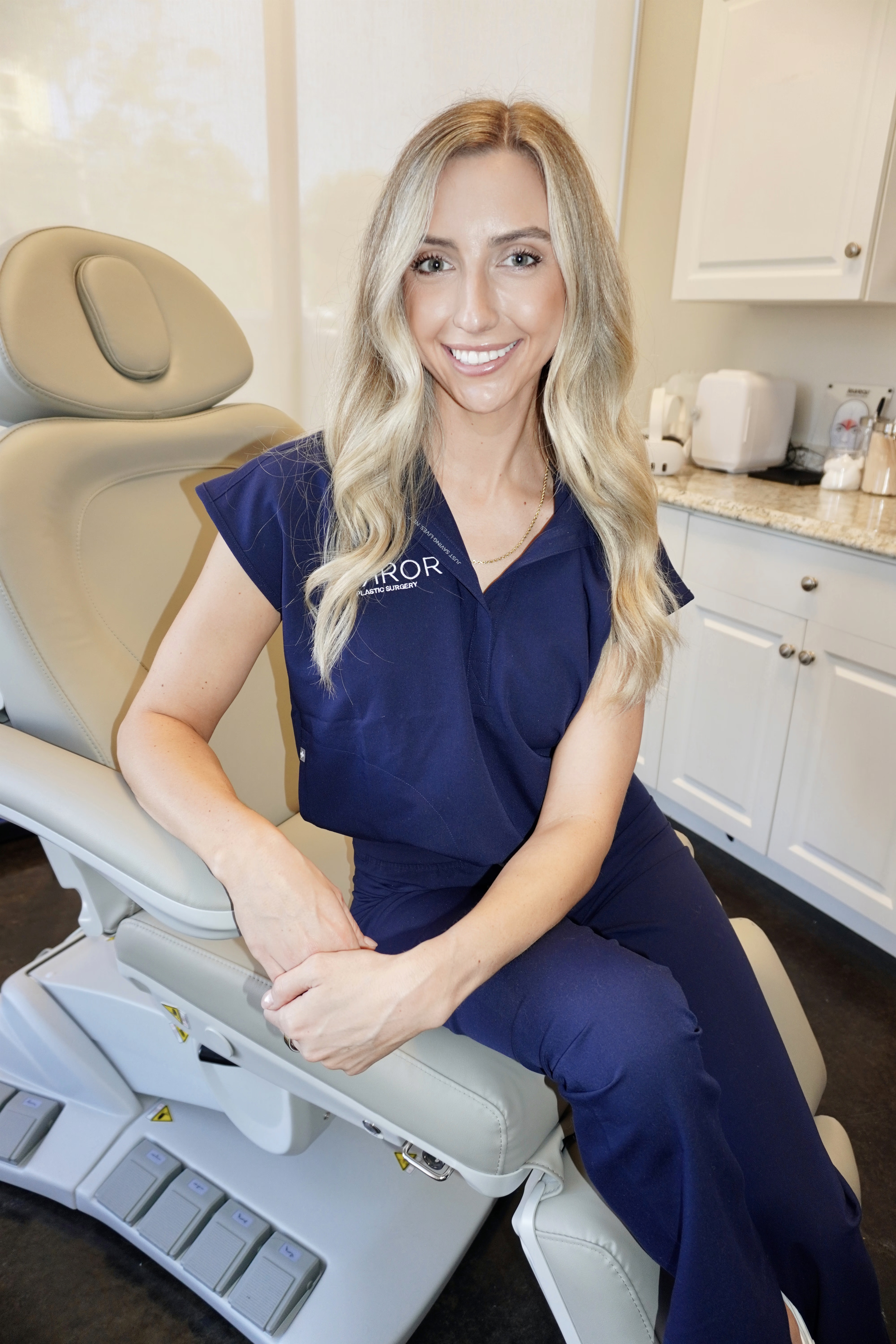
Ellie began her career at a high-end medical spa in Boston, which gave her a dual perspective that is uncommon in peptide practice. She understands the aesthetic outcomes clients want and the clinical science required to reach those outcomes safely. Her protocols start with education and clear explanations of the physiology behind each recommendation so clients know what they are taking and why. She also tells clients when a service or product is not yet necessary, prioritizing long-term outcomes over short-term revenue.
When a case calls for surgical input, Ellie collaborates with a Harvard-educated physician, a Johns Hopkins-trained plastic surgeon, and a fellowship-trained aesthetic surgeon at Manhattan Eye Ear & Throat Hospital/Lenox Hill Hospital.
Safety and Sourcing Checklist for Copper Peptides
The unregulated online peptide market carries risks that differ from the inherent risks of the peptides themselves. Contamination, inaccurate dosing, and lack of medical screening can turn an otherwise safe compound into a liability. The following checklist reflects the standards used at Mirror Plastic Surgery and the questions every prospective patient should ask before starting any copper peptide protocol.
- Batch testing documentation: Confirm that peptides come from suppliers who provide certificates of analysis with third-party batch testing for purity and accurate dosage.
- Pre-treatment lab review: Copper metabolism markers, hormone panels, and relevant inflammatory markers should be reviewed before starting GHK-Cu or a stacked protocol.
- Contraindication screening: Wilson’s disease, pregnancy, and active copper metabolism disorders are absolute contraindications that must be disclosed before any copper peptide is prescribed.
- Dosing supervision: Concentration, frequency, and delivery method (topical versus systemic) should match individual physiology, not generic online protocols.
- Maintenance planning: Copper peptide benefits fade without continued use. A supervised maintenance protocol helps prevent the reversal of gains that follows unsupervised discontinuation.
- Misconception check: Peptides are not only weight-loss agents. GHK-Cu, BPC-157, and TB500 support follicle biology, systemic inflammation control, and tissue repair, which differ from GLP-class metabolic peptides.
Frequently Asked Questions
Are copper peptides FDA-approved for hair loss?
No. GHK-Cu and AHK-Cu are not FDA-approved for any hair loss indication. Minoxidil holds FDA approval for androgenetic alopecia and remains the evidence-based first-line standard. Copper peptides are used off-label based on published cell culture, animal, and small human studies. The main risk with copper peptides often comes from unregulated sourcing without medical supervision, proper dosing guidance, or pre-treatment screening.
Can I use copper peptides if I am already using minoxidil?
The two agents target different biological pathways, with minoxidil acting mainly through vasodilation and potassium channel opening and GHK-Cu acting through dermal papilla cell signaling, VEGF gene expression, and TGF-beta1 suppression. Because their upstream mechanisms differ, combination use is considered potentially additive rather than redundant. No published randomized controlled trial has evaluated the combination directly, so any combined protocol should be supervised by a qualified practitioner who can monitor response and adjust dosing based on lab results and trichoscopic findings.
How do I know if my hair thinning fits what copper peptides address?
Copper peptides are most relevant for thinning patterns that involve scalp inflammation, perifollicular fibrosis, reduced microcirculation, or age-related follicle miniaturization rather than acute hormonal loss or scarring alopecia. A clinical assessment that includes trichoscopy, a review of inflammatory markers, and a hormonal panel can clarify whether the follicular environment is one that GHK-Cu can improve. Ellie’s consultation process at Mirror Plastic Surgery includes this individualized evaluation before any protocol is recommended.
What happens if I stop taking copper peptides after seeing results?
Copper peptide benefits do not remain permanent after discontinuation. The follicular environment, including perifollicular angiogenesis, TGF-beta1 suppression, and dermal papilla cell activity, gradually returns toward its pre-treatment state when the peptide is no longer present. This pattern matches most hair-loss interventions, where gains during active treatment require ongoing maintenance. A supervised maintenance protocol, usually at a reduced frequency compared with the induction phase, helps sustain results over time.
Is the Glow Stack appropriate for women experiencing hair thinning?
GHK-Cu does not affect DHT, testosterone, or estradiol, so it functions as a non-hormonal option for women who cannot or prefer not to use anti-androgenic agents. The Glow Stack’s combination of GHK-Cu, BPC-157, and TB500 targets follicle biology and systemic inflammation without hormonal interference. Women with female pattern hair loss, postpartum shedding, or inflammation-driven diffuse thinning may be candidates, although individual suitability depends on lab results, medical history, and the specific thinning pattern identified during consultation.
Conclusion: Building a Supervised Copper Peptide Plan
The evidence base for copper peptides in follicle health spans three decades of cell culture, animal, and human research. GHK-Cu and AHK-Cu strengthen follicles through Wnt/β-catenin activation, VEGF upregulation, TGF-beta1 suppression, dermal papilla cell survival, and extracellular matrix remodeling. These mechanisms differ from and may complement minoxidil.
Realistic timelines range from 8–24 weeks for measurable outcomes, with maintenance required to preserve gains. Safety appears favorable at cosmetic concentrations, but specific contraindications still require pre-treatment screening. The Glow Stack extends this approach to systemic inflammation through BPC-157 and TB500, addressing the broader physiological environment that shapes scalp health.
Supervised protocols that use batch-tested peptides, individualized lab review, and ongoing clinical oversight provide an evidence-aligned, lower-risk route to these outcomes.
1 Results may vary from person to person. Editorial content, before and after images, and patient testimonials do not constitute a guarantee of specific results.
Peptide therapy is intended for wellness and optimization purposes and is not prescribed to diagnose, treat, cure, or prevent disease unless specifically stated. Many peptides are not FDA-approved and may be used off-label. Some have limited long-term safety data, with a potential for unknown risks, complications, or desensitization with prolonged use.