
Written by: Ellie Pranckevicius, FNP-BC, Aesthetic Nurse Practitioner & Aesthetic Injector | Facial Restoration & Regenerative Injectable Specialist, Mirror Plastic Surgery
Key Takeaways
-
GHK-Cu copper peptides strengthen hair follicles through five distinct biological mechanisms, each supported by clinical evidence.
-
Clinical studies show increased hair density and reduced shedding within the typical 3-6 month improvement window under supervised treatment.1
-
Mirror Plastic Surgery’s Glow Stack combines GHK-Cu with BPC-157 and TB500 to support follicles and calm inflammation that contributes to hair loss.
-
Supervised protocols use pharmacy-compounded peptides, lab-based dosing, and ongoing monitoring, which reduces risk compared to unregulated online products.
-
Ready for evidence-based hair restoration? Schedule a consultation with Ellie at Mirror Plastic Surgery to discuss a tailored GHK-Cu plan.
Introduction: Why GHK-Cu Matters for Hair Loss
Hair loss affects confidence, daily routines, and long-term self-image. GHK-Cu copper peptides give many patients a science-backed option to strengthen existing follicles and slow progression.1 Mirror Plastic Surgery uses this peptide within a supervised medical program that focuses on safety, realistic expectations, and measurable results.
Meet Ellie Pranckevicius: Nurse Practitioner Leading Peptide Therapy
Ellie Pranckevicius, FNP-BC, leads peptide therapies at Mirror Plastic Surgery with a rare blend of esthetician training and advanced nursing expertise. She earned her Bachelor’s in Health Science from Boston University, completed rigorous aesthetics licensure, and obtained both Bachelor’s and Master’s degrees in Nursing from the University of South Florida.
Four years in the Neuroscience ICU at Tampa General Hospital gave her a deep understanding of physiology and metabolic health. Ellie teaches patients the science behind GHK-Cu and builds personalized protocols from comprehensive lab analysis that includes hormone and inflammation markers. Her experience with the Glow Stack combination therapy positions her as a trusted provider for follicle-strengthening treatments.
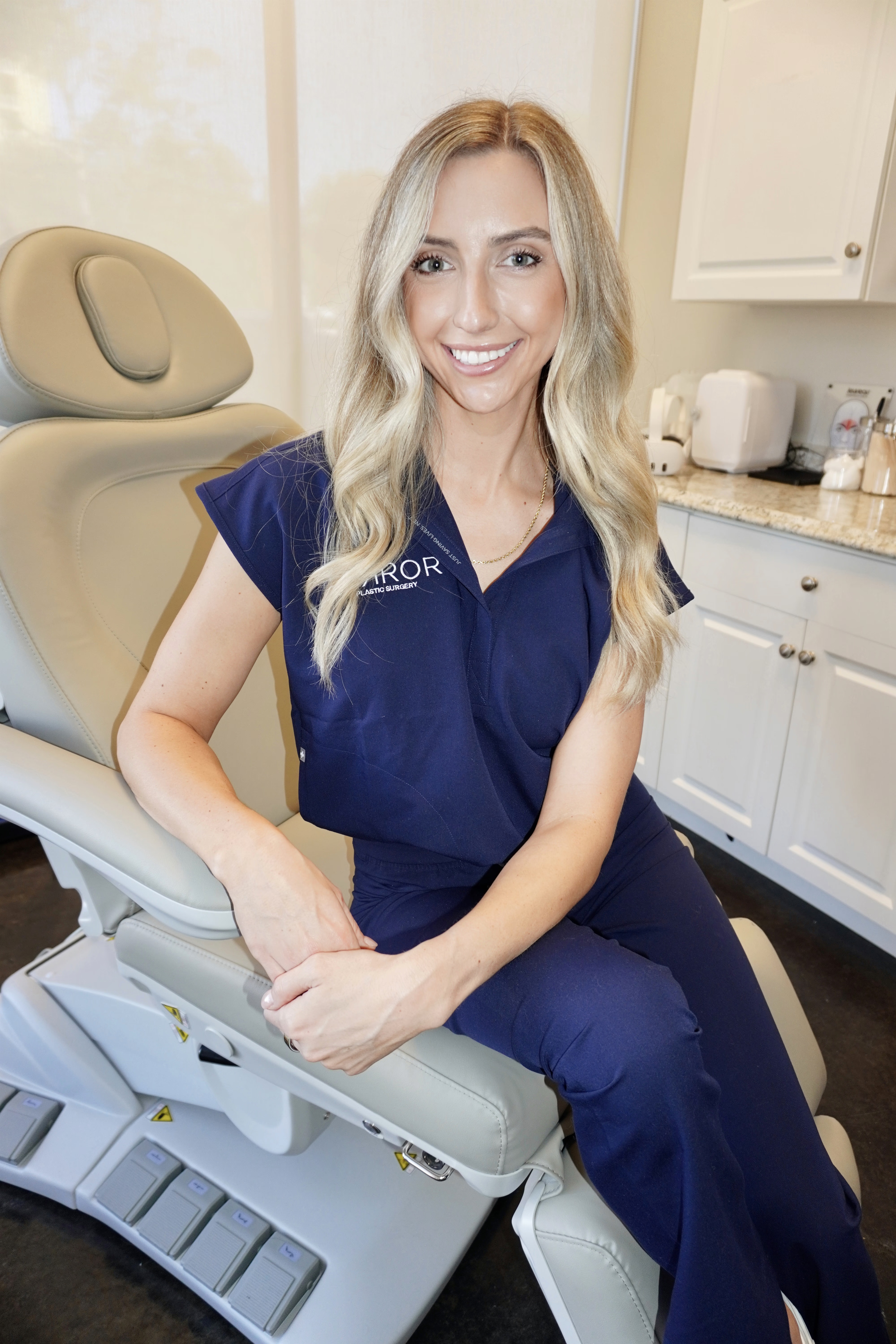
Ellie’s background helps explain why her GHK-Cu protocols focus on both scalp health and whole-body inflammation, rather than quick fixes or one-size-fits-all regimens.
Key Concepts: Copper Peptides and GHK-Cu for Hair Health
GHK-Cu is a bioavailable copper-peptide complex that works throughout the body, not just on the skin surface. This naturally occurring tripeptide strengthens hair follicles through enhanced collagen synthesis for structural anchorage, which helps follicles resist miniaturization. Beyond structural support, it reduces inflammatory markers like TNF-alpha and IL-6 and guides extracellular matrix remodeling to create a healthier environment around each follicle. The compound affects 31.2% of human genes, including those responsible for collagen synthesis and VEGF production for improved circulation, so follicles receive better blood flow and nutrient delivery.
Mirror Plastic Surgery’s Glow Stack combines GHK-Cu with BPC-157 and TB500 to pair follicle support with systemic anti-inflammatory and regenerative effects. This combination addresses both local follicle weakness and body-wide inflammation that can accelerate hair loss.
Schedule time with Ellie to review whether this approach fits your specific pattern of hair loss.
How GHK-Cu Strengthens Hair Follicles
GHK-Cu supports hair follicles through five primary mechanisms that work together over time. First, it stimulates dermal papilla cell proliferation, keeping the follicle’s “command center” active and resilient. Second, GHK-Cu enhances angiogenesis by triggering VEGF upregulation, which increases blood supply so follicles receive more oxygen and nutrients for keratinocyte proliferation. Third, the peptide increases the synthesis of collagen types I and III, along with elastin, to reinforce the dermal sheath around each follicle, giving hair a stronger anchor in the scalp.
Fourth, GHK-Cu provides anti-inflammatory support by suppressing pro-inflammatory cytokines like TNF-alpha and IL-6 and reducing oxidative stress from DHT or environmental damage. This protection helps preserve the newly strengthened follicle structure. Fifth, it activates the Wnt/β-catenin signaling pathway, which encourages follicles to shift from the resting (telogen) phase into the growth (anagen) phase.
Clinical evidence shows how these mechanisms translate into real-world outcomes. Studies report increased hair density and reduced shedding after several months of GHK-Cu use.1 However, one clinical trial found no significant change in individual hair shaft thickness with GHK-Cu treatment.1 This pattern suggests that GHK-Cu may increase the number of active follicles and reduce loss without always thickening each strand, which matters when setting expectations.1
The following timeline shows when patients usually notice each phase of improvement, which helps you plan and track progress during treatment.
GHK-Cu Treatment Timeline and Expected Outcomes
|
Phase |
Timeline |
Outcomes |
|---|---|---|
|
Initial |
4-6 weeks |
Shedding reduction (telogen purge phase)1 |
|
Noticeable |
3-6 months |
Density gains, visible coverage improvements1 |
|
Peak |
9-12 months |
Maximum follicle strength (Kuceki 2025: 26.5% regrowth)1 |
These mechanisms guide how Mirror designs protocols, since dosing and duration must match your inflammation levels, hormone profile, and follicle health. This connection is why Ellie begins each plan with detailed lab work and a full medical review.
Clinical Protocols for GHK-Cu and Glow Stack at Mirror
Mirror Plastic Surgery uses subcutaneous and intramuscular GHK-Cu delivery after a thorough consultation and laboratory review. The Glow Stack protocol combines GHK-Cu with BPC-157 and TB500 to target inflammation-driven hair loss through coordinated mechanisms. Unlike unregulated online sources that lack quality control and dosing guidance, Mirror’s protocols rely on pharmacy-compounded peptides with batch testing and individualized administration schedules.
Here is how Mirror structures treatment elements so patients receive both safety and consistent therapeutic exposure.
Sample Protocol Framework
|
Peptide |
Dose Range |
Cycle |
Administration Notes |
|---|---|---|---|
|
GHK-Cu |
Personalized based on labs |
Custom cycle per protocol |
SubQ injection, lab-guided dosing |
|
Glow Stack (BPC-157/TB500) |
Per lab results |
Custom loading phase |
Nationwide remote delivery |
Mirror Plastic Surgery provides US-wide shipping and 24/7 text access to Ellie for questions about reconstitution, injection technique, and ongoing monitoring.
Start with a labs-based protocol review to see how GHK-Cu and the Glow Stack can fit into your broader hair restoration plan.
Copper Peptides Side Effects for Hair: Risks and Safety
GHK-Cu shows a strong safety record in clinical use, with minimal side effects when used for hair growth, since it is naturally occurring, non-toxic, and effective at low concentrations. Common mild effects include temporary scalp tingling, slight burning, or redness right after application, which usually fades within minutes. Some users notice short-term increased shedding during a 2-4 week purging phase as telogen hairs are pushed out, which often signals a reset of the growth cycle.
The rare “copper uglies” phenomenon may cause temporary worsening of hair appearance due to elevated MMP-1 expression early in treatment. Contraindications include Wilson’s disease or other copper metabolism disorders, where copper accumulation can pose risks. Mirror’s supervised approach uses comprehensive lab screening and tested peptide batches to reduce these risks while preserving therapeutic benefit.
Common Misconceptions About GHK-Cu Hair Benefits
The most frequent misconception about GHK-Cu is that it creates new hair from completely dormant follicles, when it primarily strengthens and preserves existing ones. This preservation focus explains why results take time, with meaningful improvements usually appearing within the 3-6 month window rather than in a few weeks.1 To enhance this strengthening effect across the entire scalp, injectable formulations provide better systemic bioavailability than topical products, so the peptide can reach more follicles.
Because follicle health depends on inflammation, hormones, and circulation, GHK-Cu works best alongside other treatments instead of as a single solution. Mirror’s Glow Stack approach combines multiple peptides to address these overlapping factors, which supports more durable outcomes. Understanding these realities helps patients set realistic expectations and stay consistent through the full treatment course.
Frequently Asked Questions
How long does GHK-Cu take to work on hair?
GHK-Cu follows a predictable improvement pattern for most patients. Shedding often starts to decrease within 4-6 weeks as the hair cycle stabilizes and the telogen phase shortens.1 Noticeable gains in coverage and density usually appear between 3 and 6 months, which aligns with findings from clinical studies.1 Peak follicle strengthening and maximum visible benefit tend to show between 9 and 12 months of steady treatment.1 Genetics, health conditions, and adherence all influence this timeline, so supervised monitoring helps fine-tune the protocol as your response becomes clear.
Are copper peptides safe for follicles?
Copper peptides show strong safety when used under medical supervision. GHK-Cu occurs naturally in human plasma and works at physiological concentrations, which keeps toxicity risk low. Clinical trials report few adverse events, and most side effects are mild and short-lived. The main safety concerns involve copper metabolism disorders such as Wilson’s disease, allergies to copper or peptide components, and interactions with certain medications. Professional oversight allows for proper screening, quality-controlled sourcing, and dosing that balances safety with therapeutic goals.
How does GHK-Cu compare to minoxidil?
GHK-Cu and minoxidil support hair through different pathways that can complement each other. Minoxidil mainly increases blood flow to follicles and extends the anagen phase, which helps more hairs stay in the growth stage. GHK-Cu focuses on structural support through collagen production, anti-inflammatory action, and cellular protection, which helps preserve follicles over time. It also supports dermal papilla cell health, strengthens the extracellular matrix, and provides systemic anti-inflammatory effects that minoxidil does not address.
These differences matter when building a treatment plan, since minoxidil often improves growth speed while GHK-Cu improves follicle resilience. Many patients see better coverage and durability when both are combined under medical guidance1, because the two therapies support different aspects of follicle health.
Can I buy copper peptides online?
Online copper peptide products vary widely in purity, potency, and sterility, which creates real safety and effectiveness concerns. Unregulated sources may contain contaminants, inaccurate concentrations, or unstable formulations that fail to deliver consistent results. Medical supervision provides pharmacy-compounded peptides with batch testing, lab-based dosing, and structured follow-up to track response. This approach improves both safety and outcome reliability compared to self-directed use of unverified products.
What if inflammation causes my hair loss?
Inflammation-driven hair loss often responds well to GHK-Cu, especially when combined with other anti-inflammatory peptides in the Glow Stack protocol.1 GHK-Cu directly suppresses inflammatory cytokines like TNF-alpha and IL-6 while promoting tissue repair and follicle protection. Comprehensive lab work can uncover inflammatory markers, hormone shifts, and nutrient gaps that damage follicles over time. Ellie’s experience with inflammatory conditions allows her to design protocols that address these root drivers, which support more stable and lasting hair restoration.
GHK-Cu copper peptides provide science-backed follicle support through collagen synthesis, inflammation control, and improved circulation.1 Supervised protocols at Mirror Plastic Surgery tailor this therapy to your biology, medical history, and goals.
Take the first step toward stronger follicles by contacting Ellie at 727-361-6515 or hello@mirrorplasticsurgery.com to discuss comprehensive peptide therapy and nationwide treatment options.
1 Results may vary from person to person. Editorial content, before and after images, and patient testimonials do not constitute a guarantee of specific results.
Peptide therapy is intended for wellness and optimization purposes and is not prescribed to diagnose, treat, cure, or prevent disease unless specifically stated. Many peptides are not FDA-approved and may be used off-label. Some have limited long-term safety data, with a potential for unknown risks, complications, or desensitization with prolonged use.