
Written by: Ellie Pranckevicius, FNP-BC, Aesthetic Nurse Practitioner & Aesthetic Injector | Facial Restoration & Regenerative Injectable Specialist, Mirror Plastic Surgery | Last updated: July 27, 2026
What This Collagen Evidence Review Shows
- Oral collagen peptides deliver modest, statistically significant improvements in skin hydration and elasticity within 8–12 weeks and mild joint-pain relief within 12–24 weeks, with benefits reversing after discontinuation.1
- Effect sizes remain small to moderate, results vary widely between individuals, and industry-funded trials show bias, while independent data are more conservative.1
- Collagen peptides act as signaling molecules that stimulate fibroblasts and chondrocytes rather than simply providing amino-acid substrate, yet they are not a complete protein replacement.
- Advanced peptides such as GHK-Cu, BPC-157, and TB-500 operate through distinct mechanisms and require medical supervision, so they function as complementary rather than interchangeable options.
- For personalized guidance on collagen dosing, lab evaluation, or transitioning to a supervised peptide protocol, schedule a consultation with Ellie at Mirror Plastic Surgery.
Skin Outcomes in 2025–2026 Meta-Analyses
A 2025 systematic review and meta-analysis by Myung and Park in The American Journal of Medicine, pooling 23 RCTs with 1,474 participants, reported pooled improvements in hydration, elasticity, and wrinkle outcomes, yet concluded there was no clinical evidence to support collagen supplementation for preventing or treating skin aging.1 Critically, the hydration effect disappeared when the analysis was restricted to non-pharma-funded trials, which indicates meaningful industry-funding bias.
Independent RCT data are more conservative. An 8-week double-blind RCT found that oral collagen peptides can lead to improvements in wrinkle depth, skin texture, hydration, and elasticity versus placebo.1 A 2023 Nutrients meta-analysis of 26 RCTs (n=1,721) confirmed statistically significant hydration (Z=4.94, p<0.00001) and elasticity (Z=4.49, p<0.00001) improvements.1 Effect sizes across trials are modest, typically 10–20% improvement in measured parameters1, and the evidence base remains small, short-term, and inconsistent across studies. Despite these limitations, researchers have identified specific mechanistic pathways that explain the observed effects.
Reviews describe these pathways clearly. Oral collagen peptides can inhibit AP-1/MAPK signaling and downstream matrix metalloproteinases (MMP-1/3), which preserves dermal collagen. They also activate the TGF-β/Smad pathway to stimulate new collagen synthesis. Some evidence suggests that women over 40 may show more pronounced improvements in skin aging markers than younger participants, which is relevant for the primary audience of this review.
Expected Joint-Pain Relief From Collagen Peptides
Park et al. (2025) randomized adults aged 40–75 with grade I–II knee osteoarthritis to 3,000 mg/day collagen peptides or placebo for 180 days, and WOMAC pain was significantly reduced in the collagen group versus placebo (p=0.006).1 Demir-Dora et al. (2025) showed hydrolyzed collagen reduced WOMAC total scores in osteoarthritis patients after 8 weeks1, while placebo scores remained largely unchanged.
Most positive collagen-joint trials report modest effect sizes of 20–40% improvement over placebo in pain scores1. For comparison, structured quadriceps strengthening programs produce 40–60% pain improvement in knee osteoarthritis meta-analyses. No published collagen osteoarthritis trial has demonstrated structural cartilage repair via biopsy or advanced imaging, and hydrolyzed collagen peptides are not recommended as monotherapy and should not replace first-line therapies such as exercise, weight management, or topical NSAIDs.
Timelines and Doses Used in Collagen Trials
A 2019 randomized placebo-controlled trial showed that collagen peptides increased skin hydration and improved elasticity. Noticeable improvements in skin hydration appear within 4–6 weeks of daily use, with the elasticity and wrinkle improvements noted earlier becoming more pronounced at the 12-week mark1.
Joint timelines are longer. Cartilage has a low metabolic rate and no direct blood supply, so collagen peptides reach joint tissue via diffusion through synovial fluid, resulting in slower response times of 3–6 months versus 8–12 weeks for skin1.
Studied dosing ranges are:
- Skin elasticity and hydration: 2.5–5 g/day for 8–12 weeks
- Joint outcomes: 5–10 g/day of hydrolyzed collagen peptides (molecular weight 1–3 kDa) for 12–24 weeks
- Vitamin C cofactor: 200–500 mg/day required for fibroblast response regardless of collagen dose
Collagen Peptides vs Standard Protein
The objection that oral collagen is simply hydrolyzed protein is addressed by absorption data. Hydroxyproline-containing dipeptides and tripeptides, notably Pro-Hyp and Gly-Pro-Hyp, are absorbed intact into plasma and act as signaling molecules that stimulate fibroblasts and chondrocytes to increase endogenous collagen synthesis, beyond providing glycine, proline, and hydroxyproline substrate. After oral dosing of gelatin, bioavailability is 74–86%, with approximately 42% absorbed from the intestine as peptides. Tripeptides such as Gly-Pro-Hyp and Pro-Hyp can transfer into skin tissue.
Standard dietary protein does not deliver these specific hydroxyproline-containing sequences in meaningful concentrations. However, collagen peptides are low in tryptophan and do not serve as a complete protein source for muscle protein synthesis, so they are not a protein supplement replacement.
What Happens After You Stop Collagen
Discontinuation leads to a gradual return to baseline over 4–8 weeks, and 20–30% of study participants show minimal response even during active supplementation1. Multiple independent RCTs showed gains largely retained at a 4-week follow-up after cessation1, but longer-term reversal data are limited. Long-term safety and sustained efficacy beyond 24 weeks are not well established. A maintenance protocol or transition to a more targeted intervention is typically required to preserve outcomes.
Collagen Peptide Outcomes Across Independent Studies
| Outcome | Effect Size | Study Length | Quality Rating |
|---|---|---|---|
| Skin hydration | Improvement vs. placebo (2026 RCT) | 8 weeks | Double-blind RCT; independent funding |
| Skin elasticity | Significant pooled effect, Z=4.49, p<0.00001 (2023 meta-analysis, n=1,721) | 8–12 weeks | Meta-analysis of 26 RCTs; mixed funding |
| Wrinkle depth | Reduction vs. placebo (2026 RCT) | 8 weeks | Double-blind RCT; independent funding |
| WOMAC joint pain (OA) | Reduction vs. placebo (Park 2025) | 24 weeks | Double-blind RCT; grade I–II OA population |
| VAS/WOMAC pooled (OA) | Statistically significant improvement vs. placebo (2024 BMC meta-analysis, n=3,165) | 12–24 weeks | Meta-analysis of 35 RCTs; mixed funding |
Review your lab results with Ellie to determine whether oral collagen, an advanced peptide protocol, or a combination approach is appropriate for your goals.
Collagen Peptides vs Advanced Peptides Like GHK-Cu, BPC-157, and TB-500
Oral collagen peptides and advanced supervised peptides operate through fundamentally different mechanisms and require different oversight levels.
GHK-Cu stimulates both collagen and elastin production in human dermal fibroblasts at concentrations as low as 0.01 nM, while simultaneously upregulating MMP-1 and MMP-2 to clear damaged collagen and TIMP-1 to prevent excessive degradation. Plasma GHK levels decline approximately 60% from ~200 ng/mL at age 20 to ~80 ng/mL at age 60, which makes targeted replenishment clinically relevant. Critically, GHK-Cu is poorly absorbed orally because digestive enzymes break it down before systemic action. Effective delivery requires topical, sublingual, or buccal administration under clinical guidance.
BPC-157 targets systemic inflammation and musculoskeletal repair, including muscle, tendon, ligament, and joint tissue, through pathways distinct from collagen substrate delivery. TB-500 (Thymosin Beta-4) addresses soft tissue inflammation and wound repair. These mechanisms are not replicated by oral collagen supplementation. Oral collagen provides systemic substrate and signaling, while targeted peptides such as GHK-Cu provide local, concentrated fibroblast stimulation, so the two approaches function as complementary rather than interchangeable.
Advanced peptides such as GHK-Cu, BPC-157, and TB-500 are not FDA-regulated and require individualized lab evaluation, proper sourcing with batch testing, and ongoing clinical supervision to be used safely and effectively. This level of oversight is what Mirror Plastic Surgery provides through its concierge peptide program.
Explore the Glow Stack with Ellie to determine whether GHK-Cu, BPC-157, and TB-500, or another supervised peptide protocol, is appropriate for your skin, joint, or systemic inflammation goals.
Your Peptide Specialist at Mirror Plastic Surgery
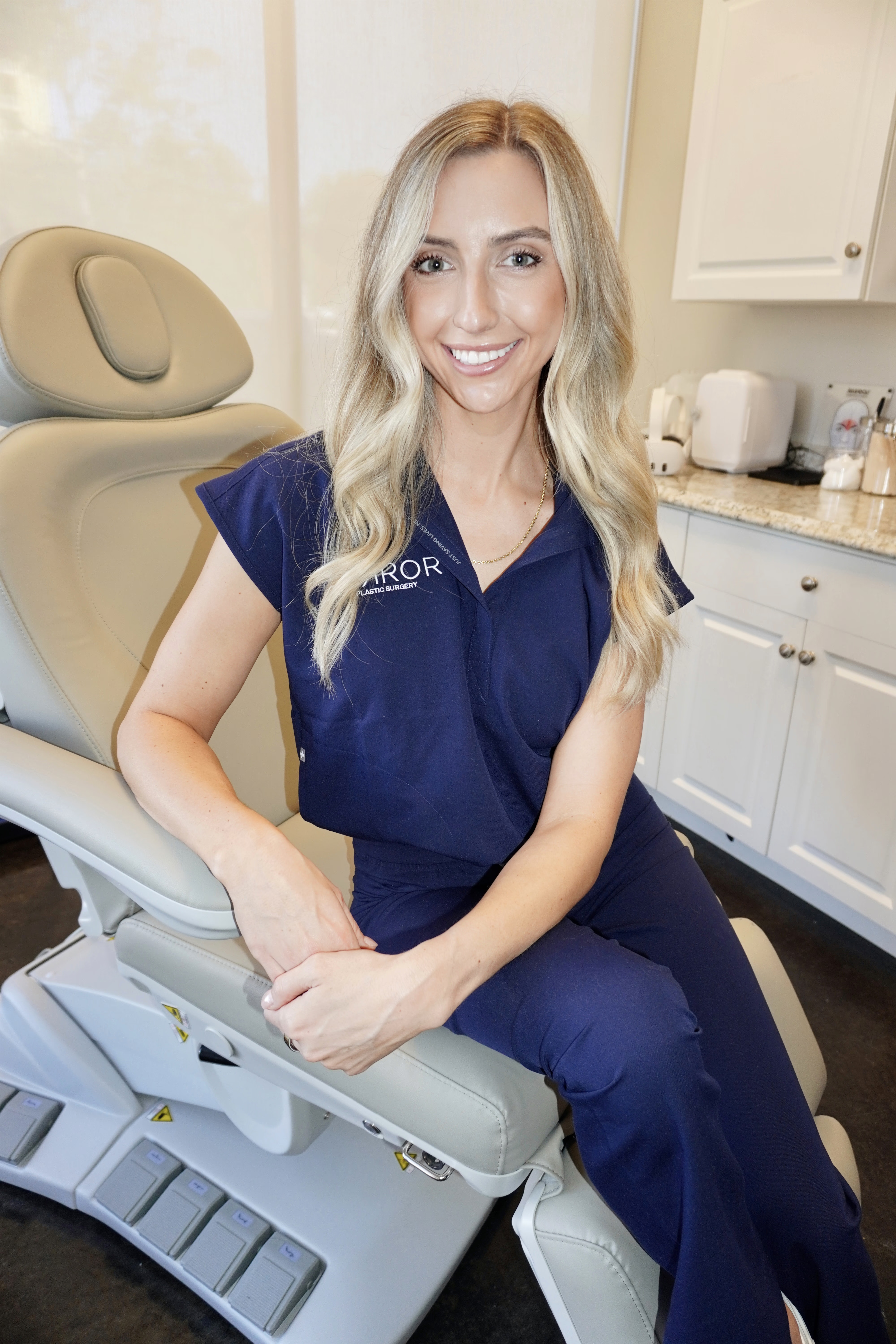
Peptide therapies at Mirror Plastic Surgery are led by Ellie Pranckevicius, FNP-BC, a board-certified Family Nurse Practitioner with a Bachelor’s in Health Science from Boston University, and both a Bachelor’s and Master’s in Nursing from the University of South Florida. Four years in the Neuroscience ICU at Tampa General Hospital gave Ellie a clinical foundation in physiology, metabolic health, and recovery that directly informs her peptide protocols. Her dual expertise in skin physiology and advanced nursing allows her to evaluate both the aesthetic outcomes patients want and the clinical science required to achieve them safely. Every protocol is preceded by a comprehensive consultation that may include lab panels, and patients receive direct concierge access to Ellie throughout their care.
Decision Framework: Continue Collagen, Escalate, or Focus on Lifestyle
The following criteria can guide the appropriate path for adults researching collagen peptide efficacy.
- Continue oral collagen peptides if you are within the first 8–12 weeks of a 2.5–10 g/day hydrolyzed collagen protocol with adequate vitamin C, sourcing from a batch-tested, third-party verified supplier, and experiencing measurable improvement in skin hydration or mild joint comfort.
- Escalate to supervised advanced peptide therapy if oral collagen has produced minimal response after 12 weeks, if your goals include systemic inflammation reduction, accelerated tissue repair, or targeted skin rejuvenation beyond hydration, or if you want lab-guided individualization rather than a generic supplement dose.
- Prioritize lifestyle factors first if first-line therapies such as structured exercise and weight management have not yet been optimized. Quadriceps strengthening alone produces the superior outcomes noted earlier, exceeding the 20–40% seen with collagen supplementation.
Get your personalized assessment that includes your medical history, relevant lab panels, and a tailored protocol, whether that means refining your current collagen regimen or transitioning to a supervised advanced peptide stack.
Frequently Asked Questions
Are collagen peptides FDA-approved?
Hydrolyzed collagen holds GRAS (Generally Recognized as Safe) status as a dietary supplement in the United States, but it is not FDA-approved as a treatment for any medical condition, including skin aging or osteoarthritis. No New Drug Application has been submitted. This means collagen peptide products are not subject to the same pre-market efficacy and safety review as pharmaceuticals. Product quality, peptide size, source animal, and third-party testing standards vary significantly across brands, and no universal standard exists for purity or optimal dosage. Sourcing from a supplier with documented batch testing is essential to ensure you are receiving the labeled dose of active peptide.
Is it safe to use collagen peptides without medical supervision?
Oral hydrolyzed collagen peptides are generally well-tolerated at daily doses of 2.5–15 grams, with possible side effects including mild digestive discomfort, headaches, or lightheadedness in a minority of users. Marine-derived collagen can trigger reactions in individuals with fish or shellfish allergies, and bovine or porcine sources may conflict with dietary restrictions. Added ingredients such as biotin in some collagen formulas can interfere with laboratory assays, including thyroid and cardiac tests. Long-term safety beyond 24 weeks is not well established. Individuals who are pregnant, breastfeeding, have kidney disease, gout, or complex medical conditions should consult a clinician before use. Advanced peptides such as GHK-Cu, BPC-157, and TB-500 carry a different risk profile and require medical supervision, lab screening, and quality-verified sourcing, conditions that Mirror Plastic Surgery’s concierge program is specifically designed to meet.
Why do some people see results with collagen peptides while others do not?
Response variability is well documented. Between 20–30% of study participants show minimal response even during active supplementation. Factors that influence outcomes include dose, since many commercial products provide only 1–5 g per serving, below the 10 g/day used in most positive joint trials. Duration also matters, because at least 8–12 weeks of consistent daily use is required for skin endpoints and 12–24 weeks for joint endpoints. Collagen source and molecular weight, vitamin C status, age, genetics, and baseline collagen levels also play roles. Women over 40 have shown more pronounced improvements in clinical trials, likely because collagen levels can decrease as much as 30% in the five years following menopause. A personalized evaluation that accounts for these variables, rather than a one-size-fits-all supplement dose, produces more predictable outcomes.
How do I know if I should move from oral collagen to a supervised peptide protocol?
Oral collagen supplementation is a reasonable starting point for adults with mild skin hydration concerns or early joint discomfort who are using a batch-tested product at an evidence-supported dose. Escalation to a supervised protocol is appropriate when oral collagen produces insufficient results after a full 12-week trial, when goals extend beyond hydration and mild comfort to include systemic inflammation, tissue repair, or more targeted anti-aging outcomes, or when an individual wants lab-guided individualization. Mirror Plastic Surgery’s concierge peptide program begins with a comprehensive consultation and, where indicated, lab panels to identify root causes and build a custom protocol. Ellie Pranckevicius provides ongoing direct support throughout the treatment journey, including guidance on reconstitution, self-administration, and protocol adjustments.
Medical Disclaimer: The information in this article is for educational purposes only and does not constitute medical advice, diagnosis, or treatment. Collagen peptides are dietary supplements and are not FDA-approved treatments for any medical condition. Advanced peptides discussed herein are not FDA-regulated. Individual results vary. Consult a qualified healthcare provider before beginning any supplementation or peptide therapy program, particularly if you have a pre-existing medical condition, are pregnant or breastfeeding, or are taking prescription medications. Mirror Plastic Surgery’s peptide therapies are provided under medical supervision following individualized consultation and, where appropriate, laboratory evaluation.
1 Results may vary from person to person. Editorial content, before and after images, and patient testimonials do not constitute a guarantee of specific results.
Peptide therapy is intended for wellness and optimization purposes and is not prescribed to diagnose, treat, cure, or prevent disease unless specifically stated. Many peptides are not FDA-approved and may be used off-label. Some have limited long-term safety data, with a potential for unknown risks, complications, or desensitization with prolonged use.