
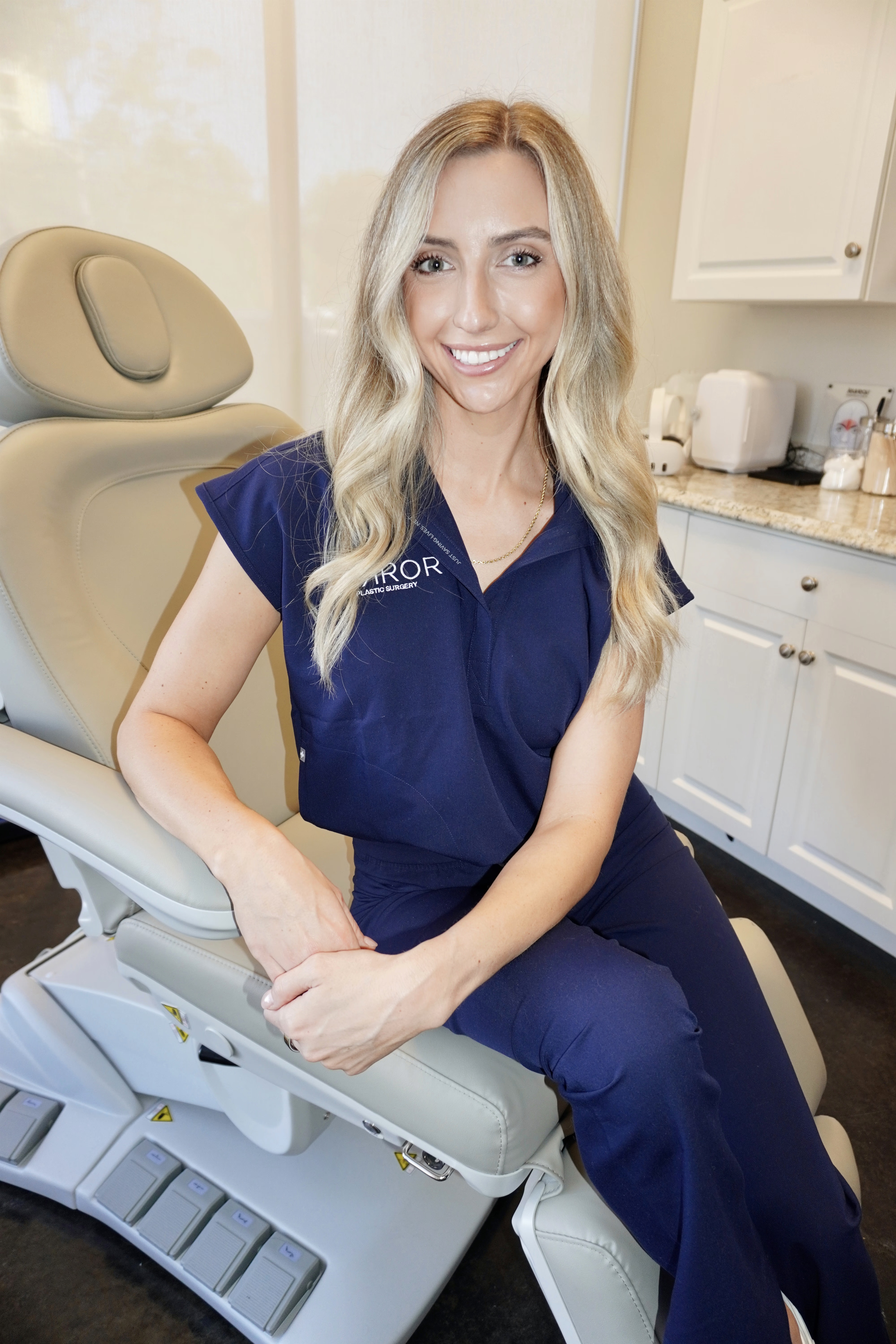
Written by: Ellie Pranckevicius, FNP-BC, Aesthetic Nurse Practitioner & Aesthetic Injector | Facial Restoration & Regenerative Injectable Specialist, Mirror Plastic Surgery | Last updated: September 5, 2026
Key Takeaways
- Body composition, the ratio of fat to lean mass, is a more meaningful health indicator than scale weight alone.
- Nutrition fundamentals, including a moderate calorie deficit, adequate protein, and high-quality whole foods, drive most body-composition change.
- Resistance training with progressive overload, combined with 150–300 minutes of moderate cardio weekly, supports fat loss while preserving muscle.
- Sleep, stress management, and consistent tracking such as waist circumference, DEXA, and photos shape long-term success.
- When diet and exercise stall, medically supervised peptide therapy at Mirror Plastic Surgery can provide a personalized, evidence-based boost.
Step 1: Why Body Composition Matters More Than Weight
BMI and scale weight are blunt instruments. Two people can share the same BMI while having very different fat-to-muscle ratios and health outcomes. High body fat percentage, even at a normal weight, is associated with metabolic syndrome and cardiovascular disease. Greater muscle mass elevates resting metabolic rate, improves insulin sensitivity, supports bone density, and preserves functional strength across the lifespan.
Body composition also changes with age in predictable ways. Muscle loss accelerates after age 30. The European Association for the Study of Obesity’s 2025 position statement highlights that sarcopenic obesity, the coexistence of excess fat and low muscle mass, is associated with synergistic worsening of clinical outcomes, including increased risk of dysmetabolic diseases and all-cause mortality. Tracking and improving body composition is therefore a clinical priority, not an aesthetic pursuit alone.
Step 2: Master the Nutrition Fundamentals
Nutrition is the primary lever for body composition change. Three variables govern outcomes: total calorie intake, protein quantity, and food quality.
Calorie intake: A moderate deficit of 300–500 calories below maintenance supports fat loss while limiting muscle breakdown. Aggressive restriction accelerates muscle breakdown and impairs recovery. It also triggers a metabolic adaptation. Losing approximately 10% of body weight reduces non-exercise activity thermogenesis by about 200–500 calories per day, which makes further progress harder.
Protein intake: The Morton et al. 2018 meta-analysis pooled 49 randomized trials with 1,863 participants. It identified a dose-response breakpoint at approximately 1.62 g of protein per kilogram of body mass per day for maximizing muscle hypertrophy, with a 95% confidence interval extending to approximately 2.2 g/kg/day. During a caloric deficit, higher intakes of 2.0–2.4 g/kg are beneficial for preserving lean mass. Total daily protein intake matters more than timing or source.
Protein distribution: The evidence-based practical framework recommends distributing total daily protein across three to five meals, each containing 0.4 to 0.55 g/kg of high-quality protein. For an 80 kg individual, that translates to roughly 30–45 g per meal across four meals.
Step 3: Structure Your Training for Muscle Gain and Fat Loss
Training design determines how much muscle you gain and how much you keep while losing fat. Resistance training provides the primary stimulus for muscle growth and preservation.
Resistance training: Resistance training alone reduces body fat percentage by -1.46% compared to no exercise in healthy adults, while combining it with caloric restriction reduces body fat percentage by -3.8% and fat mass by -5.3 kg.1 These combined strategies produce substantially greater results. To achieve these benefits, aim for two to four sessions per week focusing on compound movements such as squats, deadlifts, presses, and rows as the foundation of an effective program.
Progressive overload: Simply maintaining the same routine will not drive continued adaptation. Systematically increasing weight, reps, or volume is essential. Many people plateau because intensity and volume do not increase over time.
Cardiovascular exercise: A 2024 systematic review and dose-response meta-analysis of 116 trials published in JAMA Network Open found that 150–300 minutes per week of moderate-intensity aerobic exercise is the optimal target for meaningful fat loss. Resistance training remains the key modality for muscle preservation during a deficit, so cardio should complement, not replace, lifting.
Step 4: Align Lifestyle Habits With Your Body Composition Goals
Nutrition and training account for a large share of body composition outcomes. Lifestyle factors determine whether those inputs translate into real-world results.
Sleep: Seven to nine hours of sleep per night supports hormonal regulation, recovery, and metabolic health. Growth hormone secretion is tightly coupled to sleep onset. Disrupted sleep undermines both muscle repair and fat metabolism.
Stress management: During caloric restriction, adaptive thermogenesis involves reduced sympathetic activity, suppressed thyroid hormone signaling, and appetite-regulating hormone shifts that promote weight regain. Chronic psychological stress compounds these effects by elevating cortisol, which promotes visceral fat storage and accelerates muscle breakdown. Avoiding common pitfalls is just as important as following positive habits.
Common mistakes that undermine progress include:
- Inconsistent resistance training frequency
- Insufficient daily protein intake
- Excessive cardio without resistance training to preserve lean mass
- Poor sleep hygiene that impairs recovery and hormonal balance
- Chronic stress that elevates cortisol and promotes fat storage
Step 5: Track Progress Beyond the Scale
Effective tracking focuses on fat and muscle, not just total body weight. Multiple methods, used consistently, provide a clearer picture of change.
Body fat percentage via DEXA: Dual-energy X-ray absorptiometry (DXA) is widely regarded as the practical gold standard for body composition assessment in clinical and research settings, with body fat error commonly reported around ±1–3%. Consumer BIA smart scales typically have a body fat error of ±5–8% compared to DEXA, and foot-to-foot scales mainly sample the lower body, often missing trunk fat where visceral fat accumulates.
Progress photos and clothing fit: These simple, accessible methods capture visual changes the scale misses entirely. They are particularly useful during body recomposition phases when weight may remain stable while fat decreases and muscle increases.
Consistency of method: For long-term personal tracking, the most important advantage of any method is consistency of conditions and technique rather than absolute precision. Use the same method, same conditions, and same time of day for reliable comparisons over time.
Sample Weekly Plan: Applying the Core Principles
This sample week shows how to combine nutrition, training, lifestyle, and tracking into a realistic routine.
- Monday: Resistance training, lower body compound focus (squats, deadlifts, leg press); include 30 g protein post-workout
- Tuesday: 30 minutes moderate-intensity cardio plus mobility or flexibility work
- Wednesday: Resistance training, upper body compound focus (bench press, rows, overhead press)
- Thursday: Active recovery such as walking, yoga, or light stretching
- Friday: Resistance training, full body or focus on lagging muscle groups
- Saturday: 45–60 minutes moderate cardio or recreational activity such as cycling, swimming, or hiking
- Sunday: Complete rest; use this day for meal prep to support the week’s protein targets
Daily priorities across the week include spreading protein intake across three to five meals, targeting 0.4–0.55 g/kg per meal. Aim for 7–9 hours of sleep per night. Incorporate stress management practices such as breathwork, mindfulness, or low-intensity movement on recovery days.
Step 6: When Diet and Exercise Stall, Consider Medical Support
Some people encounter physiological barriers despite consistent effort. Following weight loss, compensatory biological responses include increased ghrelin, decreased leptin and GLP-1, and reduced resting energy expenditure, adaptations that are often sustained over time even after weight has stabilized. Hormonal changes, insulin resistance, and age-related anabolic resistance can further slow progress.
Medically supervised peptide therapy offers an advanced option for individuals who have done the foundational work and still face persistent barriers. Peptides are short chains of amino acids that signal the body to perform specific biological functions. Relevant options include:
- GLP-3R Compounding: A newer-generation GLP-1-like peptide supporting weight management and insulin sensitivity, reported to have fewer gastrointestinal side effects and less muscle wasting than older formulations.
- Sermorelin/Ipamorelin: Growth hormone-releasing peptides that stimulate natural GH production, supporting muscle retention and fat loss. In clinical practice, measurable IGF-1 increases from sermorelin are typically seen at the 4–6 week blood draw in responding patients, with body composition changes generally requiring 3–6 months of consistent dosing.1
- NAD+: Supports cellular energy production by targeting mitochondrial function, contributing to increased energy and metabolic efficiency.
While these peptides can support progress, they work as part of a broader plan. Resistance training is the primary non-pharmacological strategy for preserving lean mass and neuromuscular function, and successful body composition treatment should focus on reducing adiposity while preserving skeletal muscle, strength, and metabolic health. Peptide therapy serves as an adjunct to proper nutrition and training rather than a replacement.
Medical supervision is essential. The primary risk of buying peptides online and using them without supervision is the absence of third-party testing for quality, with no assurance of active ingredient content or appropriate dosing. At Mirror Plastic Surgery, Ellie Pranckevicius, FNP-BC, conducts comprehensive evaluations, including in-depth lab panels covering thyroid, liver, kidney, diabetes markers, and hormone panels, and sources peptides from providers with rigorous batch testing. Every protocol is personalized to the individual’s physiology, goals, and lab results.
Frequently Asked Questions
What is the 30/30/30 rule for body composition?
The 30/30/30 rule involves consuming 30 grams of protein within 30 minutes of waking, followed by 30 minutes of low-intensity steady-state exercise. This approach can support satiety and help establish consistent morning habits. The research shows that total daily protein intake matters more than timing. The rule works when it helps an individual hit overall daily protein targets and maintain consistent physical activity. It is a useful habit framework for some people, but it is not a requirement for body composition improvement.
Are peptides safe for body composition improvement?
Many peptides are not FDA-regulated, yet they have been studied in clinical trials for over a decade. The primary risks come from unregulated online sources that lack quality control, accurate dosing, or medical oversight. Medical supervision that includes comprehensive lab testing, quality-sourced peptides with batch testing, and personalized protocols significantly reduces risks. At Mirror Plastic Surgery, Ellie Pranckevicius conducts thorough evaluations and sources peptides from reputable providers with documented quality standards, ensuring every protocol matches the individual’s health profile.
Will I lose muscle if I stop taking peptides?
Benefits from peptide therapy, like benefits from training and nutrition, fade without maintenance.1 If resistance training stops, muscle mass declines. When the hormonal environment that peptides support is no longer maintained, the enhanced conditions for muscle retention and fat loss gradually return to baseline.1 Continued use through a maintenance protocol is often necessary to sustain the benefits achieved. Ellie works with each patient to develop a long-term strategy that reflects this reality rather than treating peptide therapy as a short-term intervention.
How long does it take to see results from peptide therapy for body composition?
Individual results vary based on genetics, baseline hormone levels, diet, training consistency, and the specific peptide protocol used.1 As noted earlier, growth hormone-releasing peptides such as sermorelin typically show IGF-1 changes within several weeks, while meaningful body composition changes often require several months of consistent use with proper nutrition and resistance training.1 Some peptides targeting inflammation or energy may produce noticeable effects more quickly. A comprehensive consultation with Ellie, including lab analysis, provides the clearest picture of what to expect.
Can I improve body composition through diet and exercise alone, or do I need medical support?
Many individuals achieve meaningful body composition improvements through nutrition fundamentals, consistent resistance training, and lifestyle optimization without medical intervention. Physiological barriers such as metabolic adaptation, age-related anabolic resistance, hormonal shifts, and insulin resistance can still stall progress despite strong adherence to best practices. For these individuals, medically supervised peptide therapy offers a personalized, science-backed enhancement that complements the foundational strategies. A thorough clinical evaluation provides a better basis for this decision than self-diagnosis.
Your Body Composition Journey
Improving body composition involves three interconnected domains: nutrition centered on adequate protein and a moderate caloric deficit, resistance training with progressive overload, and lifestyle support through sleep and stress management. Tracking progress with reliable methods such as waist circumference, periodic DEXA scans, and progress photos provides the feedback needed to adjust the approach over time.
When physiological barriers stall progress despite consistent effort, medically supervised peptide therapy offers a personalized, evidence-informed enhancement. Mirror Plastic Surgery’s concierge approach, led by Ellie Pranckevicius, FNP-BC, a board-certified Family Nurse Practitioner with critical care experience and advanced training in metabolic health, ensures every patient receives a protocol grounded in lab data, clear clinical assessment, and ongoing support.
Mirror Plastic Surgery is located at 780 4th Ave S, St. Petersburg, FL 33701, and serves patients throughout the United States via remote consultation. Contact the practice at 727-361-6515 or [email protected].
Disclaimer: Results may vary from person to person. Editorial content, before and after images, and patient testimonials do not constitute a guarantee of specific results.
Disclaimer: Peptide therapy is intended for wellness and optimization purposes and is not prescribed to diagnose, treat, cure, or prevent disease unless specifically stated. Many peptides are not FDA-approved and may be used off-label. Some have limited long-term safety data, with a potential for unknown risks, complications, or desensitization with prolonged use.
1 Results may vary from person to person. Editorial content, before and after images, and patient testimonials do not constitute a guarantee of specific results.
Peptide therapy is intended for wellness and optimization purposes and is not prescribed to diagnose, treat, cure, or prevent disease unless specifically stated. Many peptides are not FDA-approved and may be used off-label. Some have limited long-term safety data, with a potential for unknown risks, complications, or desensitization with prolonged use.