
Written by: Dr. Akash Chandawarkar, Board Certified Plastic Surgeon, Mirror Plastic Surgery | Last updated: September 9, 2026
Key Takeaways
- Skin aging affects the entire body, with collagen declining about 1% per year after adulthood.
- Peptides act as signaling molecules that stimulate collagen production, reduce inflammation, and support tissue repair throughout the body.1
- The Glow Stack combines GHK-Cu, BPC-157, and TB-500 to target collagen rebuilding, inflammation control, and accelerated healing.1
- Injectable peptides deliver near-complete bioavailability and full-body distribution, while topical creams provide limited absorption.
- At Mirror Plastic Surgery, every peptide protocol is designed and supervised by Dr. Akash Chandawarkar, MD, with comprehensive lab monitoring for safety and personalized results.
How Peptide Stacks Support Skin Rejuvenation
Peptides are short amino acid chains that function as biological signals. They instruct cells to produce collagen, elastin, and other structural proteins, or to modulate inflammatory pathways. A peptide “stack” combines complementary peptides to create effects that a single peptide cannot achieve alone. Each component targets a different step in the same biological repair pipeline.
The distinction between topical and systemic (injectable) delivery explains why full face and body rejuvenation requires more than a serum. Topical peptide creams typically achieve only 1–10% systemic absorption. The stratum corneum, a 15–20 micrometer barrier, blocks most peptide molecules larger than 500 daltons from entering circulation. Injectable peptides reach deeper tissue layers and distribute systemically, so they can address collagen loss across the entire body rather than only at the application site.
Topical GHK-Cu has the strongest human clinical evidence base of any peptide in this category. Multiple randomized controlled trials show measurable improvements in skin density, fine lines, and firmness. Injectable stacks rely more on preclinical animal data, yet they provide systemic reach that topical products cannot match. This difference shapes realistic expectations and reinforces the need for medical supervision.
The Glow Stack: Mirror Plastic Surgery’s Signature Protocol
Mirror Plastic Surgery’s Glow Stack combines three peptides: GHK-Cu (copper peptide), BPC-157, and TB-500. Each one targets a distinct mechanism in the skin rejuvenation pathway. Together, they support collagen matrix rebuilding, systemic inflammation control, and faster tissue healing.
GHK-Cu (Copper Peptide): The Collagen Architect
GHK-Cu (glycyl-L-histidyl-L-lysine copper) is a naturally occurring copper-binding tripeptide first isolated from human plasma in 1973. Plasma GHK-Cu levels fall by about 60% between age 20 and 60, from roughly 200 ng/mL to 80 ng/mL. This decline parallels reductions in skin elasticity, wound repair, and hair follicle function.
GHK-Cu acts as a copper chaperone, delivering bioavailable copper to cuproenzymes while limiting free radical damage. It stimulates collagen types I and III, promotes elastin and glycosaminoglycan production, and supports dermal remodeling.1 It upregulates matrix metalloproteinases that clear damaged collagen and simultaneously stimulates synthesis of new collagen. It also increases antioxidant enzymes such as superoxide dismutase and catalase and suppresses pro-inflammatory cytokines including TNF-α and IL-6.
The topical evidence base for GHK-Cu is robust. A double-blind, split-face study in the American Journal of Clinical Dermatology (Leyden et al., 2005) in women with mild to moderate facial aging found statistically significant improvements in skin laxity, roughness, and fine line depth, with collagen density increasing by about 14% over 12 weeks.1 Another controlled trial showed that GHK-Cu and retinol produced comparable gains in skin density and fine lines. Injectable GHK-Cu does not yet have formal human pharmacokinetic studies, so current dosing protocols extrapolate from animal data.
GHK-Cu also supports hair and nail health. In a controlled study applying GHK-Cu to the scalp of individuals with thinning hair, treated subjects showed a significant increase in hair density and diameter compared to controls after 12 weeks of twice-daily application.1 Its anti-inflammatory and collagen-remodeling actions have also shown benefit for melasma.
BPC-157: The Systemic Inflammation Modulator
BPC-157 (Body Protection Compound-157) is a synthetic 15-amino-acid peptide derived from a protective protein in human gastric juice. In animal models, BPC-157 supports angiogenesis, collagen synthesis, fibroblast activity, and nitric oxide pathway modulation, which together enhance healing of muscle, tendon, ligament, bone, and gastrointestinal tissue.1
Within the Glow Stack, BPC-157 focuses on the systemic inflammatory environment that accelerates skin aging. Its mechanism differs from GHK-Cu. Rather than directly driving collagen synthesis, BPC-157 creates a vascular environment that enables tissue remodeling through VEGF-mediated angiogenesis. It binds VEGFR-2 on endothelial cells and promotes vascular proliferation that precedes and supports structural repair.
The evidence base for BPC-157 is largely preclinical. A 2026 review in the International Journal of Molecular Sciences notes that BPC-157 remains mostly preclinical for skin-related uses, with inconsistent preparation standards, limited clinical validation, and regulatory restrictions. Human data come from small pilot studies, and no large randomized controlled trials exist. Medical supervision with baseline labs and ongoing monitoring is therefore essential for any BPC-157 protocol.
TB-500: The Tissue Healing Accelerator
TB-500 is a synthetic fragment of thymosin beta-4, a 43-residue peptide studied for cell migration, angiogenesis, and tissue repair. Its primary role involves binding monomeric G-actin, which regulates cytoskeletal dynamics and directly affects cell migration. This process is a rate-limiting step in wound healing and tissue repair. TB-500 has two published Phase II human trials for dry eye and venous ulcer healing, with one randomized trial showing a mean healing time of 39 days with thymosin beta-4 versus 71 days with placebo in 73 patients with venous stasis ulcers.1 No completed human musculoskeletal or skin rejuvenation trials exist as of 2026.
Within the Glow Stack, TB-500 accelerates the migration of repair cells to damaged tissue. It works upstream of BPC-157’s angiogenic effects and GHK-Cu’s collagen synthesis activity. The three peptides function in sequence: TB-500 upregulates actin to enable cell migration, BPC-157 promotes angiogenesis and reduces inflammation to stabilize the repair site, and GHK-Cu triggers fibroblasts to lay down collagen, decorin, and glycosaminoglycans.1
At Mirror Plastic Surgery, the Glow Stack is administered under Dr. Akash’s direct supervision. Lab testing precedes initiation, and dosing is personalized based on each patient’s physiology, health history, and goals.
Topical vs Injectable Peptides For Full-Body Results
Topical GHK-Cu at 0.5–1% concentration can meaningfully improve a specific facial area and has strong clinical support. Patients who want full face and body outcomes across the neck, chest, arms, and body need systemic injectable delivery, because only systemic circulation reaches all target tissues at once.
The table below summarizes key differences between topical and injectable peptides. The main takeaway is that only injectable delivery reaches all body tissues through systemic circulation.
Surface application, limited skin penetration for molecules above 500 daltonsStrong human data for GHK-Cu, multiple RCTs for topical application
| Factor | Topical Peptides | Injectable Peptides (Medically Supervised) |
|---|---|---|
| Delivery | Subcutaneous injection, high bioavailability with systemic distribution | |
| Evidence Base | Limited human trials, primarily preclinical for BPC-157 and TB-500 | |
| Scope of Effect | Localized to application site | Full face and body via systemic circulation |
| Medical Supervision | Not required for cosmetic topical use | Essential for safety, dosing, lab monitoring, and adverse event management |
For full face and body rejuvenation, injectable stacks under physician supervision provide the most complete delivery. Systemic distribution is the only mechanism that addresses collagen loss and inflammation across the entire body surface.
Safety First: Peptide Stacking And Contraindications
The most significant safety concern in the peptide space involves unregulated sourcing and lack of medical screening. On June 19, 2026, Australia’s Therapeutic Goods Administration (TGA) and Chief Medical Officer issued a joint warning about unapproved products containing BPC-157, GHK-Cu, and TB-500, citing harms including liver damage, severe allergic reactions, and inflammation requiring hospital treatment. The TGA warning notes that liver damage from unapproved peptides presents with acute hepatotoxicity, sharply raised transaminases, elevated bilirubin, and coagulopathy.
Peer-reviewed preclinical studies have not identified BPC-157 as hepatotoxic. Several animal studies have evaluated BPC-157 for protection against chemically induced liver injury, with results suggesting a cytoprotective profile. The liver risk documented by health authorities reflects unverified sourcing, contamination, and lack of medical screening rather than the peptide’s behavior in controlled settings.
General contraindications for the Glow Stack include:
- Active malignancy or recent cancer history, because BPC-157 and TB-500 promote angiogenesis and raise theoretical oncology concerns
- Pregnancy and breastfeeding, due to insufficient safety data for all three peptides
- Wilson’s disease or other copper metabolism disorders, which absolutely contraindicate GHK-Cu
- Active uncontrolled infections at the injection site
- Concurrent use of immunosuppressants or anticoagulants without close monitoring
- Stacking multiple growth hormone secretagogues without a clear clinical indication
A medical evaluation with liver function tests, a complete metabolic panel, and copper and ceruloplasmin levels is essential before starting any injectable peptide stack.
Lab Monitoring And Personalized Protocols At Mirror Plastic Surgery
At Mirror Plastic Surgery, every peptide protocol begins with a comprehensive consultation of up to one hour with Dr. Akash, followed by targeted lab analysis. For Glow Stack protocols, relevant baseline markers include thyroid function, liver enzymes (ALT, AST, GGT), kidney function, hormone panels, complete blood count, and serum copper and ceruloplasmin levels. Copper markers are especially important because GHK-Cu delivers copper.
Protocols are adjusted based on individual lab results, health history, and treatment response. For patients using injectable GHK-Cu for extended periods, periodic blood work every three to six months, including serum copper, ceruloplasmin, liver enzymes, and CBC, provides prudent risk management. Dr. Akash remains available via direct text communication for ongoing support, questions, and protocol adjustments throughout treatment.
Peptides are sourced from reputable providers with batch testing, certificate of analysis documentation, HPLC purity verification, and endotoxin testing. These steps represent the minimum acceptable quality assurance for any injectable compound.
Start With A Comprehensive Lab Panel and personalized Glow Stack consultation.
The Risks Of Unsupervised Peptide Stacks
The gray-market peptide industry creates serious risks for people who purchase injectable peptides online without medical supervision. These risks arise from missing quality control, lack of medical screening, and absence of adverse event monitoring.
The following documented risks highlight why unsupervised use is dangerous:
- A 2022 analysis of commercially available peptides found that only 58% of tested products contained the labeled peptide at the stated concentration, and 15% contained bacterial endotoxin levels above USP limits
- No screening for pre-existing conditions such as copper metabolism disorders, liver disease, or active malignancy that create absolute contraindications
- No established dosing guidance, with effective doses in animal studies spanning a 1,000-fold range and significant uncertainty in scaling to humans
- No drug interaction assessment for anticoagulants, PDE5 inhibitors, or immunosuppressants
- No adverse event reporting pathway
- Storage and handling failures that denature peptide structure before administration
Health Canada’s April 2026 public advisory warns that unauthorized injectable peptides, including GHK-Cu, BPC-157, and TB-500, can cause serious harms such as liver or kidney damage, hormonal imbalance, blood sugar imbalance, blood clots, and growth of cancerous tumours, as well as contamination with heavy metals, solvents, and microbials. Health Canada also clarifies that products labelled “For Research Use Only – Not for Human Consumption” remain subject to regulation and are not legal for personal therapeutic use.
Mirror Plastic Surgery sources peptides only from reputable providers with documented batch testing and quality verification. Every protocol is administered under Dr. Akash’s direct medical supervision.
Common Misconceptions About Peptide Stacks
A common misconception is that peptides are only for weight loss. In reality, peptides address a wide range of physiological targets, including skin collagen production, systemic inflammation, tissue repair, energy metabolism, neurological health, and sexual wellness. The Glow Stack focuses specifically on skin, hair, and connective tissue outcomes.
Another misconception is that topical peptides are sufficient for full-body anti-aging. As noted earlier, topical delivery remains limited to the application site and cannot influence systemic inflammation or collagen production across the body. Systemic injectable stacks are required for full-body effects.
Many people also assume that all peptides are the same regardless of source. Quality and purity vary widely. Research-grade injectable peptides require HPLC purity verification, mass spectrometry confirmation of sequence identity, endotoxin testing, and sterility documentation. Gray-market products often fail to meet these standards.
A final misconception is that injectable peptides are FDA-approved. The FDA’s Pharmacy Compounding Advisory Committee voted in July 2026 to recommend BPC-157 and TB-500 for placement on the 503A Bulk Drug Substances list, but this vote is advisory and non-binding, and formal FDA rulemaking will take additional time. GHK-Cu is scheduled for PCAC review before the end of February 2027. None of these peptides is an FDA-approved drug for any indication, which further underscores the need for medical supervision.
Frequently Asked Questions
Most Effective Peptide Stack For Aging Skin
The Glow Stack, which combines GHK-Cu, BPC-157, and TB-500, is one of the most comprehensive medically supervised options for full face and body skin rejuvenation. GHK-Cu stimulates collagen and elastin production and reorganizes the dermal scaffold. BPC-157 reduces systemic inflammation and promotes angiogenesis to support tissue repair. TB-500 accelerates cell migration and healing. No human clinical trials have evaluated this exact combination, so personalized medical supervision, baseline lab testing, and ongoing monitoring remain essential. Results vary by individual, and visible skin changes usually appear between weeks three and six, with peak effects around weeks six to eight.1
Safety Of Peptide Stacks For Women
None of the three peptides in the Glow Stack are hormonal, and no menstrual-cycle or fertility interactions have been documented. Dosing does not change by sex outside of reproductive status considerations. The Glow Stack should be avoided during pregnancy and breastfeeding because safety data are insufficient. Women with copper metabolism disorders, including Wilson’s disease, must avoid GHK-Cu. Women with active or recent malignancy should also avoid the stack due to theoretical angiogenic concerns with BPC-157 and TB-500. A thorough medical evaluation before starting therapy is the correct first step for any woman considering peptide treatment.
Liver Safety And Peptide Stacks
Peer-reviewed preclinical studies have not identified BPC-157 as hepatotoxic, and animal data consistently suggest a cytoprotective hepatic profile. GHK-Cu at standard supplemental doses also shows a hepatoprotective pattern, with research indicating suppression of genes linked to liver fibrosis and inflammation. Health authorities, including Australia’s TGA and Health Canada, have nevertheless documented liver damage from unregulated peptide products, presenting as acute hepatotoxicity with sharply raised transaminases, elevated bilirubin, and coagulopathy. The primary risk comes from unverified sourcing, contamination, and lack of medical screening rather than the peptides’ pharmacology under supervised conditions. Baseline liver function testing and ongoing monitoring are core components of every injectable peptide protocol at Mirror Plastic Surgery.
Timeline For Glow Stack Results
Most patients notice early changes in gut comfort and systemic inflammation within the first one to two weeks. Visible skin changes, such as improved hydration, softer fine lines, and early texture improvements, typically appear between weeks three and four.1 Peak skin effects, including measurable gains in firmness and collagen density, usually occur between weeks six and eight.1 Many patients who feel a peptide protocol “did not work” stopped before week four, before the collagen remodeling cycle could produce visible results. Peptides restore underlying biological processes over time rather than acting like rapid-result fillers.
Duration Of Peptide Use
Peptide protocols at Mirror Plastic Surgery are structured in cycles rather than indefinite use. Active treatment periods alternate with rest periods so the body can reset. The Glow Stack cycle length is set by GHK-Cu, because copper handling requires an off-period. Extended cycles of eight to twelve weeks are reserved for more complex cases and include bloodwork monitoring of copper, ceruloplasmin, and inflammation markers. If peptide therapy stops completely, benefits gradually fade, similar to discontinuing any health regimen. Dr. Akash designs maintenance protocols for patients who want to sustain results after an initial cycle.
Meet The Physician: Dr. Akash Chandawarkar, MD
Every peptide protocol at Mirror Plastic Surgery is designed and supervised by Dr. Akash Chandawarkar, MD, the practice’s founder and lead physician. Dr. Akash began his academic career at the Massachusetts Institute of Technology, where he studied neuroscience and nuclear engineering, then graduated with Honors from Harvard Medical School through the Harvard-MIT Division of Health Sciences and Technology. His clinical training included a seven-year integrated plastic and reconstructive surgery residency at Johns Hopkins University, followed by aesthetic surgery fellowship training at the Manhattan Eye Ear & Throat Hospital and Lenox Hill Hospital in New York.
Dr. Akash is board-certified by the American Board of Plastic Surgery and completed innovation training through the Stanford University Biodesign Innovation Fellowship, a program that prepares physician-innovators to identify unmet clinical needs and develop evidence-based solutions. He serves on advisory boards for several companies developing emerging technologies in the field. His approach to peptide therapy follows the same principles that guide his surgical practice: safety first, evidence-based decision-making, and protocols tailored to each patient’s labs and physiology.
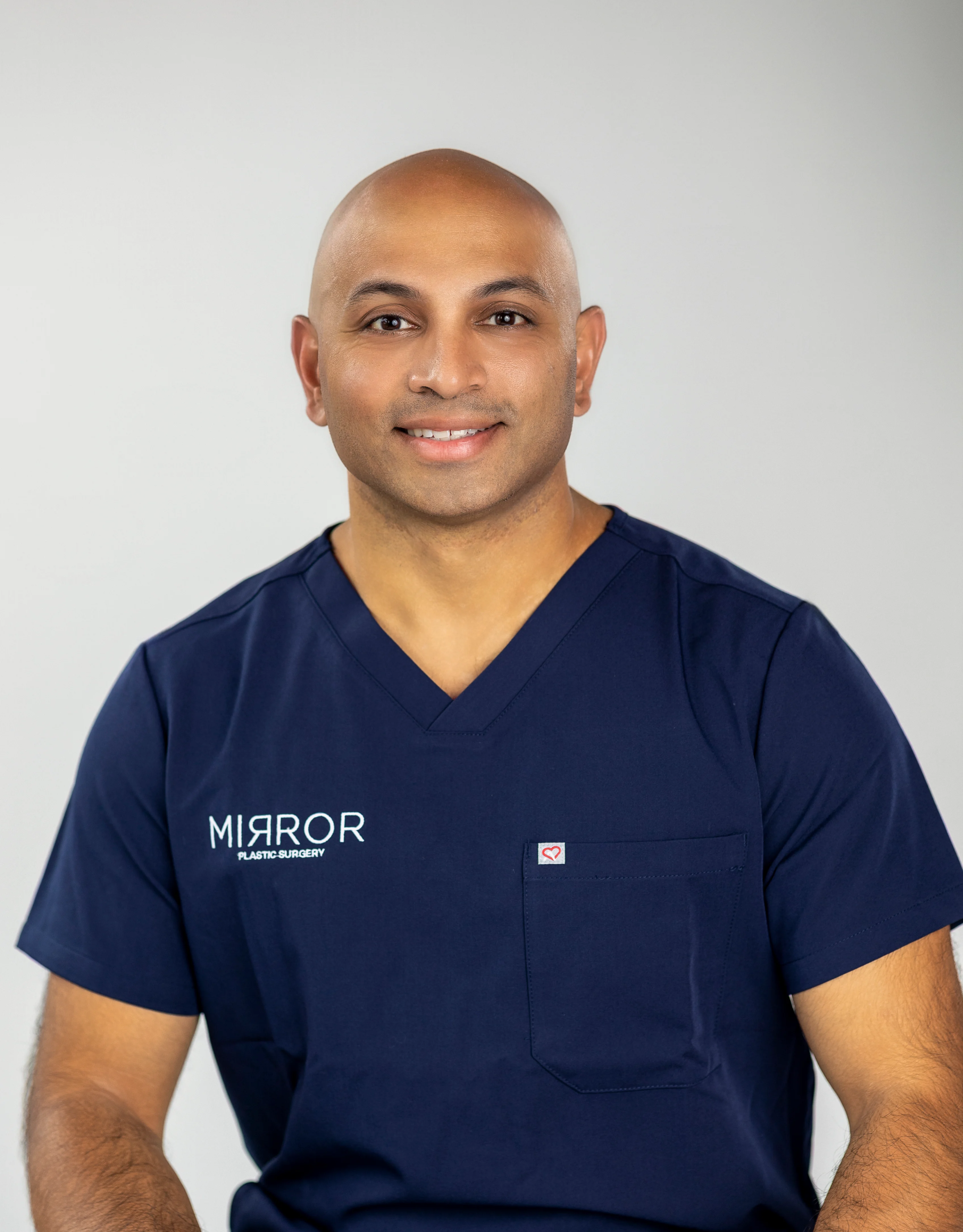
Discuss A Personalized Protocol with Dr. Akash and his team.
Conclusion: Choose Medically Supervised Peptide Therapy
Full face and body skin rejuvenation requires a systemic approach that topical products alone cannot provide. The Glow Stack, which includes GHK-Cu, BPC-157, and TB-500, addresses three core mechanisms of skin aging: collagen matrix degradation, systemic inflammation, and impaired tissue healing. When administered under physician supervision with comprehensive lab analysis and personalized dosing, it offers a scientifically grounded option for patients seeking full-body rejuvenation.
The evidence base for injectable peptide stacks continues to evolve, and responsible medical care acknowledges this reality. Mirror Plastic Surgery focuses on safety-first, evidence-informed protocols designed around each patient’s physiology, with ongoing oversight that makes peptide therapy safer and more effective than unregulated alternatives.
Dr. Akash Chandawarkar brings the clinical depth of a Harvard-educated, Johns Hopkins-trained plastic surgeon and the innovation perspective of a Stanford Biodesign Fellow to every peptide consultation. This combination of rigorous medical training, evidence-based practice, and concierge-level personal attention sets Mirror Plastic Surgery apart from high-volume telehealth platforms and online peptide retailers.
Disclaimer: Peptides are not FDA-regulated. Results vary. Medical supervision is essential.
1 Results may vary from person to person. Editorial content, before and after images, and patient testimonials do not constitute a guarantee of specific results.
Peptide therapy is intended for wellness and optimization purposes and is not prescribed to diagnose, treat, cure, or prevent disease unless specifically stated. Many peptides are not FDA-approved and may be used off-label. Some have limited long-term safety data, with a potential for unknown risks, complications, or desensitization with prolonged use.