
Written by: Dr. Akash Chandawarkar, Board Certified Plastic Surgeon, Mirror Plastic Surgery
What Happens During A Hair Restoration Consultation?
A thorough hair restoration consultation follows a clear clinical sequence. The steps below reflect what the International Society of Hair Restoration Surgery (ISHRS) identifies as the standard clinical workflow and what Mirror Plastic Surgery delivers in practice.
- Medical And Family History. The physician documents when shedding began, whether onset was sudden or gradual, which scalp zones are affected, relevant medications and supplements, recent physical or emotional stressors, and family history on both sides. Because androgenetic alopecia has a polygenic inheritance pattern, history alone can begin to narrow the diagnosis. For women, hormonal events such as pregnancy, postpartum periods, menopause, and PCOS are critical data points.
- Scalp And Donor-Hair Examination. The physician inspects the frontal, parietal, temporal, and occipital zones. They assess the distribution and pattern of thinning, the presence of miniaturized hairs alongside normal terminal hairs, and any scalp inflammation, redness, scaling, or scarring. This examination produces the single most important diagnostic distinction: scarring versus non-scarring alopecia. Scarring conditions such as lichen planopilaris permanently destroy the follicle and generally contraindicate transplantation until controlled. Non-scarring alopecias leave follicles intact and potentially recoverable.
- Dermoscopy (Trichoscopy) Of The Scalp And Donor Zone. Using a handheld dermatoscope at 10x to 70x magnification, the physician examines hair shafts, follicular openings, vascular patterns, and pigment deposits. These details are invisible to the naked eye. Trichoscopy is painless and takes just a few minutes. A 2026 study of 200 alopecia patients found trichoscopy was diagnostically contributory in 97.5% of cases. The occipital donor zone must also be examined. A 2026 Frontiers in Medicine case report recommends occipital trichoscopy in all men evaluated for androgenetic alopecia when procedural options are being considered, because miniaturized donor follicles may not survive transplantation.
- Hairline Design And Graft Planning. Once the diagnosis is established and donor stability confirmed, the physician maps a hairline appropriate to your facial structure, age, and realistic future hair-loss pattern. Graft estimates are based on donor density measurements, scalp laxity, and the surface area to be covered. Hair loss is staged using the Norwood Scale For Men And The Ludwig Scale For Women. These classifications directly inform graft counts and procedural sequencing.
- Treatment-Option Discussion, Surgical And Non-Surgical. A complete consultation presents the full spectrum of options. At Mirror Plastic Surgery, that includes FUE and FUT surgical techniques as well as non-surgical options, including Acorn Biolabs Secretome as an injected or topical treatment. The 2025 JAAD guideline positions topical minoxidil and oral finasteride as FDA-approved first-line treatments, with PRP and low-level laser therapy as adjunctive options. Because Mirror Plastic Surgery is supplier-neutral, recommendations are grounded in evidence and not product quotas.
- Honest Risk And Recovery Conversation. A physician-led consultation covers realistic density expectations, shock loss, the possibility of further sessions, scarring, infection risk, and the role of adjunct medication after surgery. A 2026 review of 35 North American hair transplant legal cases found that lack of informed consent was alleged in 48% of cases. Most disputes trace back to unmet expectations rather than technical errors. Honest counseling is a clinical obligation.
- Next Steps And The Post-Visit Decision. At the end of the appointment, you receive a personalized plan and a clear picture of what comes next. Because no deposit is requested and no surgery date is set under pressure, the decision remains yours to make on your own timeline.
FUE Vs. FUT: What Gets Discussed
The consultation explains both FUE and FUT so you understand the tradeoffs. FUE (Follicular Unit Extraction) removes individual follicular units using circular micro-punches of roughly 0.8–1.0 mm. It leaves small dot scars that are discreet at standard hair lengths. FUE now accounts for roughly 80% of all surgical hair transplant procedures globally, according to the ISHRS 2025 Practice Census. FUT (Follicular Unit Transplantation) removes a strip of scalp from the donor zone, which is then dissected into individual follicular units under magnification. It leaves a linear scar but can yield a higher graft count in a single session for patients with advanced loss. The right technique depends on your donor characteristics, scalp laxity, hair type, and goals. That determination is made during the examination.
In-Person Vs. Virtual Hair Restoration Consultations
A virtual consultation can serve as a useful first step for patients outside the Tampa Bay area. It allows a preliminary conversation about goals, history, and general candidacy. It cannot replace the physical scalp examination, trichoscopy, or donor-zone assessment that determine whether you are a surgical candidate and how many grafts are realistically available. The ISHRS Clinical Guidelines recommend standardized photography under consistent lighting as part of the consultation record, which is best achieved in person. For any patient seriously considering surgery, an in-person visit remains the clinical standard.
How Long Does A Hair Restoration Consultation Take?
A thorough, physician-led hair restoration consultation can take up to an hour. Now that you know what happens during the visit, it helps to plan how much time to set aside. The length depends on the complexity of your hair loss pattern, whether laboratory orders or additional diagnostic steps are warranted, and how many questions you bring. Most initial hair loss consultations run 30 to 60 minutes, with follow-up visits often shorter. At Mirror Plastic Surgery, the hour-long appointment is a deliberate structural choice. It contrasts with brief, high-volume visits at practices performing five to ten surgeries a day, where the attention per patient differs from a practice performing one to two.
How Painful Is A Hair Restoration Consultation?
The consultation itself is entirely non-invasive and painless. Trichoscopy involves pressing a small handheld device against the scalp. The procedure is non-invasive and does not require needles, biopsy punches, or local anesthetic. A gentle hair pull test, if performed, involves lightly grasping a small cluster of hairs and is mildly uncomfortable at most. The consultation leaves no wounds and requires no recovery period or downtime. What a procedure feels like is a separate conversation that belongs in the honest risk discussion during the consultation.
What Should I Bring To A Hair Restoration Consultation?
Arriving prepared makes the appointment more productive for both you and the physician. Bring the following:
- Photos of your hair at earlier stages, documenting progression over time
- A written list of all current medications and supplements, including biotin, which interferes with thyroid blood tests and should be stopped 48–72 hours before any blood draw
- A timeline of when shedding began and how it has progressed
- Family history of hair loss on both sides
- Questions written down in advance
- A realistic sense of your goals, including what you want to achieve and what trade-offs you are willing to accept
In addition to these items, one simple preparation step helps the exam. Avoid washing your hair the day of the appointment. Natural sebum distribution is part of the trichoscopic assessment, and styling products can obscure follicular openings.
Hair Restoration Consultation Questions To Ask
Prepared questions help you get more value from the appointment. Consider asking:
- Who performs the extraction and implantation, the physician personally or technicians?
- What happens if my hair loss continues after surgery, and how is that planned for?
- How was my candidacy determined, and what would disqualify me?
- What non-surgical options are appropriate for my pattern and stage of loss?
- What does recovery involve, and what are the realistic timelines for visible results?
- What are the risks specific to my anatomy and health history?
- How many procedures of this type do you perform per day?
The American Hair Loss Association advises that patients should be able to identify the physician responsible for the procedure, understand their background and level of involvement, and evaluate claims against principles such as donor management, long-term planning, and acknowledgment of risk. If you are ready to get clear answers to these questions, Schedule Your Physician-Led Consultation.
Candidacy And Consultation Cost Approach
Candidacy for hair transplant surgery depends on several factors assessed during the examination. These include donor-hair quality and density, the pattern and stability of hair loss, the presence or absence of miniaturization in the donor zone, and overall health. A hair restoration consultation produces one of four defined outcomes: surgical candidacy confirmed, medical management only, deferred pending workup, or not a candidate. If you are not a surgical candidate, a good consultation will say so clearly and discuss alternatives such as non-surgical treatments, medical management, or a phased approach.
Roughly 33% of female hair transplant candidates are ineligible for surgery, compared to approximately 8% of men, due to diffuse thinning, traction alopecia, and hormonal fluctuations. Hearing that you are not currently a candidate reflects the consultation doing its job and protecting your long-term outcome.
Cost is individualized. Every patient receives a personalized quote after the assessment, based on specific anatomy, graft requirements, and the treatment plan. Figures are not provided before that evaluation is complete.
How To Recognize A Sales-Driven Consultation
A diagnostic consultation and a sales pitch can look similar from the outside, yet they function very differently. In a genuine diagnostic consultation, the physician examines your scalp before discussing any treatment, presents options that include non-surgical alternatives and the possibility that surgery is not indicated, gives you time to decide without pressure, and does not request a deposit on the day of the appointment. The Centre for Medical and Surgical Research is explicit that patients should not feel pressured by a countdown, a same-day discount, or fear of losing a slot, because time-limited offers turn a clinical decision into an impulse purchase.
A sales-oriented visit looks different. Watch for these red flags:
- Pressure to book surgery or pay a deposit the same day
- Promises of a full head of hair or guaranteed results, and assurances such as “you will never go bald again” that have appeared in hair transplant litigation
- A skipped or cursory scalp examination before a treatment recommendation is made
- A non-physician conducting the entire evaluation and making the clinical recommendation
- Omission of non-surgical alternatives or the possibility that surgery is not appropriate
- Vague or evasive answers to questions about who performs the extraction and implantation
Mirror Plastic Surgery performs one to two surgeries per day. That structural limit reflects a commitment to pre-operative attention, intraoperative focus, and post-operative follow-through for each patient. The American Hair Loss Association notes that the choice of clinic is the single biggest lever for lowering complication risk.
Behaviors A Hair Restoration Consultation Should Avoid
To summarize the main red flags, a legitimate consultation should never:
- Recommend surgery before completing a scalp examination and trichoscopy
- Make promises about specific outcomes or graft counts before assessing donor density
- Request a deposit or booking fee on the day of the consultation
- Delegate the clinical evaluation and recommendation to a non-physician coordinator
- Skip the discussion of non-surgical alternatives
- Omit the risks, recovery timeline, and possibility of additional sessions from the conversation
- Use time-limited discounts or urgency tactics to accelerate a decision
Risks And Recovery: What The Consultation Should Teach You
A complete consultation explains what surgery involves after you leave the office. Overall complication rates for hair transplantation range from 1.2% to 4.7%, making it one of the safer elective surgical procedures when a qualified, experienced surgeon operates in a proper clinical environment.
You should leave the consultation understanding the following:
- Shock loss refers to temporary shedding of transplanted and surrounding native hairs. It begins around weeks 2–4 and represents a normal biological response. Regrowth typically begins at months 3–4.1
- Visible results take time.1 Approximately 40–50% of final density is visible at month 6,1 and full assessment is deferred to 12–18 months.1
- Donor supply is finite. Over-harvesting creates permanent thinning that cannot be reversed, which is why conservative donor planning matters.
- Hair loss continues in non-transplanted areas after surgery. Medical management with options such as minoxidil, finasteride, or adjunct therapies is typically recommended to preserve native hair.
- Additional sessions may be needed as hair loss progresses over time. A good consultation plans for your lifetime of hair, not just the next procedure.
Who Should Lead Your Consultation
The GMC’s 2016 consent guidelines are unambiguous. Informed consent for cosmetic surgery must be obtained by the operating surgeon, who must personally discuss the intervention, its risks, and its alternatives with the patient before any consent form is signed. Consent cannot be delegated to a coordinator or intake staff member. When you evaluate who leads a consultation, the training behind that physician matters.
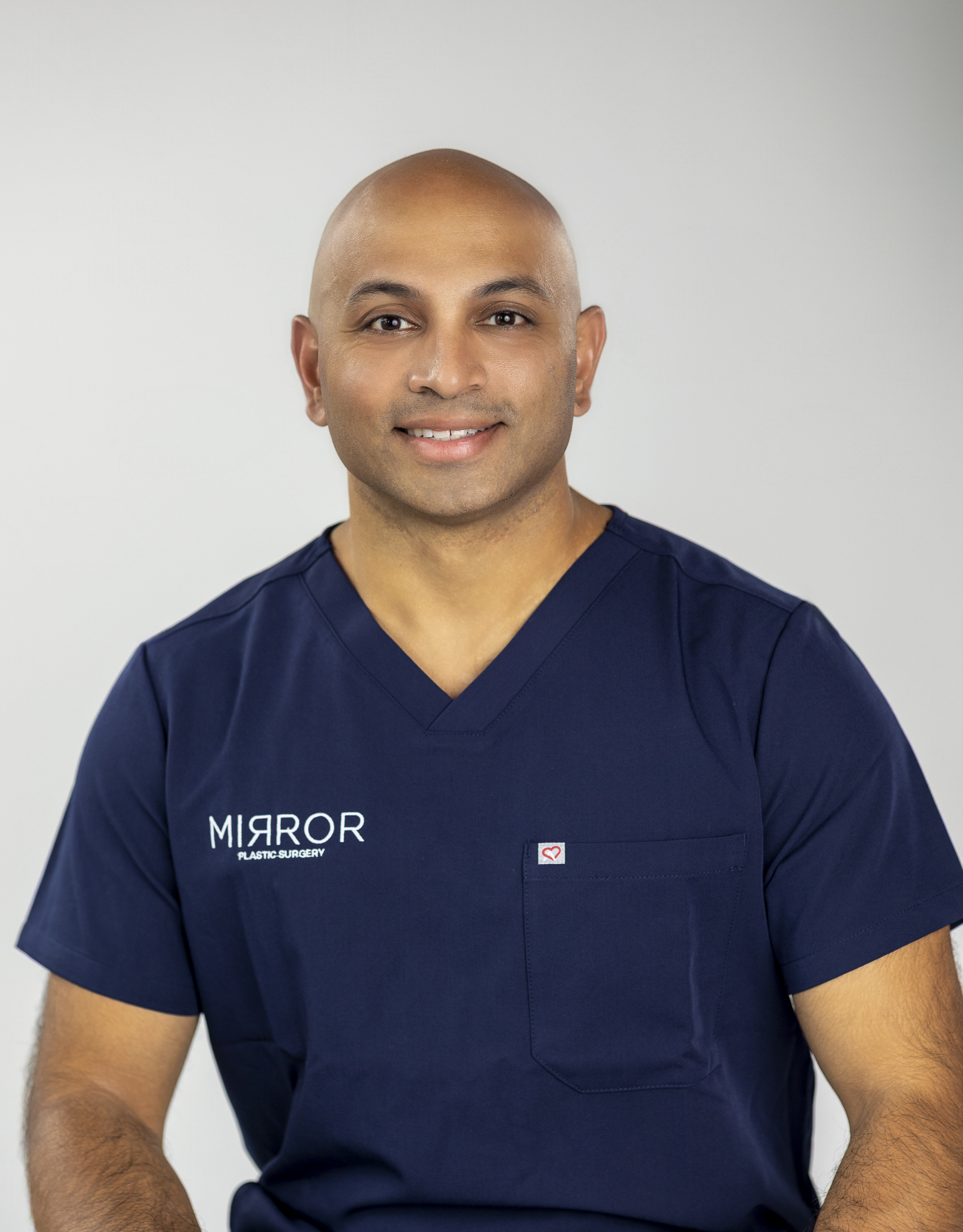
Dr. Akash earned his medical degree from Harvard Medical School, completed a seven-year integrated plastic and reconstructive surgery residency at Johns Hopkins University, and completed an aesthetic surgery fellowship at the Manhattan Eye, Ear and Throat Hospital (MEETH), one of the most competitive programs in the field. He is board-certified by the American Board of Plastic Surgery and has been named in America’s Best Plastic Surgeons 2025 by Newsweek for two years in a row. At Mirror Plastic Surgery, Dr. Akash personally leads every consultation. That level of accountability supports a diagnostic-first approach. If you want to meet directly with the operating surgeon, Meet With Dr. Akash To Discuss Your Options.
Frequently Asked Questions
Is A Hair Restoration Consultation Painful?
The consultation is entirely non-invasive and painless. It does not involve needles, incisions, or tissue removal. Trichoscopy, the magnified scalp examination, requires only that a small handheld device be pressed gently against the scalp. A hair pull test, if performed, involves lightly grasping a small cluster of hairs and is mildly uncomfortable at most. There is no recovery period or downtime associated with the consultation appointment itself.
How Do I Know If I Am A Candidate For A Hair Transplant?
The physician determines candidacy during the consultation. They evaluate donor-hair density and stability, the pattern and progression of your hair loss, whether miniaturization is present in the donor zone, and your overall health. Patients with scarring alopecia, diffuse unpatterned alopecia, or significant donor-zone miniaturization may not be surgical candidates until the underlying condition is stabilized. A good consultation explains which category you fall into and presents appropriate alternatives if surgery is not indicated.
What Should I Do To Prepare For My Consultation?
A few simple steps make the visit smoother. Avoid washing your hair the day of the appointment, as natural sebum is part of the scalp assessment. Stop biotin supplements at least 48–72 hours before the visit if blood work is anticipated, since biotin interferes with thyroid test accuracy. Bring a written list of all medications and supplements, photos documenting your hair at earlier stages, a timeline of when shedding began, and any questions you want answered. The more information you bring, the more precise the diagnostic picture the physician can build.
How Long Until I See Results After A Hair Transplant?
Hair restoration unfolds over many months. Transplanted hairs typically shed their shafts in the first two to four weeks, a normal biological response called shock loss. New growth begins around months 3–4.1 As mentioned in the recovery section, about 40–50% of final density is visible at month 6.1 Full results are assessed at the 12–18 month mark discussed earlier, when shaft maturation, pigmentation, and diameter have stabilized.1 Patients who evaluate their results at six months routinely underestimate the final outcome.1 Ongoing medical management with minoxidil or finasteride is typically recommended to preserve native hair in non-transplanted areas, since androgenetic alopecia continues to progress after surgery.
How Do I Compare Hair Restoration Providers?
Start by confirming that the physician who leads the consultation is the same physician who will perform the surgery and that they are board-certified in plastic surgery or a recognized hair restoration specialty. Ask how many procedures the practice performs per day. As noted earlier, the practice’s one-to-two-surgeries-per-day limit contrasts with high-volume practices. Ask who performs the extraction and implantation steps specifically. Look for a consultation that includes a physical scalp examination and trichoscopy before any treatment is recommended, presents non-surgical alternatives alongside surgical options, and does not request a deposit or booking fee on the day of the visit. A practice that pressures you to commit before you have had time to reflect falls short of a diagnostic-first standard.
The Bottom Line
A hair restoration consultation is a medical appointment. Its purpose is diagnosis, honest counseling, and a personalized plan. The quality of that appointment depends on who leads it, how much time they spend, and whether the examination comes before the recommendation.
At Mirror Plastic Surgery, every consultation is physician-led, up to an hour long, and built around a safety-first philosophy that puts your well-being ahead of any procedure. If surgery is not right for you, you will be told so. If it is appropriate, you will leave with a clear, evidence-based plan and no pressure to act before you are ready.
Mirror Plastic Surgery is located at 780 4th Ave S, St. Petersburg, FL 33701, and serves patients throughout the Tampa Bay area. To schedule your appointment, call or text 727-361-6515, email hello@mirrorplasticsurgery.com, or book online below. When you are ready to move forward, Book Your Personalized Evaluation.
Key Takeaways
- A hair restoration consultation is a diagnostic medical appointment that evaluates the cause, pattern, and extent of hair loss before any treatment recommendations are made.
- The process includes a detailed medical history, scalp examination, trichoscopy, hairline design, and a full discussion of surgical and non-surgical options.
- You can expect an honest, pressure-free conversation that covers risks, recovery timelines, realistic outcomes, and whether surgery is appropriate for your situation.
- A physician-led consultation that prioritizes safety and evidence-based recommendations over sales tactics or same-day commitments offers stronger long-term protection.
- Scheduling a personalized consultation with Dr. Akash at Mirror Plastic Surgery provides a thorough evaluation and a tailored treatment plan.
1 Results may vary from person to person. Editorial content, before and after images, and patient testimonials do not constitute a guarantee of specific results.