
Written by: Dr. Akash Chandawarkar, Board Certified Plastic Surgeon, Mirror Plastic Surgery
Key Takeaways for Post-Weight-Loss Tummy Tucks
- Patients need at least six months of stable weight and solid nutrition before abdominoplasty after major weight loss.
- Active smoking, BMI ≥35, and uncorrected nutritional deficiencies are the most common reasons surgeons decline or delay surgery.
- Full abdominoplasty is cosmetic and not covered by insurance, while panniculectomy may qualify when strict medical criteria are documented.
- Complication rates vary by patient and procedure extent; post-weight-loss patients face higher risks of seroma, wound issues, and VTE that require experienced planning.1
- Schedule a personalized consultation at Mirror Plastic Surgery to confirm candidacy and create a safety-first surgical plan.
Five Evidence-Based Reasons Surgeons Decline Tummy Tuck After Major Weight Loss
The following conditions are the most consistently cited reasons surgeons decline or defer abdominoplasty in post-weight-loss patients.
- Unstable weight within the preceding six to twelve months. A common surgical standard is stable body weight for at least six months before surgery. Continued loss creates new laxity. Weight regain stretches the repair and widens scars.
- Active smoking or any nicotine use. Surgeons often require patients to quit all nicotine sources, including patches, gum, vaping, and chewing tobacco, before and after surgery because nicotine impairs wound healing and increases tissue death and infection. Some regional guidelines recommend tobacco abstinence for several weeks before referral.
- BMI ≥35 with uncontrolled comorbidities. Complication rates for abdominoplasty can increase when BMI exceeds 30.1 Patients in higher BMI ranges face higher risks of complications and less favorable cosmetic outcomes and are often advised to lose additional weight before surgery.1
- Uncorrected nutritional deficiencies. Surgeons often require confirmation that hemoglobin and vitamin D levels are sufficient before scheduling abdominoplasty in post-bariatric patients to support safe wound healing. Referral guidelines may require recent normal bloodwork. Abnormal results need correction before surgery.
- Unrealistic expectations or active substance abuse. Factors that can contraindicate skin-reduction surgery after weight loss include active mental health issues, alcohol or substance abuse, ongoing smoking, and severe systemic illness. Patients who expect abdominoplasty to replace long-term weight management or to eliminate all visible scarring are not suitable candidates.
Insurance Coverage Rules for Tummy Tuck and Panniculectomy
Full abdominoplasty is usually classified as a cosmetic procedure and is generally not covered by insurance. Panniculectomy, which removes the hanging skin apron without muscle repair, falls into a different category and may qualify for coverage when strict criteria are met.
Under Blue Cross Blue Shield Florida guidelines, panniculectomy meets medical necessity when all of the following apply:
- The panniculus reaches Grade 2 or higher on the ASPS scale, meaning it covers the genitals and upper thigh crease or lower.
- Recurrent intertriginous dermatitis, cellulitis, non-healing ulceration, or functional impairment such as difficulty walking is documented and persists after three months of prescribed medical therapy.
- The patient has reached BMI ≤30 kg/m², lost at least 100 pounds, or lost 40% or more of excess body weight.
- Post-bariatric patients are at least 18 months post-operative or demonstrate documented stable weight for at least three months.
Excellus BlueCross BlueShield Medical Policy 7.01.53 (effective May 21, 2026) requires preoperative photographs as an absolute requirement for determination of medical appropriateness for panniculectomy, with documentation of functional impairment, prescribed medical management, and weight trends. Other major insurers follow similar documentation standards. When both procedures are bundled, insurers pay only for the medically necessary panniculectomy portion and require the patient to pay out of pocket for any cosmetic abdominoplasty components.
Risks and Complication Patterns After Major Weight Loss
Systematic reviews and meta-analyses show that overall complication rates after abdominoplasty in post-weight-loss patients vary widely. Individual risk factors, nutritional status, BMI, and the extent of surgery all influence outcomes.
Seroma formation appears as the most frequently reported complication across 143 studies and 27,834 patients in Salari et al. 2021. Reported seroma rates range from single digits to more than 30 percent, depending on drain protocols, quilting sutures, and tissue handling techniques.1
Wound dehiscence and infection rates also span broad ranges in Myszkowska 2025, Chaker 2024, and Liao 2024. Higher BMI, active smoking, and poor nutritional status are the strongest predictors of these wound problems.
Hematoma occurs less often than seroma but still appears regularly in large series of post-bariatric abdominoplasty. Careful blood pressure control, avoidance of certain medications, and meticulous hemostasis help reduce this risk.
Venous thromboembolism risk is higher than in many other aesthetic procedures, as shown in Hatef et al. 2010 and Myszkowska 2025.1 Circumferential body lifts and longer operative times increase VTE risk further, which is why aggressive prophylaxis and early walking matter so much.
Major complications that require hospitalization occur in a small percentage of cases in large datasets such as Chaker et al. 2024, which analyzed 55,596 patients.1 These events remain uncommon but become more likely when BMI, smoking, and nutritional issues are not addressed before surgery.
A 2025 retrospective review of 373 non-bariatric panniculectomy patients found that GLP-1 receptor agonist users experienced higher rates of delayed wound healing but lower rates of seromas compared to non-users.1 GLP-1 patients considering surgery should discuss these specific risk differences with their surgeon.
Comparing Full Abdominoplasty and Panniculectomy After Major Weight Loss
| Feature | Full Abdominoplasty | Panniculectomy |
|---|---|---|
| Muscle repair (plication) | Yes, rectus diastasis corrected | No muscle repair performed |
| Skin and fat excision | Full lower abdominal panel with umbilical transposition | Hanging pannus only with no waistline reshaping |
| Insurance status | Cosmetic and not covered | May be covered with Grade 2+ pannus and documented functional impairment |
| Typical recovery | 4–6 weeks, with 6–8 weeks to full activity | Similar or shorter when no muscle repair, and longer if combined with abdominoplasty |
Weight Stability Timeline Before Tummy Tuck
Most surgeons recommend waiting 12 to 18 months after bariatric surgery before body-contouring procedures, and only after weight has stabilized, to allow nutritional status to normalize and reduce metabolic stress. The minimum standard across published guidelines is six months of stable weight. This stability, combined with a lower BMI, supports safer surgery and more durable results.
For GLP-1 patients, the same stability window applies. Patients who are still actively losing weight on semaglutide or tirzepatide should delay surgery until the plateau is confirmed and maintained. Significant weight fluctuations before or after abdominoplasty can cause recurrent skin laxity, stretched muscle repairs, wider scars, and may necessitate revision surgery.
Recovery Milestones and Long-Term Results
Post-weight-loss abdominoplasty recovery is materially longer than standard cosmetic cases because of larger skin excision, reduced muscle reserve, elevated DVT risk, and frequently suboptimal nutritional baseline including protein malnutrition, vitamin D deficiency, and low iron. Walking usually begins on day one. Light cardio often starts at four to six weeks. Heavy lifting typically waits until eight to twelve weeks, with timelines adjusted based on whether muscle repair was performed.
Functional gains are well documented. A 2026 systematic review by Lizarzaburo Penafiel et al. analyzing 20 studies published between 2010 and 2024 concluded that abdominoplasty in post-weight-loss patients provides aesthetic benefits while significantly improving function and quality of life by resolving skin infections, hygiene difficulties, and mobility limitations.1 A 2025 prospective Swedish study of 110 post-bariatric patients reported significant improvements in quality of life and perception of excess skin after modified abdominoplasty, with particularly pronounced gains in the BMI 30–40 group.
Honest discussion of regret and weight regain forms part of every Mirror Plastic Surgery consultation. The NIDDK-funded Longitudinal Assessment of Bariatric Surgery study found that participants maintained most of their weight loss at seven years, with average regain of 3.9% of body weight after gastric bypass. Modest regain within this range rarely compromises a well-executed abdominoplasty result.1 Larger regain can stretch the repair and may require revision.
Choosing a Surgeon for Post-Weight-Loss Body Contouring
Post-massive-weight-loss abdominoplasty ranks among the most technically demanding body-contouring procedures. Larger excision patterns, elevated VTE risk, nutritional complexity, and the frequent need for circumferential or fleur-de-lis techniques call for a surgeon with deep reconstructive and aesthetic training, not just high case volume.
At Mirror Plastic Surgery, Dr. Akash uses a safety-first, function-second, aesthetics-third framework for every post-weight-loss case. The practice limits itself to one to two surgeries per day, which keeps the entire clinical team focused on a single patient before, during, and after the procedure. This approach contrasts with high-volume practices that perform five to ten surgeries daily.
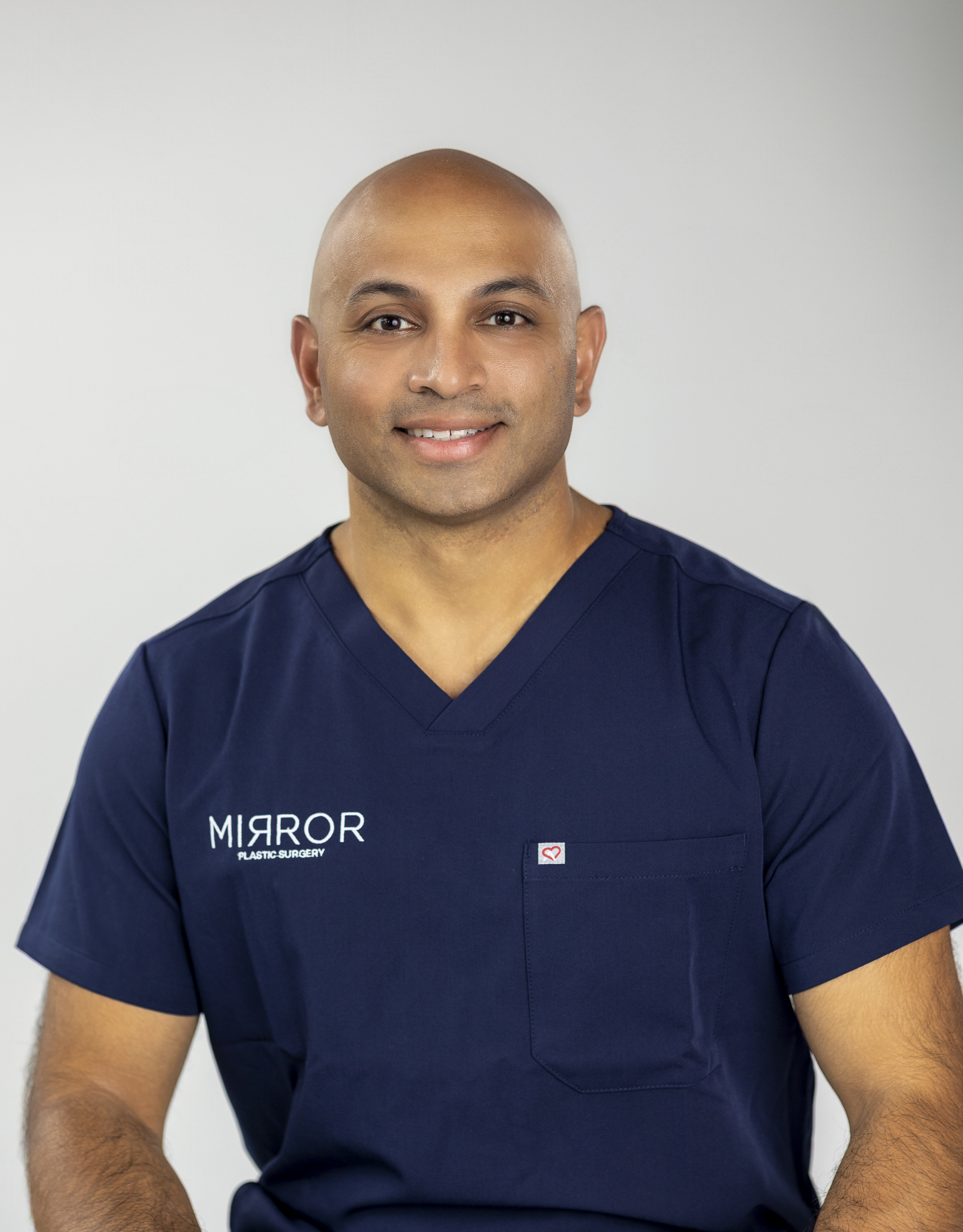
Dr. Akash completed a seven-year integrated plastic and reconstructive surgery residency at Johns Hopkins University, followed by an aesthetic surgery fellowship at the Manhattan Eye, Ear and Throat Hospital (MEETH), and holds a medical degree from Harvard Medical School earned through the Harvard-MIT Health Sciences and Technology program. He has been named in America’s Best Plastic Surgeons 2025 by Newsweek for 2 years in a row. Board certification by the American Board of Plastic Surgery also provides hospital-privilege access in the rare event of a surgical complication, which adds a safety layer that non-hospital-affiliated practices cannot offer.
When evaluating any surgeon for post-weight-loss body contouring, ask about their approach to nutritional optimization, VTE prophylaxis protocol, and whether they perform circumferential procedures when indicated rather than defaulting to a standard anterior-only technique.
Book a one-hour consultation for personalized assessment with Dr. Akash for a comprehensive evaluation of your anatomy, weight history, nutritional status, and realistic candidacy for abdominoplasty or panniculectomy.
Frequently Asked Questions
What happens if I lose more weight after a tummy tuck?
Additional weight loss after abdominoplasty can create new skin laxity, stretch the muscle repair, and widen scars, which may require revision surgery.1 This risk explains why surgeons insist on confirmed weight stability for six to twelve months before operating. Patients still actively losing weight on GLP-1 medications should delay surgery until their plateau is sustained. At Mirror Plastic Surgery, Dr. Akash reviews weight trend data during the consultation to determine whether a patient has reached a genuinely stable and maintainable weight before recommending a surgical date.
Can I combine a tummy tuck with other procedures after major weight loss?
Combining procedures is possible but requires careful risk stratification. Abdominoplasty already carries the highest venous thromboembolism risk among aesthetic procedures, and adding concurrent surgeries compounds that risk.1 Mirror Plastic Surgery’s philosophy advises against combining too many procedures at once, as studies show this can sharply increase complication rates. Dr. Akash evaluates each patient’s overall health, BMI, nutritional status, and surgical goals to decide whether staging procedures over separate sessions offers a safer path, even when a patient prefers to address multiple areas at once.
Does a tummy tuck fix diastasis recti after weight loss?
Full abdominoplasty includes rectus plication, which repairs the separated abdominal muscles from the chest to the pubic area. This repair provides a core functional benefit and differs from panniculectomy, which removes only the hanging skin apron without any muscle repair. Diastasis recti is more commonly associated with pregnancy than with weight loss alone, so not every post-bariatric patient will need plication. Dr. Akash assesses for diastasis during the physical examination and explains whether muscle repair is indicated based on your specific anatomy.
How do I know if my pannus qualifies for insurance coverage?
Insurance coverage for panniculectomy usually requires a Grade 2 or higher pannus, meaning the skin apron covers the genitals and upper thigh crease at minimum, plus documented recurrent skin infections, rashes, or functional impairment that has persisted despite at least three months of prescribed medical treatment. You must also meet weight-loss thresholds such as BMI at or below 30, a loss of at least 100 pounds, or loss of 40% or more of excess body weight. Post-bariatric patients generally must be at least 18 months post-operative. A board-certified surgeon experienced with insurance cases can write a detailed letter of medical necessity supported by dated photographs, dermatology records, and primary care notes, which strengthens approval odds.
Is a tummy tuck after GLP-1 weight loss different from one after bariatric surgery?
The surgical technique is largely similar, but the risk profile differs in specific ways. A 2026 propensity-score-matched analysis found that rates of postoperative infection, wound dehiscence, and thromboembolic events were statistically similar between post-bariatric and post-GLP-1 body-contouring patients. However, GLP-1 patients showed significantly lower intraoperative hemorrhage rates and were more likely to require breast-focused rather than abdominal procedures.
GLP-1 patients also face higher delayed wound-healing risk and should target 60 to 80 grams of protein daily during recovery. Semaglutide-related anesthesia considerations, including aspiration risk from delayed gastric emptying, require discussion with both the surgeon and anesthesiologist before scheduling.
Next Step: Personalized Assessment With Mirror Plastic Surgery
Candidacy for tummy tuck after major weight loss depends on factors that extend beyond a simple checklist. Weight trend data, nutritional labs, pannus grade, muscle integrity, skin quality, and your overall health history all shape the recommendation.
Mirror Plastic Surgery’s one-hour consultation evaluates each of these variables and provides an honest, evidence-based answer about whether surgery is appropriate, which procedure is indicated, and what realistic outcomes look like for your specific anatomy.
Book a one-hour consultation for personalized assessment with Dr. Akash at Mirror Plastic Surgery in St. Petersburg, Florida. Tampa Bay-area patients can also reach the practice by calling or texting 727-361-6515 or emailing hello@mirrorplasticsurgery.com.
1 Results may vary from person to person. Editorial content, before and after images, and patient testimonials do not constitute a guarantee of specific results.