
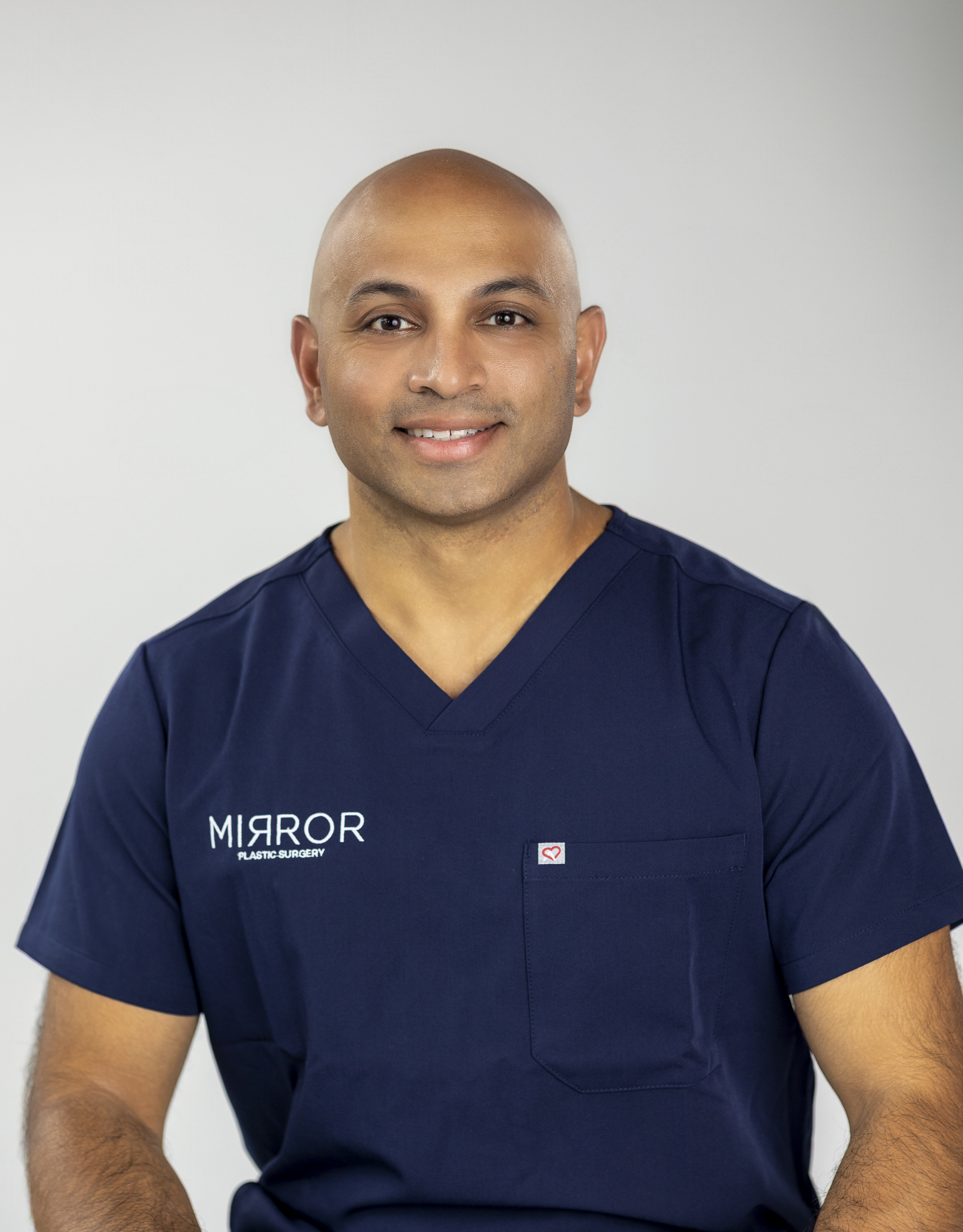
Written by: Dr. Akash Chandawarkar, Board Certified Plastic Surgeon, Mirror Plastic Surgery
Key Takeaways for Tampa Rhinoplasty Costs
- Rhinoplasty in Tampa typically costs $7,000–$15,000 in 2026, with surgeon expertise and facility accreditation driving most price differences.
- Revision rhinoplasty is more expensive and technically demanding than primary surgery, so the quality of the first operation shapes long-term value.
- Insurance only covers clearly documented functional problems. Cosmetic rhinoplasty is never covered, so patients need detailed medical records for any functional claim.
- American Board of Plastic Surgery certification, facial surgery fellowship training, and hospital privileges correlate with lower revision rates and safer outcomes.
- Patients considering rhinoplasty in Tampa can schedule a personalized consultation at Mirror Plastic Surgery for a complete, itemized plan tailored to their anatomy and goals.
2026 Tampa Rhinoplasty Pricing: What Drives the Range
Primary rhinoplasty with a board-certified surgeon at an accredited Tampa facility usually ranges from $7,000 to $15,000 all-in. That range reflects differences in anatomy, surgical goals, and the scope of structural work.
The four main cost drivers in the Tampa market are procedure complexity, facility accreditation level, anesthesia type, and surgeon expertise. Higher pricing often aligns with greater surgeon experience and American Board of Plastic Surgery certification, which many patients associate with safer care and more stable long-term results.1
Surgeon expertise most directly influences long-term outcomes and the likelihood of needing revision. Worldwide revision rates after primary rhinoplasty average approximately 5% to 15%, so getting the structure right the first time has real financial and emotional impact. This is why training depth matters. Dr. Akash’s pathway through Harvard Medical School with Honors, a seven-year integrated plastic and reconstructive surgery residency at Johns Hopkins University, and an aesthetic surgery fellowship at the Manhattan Eye, Ear and Throat Hospital (MEETH) reflects the type of preparation linked to lower revision risk.1 Recognized as one of America’s Best Plastic Surgeons by Newsweek for two consecutive years, he brings focused facial surgery expertise that supports strong first-surgery outcomes.1
Breaking Down Your Rhinoplasty Quote
A complete rhinoplasty quote in Tampa usually includes four core line items. The table below outlines each component with its typical 2026 range for a primary procedure at an accredited facility.
| Component | Typical 2026 Range (Tampa) | Key Variables | Notes |
|---|---|---|---|
| Surgeon Fee | $3,500–$7,000 | Experience, credentials, case complexity | Largest single line item, reflecting training depth and revision-risk reduction |
| Facility and Anesthesia Fees | $2,500–$5,000 | Accreditation class, OR time, provider type | Combined fees for JCAHO- or AAAASF-accredited facilities and board-certified anesthesiologist that meet essential safety standards |
| Ancillary Expenses | Varies | Pre-op labs, post-op visits, prescriptions | Includes imaging, planning tools, and follow-up care |
Anesthesia, facility fees, medical tests, and post-surgical care usually make the total cost 2–3 times the base surgeon fee in aesthetic surgery quotes. Patients comparing quotes should confirm that each estimate includes all four components on the same scope of work before deciding.
Request your itemized rhinoplasty quote during a consultation with Dr. Akash, with every line item explained in the context of your anatomy.
Primary vs Revision Rhinoplasty Costs
The difference between primary and revision rhinoplasty has major cost and complexity implications. Revision rhinoplasty usually costs more than primary surgery because scar tissue, altered anatomy, and frequent cartilage grafting from the rib or ear increase operating time and technical difficulty. Revision rhinoplasty in Tampa often exceeds the $7,000–$15,000 primary range in 2026, and quotes under $5,000 usually involve trade-offs in surgeon credentials or facility standards.
Research shows an inverse relationship between satisfaction after revision rhinoplasty and the number of prior nasal surgeries. First revisions tend to perform better than later ones. This pattern reinforces the idea that the quality of the primary surgery is the single most consequential factor in the total lifetime cost of nasal surgery.
Dr. Akash’s Johns Hopkins integrated residency included complex reconstruction rotations at the Johns Hopkins Hospital, the R Adams Cowley Shock Trauma Center, and the Curtis National Hand Center. Those experiences built the structural judgment that reduces incomplete correction, a leading driver of revision requests. His MEETH fellowship then added advanced facial techniques that directly address the technical issues most associated with revision.
Choosing Between Open and Closed Rhinoplasty
Open rhinoplasty uses a small columellar incision that improves visibility and control compared with closed rhinoplasty, which keeps all incisions inside the nostrils. The cost difference is usually a few hundred dollars and mainly reflects extra operating-room time. Surgeons often recommend open rhinoplasty for complex reshaping and closed rhinoplasty for more limited structural changes.
A 2025 meta-analysis suggests that when experienced surgeons perform the operation, the choice of open or closed approach matters less than once believed. Long-term aesthetic and functional results depend more on surgical execution, patient anatomy, and perioperative protocols than on incision pattern alone.
Dr. Akash performs both open and closed rhinoplasty and selects the approach based on each patient’s anatomy and goals, not habit. His specialized facial surgery fellowship at MEETH, under leading experts, supports technique selection grounded in anatomy and evidence rather than convenience.
Ethnic Rhinoplasty Planning and Cost Factors
Ethnic rhinoplasty involves distinct anatomical patterns, such as thicker skin and wider tip bases, that influence planning and cost. Ethnic and preservation techniques that address these features or preserve key nasal structures often sit at the higher end of the primary price range because relatively few surgeons have deep experience with them.
Thick skin envelopes require more precise tip work and longer operative time to achieve definition. Wider alar bases, lower dorsal profiles, and softer cartilage frameworks each call for individualized structural planning rather than a standard template. The 2017 Otolaryngology–Head and Neck Surgery clinical practice guideline stresses that rhinoplasty must address both nasal form and function, so quotes increase when surgery is designed to preserve or improve the airway along with cosmetic changes.
Dr. Akash’s anatomy-first philosophy and his published research on artificial intelligence and machine learning for objective analysis in aesthetic surgery, including rhinoplasty, directly support ethnic rhinoplasty planning. His AI-driven measurement tools help quantify tip projection, alar base width, and dorsal contour in thick-skin cases, which reduces the guesswork that often leads to under-correction. Training in neuroscience and nuclear engineering at MIT, followed by Harvard Medical School and surgical residency, provides a rigorous scientific base for this data-informed approach.
Insurance Coverage for Functional Rhinoplasty Components
Cosmetic rhinoplasty never qualifies for insurance coverage. Functional components may receive partial coverage when documentation clearly shows medical necessity.
Effective March 30, 2026, AmeriHealth updated its coverage criteria for Septoplasty, Rhinoplasty, and Septorhinoplasty. Patients with nasal airway obstruction no longer need a full four-week trial of conservative medical management, although some attempted medical therapy is still required. Across major payers in 2026, insurance approval requires proving both medical necessity and treatment failure while avoiding any cosmetic framing. Each documentation element addresses a specific denial risk:
- Documented nasal airway obstruction symptoms plus failure of conservative medical management over at least four weeks, per common payer policies including Aetna as of June 2026
- A baseline NOSE (Nasal Obstruction Symptom Evaluation) score of 45 or above, nasal endoscopy, CT imaging of sinuses, and clinical photographs in frontal, lateral, and worm’s-eye views
- Diagnostic studies such as nasal endoscopy, anterior rhinoscopy, or CT scan, along with a letter of medical necessity detailing symptom severity, duration, and prior treatment results, plus frontal, lateral, and submental photographs
- Complete absence of aesthetic language in the clinical record when submitting for functional coverage
When surgeons perform a combined septorhinoplasty, only the functional CPT codes qualify for insurance or Medicare billing. The cosmetic portion always remains a self-pay charge with no coverage under Original Medicare, Medicare Advantage, or ACA-compliant plans. High-deductible plans often apply the full facility and professional fees for functional septoplasty to the deductible before coinsurance, so patients may still owe $2,000 to $4,000 out of pocket even after approval.
Patients with breathing obstruction should bring imaging, symptom logs, and prior treatment records to their consultation. Mirror Plastic Surgery’s pre-operative evaluation uses advanced in-office diagnostics that generate the objective data insurers expect.
Using Your Consultation to Make a Safe Decision
A rhinoplasty consultation at Mirror Plastic Surgery functions as a one-hour, concierge-level assessment, not a quick intake visit. The practice schedules one to two surgeries per day so the clinical team can focus fully on each patient before, during, and after the procedure, in contrast to high-volume centers that may perform five to ten cases daily.
Patients gain more from the visit when they arrive with a clear question list. The framework below moves from baseline safety credentials to procedure-specific expertise and cost clarity, covering the areas most predictive of long-term satisfaction:
- What is the surgeon’s board certification, and does it specifically include plastic surgery credentialed by the American Board of Plastic Surgery? This establishes baseline qualification to operate.
- Does the surgeon hold hospital privileges, which provide a safety backstop if rare complications require hospital care?
- What fellowship training, if any, did the surgeon complete in facial surgery and rhinoplasty, indicating specialization beyond residency?
- How many times has the surgeon performed this exact procedure, and which costs are included versus which may generate additional charges?
- What is the facility’s accreditation status, and what anesthesia protocols and provider qualifications are in place?
- How does the surgeon’s anatomical assessment of your nasal structure shape the recommended technique and expected recovery?
Mirror Plastic Surgery’s safety-first philosophy means every plan starts with a detailed anatomical education session so patients understand the structural reasoning behind each recommendation.
Schedule your one-hour concierge consultation and bring your questions. The hour is dedicated to your anatomy, goals, and decision-making.
Evidence-Based Answers to Common Questions
How long do rhinoplasty results last? Rhinoplasty creates permanent structural changes to the nasal framework.1 Outcomes depend on many variables, including tip work, cartilage management, structural support, airway preservation, healing, and surgical judgment. These factors determine whether results remain stable and natural five to ten years later. The quality of the initial structural correction drives long-term stability.1
Is rhinoplasty worth the investment? Studies from academic centers report high rates of meaningful improvement in nasal function and strong willingness among patients to choose surgery again.1 For people with both functional and aesthetic goals, the combined benefit of easier breathing and natural-looking changes often justifies the investment when a credentialed specialist performs the procedure.
What is the minimum age for rhinoplasty? Nasal growth must be complete before structural surgery proceeds. Studies show key nasal dimensions usually reach maturity by age 12–13 in females and 14–15 in males. Dr. Akash’s pre-operative evaluation includes an assessment of skeletal maturity as part of his safety-first protocol.
Does a higher price guarantee better results? Higher price alone does not guarantee quality. Board certification or specialist status provides a starting filter, but patients also need to assess procedure-specific experience, facility standards, anesthesia protocols, and aftercare planning. The most relevant evaluation criteria are credentials, accreditation, anesthesia safety, and documented outcome consistency, not the quote in isolation.
Limitations, Risks, and Choosing a Surgeon
The 5–15% revision rate mentioned earlier varies by how “revision” is defined and by patient complexity, yet even the best surgeons cannot control every healing variable. Skin thickness, scar formation, and individual tissue response mean no one can promise a specific aesthetic result. Risks include infection, septal perforation, asymmetry, and airway changes. Rigorous planning and precise technique reduce these risks but cannot eliminate them.
A UC Davis Health study in JPRAS Open found that treating aesthetic-surgery complications can generate substantial hospital charges. Complications from under-resourced settings often cost far more, financially and physically, than any savings from a lower initial quote.
Board certification in Plastic Surgery, fellowship training in facial plastic and reconstructive surgery, high annual rhinoplasty volume, and hospital privileges at accredited institutions all correlate with more consistent long-term outcomes. Beyond the Newsweek recognition noted earlier, Dr. Akash serves as Next Generation Editor for the Aesthetic Surgery Journal and has testified before the U.S. Food and Drug Administration on implant safety. These roles reflect a level of professional accountability that extends beyond the operating room.
Frequently Asked Questions
How much does rhinoplasty cost in Tampa in 2026?
Each patient receives a personalized quote during consultation because no two rhinoplasty cases share identical anatomy or goals. The total investment includes the surgeon’s fee, facility fee, anesthesia, and ancillary expenses such as pre-operative labs and post-operative visits. Complexity factors, including primary versus revision status, functional breathing correction, and technique choice, all influence the final figure. A concierge consultation with Dr. Akash provides a complete, itemized assessment based on your nasal structure and objectives.
Does insurance cover any part of rhinoplasty?
Purely cosmetic rhinoplasty is never covered. When patients have documented functional impairment, such as nasal airway obstruction from a deviated septum, nasal valve collapse, or post-traumatic deformity, the functional portion may qualify for coverage after a documented trial of conservative medical management, typically four to six weeks of nasal corticosteroids or decongestants. Coverage requires prior authorization, objective diagnostic documentation such as nasal endoscopy or CT imaging, and strict separation of functional and cosmetic billing. The cosmetic portion of any combined procedure remains self-pay regardless of functional approval. Mirror Plastic Surgery’s evaluation process generates the documentation needed to support a functional claim when medically appropriate.
What is the difference between open and closed rhinoplasty, and which is right for me?
Closed rhinoplasty places all incisions inside the nostrils, leaving no external scar. Open rhinoplasty adds a small incision across the columella, the tissue between the nostrils, to allow direct visualization of the nasal framework. Surgeons generally favor the open approach for complex structural work, major tip reshaping, cartilage grafting, or revision cases with distorted anatomy. The closed approach suits more limited changes. Current evidence shows no meaningful difference in long-term aesthetic or functional outcomes between the two techniques. Results depend mainly on surgical execution and anatomical judgment. Dr. Akash selects the approach that best matches your anatomy and goals during consultation.
How do I reduce the risk of needing a revision rhinoplasty?
As noted in the revision-cost discussion above, avoiding revision starts with choosing a surgeon whose training and case experience reduce the chance of incomplete correction on the first surgery. Predictors of revision include prior nasal surgery, inadequate structural correction, and unaddressed tip issues. Selecting a board-certified plastic surgeon with facial fellowship training, hospital privileges, and a safety-first planning approach addresses the main modifiable risks. Mirror Plastic Surgery’s one-to-two-surgeries-per-day model helps ensure each patient receives the team’s full attention, which guards against rushed decisions linked to higher revision rates in high-volume settings.
What questions should I ask during a rhinoplasty consultation?
A productive consultation covers the surgeon’s board certification and fellowship training, facility accreditation, anesthesia protocol and provider qualifications, hospital privileges, the technique recommended for your anatomy and why, what the quote includes, and the post-operative follow-up plan. Patients should also request before-and-after examples that match their anatomical profile and goals. They should expect a thorough anatomical education segment that explains the structural logic behind the proposed plan. Mirror Plastic Surgery’s hour-long concierge consultation is designed to address all of these points before any surgical decision.
Summary: Planning a Safe, High-Value Rhinoplasty
Rhinoplasty cost in Tampa in 2026 reflects four main variables: surgeon expertise, facility accreditation, anesthesia standards, and case complexity. Evidence consistently shows that the quality of the primary surgery predicts long-term satisfaction and remains the most effective way to avoid the higher financial and physical cost of revision. A surgeon certified by the American Board of Plastic Surgery with deep experience usually commands higher fees because patients pay for safety and results rather than the operation alone. Choosing based only on the lowest quote increases complication risk.
Dr. Akash’s Harvard-MIT, Johns Hopkins, MEETH, and Stanford training, combined with Mirror Plastic Surgery’s concierge model, safety-first philosophy, and one-to-two-surgeries-per-day schedule, creates a structural approach to reducing variables linked to unsatisfactory outcomes. Patients can review the before-and-after gallery, prepare anatomy-focused questions, and arrive ready for a detailed, evidence-based discussion of their nasal structure and goals.
Start your safety-first rhinoplasty journey with a consultation at Mirror Plastic Surgery in St. Petersburg, Florida. This visit is the first step toward an outcome built on function and natural aesthetics.
1 Results may vary from person to person. Editorial content, before and after images, and patient testimonials do not constitute a guarantee of specific results.