
Written by: Dr. Akash Chandawarkar, Board Certified Plastic Surgeon, Mirror Plastic Surgery
Key Takeaways
- A plastic surgery consultation in Tampa is a detailed, two-way clinical visit that covers history, exam, goals, outcomes, and logistics.
- The consultation matters most because it sets your surgical plan, confirms safety, and starts your relationship with the surgeon.
- Core steps include intake, medical history review, physical exam, goal discussion, outcome planning, cost breakdown, and time to decide without pressure.
- Preparation means bringing medication lists, prior records, reference photos, top concerns, and questions, and being open about health, lifestyle, and motivations.
- To experience an unhurried, safety-first visit, schedule your personalized consultation with Mirror Plastic Surgery.
Why The Consultation Shapes Your Entire Surgical Journey
The consultation sets your surgical plan, your safety screen, and your relationship with the surgeon at the same time. Every later decision about whether to proceed, which technique to use, and how to plan recovery grows out of that first conversation. A rushed or sales-focused visit cannot cover all three areas well.
Because plan, safety, and relationship all depend on how the consultation runs, this guide walks through the exact sequence at Mirror Plastic Surgery. It also answers the questions Tampa patients ask most often, including whether you will be charged, how soon surgery can follow, what can delay or disqualify a candidate, and how to prepare. Along the way, it explains what consultation length and depth reveal about the practice you choose.
How A Plastic Surgery Consultation Works In Tampa
- Scheduling And Intake Paperwork. You call or text to book. Before you arrive, you complete a health questionnaire so the visit focuses on evaluation instead of forms. At Mirror Plastic Surgery, patients can reach the team at 727-361-6515 or visit the practice at 780 4th Ave S, St. Petersburg, FL 33701.
- Medical History Review. The surgeon reviews medications, supplements, prior surgeries, allergies, health conditions, smoking and nicotine status, and weight stability. Supplements including vitamin E, St. John’s Wort, ginkgo, garlic, ginseng, and fish oil can increase bleeding risk or interfere with anesthesia, so full disclosure at this stage protects your safety.
- Physical Examination And Anatomical Assessment. The surgeon evaluates tissue quality, skin elasticity, and underlying anatomy to match techniques to your body. At Mirror Plastic Surgery, this assessment follows a safety-first, function-second, aesthetics-third philosophy, so structural and functional needs come before cosmetic refinements.
- Goal Discussion. You describe what you hope to change. Specific reference photos and your top three concerns keep the conversation focused. Patients do not need to decide on surgery before booking a consultation. The discussion itself helps you decide.
- Realistic Outcome Planning. The surgeon explains what is safely achievable for your anatomy, along with limitations, tradeoffs, risks, and recovery timelines.1 Emotionally ready patients understand that surgery changes appearance but does not guarantee happiness or fix relationships. A thorough surgeon addresses this openly.
- Financial And Logistics Breakdown. You receive a personalized quote that lists surgeon, anesthesia, and facility fees, plus financing options such as CareCredit. Every plan is unique, so cost is built during this step instead of quoted in advance. A complete estimate should show surgeon, anesthesia, and facility fees as separate line items so you can compare practices clearly.
- Next Steps And Decision Time. You leave with a written plan and time to think. There is no obligation to schedule that day. Informed consent is an ongoing process, and patients can withdraw at any stage without penalty.
Explore what an unhurried consultation feels like by reserving your time with Dr. Akash.
Is It Normal To Pay For A Plastic Surgery Consultation In Tampa?
Many Tampa practices charge a consultation fee, while others do not. Some, such as Holcomb & Kreithen Plastic Surgery in Carrollwood and Tampa Palms Plastic Surgery, apply that fee toward surgery if you move forward. The fee covers the surgeon’s time and clinical evaluation, so you are paying for expertise rather than placing a sales deposit. Confirm the policy when you schedule.
Many offices charge the fee upfront and may credit some or all of it toward surgery. In most cases, the fee is non-refundable because it compensates the surgeon for the evaluation itself.
Free consultations are often shorter and more sales-oriented. A fee-based consultation, especially one credited toward surgery, usually signals that the practice treats the visit as a true clinical appointment.
How Long After A Consultation You Can Schedule Plastic Surgery
Timing from consultation to surgery depends on pre-operative needs, facility availability, and your readiness. Straightforward cases may be scheduled within a few weeks. Cases that require medical clearance, lab work, or smoking cessation take longer. Practices that limit daily surgery volume often have different scheduling patterns than high-volume clinics.
For many elective cosmetic procedures, the typical wait from consultation to surgery is 3 to 8 weeks. Intermediate-risk patients usually complete pre-op evaluations 2 to 4 weeks before surgery, and high-risk patients 4 to 6 weeks before, which allows time to adjust medications or address findings.
Many practices recommend at least a two-week reflection period after the first consultation so you can decide without pressure. A separate pre-operative review usually happens about two weeks before surgery to review aftercare, sign consent forms, and take pre-op photos. Smoking cessation often acts as a firm requirement. Stopping smoking at least four to eight weeks before elective surgery reduces pulmonary risk1, and many surgeons will not confirm a date until that benchmark is met.
What Disqualifies You From Plastic Surgery?
Several factors can delay or prevent surgery, including smoking or nicotine use, uncontrolled diabetes or high blood pressure, unstable weight, active infection, blood-clotting disorders, certain medication interactions, and unrealistic expectations. Most are relative issues. Surgeons usually postpone surgery until the concern is corrected rather than ruling it out forever.
A contraindication is any medical or psychological factor that makes surgery unsafe or a satisfying outcome unlikely. Absolute contraindications rule surgery out entirely. Relative contraindications usually delay surgery until the issue improves. Common examples include:
- Nicotine Use. Surgeons typically require patients to be nicotine-free for 4 to 6 weeks before and after surgery, including cigarettes, vapes, patches, and gum.
- Uncontrolled Chronic Conditions. Uncontrolled diabetes or high blood pressure, significant heart or lung disease, active infections, blood-clotting disorders, and a history of poor wound healing often lead to postponement.
- Unstable Weight. Many surgeons prefer at least 12 months of stable, healthy BMI before procedures such as liposuction or abdominoplasty.
- Psychological Factors. Body dysmorphic disorder, unrealistic expectations, or pressure from a partner can all prompt an ethical surgeon to delay or decline surgery.
- Certain Medications And Supplements. Blood thinners, antiplatelet drugs, and some supplements may need to be paused under guidance from both the surgeon and the prescribing physician.
A surgeon who says “not yet” is protecting your health. That decision reflects clinical judgment about timing and safety, not a personal judgment about you.
What Not To Say To A Plastic Surgeon
Clear, specific communication helps your surgeon plan safely. Vague requests like “make me look like a celebrity” or “fix everything” do not give enough direction. Instead, bring focused concerns, reference photos, and a sense of your priorities. Honest discussion about your motivations, health, and lifestyle supports a safer plan.
A strong consultation explains what will change anatomically, what can improve, what will not, and whether surgery is the right answer. That level of clarity depends on transparency from you. In particular:
- Disclose all medications, supplements, and substance use, including recreational drugs and alcohol, because these affect anesthesia and healing.
- Be open about mental health history. Psychiatric conditions are common among patients seeking elective surgery, and surgeons may request formal clearance. This step supports safety.
- Share details of prior procedures, even if done elsewhere, because scar tissue and altered anatomy change surgical planning.
- Explain your true motivation. Motivations such as pleasing a partner or saving a relationship often prompt ethical surgeons to postpone or decline surgery.
Language such as “I can’t live with this,” “I think about it all day,” or “everyone else looks better” can signal intense preoccupation. A careful surgeon explores these cues instead of brushing them aside.
Knowing what to say is only half of preparation. What you bring to the appointment matters just as much.
How To Prepare For A Plastic Surgery Consultation In Tampa
The more complete your records, the more precise the surgeon’s assessment can be. Bring your medical history, a current medication list, records from prior procedures, and reference photos. Writing down your top three concerns and your questions keeps the conversation focused. Comfortable clothing makes the physical examination easier.
A complete preparation checklist includes:
- Medical History And Medication List. Include all prescription drugs, over-the-counter medications, vitamins, and herbal supplements with dosages.
- Records From Prior Surgeries Or Procedures. Operative notes and implant records matter especially for revision consultations.
- Reference Photos. Bring images that show the direction you have in mind, so you communicate goals rather than request an identical result.
- Your Top Three Concerns, Written Down. Prioritizing keeps the visit organized and helps ensure nothing is missed.
- A List Of Questions. See the surgeon credential checklist under “Credentials To Verify In Any Tampa Consultation” for a starting point.
- Questions About Recovery Logistics. Ask about time away from work, lifting limits, driving, and who should help you during the first 48 hours.
- Comfortable Clothing. Choose garments that allow easy examination of the area you want evaluated.
Concierge Vs. High-Volume: What Consultation Length Actually Tells You
Consultation length sends a clear clinical signal. A thorough consultation covers medical history, physical exam, goals, outcome planning, and a financial breakdown. That level of detail usually takes meaningful time. A surgeon who spends only 15 to 30 minutes with a new patient cannot complete all of these elements, so something gets compressed or skipped.
Mirror Plastic Surgery dedicates up to an hour to the initial consultation and limits itself to one to two surgeries per day. That structure reflects a safety-first philosophy that keeps the team’s focus on each patient before, during, and after surgery. High-volume practices that perform five to ten surgeries daily follow a very different model. The table below compares these approaches across appointment length, daily volume, and evaluation depth.
| Attribute | Concierge Consultation (Mirror Plastic Surgery) | High-Volume Consultation |
|---|---|---|
| Typical Appointment Length | Up to 60 minutes | Often 15–30 minutes |
| Surgeries Performed Per Day | 1–2 | 5–10 |
| Evaluation Depth | Full medical history, anatomical assessment, outcome planning, logistics | Primarily procedure selection and booking |
High-volume consultations that focus mainly on anatomy limit time for psychological screening and detailed goal discussion. The consultation model a practice chooses reflects its priorities, and those priorities carry through to the operating room.
Schedule your unhurried evaluation at Mirror Plastic Surgery.
Credentials To Verify In Any Tampa Consultation
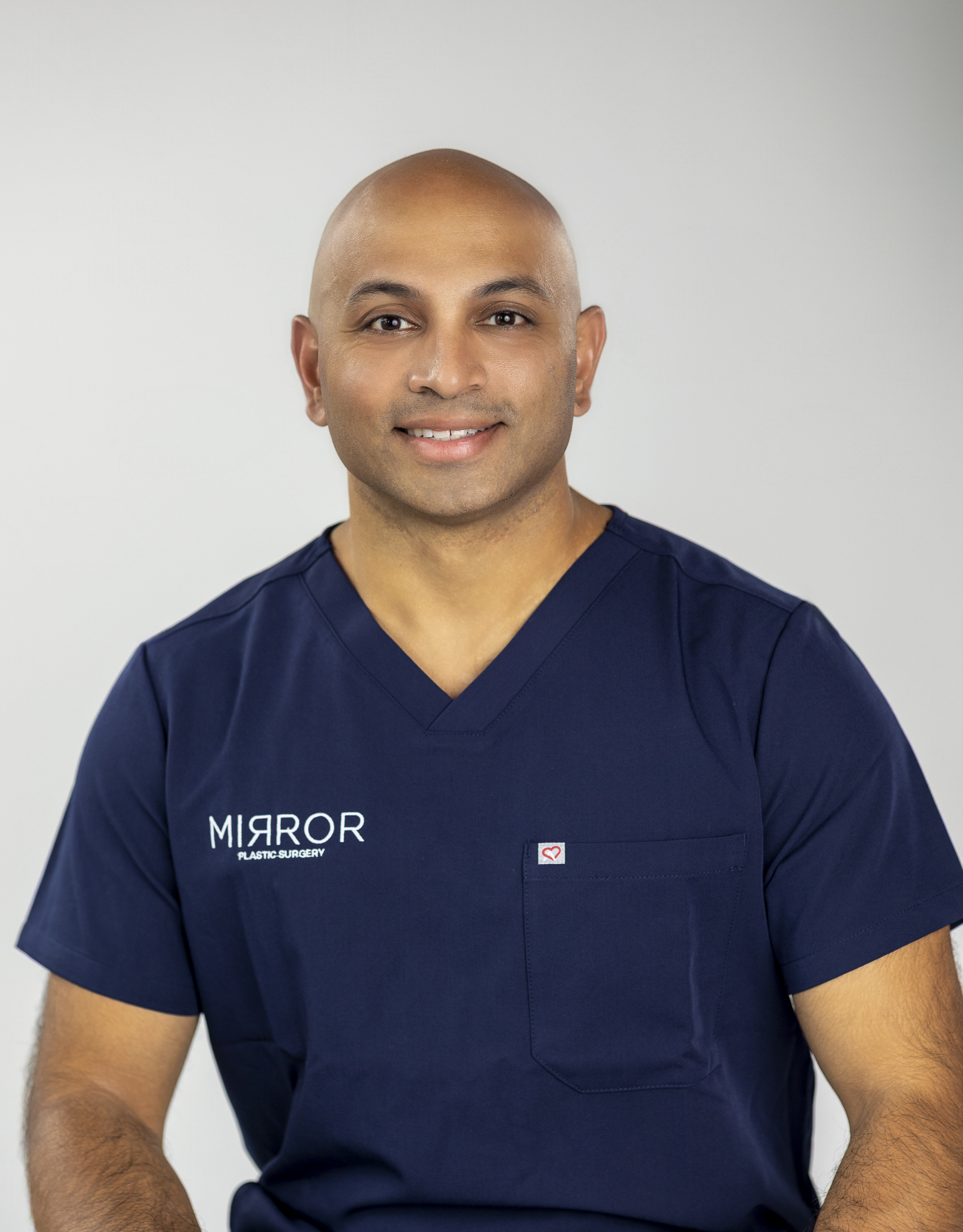
Training and credentials give you a window into a surgeon’s background. Dr. Akash is Harvard-educated through the Harvard-MIT Division of Health Sciences and Technology, trained in plastic and reconstructive surgery at Johns Hopkins, and fellowship-trained in aesthetic surgery at Manhattan Eye, Ear & Throat Hospital (MEETH)/Lenox Hill. He has appeared in America’s Best Plastic Surgeons 2025 by Newsweek for two consecutive years.
The American Board of Plastic Surgery is the only board recognized by the American Board of Medical Specialties to certify surgeons in plastic surgery. ABPS certification confirms at least six years of surgical training, including a minimum of three years of plastic surgery residency, plus written and oral examinations. The title “cosmetic surgeon” has no equivalent ABMS-recognized standard, and any licensed physician may use it.
Questions To Ask Your Tampa Plastic Surgeon
- Are you board certified by the American Board of Plastic Surgery? You can verify this through the ABPS public tool and cross-check with the ABMS Certification Matters lookup.
- Is your certification current?
- Who administers anesthesia, and what are their credentials? The surgeon you meet at consultation should be the surgeon who operates.
- Is the surgical facility accredited by AAAASF, AAAHC, or the Joint Commission, or licensed as an ambulatory surgical center?
- How many of this specific procedure do you perform each year?
- What is your revision policy, and is it in writing?
- If I have a complication at 9 pm on a Saturday, who do I contact?
Patients consistently praise surgeons who plan for the bad day and remain reachable when problems arise. Red flags include lack of ABPS certification, pressure to decide quickly, and operating in unaccredited facilities.
Common Misunderstandings About The Consultation
Several myths cause Tampa patients to delay booking or arrive with inaccurate expectations.
- “It’s A Sales Pitch.” A well-run consultation is a clinical evaluation with no obligation to schedule. Reputable surgeons will say when a patient is not a good candidate and may recommend alternatives or advise against surgery.
- “Surgery Gets Scheduled Immediately.” Most patients take time to decide, and a reflection period benefits decision-making. The Royal College of Surgeons recommends at least two weeks between consultation and formal consent for elective procedures.
- “A Consultation Guarantees Candidacy.” The consultation evaluates candidacy. A key safety signal is a surgeon’s willingness to decline surgery when a patient is not an appropriate candidate.
- “The Cheapest Consultation Is The Best Value.” A low or free fee often reflects a shorter, less individualized evaluation. The depth and quality of the appointment matter more than the price.
Conclusion: Using The Consultation As Your Planning Foundation
A plastic surgery consultation in Tampa is a structured clinical visit that covers medical history, physical exam, goal discussion, outcome planning, and financial logistics in a clear sequence. It functions as a clinical evaluation with no obligation to proceed. The consultation clarifies whether surgery is appropriate, which techniques fit your anatomy, and what a safe, realistic result looks like for you.
Fee policies differ across practices, so confirm them when you book. Timing from consultation to surgery depends on your health and pre-operative needs and often ranges from a few weeks to several months. Most disqualifying factors are temporary and can be improved. Thoughtful preparation, including a medication list, reference photos, and written questions, makes the visit more productive for you and your surgeon.
The length and depth of the consultation clearly signal the type of practice you are choosing. A team that limits daily surgeries, spends meaningful time with each new patient, and evaluates safety before aesthetics makes a structural commitment to your care that extends from the consultation room through surgery and recovery.
Schedule Your Consultation With Mirror Plastic Surgery
Mirror Plastic Surgery serves the St. Petersburg and Tampa Bay area with a concierge approach to plastic and aesthetic surgery. Dr. Akash, Harvard-educated, Johns Hopkins-trained, and fellowship-trained at MEETH/Lenox Hill, spends extensive time with each initial consultation and limits the practice to one to two surgeries per day so every patient receives focused attention.
To schedule your consultation, contact Mirror Plastic Surgery directly:
- Phone/Text: 727-361-6515
- Address: 780 4th Ave S, St. Petersburg, FL 33701
- Email: hello@mirrorplasticsurgery.com
Reserve your consultation time with Dr. Akash.
Frequently Asked Questions
What Should I Bring To A Plastic Surgery Consultation In Tampa?
Bring a complete list of current medications and supplements, including dosages, plus records from prior surgeries or procedures. Reference photos that show your goals help you communicate without needing perfect wording. Write down your top three concerns and any questions about recovery, downtime, and logistics. Wear comfortable clothing that allows examination of the area of concern. If you have implants or devices, bring any records with model and size, because these details guide planning.
How Is A Plastic Surgery Consultation Different From A Pre-Operative Appointment?
The consultation is a surgeon-led clinical evaluation that decides whether surgery is appropriate, which techniques fit your anatomy, and what outcome is realistic. It is where the plan is created. The pre-operative appointment, usually one to two weeks before surgery, focuses on readiness. It includes reviewing lab results, confirming medication changes, taking pre-op photos, reviewing aftercare, and obtaining formal consent, and it may be conducted by the surgeon or a designated medical professional. The consultation is the decision-making visit. The pre-op visit is the preparation visit. Both matter, and one does not replace the other.
Can I Be Turned Down For Plastic Surgery After A Consultation?
Yes. A surgeon who declines to operate when candidacy is not established is practicing responsible medicine. As covered under “What Disqualifies You From Plastic Surgery?”, common reasons include uncontrolled medical conditions, nicotine use, unstable weight, active infection, medication interactions, and psychological factors such as unrealistic expectations or motivations that suggest surgery is not in your best interest right now. Many patients who are not candidates at a first consultation later have safe, successful surgery once these issues are addressed.1 If a surgeon declines, ask which benchmarks you need to meet and whether less invasive options make sense in the meantime.
Does Mirror Plastic Surgery Offer Financing For Surgery?
Yes. Mirror Plastic Surgery offers financing options, including CareCredit, for surgical procedures. Because every plan is unique, the specific cost of your procedure, including surgeon, anesthesia, and facility fees, is discussed during the consultation and presented as a personalized, itemized quote. Financing should match that real number rather than an estimate, so the consultation is the right time to review payment options and confirm which programs the practice accepts. Most Tampa practices require payment in full a few weeks before surgery, so applying for financing soon after the consultation helps avoid delays.
How Do I Verify That A Tampa Plastic Surgeon Is Board Certified?
Use the American Board of Plastic Surgery’s public verification tool and cross-check through the ABMS Certification Matters lookup. Both tools are free and open to the public. Confirm that certification exists, that it is active, and that it is in plastic surgery specifically. The American Board of Plastic Surgery is the only board recognized by the American Board of Medical Specialties to certify surgeons in plastic surgery. A surgeon who claims board certification without naming the certifying organization, or whose name does not appear in the ABPS database, warrants further investigation before you proceed.
1 Results may vary from person to person. Editorial content, before and after images, and patient testimonials do not constitute a guarantee of specific results.