
Written by: Dr. Akash Chandawarkar, Board Certified Plastic Surgeon, Mirror Plastic Surgery
How Buccal Fat Removal Affects Your Face Long Term
-
Buccal fat removal permanently reduces midface volume because the excised fat pads do not regenerate once surgically removed.1
-
The long-term aesthetic outcome depends on patient anatomy, age at surgery, surgical conservatism, and how the face naturally ages over time.1
-
Over-resection or poor candidate selection can lead to premature hollowing and visible aging effects that worsen after age 40–45.1
-
Ideal candidates have strong cheekbones, good skin elasticity, and fullness specifically from the buccal fat pads rather than subcutaneous fat or skin laxity.
-
Patients considering buccal fat removal should schedule a thorough consultation at Mirror Plastic Surgery to ensure the procedure aligns with their long-term facial goals.
Does Buccal Fat Come Back?
The buccal fat pad is a naturally occurring, deep structural fat deposit that provides fullness and support to the midface and does not fluctuate with body weight. Unlike subcutaneous fat, which responds to caloric intake and exercise, the buccal fat pad is a fixed anatomical structure. Genetics determine its size rather than lifestyle.
Once surgically excised, the buccal fat pad does not grow back.1 The change is a permanent anatomical alteration. The procedure should be considered a permanent anatomical alteration rather than a temporary contour treatment, and patients must understand this irreversibility before proceeding.
Partial restoration of cheek volume is possible through fat grafting or injectable fillers, but restoration options such as fat transfer are limited and rarely restore the original anatomy. Given this permanence, understanding how the procedure interacts with natural facial aging becomes critical.
Does Buccal Fat Removal Age You Over Time?
The relationship between buccal fat removal and facial aging is one of the most clinically significant considerations for prospective patients. The midface naturally loses volume between ages 30 and 60 through progressive loss of collagen, bone density, and both superficial and deep fat compartments. Buccal fat removal does not accelerate this biological process at the cellular level, but it permanently reduces the volume reserve available to the face as it ages.
A youthful face is defined by soft, rounded contours forming the “triangle of youth”, with full cheeks and a sharp chin. Buccal fat removal can flip this into the “pyramid of age”, with hollow cheeks and heavy jowls, when combined with natural aging processes of bone density loss, collagen reduction, and fat pad deflation.1
A paper in Plastic and Reconstructive Surgery Global Open stated that resection of the buccal fat pad has only served to expedite the aging process and advance skin-related deformations associated with facial aging. The British Association of Aesthetic, Plastic and Reconstructive Surgeons (BAPRAS) warns that buccal fat removal can produce a gaunt, drooping look years earlier than would have occurred naturally.
The risk is not uniform across all patients. When performed conservatively and with individual facial aging patterns in mind, buccal fat removal does not inherently accelerate aging, and patients with good skin elasticity tend to age more gracefully after the procedure.1 Patient selection and surgical conservatism are the primary determinants of long-term outcome.
Why Some Patients Regret Buccal Fat Removal
Buccal fat removal regret is more common than most patients expect and often does not appear until years after the procedure. Regret usually stems from the permanent nature of fat pad removal, natural age-related volume loss that compounds hollowing, over-extraction, poor candidate selection, and trend-driven decisions based on social media rather than anatomy.
The most common regret pattern is premature hollowing, where the lower cheeks thin more than expected or age faster than the rest of the face.1 Surgeons also report patients who miss their original facial fullness as part of their personal identity.
Over-resection is one of the main causes of long-term dissatisfaction; the resulting hollowing worsens with age and cannot be fully corrected, though fat grafting may partially restore volume in some cases.
Regret does not occur in every case. Conservative buccal fat resection in well-selected patients can produce stable, satisfying long-term results. More aggressive resection increases the chance of visible hollowing as the face ages. Thorough pre-operative evaluation and conservative technique remain the most reliable safeguards against regret.
Buccal Fat Removal 10 Years Later
Long-term published data on buccal fat removal outcomes remains limited. A 2021 systematic review by Traboulsi-Garet et al. concluded that the evidence base is scarce and of low quality with essentially no published long-term follow-up data.
In the absence of robust decade-scale evidence, surgeons extrapolate expected facial changes over 10 years from anatomical knowledge of aging. A patient who has undergone buccal fat removal may find the relative hollowing effect more visible as the rest of the face thins naturally after age 40–45 due to deflation and descent of other facial fat compartments.1 Patients considering the procedure should weigh this uncertainty as part of their decision-making process.
How Long Swelling Lasts After Surgery
Recovery from buccal fat removal follows a predictable timeline, though individual variation exists. The initial post-operative period involves the most visible swelling, which gradually resolves in stages before the final contour becomes apparent.
-
Days 1–3: Peak swelling and mild discomfort, with a soft diet recommended and intraoral incisions requiring careful oral hygiene.
-
Week 1–2: Most acute swelling subsides, and most patients return to normal social activity.
-
Weeks 3–6: Residual swelling continues to resolve, and early contour changes become visible.
-
3–6 months: The final result emerges as all swelling resolves and tissues settle into their new position.
Because the buccal fat pad lies deep within the cheek, the full contouring effect is not visible until swelling has completely resolved. Evaluating results before the three-to-six-month mark feels premature and often misleading.
Who Is Not a Good Candidate for Buccal Fat Removal?
Evidence-based candidacy assessment is the most important step in buccal fat removal. The 2021 Traboulsi-Garet systematic review identifies the ideal candidate as someone with strong malar bones hidden by prominent cheeks, while noting the procedure is contraindicated in patients with weak cheekbones because it tends to over-hollow the face.
The following patient profiles represent contraindications or significant risk factors based on current clinical evidence:
-
Patients over 45, when the midface volume loss mentioned earlier is already underway, often develop a prematurely aged, hollowed appearance after surgery1
-
Patients under 25 whose facial structure is still developing and fat distribution has not stabilized
-
Active smokers unwilling to cease nicotine use before and after surgery
-
Patients with untreated oral or dental disease, uncontrolled medical conditions, or progressive hemifacial atrophy
-
Patients with body dysmorphic disorder or distorted self-perception
-
Patients planning significant future weight loss, as post-surgical weight loss accentuates the permanent volume reduction and can lead to excessive hollowing
-
Patients whose lower-face fullness originates from subcutaneous fat, skin laxity, or overall body weight rather than the buccal fat pads themselves
A systematic review and meta-analysis of clinical studies found an overall 25% complication rate after buccal fat pad removal, underscoring the importance of surgical precision and conservative technique.
Planning Safely for Long-Term Results
Several factors interact with buccal fat removal outcomes over time and need careful review during pre-operative evaluation.
Weight fluctuation: Significant weight loss after buccal fat removal accentuates the contouring effect because the rest of the face also loses volume, sometimes producing excessive hollowing. Patients should be at a stable, healthy weight before surgery and should not anticipate major weight changes afterward.
Functional implications: The buccal fat pad serves as a gliding cushion between facial muscles during mastication. When performed correctly by an experienced surgeon, buccal fat removal does not affect facial muscles responsible for expressions, but surgical risks including injury to the buccal branch of the facial nerve and the parotid duct remain relevant considerations.
Pre-operative evaluation: A thorough consultation should assess cheekbone structure, skin elasticity, facial fat distribution, family history of facial aging patterns, and the patient’s long-term goals. When this evaluation reveals contraindications or an unfavorable risk-benefit balance, declining to operate becomes not only legitimate but medically appropriate.
The Mirror Plastic Surgery Philosophy for Facial Contouring
Mirror Plastic Surgery operates on a foundational principle: safety first, function second, aesthetics third. For a procedure as anatomically consequential and irreversible as buccal fat removal, this hierarchy directly shapes how consultations are conducted and how surgical decisions are made.
Every patient undergoes a comprehensive, up-to-one-hour assessment that evaluates facial anatomy, skin quality, bone structure, aging trajectory, and personal goals. The practice performs one to two surgeries per day, which allows the surgical team to focus fully on each patient before, during, and after the procedure. This schedule contrasts with high-volume practices that may perform five to ten surgeries daily. Non-surgical alternatives are discussed alongside surgical options, and the team recommends surgery only when the evidence supports it for that patient’s specific anatomy.
About Dr. Akash
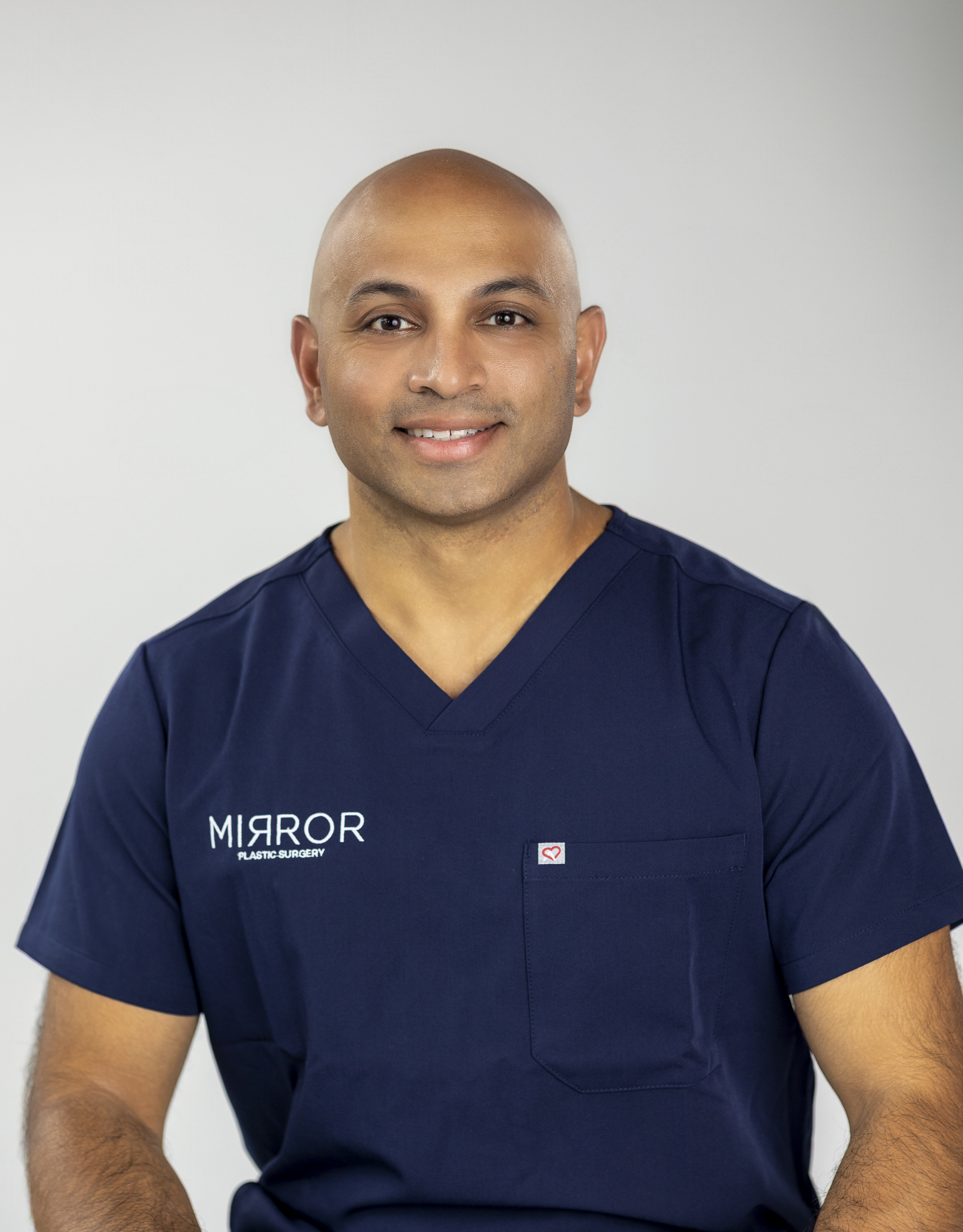
Mirror Plastic Surgery’s facial procedures are performed by Dr. Akash. He completed his medical degree at Harvard Medical School through the Harvard-MIT Health Sciences and Technology program, followed by a seven-year integrated plastic and reconstructive surgery residency at Johns Hopkins University. He subsequently completed a specialized aesthetic surgery fellowship at the Manhattan Eye, Ear and Throat Hospital (MEETH) at Lenox Hill Hospital, one of the most competitive aesthetic training programs in the United States.
His background also includes a Biodesign Innovation Fellowship at Stanford University. Dr. Akash has been recognized by Newsweek as one of America’s Best Plastic Surgeons for two consecutive years, including 2025. He serves as a Next Generation Editor for the Aesthetic Surgery Journal and has testified before the U.S. Food and Drug Administration on breast implant safety.
Buccal Fat Removal vs Non-Surgical Cheek Slimming
Patients seeking lower-face contouring have several options beyond surgical buccal fat removal. Each option carries a distinct mechanism, risk profile, and longevity.
Facial fillers: Injectable fillers can add volume to the midface and cheekbones to create the appearance of greater facial definition without removing tissue. Results are temporary, typically lasting 12–24 months depending on the product, and are reversible with hyaluronidase for hyaluronic acid-based fillers. Fillers do not address excess buccal fat volume directly.
Facial fat transfer: Autologous fat grafting harvests fat from another area of the body and injects it into the face to restore or redistribute volume. It is more commonly used as a corrective measure after over-resection of buccal fat than as a primary contouring tool. Injected fat behaves differently from native buccal fat and produces variable results in response to later weight changes and hormonal shifts.
The appropriate option for any individual depends on the anatomical source of their facial fullness, their aging trajectory, and their tolerance for permanence versus reversibility. These factors are assessed in detail during a thorough pre-operative consultation.
Common Misconceptions About Buccal Fat Removal
Misconception: Buccal fat removal results are reversible. The buccal fat pad does not regenerate after excision. The change should be considered a permanent anatomical alteration. As discussed earlier, the excised fat pads do not regenerate, making reversal impossible. Despite the restoration options mentioned previously, the original buccal fat pad structure cannot be recreated.
Misconception: The procedure halts or slows facial aging. Buccal fat removal does not affect the biological processes of aging. Collagen loss, bone resorption, and fat pad deflation in other facial compartments continue on their natural timeline. The procedure removes a fixed volume of tissue, while everything else continues to change.
Misconception: Any patient with full cheeks is a good candidate. Buccal fat removal is contraindicated in patients whose lower-face fullness originates from subcutaneous fat or skin laxity rather than the buccal fat pads themselves. Clinical evaluation is required to confirm that the buccal fat pad is the anatomical source of the fullness before surgery is appropriate.
Misconception: Social media results are representative. Interest in buccal fat removal spiked significantly, fueled by TikTok and celebrity culture, while patient reports describe initial satisfaction followed by a gaunt appearance by the mid-30s. Social media content reflects short-term post-operative results, not decade-scale outcomes.
Frequently Asked Questions
Is buccal fat removal a safe procedure?
Buccal fat removal carries meaningful risks that patients should understand in advance. As noted earlier, the procedure carries a documented 25% complication rate, with the most common issues being temporary trismus and transient nerve irritation. More serious risks include injury to the buccal branch of the facial nerve or the parotid duct, which can occur due to natural anatomical variation.
Safety improves with rigorous candidate selection, conservative surgical technique, and performance by a board-certified plastic surgeon with specialized facial surgery training. The long-term safety profile remains less well-characterized because robust decade-scale outcome data are not yet available in the published literature.
How should I prepare for a buccal fat removal consultation?
A productive consultation starts with a clear understanding of your goals, your family history of facial aging, your weight history, and any medical conditions or medications that affect healing or bleeding. Photographs of your face over several years help a surgeon assess your natural aging trajectory. You should also know whether your facial fullness persists at a stable, healthy weight, as this is a key indicator of whether the buccal fat pad is the anatomical source of the fullness.
Honest communication about your expectations, including your tolerance for a permanent, irreversible change, is essential. This conversation allows your surgeon to advise you safely and realistically.
What is the recovery experience like after buccal fat removal?
Most patients experience peak swelling in the first two to three days, with the majority of acute swelling resolving within one to two weeks. A soft diet is recommended during the initial healing period, and careful oral hygiene is required because the incisions are made inside the mouth. Most patients return to normal social activity within one to two weeks.
The final contour is not visible until three to six months post-operatively, when all residual swelling has resolved and the tissues have settled.
Will my results look natural as I age?
Long-term naturalness depends primarily on patient selection and surgical conservatism. Patients with naturally full, rounded lower cheeks, strong cheekbone structure, good skin elasticity, and stable weight who undergo conservative partial removal are most likely to age gracefully after the procedure. Patients with narrow or lean faces, weak cheekbones, or a family history of significant facial volume loss face a higher risk of developing a hollow or gaunt appearance as natural aging compounds the surgical volume reduction.
Because robust long-term data do not yet exist, this assessment relies on anatomical reasoning and surgeon experience rather than published decade-scale outcome studies.
Can the results of buccal fat removal be corrected if I am unhappy?
Partial correction is possible through facial fat grafting or injectable fillers, but neither option fully restores the original anatomy of the buccal fat pad. Fat grafting requires a second surgical procedure, and the injected fat responds unpredictably to future weight changes and hormonal shifts. Injectable fillers provide temporary volume but do not replicate the structural properties of the native fat pad.
The most reliable way to avoid the need for correction is thorough pre-operative evaluation and conservative surgical technique during the primary procedure.
Summary: Making an Informed Decision About Buccal Fat Removal
Buccal fat removal is a permanent, irreversible procedure that reduces midface volume by surgically excising the buccal fat pads. The fat does not regenerate. Natural facial aging continues after surgery, and the long-term aesthetic result depends on the patient’s anatomy, age at the time of surgery, surgical conservatism, and subsequent weight stability. Published evidence is limited to short-term outcomes, with no robust decade-scale follow-up data available.
Patient selection is the most critical determinant of long-term satisfaction. Ideal candidates have naturally full lower cheeks attributable to prominent buccal fat pads, strong cheekbone structure, good skin elasticity, and stable weight. The procedure is contraindicated in patients with narrow or lean faces, weak cheekbones, advanced age-related volume loss, or unrealistic expectations about reversibility. Informed decision-making requires a thorough, anatomy-based consultation with a board-certified plastic surgeon before any commitment to surgery.
1 Results may vary from person to person. Editorial content, before and after images, and patient testimonials do not constitute a guarantee of specific results.