
Written by: Dr. Akash Chandawarkar, Board Certified Plastic Surgeon, Mirror Plastic Surgery | Last updated: July 12, 2026
Key Takeaways
- Choosing between a Cinderella facelift and buccal fat removal means deciding between preserving facial volume and permanently removing it. The right choice depends on your anatomy and how your face is likely to age over the next 10 to 20 years.
- Buccal fat removal is permanent and has limited long-term evidence. It suits only younger patients with stable, genetically full lower cheeks and strong bone support.
- Volume preservation techniques such as deep-plane facelift, fat repositioning, and fat grafting keep or restore structural fat. These options usually work better for patients already showing early volume loss or midface descent.
- Long-term risks of buccal fat removal include progressive hollowing in the 40s and 50s that is hard to correct, so careful candidacy assessment is essential before surgery.
- Patients considering these procedures should schedule a personalized anatomical assessment at Mirror Plastic Surgery to match surgical choices with their 10–20-year aesthetic goals.
Cinderella Facelift, Buccal Fat, and Volume Preservation Basics
Cinderella facelift is a marketing term used for both mini facelifts and deep-plane facelifts that aim for subtle, natural rejuvenation. A mini facelift tightens skin and superficial tissues along the jawline and upper neck. A deep-plane facelift works beneath the SMAS layer, releases key retaining ligaments, and repositions facial soft tissues as a single unit.
Buccal fat removal (bichat lipectomy) is the surgical excision of the buccal fat pad. This pad has an average volume of 8.9–10.2 mL per cheek (slightly larger in males) and sits in a deep compartment between the cheekbones and jawline. The result is permanent. The buccal fat pad does not fluctuate with body weight and does not grow back once removed.
Volume preservation refers to techniques, including deep-plane facelift, fat repositioning, and fat grafting, that maintain or restore structural fat compartments instead of excising them.
How Buccal Fat Removal Fits the Current Aesthetic Landscape
Social media has increased demand for the sculpted, hollow-cheeked look associated with buccal fat removal, often paired with facelift procedures. The clinical evidence base has not kept pace with that demand. A 2021 systematic review in Medicina Oral, Patología Oral y Cirugía Bucal found that evidence supporting buccal fat removal is scarce and low quality, with almost no published long-term follow-up.
Long-term data on buccal lipectomy outcomes also remain limited because the current younger and larger patient population has not yet reached their 50s and 60s. That decade is when the impact of early volume removal usually becomes most visible.
On the facelift side, a 2026 prospective cohort study reported high patient satisfaction when a pedicled buccal fat pad flap was combined with a deep-plane facelift.1 This study examined reconstruction after permanent filler removal in older patients. It did not study elective contouring in younger patients. In that setting, the buccal fat pad was preserved and repositioned as a flap, not discarded.
Main Decision Factors for Facelift vs Buccal Fat Removal
Given the permanent nature of volume removal and the limited long-term data, choosing between these procedures requires weighing specific clinical factors. The table below compares mini facelift, deep-plane facelift, and buccal fat removal across five clinically relevant dimensions. All figures come from published sources cited inline.
| Factor | Mini Facelift | Deep-Plane Facelift | Buccal Fat Removal |
|---|---|---|---|
| Longevity | 3–5 years before maintenance is advisable | 10–15 years, with some patients keeping visible improvement beyond 15 years1 | Permanent, because removed fat does not regenerate |
| Candidacy by Age and Facial Structure | Early signs of aging, conservative improvement goals, limited jowling | Visible jowls at rest, midface descent, deeper facial aging, long-term correction goals | 20s to early 40s with genuine lower-cheek fullness out of proportion to facial structure. Poor candidates include lean, narrow-faced, or mid-40s+ patients with early volume loss. |
| Functional Impact | Limited effect on midface or deeper facial descent | Repositions soft tissues as a single unit and addresses midface, jowls, lower-face descent, and neck continuity | Proximity to the buccal branch of the facial nerve and parotid duct creates risk of inadvertent injury. Temporary trismus and transient nerve irritation are the most common complications. |
| Revision Likelihood | Higher. Patients with visible jowls often find a mini facelift under-corrects and later need deeper techniques. | Lower. Correcting the appropriate anatomical layer the first time usually provides better long-term value. | Hollow cheek syndrome is difficult to reverse. Injectable fillers rarely replicate the natural structure of the original fat pad. |
| Maintenance Needs | Many patients plan more comprehensive surgery later and view a mini facelift as a first-step treatment. | No facelift stops aging entirely. Maintenance treatments are often discussed during planning, and lifestyle factors such as sun exposure and genetics influence longevity. | Chronic hollowness from overcorrection may not respond well to fillers over time. Fat grafting may be required. |
Approaches That Shape the Midface Without Excess Fat Removal
Volume preservation still allows meaningful contour change. Several recognized techniques refine the midface without permanently excising structural fat.
Fat repositioning during a deep-plane facelift moves descended fat compartments back to their youthful position instead of removing them. This approach addresses hollowing and jowling at the same time while keeping structural volume.
Facial fat grafting harvests fat from another body site and transfers it to depleted facial compartments. Fat transfer restores volume where it has been lost. It does not tighten loose skin, reposition descended tissue, or correct structural changes. Because of these limitations, patients with both volume loss and structural descent often combine fat grafting with a facelift for more complete rejuvenation than either procedure alone.
Buccal fat pad flap is a reconstructive variation that preserves the buccal fat pad on a vascular pedicle and repositions it rather than discarding it. The 2026 prospective cohort study showed high satisfaction with this technique in a reconstructive setting after filler removal. This finding highlights the buccal fat pad’s value as repositionable tissue, not just a target for excision.
Partial buccal fat reduction removes only part of the fat pad to reduce excess fullness while preserving structural volume. Surgeons discuss this as a middle-ground option for carefully selected patients, although it is not universally standardized.
Long-Term Risks and Facial-Type Scenarios
10–20-Year Projection Scenarios by Facial Type
The long-term trajectory of buccal fat removal varies significantly by facial type.
- Full, round face with high cheekbones and good bone support: Buccal fat removal in the 20s or early 30s may create proportionate definition that ages acceptably if natural volume loss is gradual. For suitable candidates, the permanent result can age in a balanced way.1
- Oval or heart-shaped face with moderate cheek volume: Risk of hollowing increases through the 40s and 50s as the face loses collagen, bone density, and fat volume, starting in the 30s and becoming more pronounced later.1 When the buccal fat pad has been removed, this natural loss has no deep cushion to offset it, which accelerates the appearance of hollowing.
- Naturally lean or angular face: A face that looks elegantly sculpted at 25 can appear gaunt or prematurely aged by 35 or 40 if buccal fat removal did not match the patient’s anatomy. These patients are generally contraindicated for the procedure.
- Patients with flat or weak cheekbones: Buccal fat removal is contraindicated when cheekbones are weak or flat, because it often over-hollows the face.
The “Gaunt Later” Concern Explained
Forum communities and patient review platforms often repeat the same fear: looking gaunt at 50 after buccal fat removal. This concern has a clear anatomical basis. The buccal fat pad shrinks naturally with age, and the midface loses volume in the 40s and 50s. Removing that fat from a young, thin face trades definition now for hollowing later.
A peer-reviewed study in the Aesthetic Surgery Journal raised concerns that buccal fat removal in younger, non-aging patients could cause long-term facial deformities. The absence of the fat pad removes a structural foundation that supports the face as age-related volume loss occurs. The issue is not faster cellular aging. The problem is the loss of a support layer the face may need later in life. Critically, this hollowing is difficult to reverse, and as noted in the comparison above, fillers cannot recreate the structural foundation that was removed.
Which Path Fits You: Practical Decision Checklist
The following checklist helps clarify likely pathways. A board-certified plastic surgeon must still confirm candidacy through an in-person anatomical assessment.
Consider buccal fat removal only if all of the following apply:
- Age 20–early 40s with stable weight
- True, persistent lower-cheek fullness that stays despite weight changes
- Good skin elasticity and strong underlying bone support
- Full or round facial structure (not lean or angular)
- No early signs of natural facial volume loss
- Non-smoker with realistic long-term expectations
Consider volume preservation (deep-plane facelift, fat repositioning, or fat grafting) if any of the following apply:
- Age mid-40s or older with early signs of natural volume loss
- Sagging, heavy jowls, or poor lower-face definition due to skin laxity
- Lean or angular facial structure
- Flat or weak cheekbones
- Midface descent or hollowing already present
- Primary concern is aging appearance rather than excess cheek volume
Consider combining deep-plane facelift with selective buccal fat reduction only if:
- You have both persistent lower-cheek fullness and aging-related laxity or jowling
- Your bone structure and overall facial volume support partial reduction without future hollowing risk
- Your surgeon confirms that repositioning alone does not adequately address the fullness
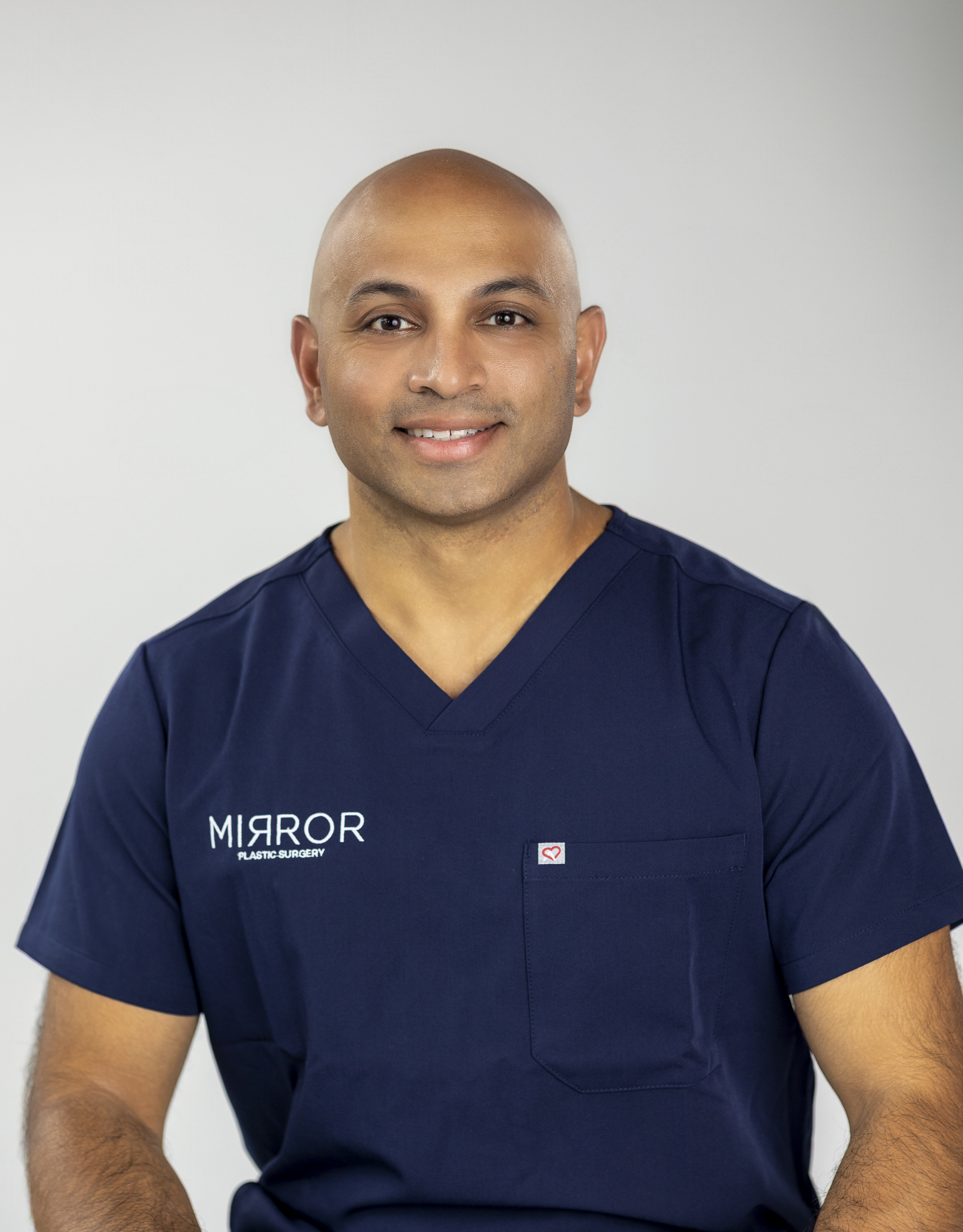
Dr. Akash, recognized in Newsweek’s America’s Best Plastic Surgeons 2025 for two consecutive years and fellowship-trained in aesthetic surgery at the Manhattan Eye, Ear and Throat Hospital (MEETH), applies this decision framework within Mirror Plastic Surgery’s core philosophy: safety first, function second, aesthetics third. Every facelift and contouring plan at Mirror Plastic Surgery starts with a comprehensive anatomical assessment, not a trend-driven checklist.
Frequently Asked Questions
Is buccal fat removal safe to combine with a Cinderella facelift?
Combining procedures increases operative time and cumulative risk, so the decision must be anatomy-driven. A patient with genuine lower-cheek fullness and concurrent jowling may be a reasonable candidate for selective buccal fat reduction with a deep-plane facelift, if bone structure and overall volume support this dual approach. Patients who are already lean, narrow-faced, or showing early natural volume loss are usually not appropriate candidates for buccal fat removal with any facelift type. Mirror Plastic Surgery limits combined procedures to those that are anatomically justified, not trend-driven.
How do I know if my cheek fullness is buccal fat or something else?
Buccal fat fullness is genetically determined, sits in the lower cheek between the cheekbones and jawline, and does not change much with weight shifts. Fullness that improves with weight loss is more likely subcutaneous fat, which buccal fat removal does not address. Fullness that appears lower on the face and comes with skin laxity or jowling usually reflects descended soft tissue that needs repositioning, not removal. An in-person anatomical assessment by a fellowship-trained plastic surgeon is the only reliable way to distinguish these causes.
What is the recovery timeline for a deep-plane facelift versus buccal fat removal?
Recovery timelines differ significantly between the procedures. Buccal fat removal typically allows return to normal activity within one to two weeks. A deep-plane facelift usually requires two to three weeks of initial recovery, with final results settling over three to six months. When procedures are combined, expect the longer facelift timeline.
Will I need revision surgery after buccal fat removal?
Well-selected candidates often enjoy a permanent result that does not require revision.1 Patients who were not ideal candidates, such as those who were too lean, too narrow-faced, or too old at the time of surgery, may develop progressive hollowing in their 40s and 50s. This change can create a gaunt or prematurely aged appearance that needs correction. Revision options include fat grafting, but fillers cannot recreate the original fat pad’s structure. Careful candidacy assessment before the first surgery remains the most effective way to avoid revision.
What questions should I ask during a consultation for a Cinderella facelift and buccal fat removal?
Helpful consultation questions include the following:
- What is my facial fat distribution pattern, and how is it likely to change over the next 10–20 years?
- Am I a candidate for buccal fat removal based on my bone structure, not just my current cheek appearance?
- Would fat repositioning or grafting support my long-term goals better than removal?
- Which facelift technique matches my degree of facial descent, and how long are results likely to last?
- What revision options exist if I develop hollowing later?
Mirror Plastic Surgery consultations are structured to cover these topics, with up to an hour dedicated to anatomical education and individualized planning.
Get evidence-based answers to your facial surgery questions at Mirror Plastic Surgery in St. Petersburg, Florida, with Dr. Akash.
1 Results may vary from person to person. Editorial content, before and after images, and patient testimonials do not constitute a guarantee of specific results.