
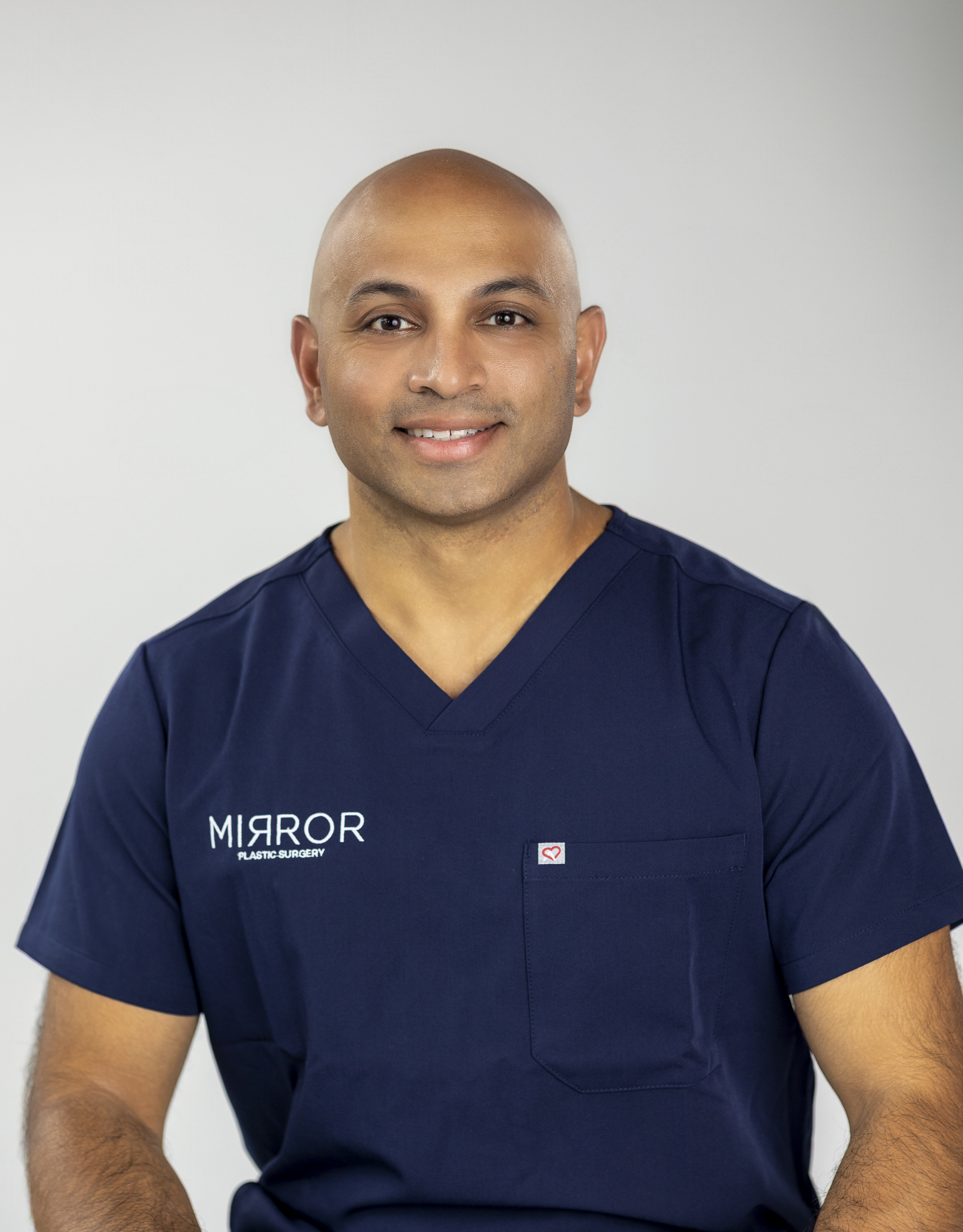
Written by: Dr. Akash Chandawarkar, Board Certified Plastic Surgeon, Mirror Plastic Surgery | Last updated: July 19, 2026
Key Takeaways
- Buttock augmentation longevity varies by method: BBL fat transfer often lasts 5–10+ years with 60–80% fat survival once stabilized, silicone implants can last 10+ years when complication-free, and Sculptra results last 2–3 years with maintenance.1
- Weight stability is the single most important lifestyle factor for preserving BBL results, because significant fluctuations can visibly alter volume and shape at any time.1
- Subcutaneous-only fat placement with ultrasound guidance is both the current safety standard and the key to predictable long-term BBL outcomes.
- Complication rates are higher with implants (21.6%) than BBL (9.9%), so choosing a board-certified surgeon and accredited facility is critical for minimizing revision risk across all methods.
- Schedule your personalized consultation at Mirror Plastic Surgery to receive anatomy-specific longevity projections and evidence-based guidance for your goals.
Longevity Ranges for BBL, Implants, and Sculptra
The table below summarizes peer-reviewed and clinically reported longevity data for each method. Every figure is cited inline, and non-comparable metrics are explained in the sections that follow.
| Procedure Type | Typical Longevity Range | Maintenance Needs | Primary Revision Triggers |
|---|---|---|---|
| Fat Transfer (BBL) | 5–10+ years (60–80% fat survival after stabilization) | Stable weight to preserve proportions, no routine procedural maintenance | Significant weight fluctuation, aging, pregnancy, some patients pursue a touch-up to address volume changes |
| Silicone Implants | 10+ years, replacement only as indicated for complications or preference | No procedural maintenance, activity and weight monitoring | Revision rates vary, triggers include capsular contracture, displacement, infection |
| Biostimulatory Injectables (e.g., Sculptra) | 2–3 years per treatment series | Periodic maintenance sessions may be needed for some patients | Natural collagen degradation, aging, weight change, repeat series required for sustained volume |
Clinical data shows 60–80% of transferred fat survives long-term after BBL, with full stabilization and revascularization complete at 3–6 months.1 The 2–3 year Sculptra range reflects published longevity data for buttock augmentation.
What Happens 10 Years After a BBL?
Peer-reviewed analyses consistently report fat retention rates between 50% and 80% at one year, with the final baseline established after the remodeling phase concludes at approximately 12 months. The critical biological milestone is neovascularization, when surviving fat secures a blood supply and becomes stable tissue.
BBL results can remain long-lasting after 10 years when transferred fat survives the integration process and patients maintain stable body weight, with some individuals retaining outcomes for several decades without needing a secondary procedure.1 However, the natural aging process changes body contour over time through loss of skin elasticity and gravity, and some patients choose additional procedures around the 10-year mark.
While the biological integration timeline is well established, translating that into a 10-year projection requires accounting for several patient-specific variables. Significant weight fluctuations after the initial 6-month stability point are the most common cause of visible changes in BBL volume and shape. A 20-pound weight loss after a BBL will visibly shrink the result, while a 20-pound weight gain will enlarge it, often disproportionately. No surgeon can guarantee a specific retention percentage, although one large published BBL series estimates fat-graft survival at approximately 70%.
By approximately three months after fat transfer, surviving fat has established a stable blood supply, and at this point results can be considered long-lasting and, in many cases, permanent.1 After this stabilization window, the surviving 60–80% of fat behaves like native tissue and follows your body’s weight and aging patterns.
Book a consultation with Dr. Akash to receive an anatomy-specific assessment of your fat transfer candidacy and realistic 10-year projections based on your body composition.
How Long Do Buttock Implants Last?
Buttock implants made of solid or semi-solid silicone elastomer are generally considered semi-permanent devices that patients keep for 10 years or longer, with some never requiring revision.1 Replacement is indicated only for complications such as infection, capsular contracture, or displacement, or due to patient preference.
Complication data at the 5- and 10-year marks is a critical planning variable. Studies on gluteal implants report varying complication rates across several categories, including capsular contracture, implant displacement, infection requiring explantation, and seroma. When aggregated, these complications affect 21.6% of patients overall, with 17.8% requiring revision, which is higher than the 9.9% overall complication rate reported for BBL procedures.
Capsular contracture is a known risk for gluteal implant patients, and technique influences this risk. Seroma is a common complication that often resolves without reintervention, although persistent cases may require treatment.
At 20 years, no large-scale prospective data exists. Longevity at that horizon depends on implant quality, surgical technique, placement plane, patient anatomy and tissue support, weight stability, aging, gravity, and absence of trauma or complications.
BBL Movement and “Jiggle” After 5 Years
Autologous fat transferred in buttock augmentation that survives past six months establishes its own blood supply and is permanent thereafter, behaving like native body fat. Because surviving fat is biologically identical to native adipose tissue, it retains the same mechanical properties, including natural movement, that native gluteal fat produces.
The quality of that movement at five years and beyond depends on two main anatomical factors: surgical plane placement and skin elasticity. Fat placed exclusively in the subcutaneous plane integrates with existing tissue architecture and preserves natural tissue mechanics. Placing fat only in the subcutaneous space during buttock augmentation maximizes safety and improves longevity. Skin elasticity, which declines with age and sun exposure, affects how the overlying envelope responds to the underlying volume over time. In weight-stable patients with good skin quality, natural movement is typically preserved well past the five-year mark.
BBL Trends and Style in 2026
Approximately 29,466 BBL procedures are performed annually in the United States, accounting for about 96% of all buttock augmentation cases. Demand remains strong, and the clinical conversation now focuses on technique refinement and safety.
The defining trend in 2026 is a shift from maximum-volume approaches toward anatomical proportionality and subcutaneous-only injection. The “mini BBL” trend uses smaller-volume fat transfers that prioritize shape over maximum volume, which supports longer-lasting outcomes and lower revision rates for patients seeking proportional results. The Multi-Society Gluteal Fat Grafting Task Force mandates subcutaneous-only injection for BBL procedures using large blunt cannulas angled upward, with real-time intraoperative ultrasound guidance to prevent intramuscular placement and pulmonary fat embolism.
Recent reports show low mortality rates for gluteal fat grafting procedures, reflecting improved safety protocols such as subcutaneous-only injection. The procedure remains popular and continues to evolve toward a more precise, safety-first standard.
Safety Protocols That Protect Long-Term Results
Safety protocols form the foundation of long-term longevity, because complications are the primary driver of premature revision across all three buttock augmentation methods. The following protocols reduce complication risk and, by extension, protect long-term outcomes:
- Subcutaneous-only fat injection, with no cases of fat embolism reported when fat is injected exclusively in the subcutaneous plane without any intramuscular component
- Real-time intraoperative ultrasound guidance for plane verification
- Large blunt cannulas (≥4 mm) angled upward during injection, per Multi-Society Task Force mandates
- Board certification by the American Board of Plastic Surgery and accredited surgical facility use
- Low-volume scheduling, as Mirror Plastic Surgery performs 1–2 surgeries per day so the entire team can focus on each patient before, during, and after the procedure
- Nicotine cessation to support proper healing and fat graft survival
- Post-operative pressure avoidance for 6 weeks, as patients must avoid direct pressure on grafted buttocks using specialized pillows and stomach or side sleeping to protect fragile new capillaries during neovascularization
How Gluteal Anatomy Shapes Aging and Longevity
Predictable long-term outcomes depend on respecting the anatomy being modified. The gluteal region contains layered tissue planes, including skin, subcutaneous fat, fascia, and muscle, and each layer has distinct mechanical and biological properties. Fat placed in the correct subcutaneous plane integrates with existing adipose architecture and ages in proportion with surrounding tissue. Fat placed intramuscularly does not integrate in the same way and carries substantially higher safety risk.
Volume-only approaches that ignore plane precision and tissue support tend to produce results that age less predictably, because the structural foundation does not support long-term tissue behavior. Functional restoration that respects the underlying anatomy, rather than simply adding volume, produces results that age in proportion with the patient’s body.
Dr. Akash, named to Newsweek’s America’s Best Plastic Surgeons list for two consecutive years, brings Harvard-MIT medical training, a seven-year Johns Hopkins integrated plastic and reconstructive surgery residency, and an aesthetic surgery fellowship at the Manhattan Eye, Ear and Throat Hospital (MEETH) to every gluteal procedure. This depth of anatomical training informs the plane-specific, safety-first approach applied at Mirror Plastic Surgery.
Book a consultation with Dr. Akash to discuss how anatomical plane reasoning applies to your specific tissue composition and long-term goals.
Real-World Longevity Factors for Tampa Bay Patients
Florida’s climate and lifestyle introduce variables not addressed in most published longevity data, which is drawn from geographically diverse populations. Tampa Bay patients face specific considerations:
- Year-round heat and humidity increase perspiration in the intergluteal region, which is particularly relevant for implant patients given the proximity of the incision to moisture-prone areas
- High activity levels, including water sports, outdoor fitness, and beach activity, place repetitive mechanical stress on gluteal tissue, which can influence implant displacement risk over time
- Sun exposure accelerates skin elasticity loss, affecting how the overlying envelope responds to underlying volume at 5 and 10 years
- Florida’s active social culture supports weight stability through consistent exercise, which is a key protective lifestyle factor for BBL longevity
- Humidity-related skin changes may influence the collagen scaffold produced by biostimulatory injectables, although no Florida-specific clinical data currently exists on this variable
10- and 20-Year Projections and Key Variables
Projections at 10 and 20 years represent informed estimates rather than guarantees. The variables below determine where any individual patient falls within published ranges:
- Weight stability: BBL results typically last 5 to 10 years when patients maintain stable weight. Implant longevity is also influenced by weight changes that alter tissue support around the device.
- Aging: Skin laxity increases with age and affects how volume appears externally, regardless of underlying fat or implant integrity.
- Pregnancy: Pregnancy after a BBL can alter results due to weight changes affecting grafted fat and abdominal wall changes shifting body proportions.
- Activity level: Consistent moderate exercise supports weight stability, while high-impact activity may increase mechanical stress on implants over time.
- Surgical technique: Published protocols indicate that fat graft retention rates typically range between 50% and 80% (most often 60–70%) under optimized conditions.
At 20 years, no large-scale prospective data exists for any buttock augmentation method. Projections at that horizon extrapolate from shorter follow-up periods and should be treated as directional rather than definitive.
Revision Realities and How to Reduce the Odds
Revision occurs across all three methods, but the triggers and rates differ. Some BBL patients pursue a touch-up procedure in later years to restore volume lost to natural resorption, aging, or weight loss. For implants, revision is required in a subset of cases, primarily due to wound separation, implant displacement from high gluteal muscle contractile forces, and surgical site infection.
The most effective revision-minimization strategies occur upstream. Correct plane selection, conservative volume targets, accredited facility use, and board-certified surgeon selection all reduce risk. Studies on subcutaneous-plane gluteal fat grafting report low revision rates and high patient satisfaction when safety-first, anatomy-first protocols are applied consistently.
Frequently Asked Questions
Is a BBL permanent?
A BBL is considered semi-permanent. Fat that survives the first six months establishes its own blood supply and behaves like native body fat indefinitely, and it does not reabsorb on a fixed schedule the way a filler does.1 However, that surviving fat responds to weight changes and aging just as native fat does. Significant weight loss will reduce volume, and significant weight gain will increase it, sometimes disproportionately. The result is not static, but in weight-stable patients with good skin elasticity, outcomes can remain satisfying for a decade or longer without revision.
Will my BBL still look natural and move naturally after 5 years?
In most weight-stable patients, results continue to look and move naturally. Surviving fat is biologically identical to native adipose tissue, so it retains the same movement characteristics. The key determinant is surgical plane, because fat placed in the subcutaneous plane integrates with existing tissue architecture and preserves natural mechanics. Skin elasticity, which declines gradually with age and sun exposure, also influences how the overlying envelope responds to the underlying volume. Patients who maintain weight stability and protect skin health through sun protection and hydration tend to retain the most natural appearance over time.
How often do buttock implants need to be replaced?
Unlike breast implants, buttock implants have no routine replacement schedule. Modern silicone gluteal implants are designed to last 10 years or longer, and many patients never require replacement. Replacement is indicated only when complications arise, such as capsular contracture, implant displacement, infection, or seroma that does not resolve, or when the patient desires a change in size or shape. The decision to revise is driven by clinical findings rather than a calendar-based protocol. Complication rates vary significantly by implant type, surgical technique, and surgeon experience, which makes board-certified surgeon selection the primary modifiable variable.
How long does Sculptra last for buttock augmentation, and is there data beyond 5 years?
Sculptra buttock augmentation results typically last 2–3 years, with volume peaking at 3–6 months after the final session. Periodic maintenance sessions may be needed to sustain results. Sculptra is also FDA-approved only for facial rejuvenation, and its use for buttock augmentation is off-label, which limits the available clinical evidence base. Patients considering Sculptra for buttock enhancement should understand that ongoing maintenance sessions are required to sustain results, and that the volume produced is modest compared to surgical fat transfer or implants.
What is the single most important factor for long-term BBL results?
The factor most consistently cited in clinical literature is maintaining stable body weight, which preserves both the volume and shape of surviving fat. Beyond weight, the surgical technique, specifically subcutaneous-only fat placement with ultrasound guidance, determines both safety and the quality of fat integration, which directly affects how predictably results age. Nicotine cessation before and after surgery also supports fat graft survival.
Summary: Critical Factors for Long-Term Success
- BBL fat transfer produces semi-permanent results, with long-term fat survival established by 3–6 months and 10-year outcomes well documented in weight-stable patients.
- Silicone buttock implants are designed to last 10+ years but carry higher complication and revision rates than BBL, with revision required in a subset of cases.
- Biostimulatory injectables such as Sculptra last about 2–3 years per series, so ongoing maintenance is required.
- Subcutaneous-only fat placement remains both the safety standard and the longevity standard for BBL procedures.
- Weight stability functions as the primary protective lifestyle factor for BBL longevity.
- Safety protocols including board certification, accredited facilities, low-volume scheduling, and ultrasound guidance reduce complication rates that drive premature revision.
- Florida-specific factors such as heat, humidity, sun exposure, and activity levels are relevant planning variables that most published studies do not capture.
- No large-scale prospective data exists for any method at 20 years, so projections at that horizon remain extrapolations.
Next Step: Personalized Anatomical Guidance
Longevity ranges published in clinical literature describe populations rather than individuals. Your specific anatomy, including tissue thickness, skin elasticity, fat distribution, body weight trajectory, and activity profile, determines where your outcome falls within those ranges. A thorough, anatomy-specific consultation offers the most reliable way to translate population-level data into a personalized projection.
Dr. Akash, twice named to Newsweek’s America’s Best Plastic Surgeons list and trained at Harvard-MIT, Johns Hopkins, and MEETH, conducts up to one-hour consultations that include a top-to-bottom anatomical assessment, evidence-based procedure comparison, and clear discussion of realistic 5-, 10-, and 20-year expectations. Mirror Plastic Surgery’s concierge model, limited to 1–2 surgeries per day, ensures that planning rigor extends through every phase of your care.
Book a consultation with Dr. Akash at Mirror Plastic Surgery in St. Petersburg, Florida, and receive an anatomy-first assessment grounded in the evidence presented here.
1 Results may vary from person to person. Editorial content, before and after images, and patient testimonials do not constitute a guarantee of specific results.